-
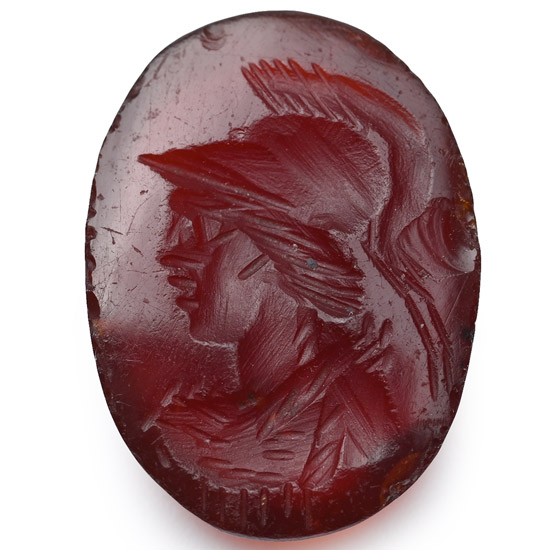
Roman Carnelian Gemstone with Minerva
2nd-3rd century A.D.Sold for (Inc. bp): £260
With intaglio bust of Minerva wearing a crested helmet; supplied with a museum-quality impression. 0.64 grams, 12.97 mm
From the private collection of a European gentleman (1942-2024), formed since the 1970s. -
.jpg)
Roman Carnelian Gemstone with Insect
2nd-3rd century A.D.Sold for (Inc. bp): £46
With intaglio insect; supplied with a museum-quality impression. 0.90 grams, 13.22 mm
From the private collection of a European gentleman (1942-2024), formed since the 1970s. -
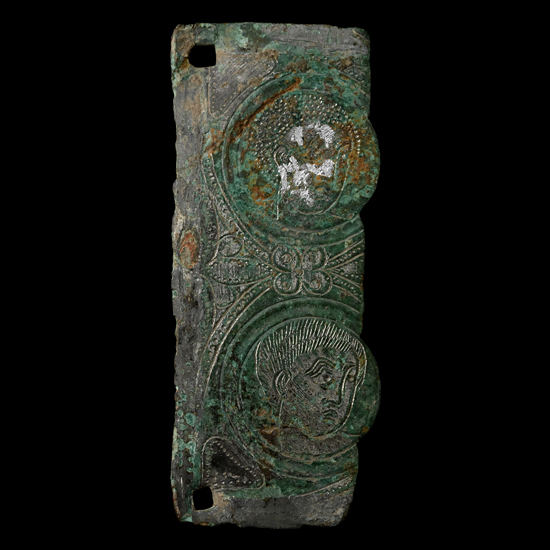
Roman Tinned Bronze Plaque Fragment with Two Busts
Circa 4th century A.D.Sold for (Inc. bp): £156
Tinned plaque fragment with attachment points in the corners; roundel with male bust in three-quarter view with pointillé hairstyle, similar below with hatched hair; scrolls and tendril forming a frame. 7.52 grams, 62.30 mm
From the private collection of a European gentleman (1942-2024), formed since the 1970s. -
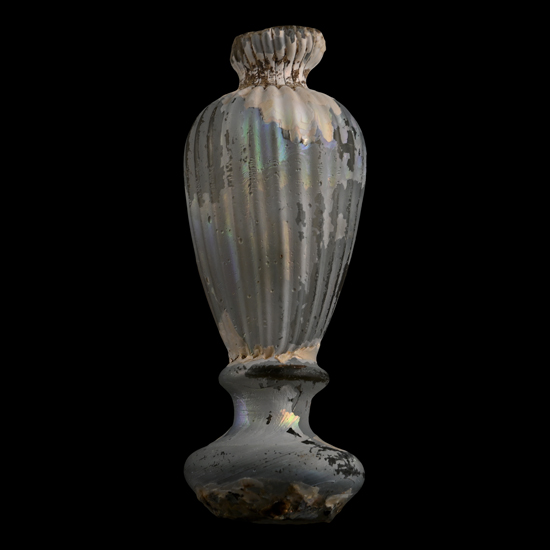
Roman Iridescent Moulded Fluted Glass Perfume Bottle
Cyprus, circa 1st century A.D.Sold for (Inc. bp): £247
Piriform fluted body with narrow neck and everted rim, flared base. 19.7 grams, 60 mm
Private collection, Oxfordshire, UK, by direct descent from the collection of Judge George Cyril Griffith-Williams (1893-1983), Supreme Court Judge of the Colony of Cyprus; items having been collected in the 1930s and 1940s in Cyprus during his tenure there. -
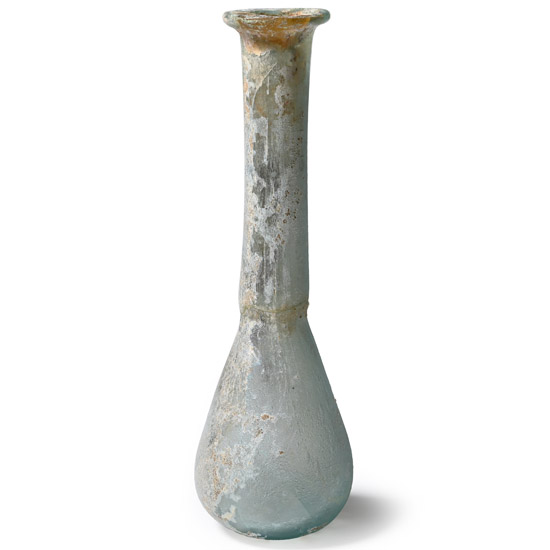
Roman Amphora-Shaped Glass Perfume Bottle
Circa 1st century B.C.-1st century A.D.Sold for (Inc. bp): £104
Piriform body with cylindrical neck, everted folded rim and a broad base; some iridescence remaining. 33 grams, 14 cm
From the private collection of Mr Brian Edwards, New Malden, Surrey, UK, formed from the late 1970s-early 1980s; thence by descent. Accompanied by the original collector's data sheet with reference no.A80. -
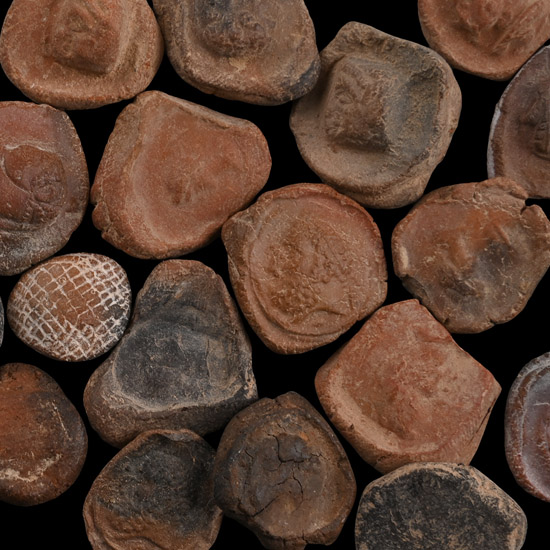
Roman Terracotta Bullae, Tesserae or Token Group
3rd century B.C.-1st century A.D.Sold for (Inc. bp): £52
A mixed group of ceramic bullae, tesserae or theatre tokens bearing low-relief motifs, mainly consisting of profile busts of deities. 35 grams total, 14-20 mm
From the private collection of a European gentleman (1942-2024), formed since the 1970s.
The term 'tessera' was used in Roman times to convey the Greek term σύμβολον (token). Small tiles are known as tokens, often shaped like coins, made of metal (copper, lead, iron), clay, bone, wood, or glass, stamped as well as engraved. The tokens, however, are not exclusively coin-shaped, as the Latin term 'tessera' suggests by etymologically referring to a square or at least a four-sided shape and confirmed in several cases by material remains of the past. Tokens and tesserae seem to have been used both in Athens and Rome for the distribution of goods. According to written sources, the term token is identified with credentials of the official authorities. They have also been interpreted as tokens of identity, as entrance tickets to theatre performances, tribunals or assemblies of citizens, archival material of seal engraving, as pawns in games, Charon’s obols and even as amulets. -
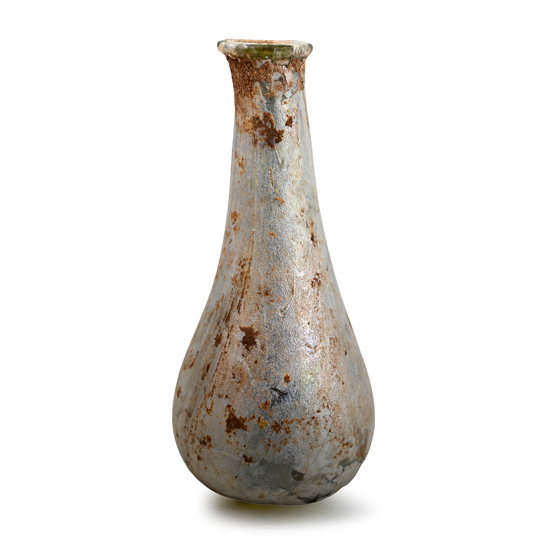
Roman Iridescent Glass Vessel
1st-4th century A.D.Sold for (Inc. bp): £156
Comprising a piriform body with everted folded rim to the mouth and iridescent surface. 17.4 grams, 91 mm
Ex London, UK, art market 1990s. -
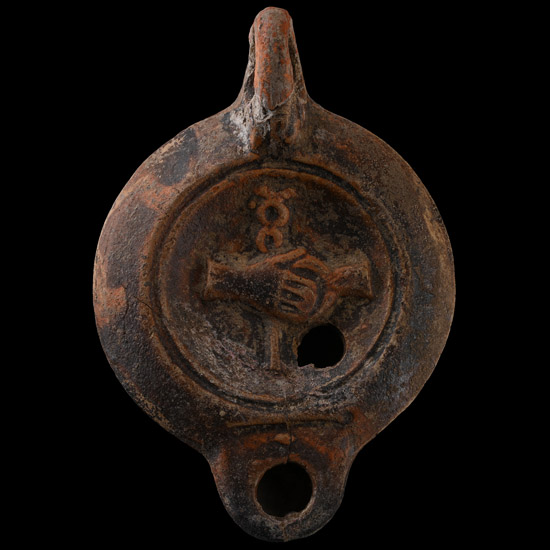
Roman Terracotta Oil Lamp with Clasped Hands Holding a Caduceus
Circa 2nd century A.D.Sold for (Inc. bp): £364
Circular body with short nozzle and a loop handle, discus with clasped hands before a caduceus. 57.5 grams, 92 mm
From the private collection of Mr Brian Edwards, New Malden, Surrey, UK, formed from the late 1970s-early 1980s; thence by descent. Accompanied by the original collector's data sheet with reference no.A40. -
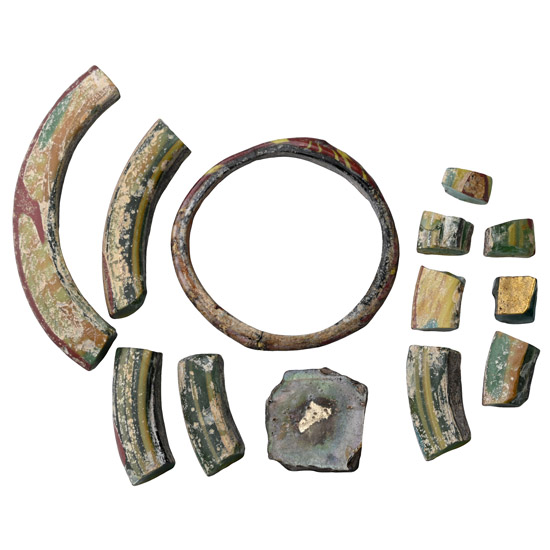
Roman Glass Bangle and Glass Fragment Collection
1st-4th century A.D.Sold for (Inc. bp): £13
Comprising: a D-section child's glass bangle with drawn decoration; polychrome glass bangle fragments; a thick, rectangular glass inlay(?). 53.2 grams total, 12-74 mm
From the private collection of a European gentleman (1942-2024), formed since the 1970s. -
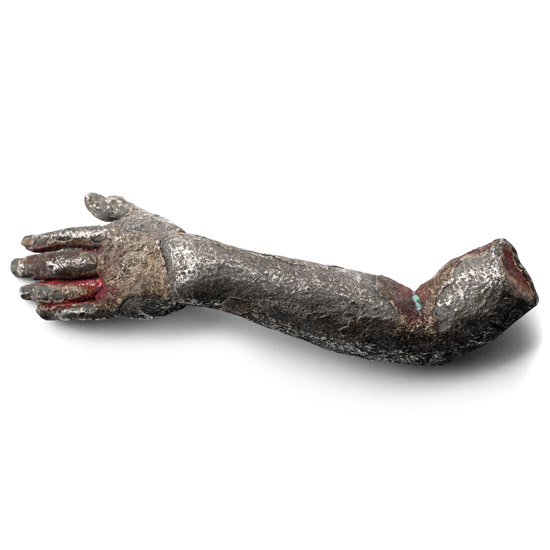
Roman Silver Arm from a Statuette
1st-2nd century A.D.Sold for (Inc. bp): £65
Featuring slender fingers and a bent elbow, likely once belonging to a statue depicting a goddess. 13.3 grams, 45.9 mm
From the private collection of a European gentleman (1942-2024), formed since the 1970s. -
.jpg)
Roman Agate Gemstone with Figure Holding a Spear
Circa 2nd-3rd century A.D.Sold for (Inc. bp): £52
With intaglio standing figure holding a spear and one hand extended; supplied with a museum-quality impression. 0.61 grams, 12.42 mm
From the private collection of a European gentleman (1942-2024), formed since the 1970s. -
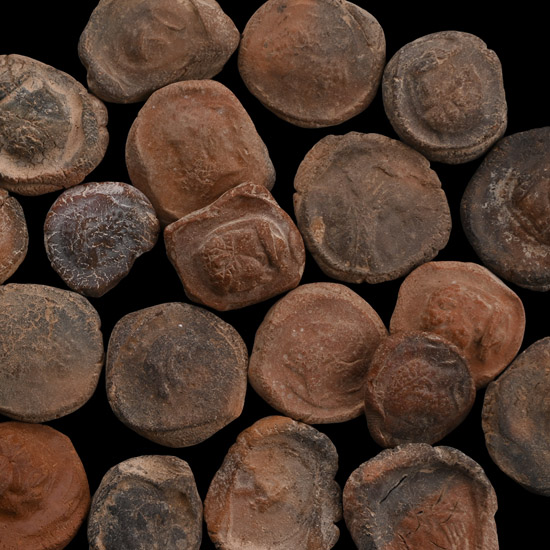
Roman Terracotta Bullae, Tesserae or Token Group
3rd century B.C.-1st century A.D.Sold for (Inc. bp): £52
A mixed group of ceramic bullae, tesserae or theatre tokens bearing low-relief motifs, mainly consisting of profile busts of deities. 43 grams total, 16-23 mm
From the private collection of a European gentleman (1942-2024), formed since the 1970s.
The term 'tessera' was used in Roman times to convey the Greek term σύμβολον (token). Small tiles are known as tokens, often shaped like coins, made of metal (copper, lead, iron), clay, bone, wood, or glass, stamped as well as engraved. The tokens, however, are not exclusively coin-shaped, as the Latin term 'tessera' suggests by etymologically referring to a square or at least a four-sided shape and confirmed in several cases by material remains of the past. Tokens and tesserae seem to have been used both in Athens and Rome for the distribution of goods. According to written sources, the term token is identified with credentials of the official authorities. They have also been interpreted as tokens of identity, as entrance tickets to theatre performances, tribunals or assemblies of citizens, archival material of seal engraving, as pawns in games, Charon’s obols and even as amulets.

