-
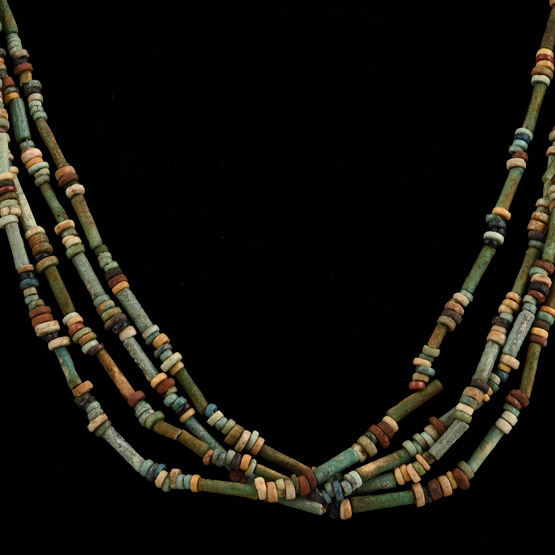
Egyptian Multi-Stranded Mummy Bead Necklace
Late Period, 664-332 B.C.Sold for (Inc. bp): £234
Four-strand designer necklace composed of polychrome beads of mainly disc and cylindrical types. 27.4 grams, 69.5 cm
Acquired before 1979. From the private collection of Mr F.A., South Kensington, London, UK; thence by descent 2014.
For thousands of years, artisans in Egypt created vibrant ceramics to echo the beauty of rare jewels. These ornaments were created with almost every material, colour, and texture imaginable, and they come from across Egypt and beyond: vibrant blue lapis lazuli from Afghanistan, glossy black obsidian from Turkey, and aqua-green turquoise from the Sinai. They were worn in life and, after death, they served as precious ornamentation for mummies. -
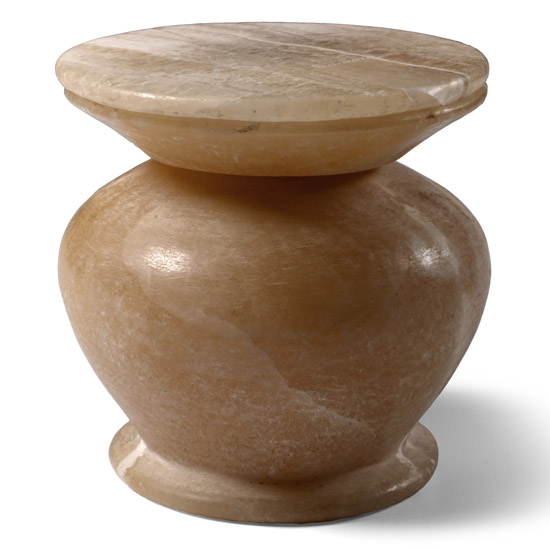
Egyptian Travertine Kohl Jar and Lid
Middle Kingdom-early New Kingdom, 12th-early 18th Dynasty, circa 1985-1479 B.C.Sold for (Inc. bp): £1,820
Piriform vessel with flared foot and wide rim, discoid lid with raised central panel to verso. 355 grams, 65 mm
Ex Galerie Nefer, Zurich, Switzerland. with Galerie Rhéa, Zurich, Switzerland. -
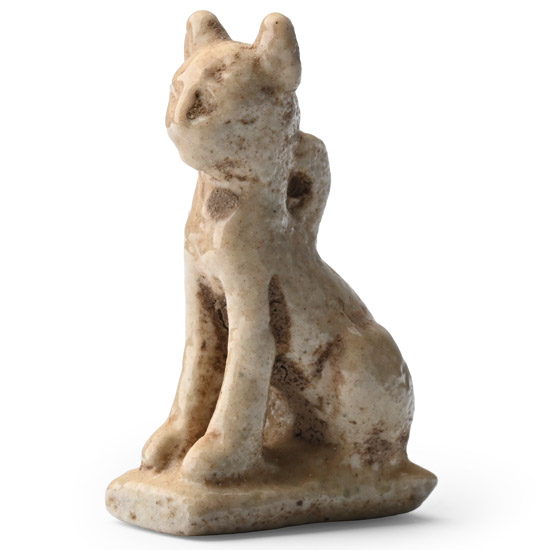
Egyptian White Cat Amulet
Late Period, 664-332 B.C.Sold for (Inc. bp): £286
Modelled in the round, sitting on a trapezoidal base, ears pricked, ribbed loop behind shoulders. 2.32 grams, 25.54 mm
Ex London gentleman's collection, by descent 1980s. -
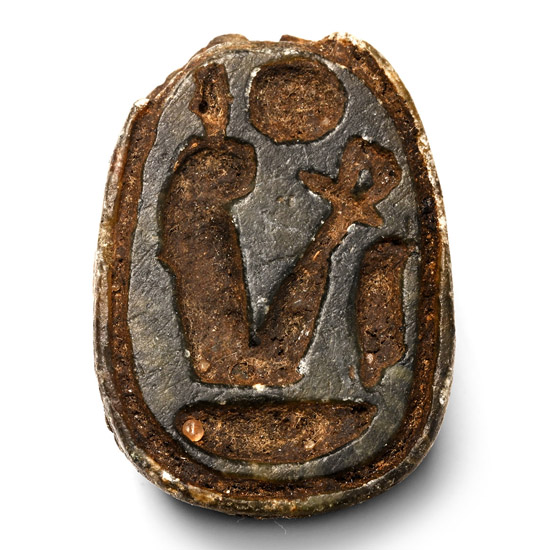
Egyptian Faience Scarab of Amenhotep III
Late Period-Ptolemaic Period, circa 664-30 B.C.Sold for (Inc. bp): £169
Detailed body and legs, underside with a cartouche of Amenhotep III containing his throne name Nebmaatre. 6.4 grams, 22 mm
From the collection of a gentleman, acquired on the London art market in the 1990s. -
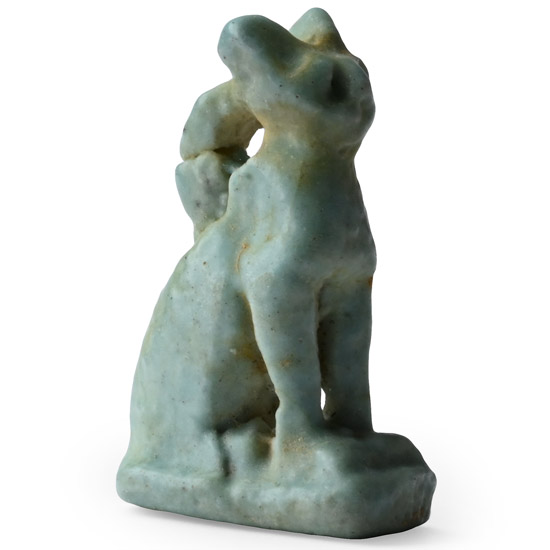
Egyptian Blue Faience Cat Amulet
Late Period, 664-332 B.C.Sold for (Inc. bp): £156
Sitting cat on a tongue-shaped base, suspension loop behind the shoulders. 0.65 grams, 16 mm
Ex London gentleman's collection, by descent 1980s. -
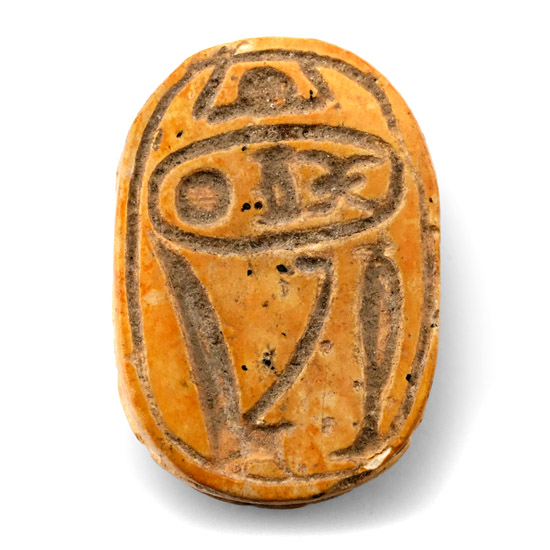
Egyptian Yellow Steatite Scarab with Cartouche
New Kingdom, 18th Dynasty, 1550-1292 B.C.Sold for (Inc. bp): £143
Incised anatomical detailing on the body, underside with a cartouche of Pharaoh Thutmose III, Red crown, hes-vase and sun disc. 1.06 grams, 14 mm
From a late Warwickshire numismatic collector, his collection formed from the early 1980s. -
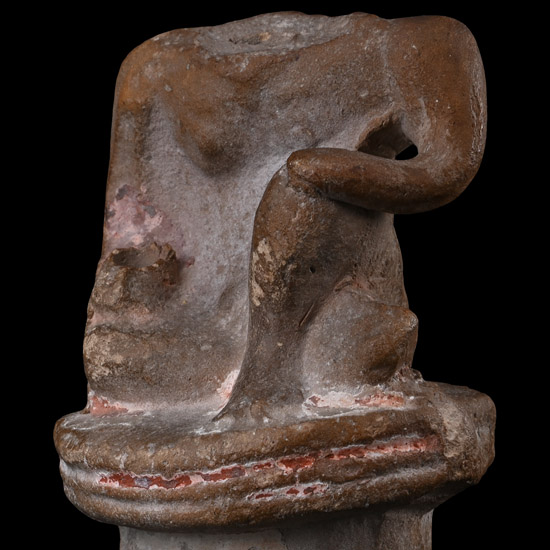
Romano-Egyptian Terracotta Seated Figure
Ptolemaic Period, 332-30 B.C. or laterSold for (Inc. bp): £85
Hollow-formed lid of a jar with anthropomorphic figure crouching with left hand on the knee; right hand hollow to form a socket; head absent. 173 grams, 90 mm
Phillips International Auctioneers & Valuers, Tribal & Antiquities Sale, 25th June 1998, no.15 (part). Property of a West Northamptonshire, UK, gentleman. -
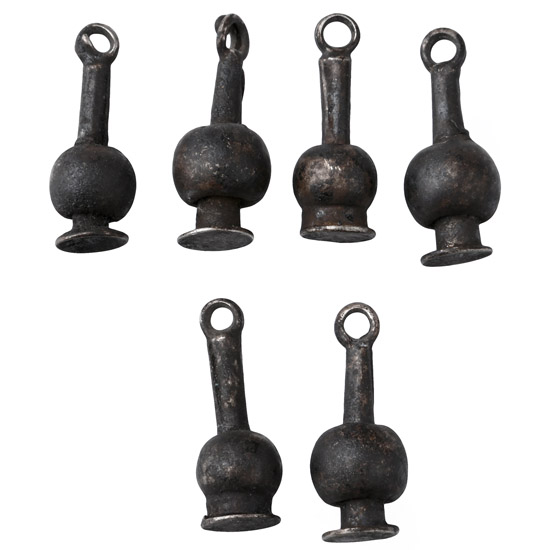
Egyptian Silver Poppy Amulet Group
Late Period-Ptolemaic Period, 664-30 B.C.Sold for (Inc. bp): £104
Each a bulbous poppy-head with loop at the apex. 6.59 grams total, 16-18 mm
From the collection of a gentleman, acquired on the London art market in the 1990s. -
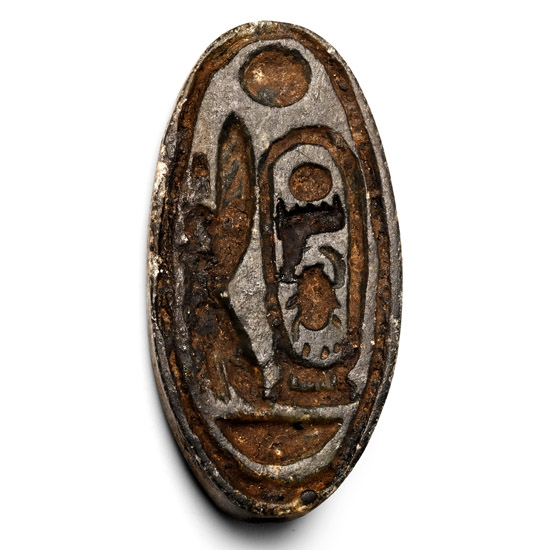
Egyptian Stone Scaraboid with Cartouche of Thutmose IV
New Kingdom, 18th Dynasty, circa 1415 B.C.Sold for (Inc. bp): £260
Keeled body pierced longitudinally, underside with cartouche for Thutmose IV (Men-kheperru-re) and other hieroglyphs. 5.79 grams, 34 mm
From the collection of a gentleman, acquired on the London art market in the 1990s. -
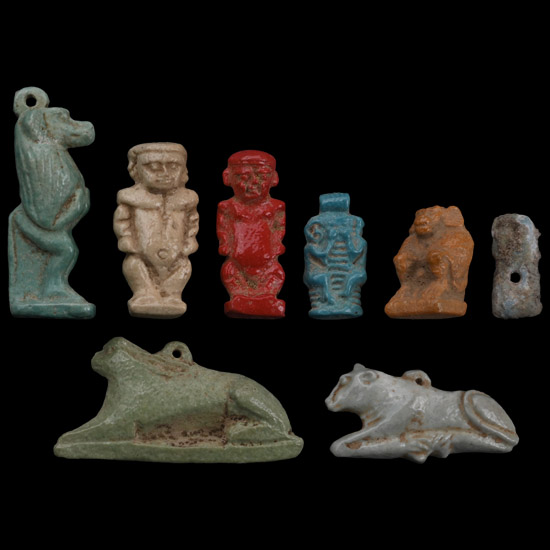
Egyptian Faience Amulet Collection
Late Period-Ptolemaic Period, 664-30 B.C.Sold for (Inc. bp): £572
Including a crouching baboon, a baboon standing in an adoring pose, two Pataikos, a hare, and other types. 22.97 grams total, 17-41 mm
From the collection of a gentleman, acquired on the London art market in the 1990s. -
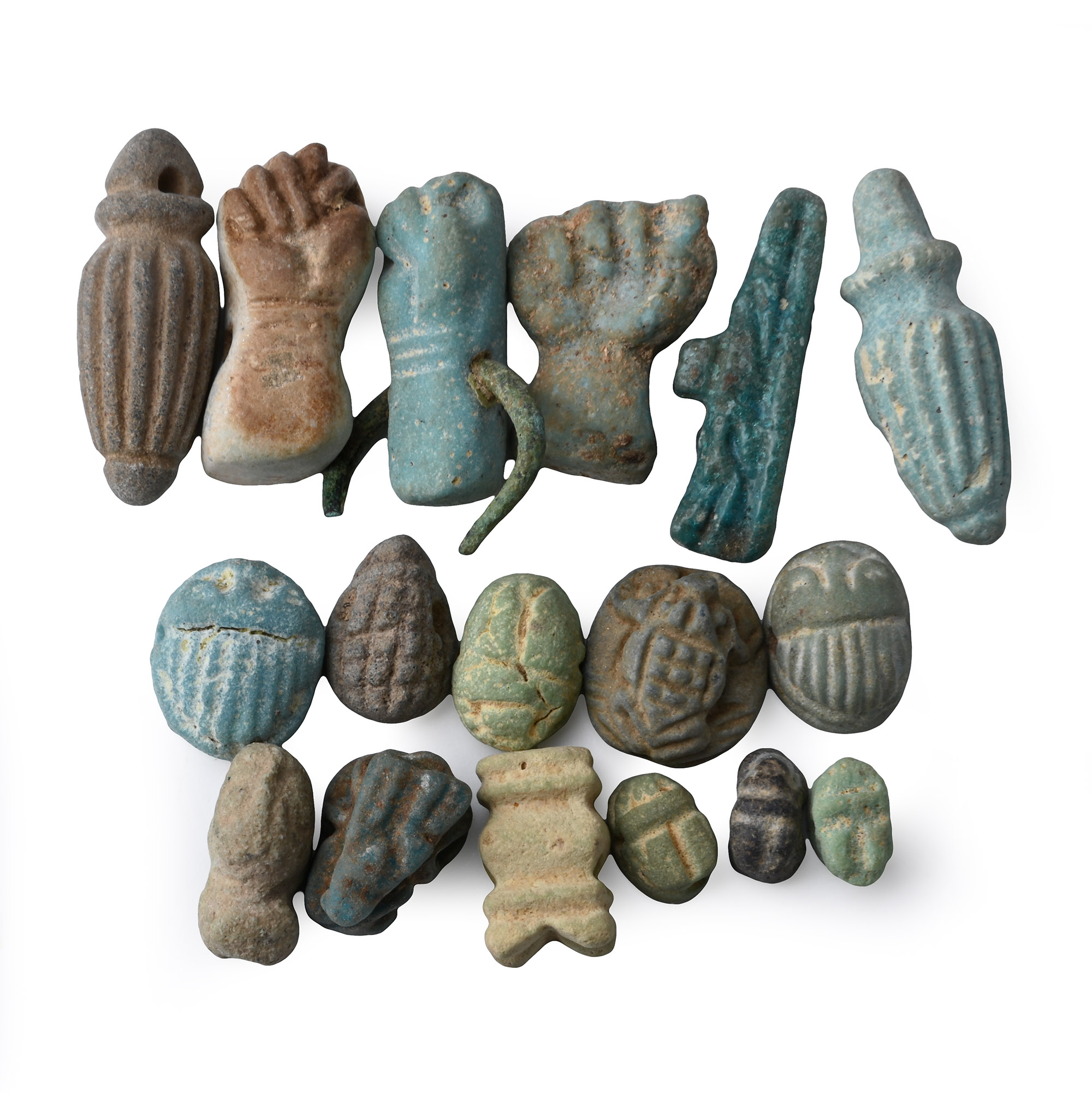
Egyptian Faience Amulet Collection
Ptolemaic-Roman Period, circa 332 B.C.-300 A.D.Sold for (Inc. bp): £195
A mixed group of amulets, including scaraboids, a crocodile, three fists, a frog, a fly, and others. 12.46 grams total, 7.60-22.07 mm
From the private collection of a European gentleman (1942-2024), formed since the 1970s. -
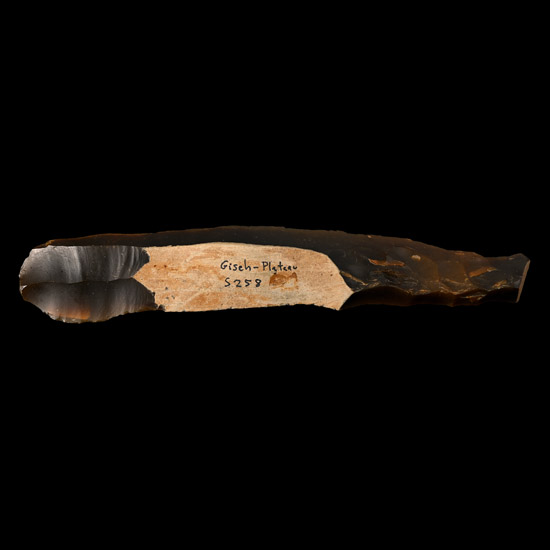
Exceptionally Long Egyptian Stone Age Knapped Flint Blade
Neolithic Period, circa 6,000 B.P.Sold for (Inc. bp): £293
Curved in profile, tongue-shaped with two cutting edges; from the Giza Plateau, Egypt. 77 grams, 19.8 cm
Ex J Dickey collection. Ex Jerry Sherman collection, acquired on the US art market.

