-
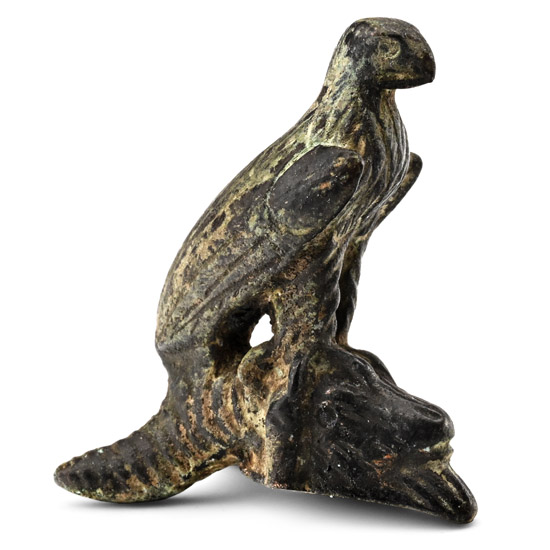
Roman Bronze Eagle on Ram's Head Statuette
3rd-4th century A.D.Sold for (Inc. bp): £176
The eagle standing with its wings closed, and its head turned slightly to the right, with long claws spread on the top of a large goat head with long segmented horns and a protruding beard. 22.1 grams, 34 mm
Ex German art market, 2000s. Acquired from an EU collector living in London. From the collection of a Surrey, UK, gentleman. -
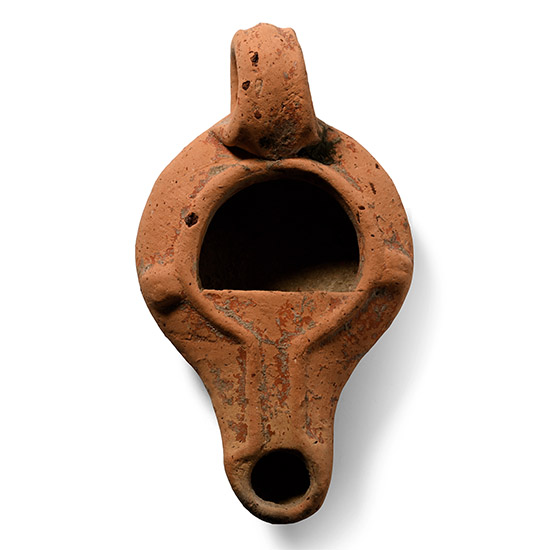
Roman Terracotta Oil Lamp with Maker's Mark
3rd-4th century A.D.Sold for (Inc. bp): £72
Rounded body with large looped handle at the rear and long nozzle, D-shaped filler hole with raised rim, maker's mark on the base. 58 grams, 10.6 cm
Ex German art market, 2000s. Acquired from an EU collector living in London. From the collection of a Surrey, UK, gentleman. -
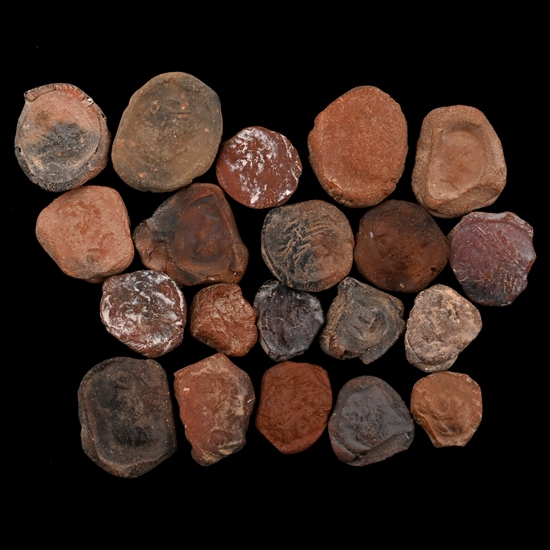
Roman Terracotta Bullae, Tesserae or Token Group
3rd century B.C.-1st century A.D.Sold for (Inc. bp): £72
A mixed group of ceramic bullae, tesserae or theatre tokens bearing low-relief motifs, mainly consisting of profile busts of deities. 31 grams total, 14-23 mm
From the private collection of a European gentleman (1942-2024), formed since the 1970s.
The term 'tessera' was used in Roman times to convey the Greek term σύμβολον (token). Small tiles are known as tokens, often shaped like coins, made of metal (copper, lead, iron), clay, bone, wood, or glass, stamped as well as engraved. The tokens, however, are not exclusively coin-shaped, as the Latin term 'tessera' suggests by etymologically referring to a square or at least a four-sided shape and confirmed in several cases by material remains of the past. Tokens and tesserae seem to have been used both in Athens and Rome for the distribution of goods. According to written sources, the term token is identified with credentials of the official authorities. They have also been interpreted as tokens of identity, as entrance tickets to theatre performances, tribunals or assemblies of citizens, archival material of seal engraving, as pawns in games, Charon’s obols and even as amulets. -
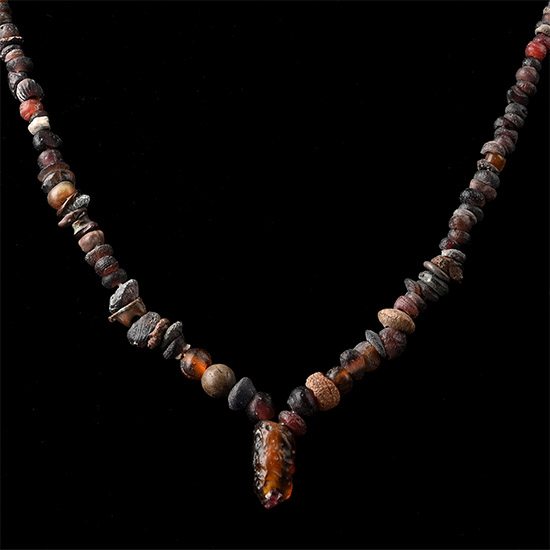
Roman Aubergine Glass and Other Bead Necklace String
1st-4th century A.D. and laterSold for (Inc. bp): £39
Composed of mixed beads in graduated sizes, with a large bead as the central feature, restrung. 18.7 grams, 38 cm
Ex London, UK, collection, 1990s. -
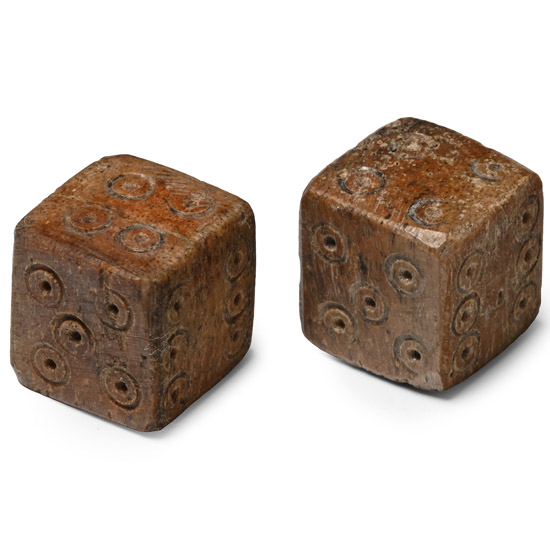
Large Roman Gaming Dice Pair
1st-2nd century A.D.Sold for (Inc. bp): £260
Each cuboid with ring-and-dot markings disposed 1:6, 2:5, 3:4. 4.35 grams total, 11 mm each
Ex Essex gentleman's collection, 2000s. -
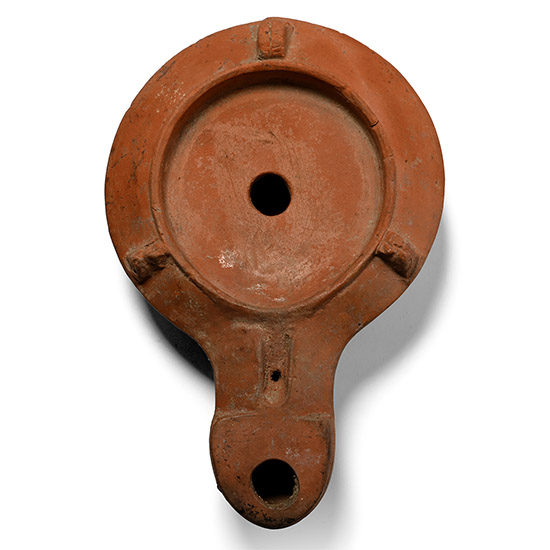
Roman Terracotta FORTIS Factory Oil Lamp
1st century A.D.Sold for (Inc. bp): £286
Rounded body with long nozzle, raised rim around the discus with central filling hole and three raised lugs on the shoulder; the base with concentric circles and maker's mark 'FORTIS'. 122 grams, 11.8 cm
Ex German art market, 2000s. Acquired from an EU collector living in London. From the collection of a Surrey, UK, gentleman. -
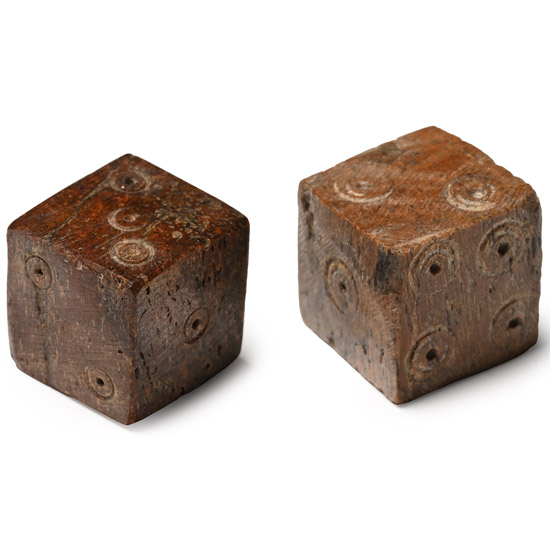
Roman Bone Gaming Dice Pair
1st-4th century A.D.Sold for (Inc. bp): £286
A pair of cuboid dice, each with ring-and-dot markings disposed 1:6, 2:5, 3:4 and 1:6, 2:3, 4:5. 8.22 grams total, 13 mm each
Ex German art market, 2000s. Acquired from an EU collector living in London. From the collection of a Surrey, UK, gentleman. -
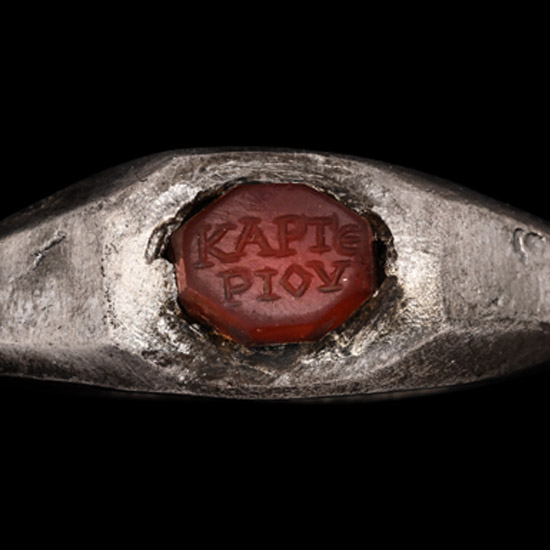
Roman Silver Ring with Carnelian Gemstone with Inscription
1st-2nd century A.D.Sold for (Inc. bp): £351
Keeled hoop with expanding angular shoulders, set with a red carnelian intaglio bearing the inscription 'KAPTE / PIOV'; possibly a marriage. 9.99 grams, 30.43 mm overall, 17.55 x 12.88 mm internal diameter (approximate size British G 1/2, USA 3 1/2, Europe 5.55, Japan 5)
Ex German art market, 2000s. Acquired from an EU collector living in London. From the collection of a Surrey, UK, gentleman. -
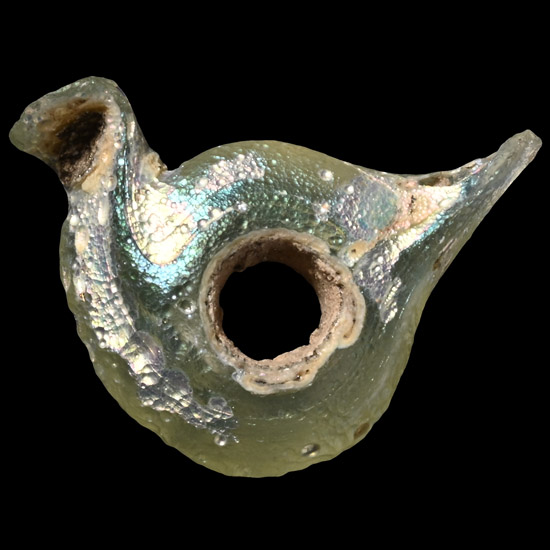
Roman Glass Bird Pendant
1st-4th century A.D.Sold for (Inc. bp): £117
Formed in iridescent aqua glass with pinched head and tail. 1.25 grams, 19 mm
From the London collection of the late Mr S.M., 1969-1999. -
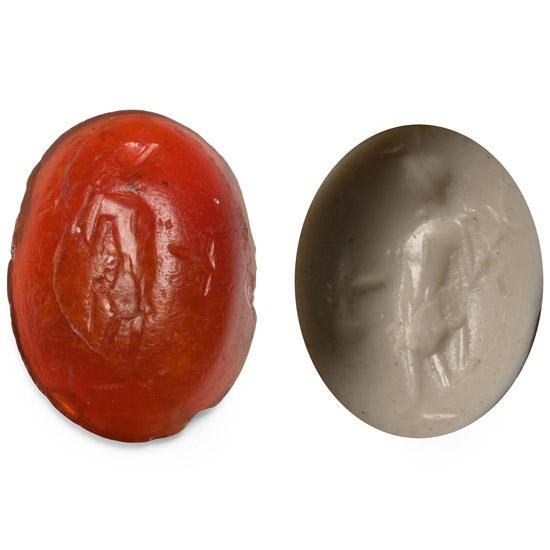
Roman Carnelian Gemstone with Mercury
2nd-3rd century A.D.Sold for (Inc. bp): £65
With intaglio standing figure of Mercury with caduceus; supplied with a museum-quality impression. 0.57 grams, 12.85 mm
From the private collection of a European gentleman (1942-2024), formed since the 1970s. -
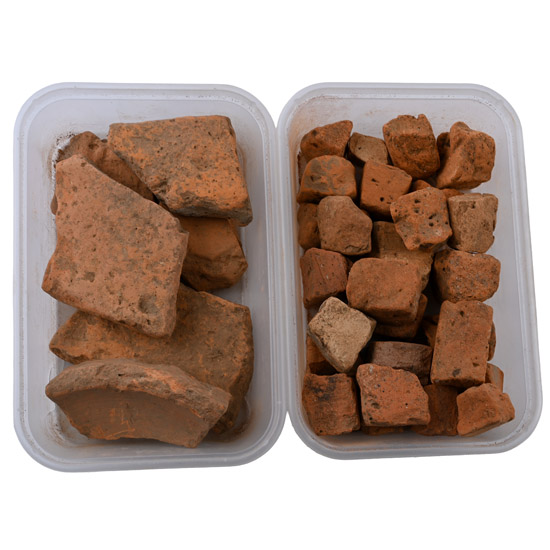
Roman Terracotta Tile Sections and Tesserae Group
Circa 1st-4th century A.D.Sold for (Inc. bp): £26
Mixed group of roughly cuboid tesserae and variously shaped tile fragments. 1 kg total including boxes, 15-90 mm
From the collection of a Dorset, UK, gentleman. Ex West London, UK, gentleman. -
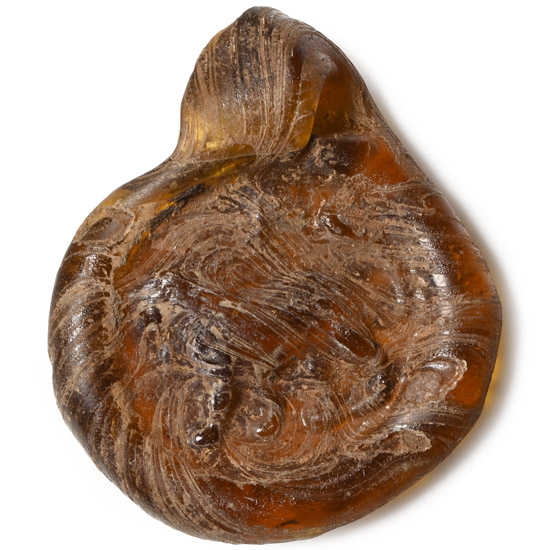
Roman Glass Pendant with Lion
2nd-3rd century A.D.Sold for (Inc. bp): £65
An amber-coloured discoid pendant with an impressed image of an advancing lion facing left. 2.27 grams, 24.44 mm
From the private collection of a European gentleman (1942-2024), formed since the 1970s.

