-
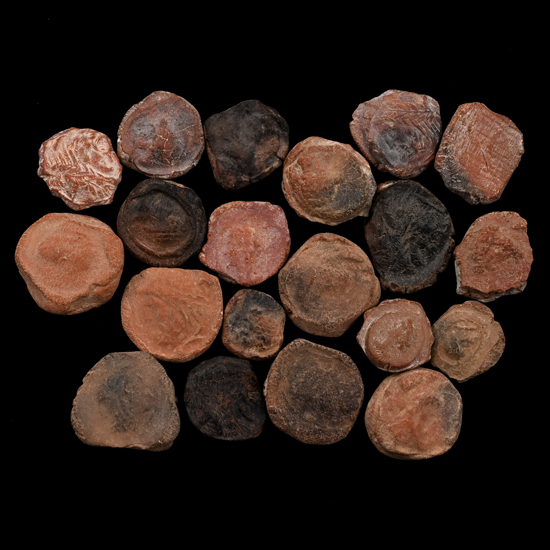
Roman Terracotta Bullae, Tesserae or Token Group
3rd century B.C.-1st century A.D.Sold for (Inc. bp): £91
A mixed group of ceramic bullae, tesserae or theatre tokens bearing low-relief motifs, mainly consisting of profile busts of deities. 31 grams total, 14-20 mm
From the private collection of a European gentleman (1942-2024), formed since the 1970s.
The term 'tessera' was used in Roman times to convey the Greek term σύμβολον (token). Small tiles are known as tokens, often shaped like coins, made of metal (copper, lead, iron), clay, bone, wood, or glass, stamped as well as engraved. The tokens, however, are not exclusively coin-shaped, as the Latin term 'tessera' suggests by etymologically referring to a square or at least a four-sided shape and confirmed in several cases by material remains of the past. Tokens and tesserae seem to have been used both in Athens and Rome for the distribution of goods. According to written sources, the term token is identified with credentials of the official authorities. They have also been interpreted as tokens of identity, as entrance tickets to theatre performances, tribunals or assemblies of citizens, archival material of seal engraving, as pawns in games, Charon’s obols and even as amulets. -
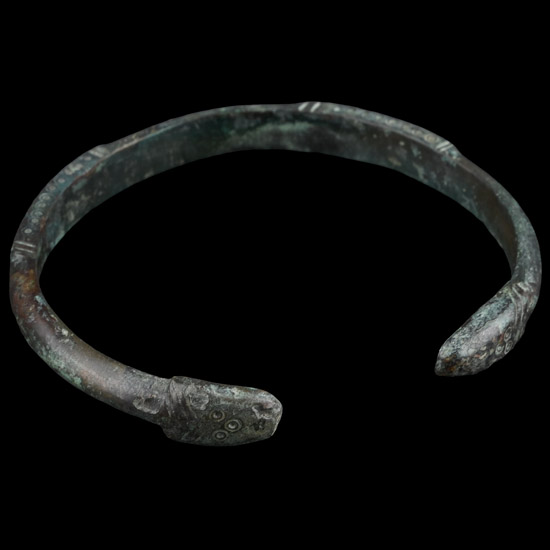
Roman Bronze Decorated Armilla Bracelet
1st-4th century A.D.Sold for (Inc. bp): £104
Penannular body with stylised beast-head finials, pointillé decoration on the body. 23.38 grams, 63 mm
Ex German art market, 2000s. Acquired from an EU collector living in London. From the collection of a Surrey, UK, gentleman. -
.jpg)
Roman Bronze Eagle Statuette
Eastern Empire, 3rd-4th century A.D.Sold for (Inc. bp): £104
Modelled in the round with a short tail and exaggerated beak; sockets to the eyes to accept glass inserts. 46 grams, 52 mm
From the collection of a gentleman, acquired on the London art market in the 1990s. -
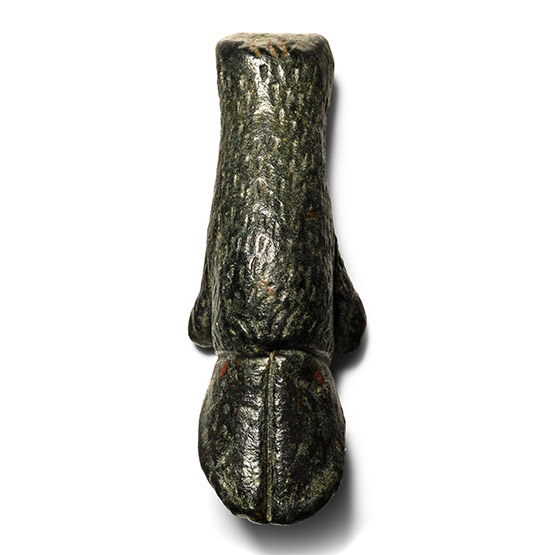
Roman Bronze Boar's Hoof Casket or Lamp Leg
Circa 1st century A.D.Sold for (Inc. bp): £143
The cloven hoof with both main toes and dewclaws, with detailing beneath the toes, incised fur detailing. 50 grams, 52 mm
Ex German art market, 2000s. Acquired from an EU collector living in London. From the collection of a Surrey, UK, gentleman. -
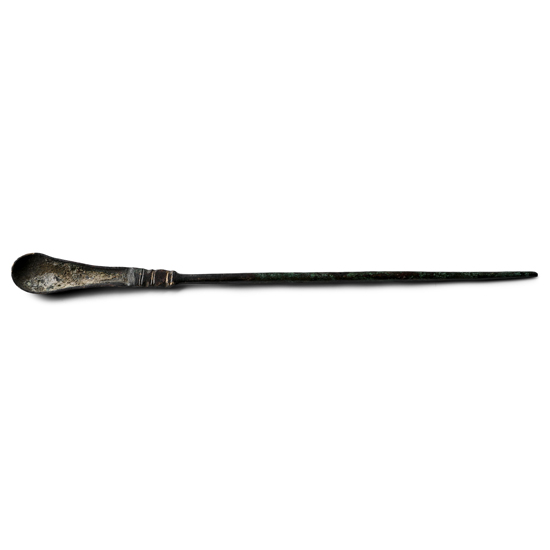
Roman Bronze Ligula Spoon
2nd-4th century A.D.Sold for (Inc. bp): £98
Comprising a tapering round-section handle and an ovoid, deep bowl. 16.3 grams, 18.5 cm
From the private collection of a European gentleman (1942-2024), formed since the 1970s. -
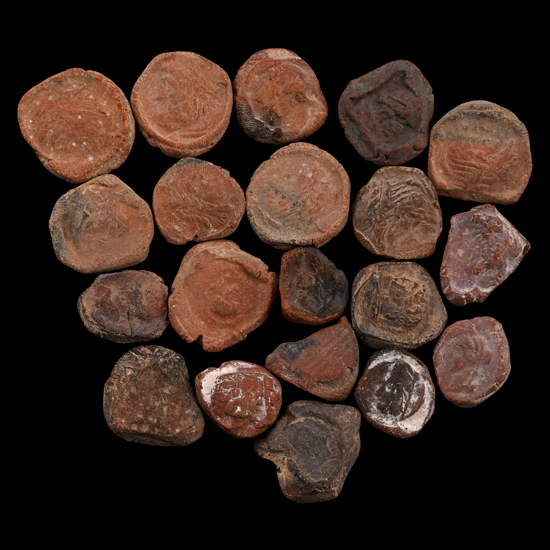
Roman Terracotta Bullae, Tesserae or Token Group
3rd century B.C.-1st century A.D.Sold for (Inc. bp): £221
A mixed group of ceramic bullae, tesserae or theatre tokens bearing low-relief motifs, mainly consisting of profile busts of deities. 35 grams total, 15-22 mm
From the private collection of a European gentleman (1942-2024), formed since the 1970s.
The term 'tessera' was used in Roman times to convey the Greek term σύμβολον (token). Small tiles are known as tokens, often shaped like coins, made of metal (copper, lead, iron), clay, bone, wood, or glass, stamped as well as engraved. The tokens, however, are not exclusively coin-shaped, as the Latin term 'tessera' suggests by etymologically referring to a square or at least a four-sided shape and confirmed in several cases by material remains of the past. Tokens and tesserae seem to have been used both in Athens and Rome for the distribution of goods. According to written sources, the term token is identified with credentials of the official authorities. They have also been interpreted as tokens of identity, as entrance tickets to theatre performances, tribunals or assemblies of citizens, archival material of seal engraving, as pawns in games, Charon’s obols and even as amulets. -
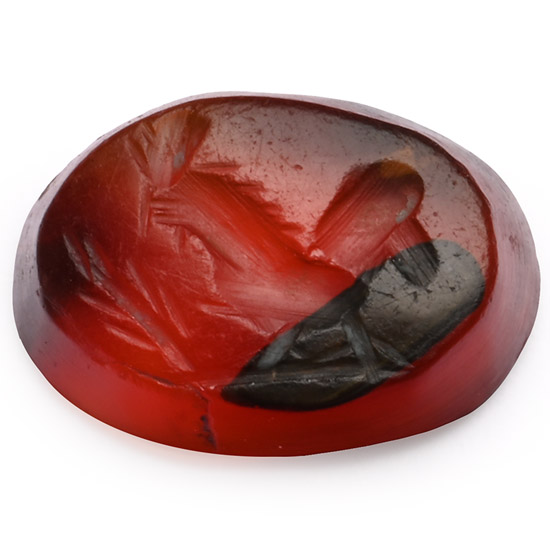
Roman Carnelian Gemstone with Cockerel
2nd-3rd century A.D.Sold for (Inc. bp): £85
With intaglio cockerel on a baseline with frond; supplied with a museum-quality impression. 0.90 grams, 13.26 mm
From the private collection of a European gentleman (1942-2024), formed since the 1970s. -
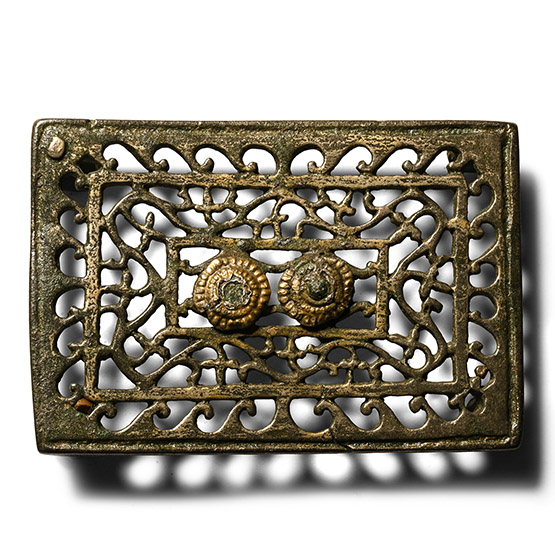
Roman Bronze Military Openwork Belt Plate
2nd-3rd century A.D.Sold for (Inc. bp): £754
Rectangular panel with intricate foliate decoration, two gilt rosettes at the centre and four attachment studs on the reverse. 29.1 grams, 64 mm
Ex German art market, 2000s. Acquired from an EU collector living in London. From the collection of a Surrey, UK, gentleman. -
.jpg)
Roman Carnelian Gemstone with Winged Victory
2nd-3rd century A.D.Sold for (Inc. bp): £65
Intaglio winged Victory standing with one arm extended; supplied with a museum-quality impression. 0.29 grams, 8.81 mm
From the private collection of a European gentleman (1942-2024), formed since the 1970s. -
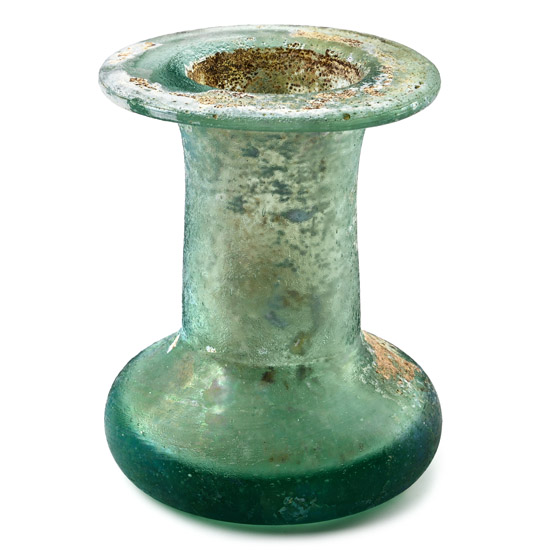
Roman Dark Green Glass Cotton Reel Unguentarium
1st-4th century A.D.Sold for (Inc. bp): £234
With a broad plano-convex base, sturdy tubular body, everted and rolled rim. 137 grams, 75 mm
From a specialist collection of glass, acquired from dealerships during the 1990s. -
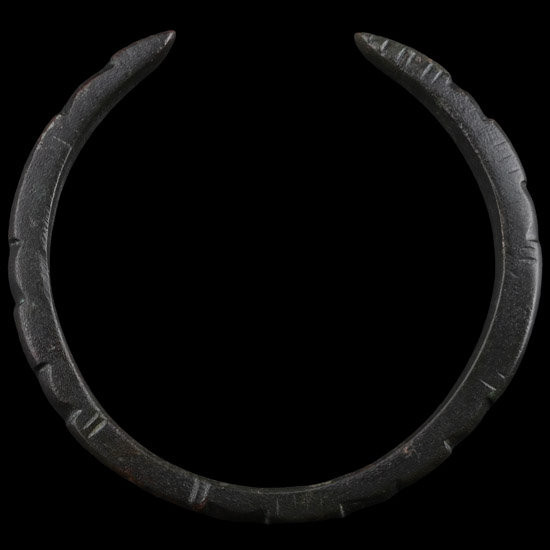
Roman Bronze Decorated Armilla Bracelet
1st-4th century A.D.Sold for (Inc. bp): £91
Penannular rectangular-section body divided into segments with linear decoration. 29.7 grams, 59 mm
Ex German art market, 2000s. Acquired from an EU collector living in London. From the collection of a Surrey, UK, gentleman. -
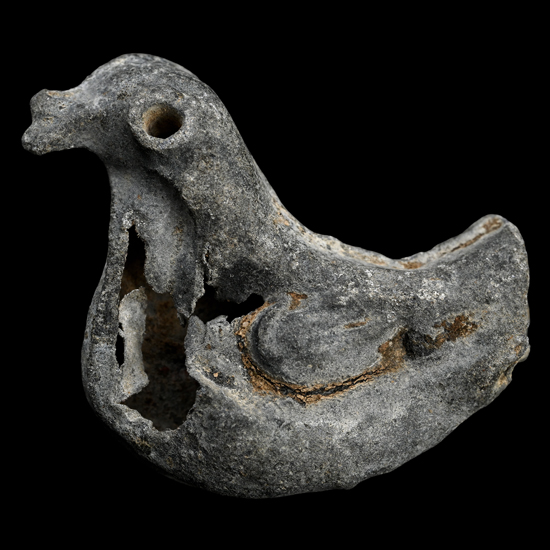
Roman Lead Child's Toy Bird
1st-4th century A.D.Sold for (Inc. bp): £104
A hollow-form figurine of a dove, with annular eyes, small wings and an open beak. 22 grams, 42.5 mm
From the private collection of a European gentleman (1942-2024), formed since the 1970s.

