-
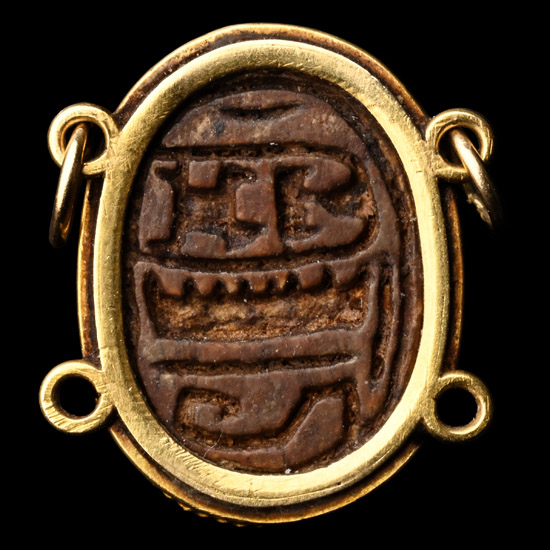
Egyptian Steatite Scarab in Antique Pendant Mount
Late Period, 664-332 B.C. and laterSold for (Inc. bp): £195
The scarab with anatomical detailing on the body, underside with a cartouche for Tuthmoses III and other hieroglyphs; set in a gold filigree mount with four lateral loops. 3.68 grams, 18.3 mm
From the private collection of a European gentleman (1942-2024), formed since the 1970s. -
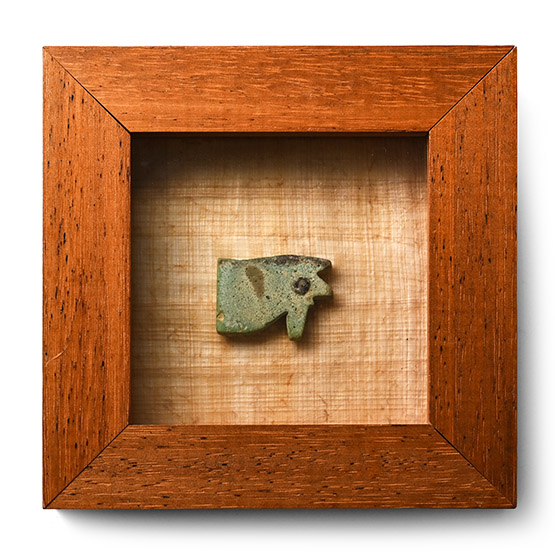
Framed Egyptian Faience Eye of Horus Amulet
Late Period-Ptolemaic Period, 664-30 B.C.Sold for (Inc. bp): £65
The amulet in blue-green faience with black detailing, set in a glazed wooden frame with modern papyrus backing. 207 grams total, 12.2 x 12.3 cm including frame
Acquired from Ancient Art, London, UK. From the collection of a Nottingham, UK, collector, established from the early 2000s. Accompanied by the original Ancient Art certificate of authenticity. -
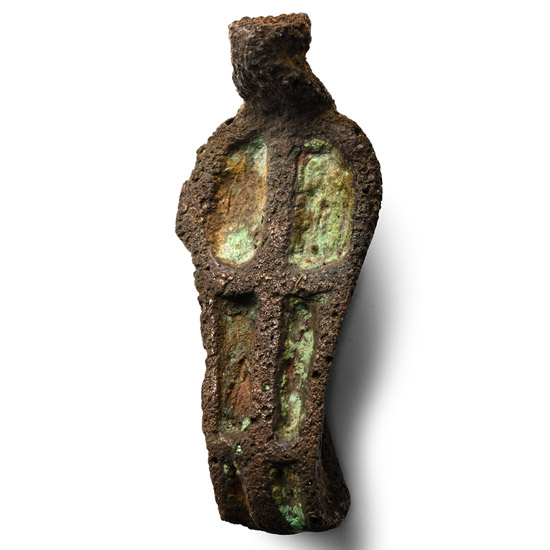
Egyptian Bronze Uraeus Mount
Late Period-Ptolemaic Period, circa 664-30 B.C.Sold for (Inc. bp): £59
Formed as a rearing cobra with the hood divided into cells to accept inlay. 6.54 grams, 35 mm
From the collection of a gentleman, acquired on the London art market in the 1990s.
The uraeus depicts a rearing cobra and symbolises royal power and authority, as well as the Lower Egyptian goddess Wadjet. -
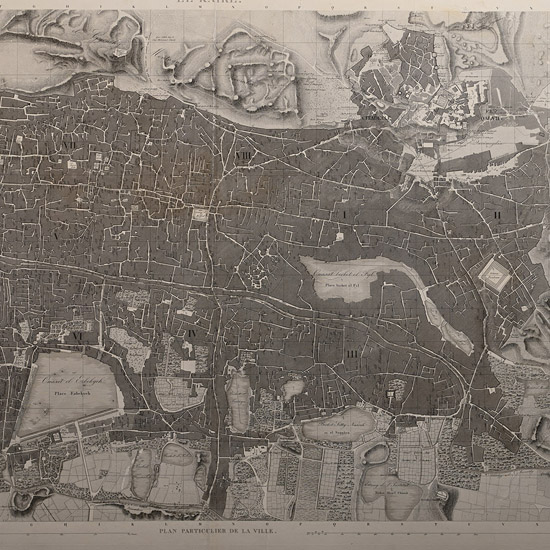
Very Large Egyptian Expedition Lithograph of the Plan of Cairo
Early 19th century A.D.Sold for (Inc. bp): £130
Proof etching on laid paper of plate 50 from Vol I of Description de l'Égypte : ou, Recueil des observations et des recherches qui ont été faites en Égypte pendant l'expédition de l'armée française, titled Le Kaire. Plan particulier de la ville. 231 grams, 106 x 69.5 cm
From the collection of a North American priest. Acquired between 1981-1996. Property of a North American collector.
Produced between February 1802 and 1830 on the orders of Napoleon Bonaparte; published between 1809 and 1828. Just 1,000 copies were distributed to various institutions, printed on laid paper with an 'Égypte ancienne et moderne' watermark. The book is subtitled Recueil des observations et des recherches qui ont été faites en Égypte pendant l’expédition de l’Armée française, publié par les ordres de Sa Majesté l’Empereur Napoléon le Grand (Gathering of observations and discoveries which were made in Egypt during the expedition of the French army, published on the orders of His Majesty the Emperor Napoleon the Great). It was the world's first encyclopedia devoted exclusively to the remains of ancient Egypt. The plates of this book are the first to present the archaeological sites of Thebes (Luxor). The papyrus manuscript was recovered from the underground chambers (hypogea). -
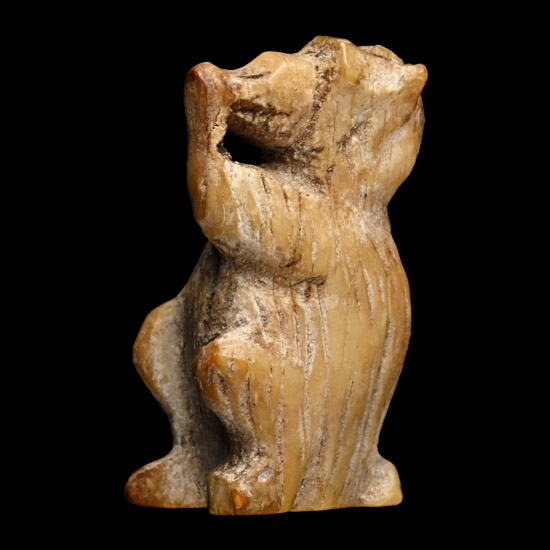
Egyptian Bone Baboon Amulet
Roman Period, 30 B.C.-323 A.D.Sold for (Inc. bp): £72
Modelled seated with its left front paw raised to its lips. 1.17 grams, 17.91 mm
From the private collection of a European gentleman (1942-2024), formed since the 1970s. -
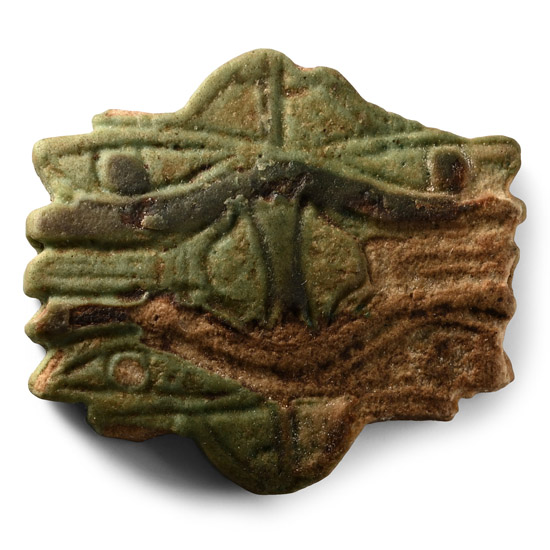
Large Egyptian Quadruple Eye of Horus Amulet
Late Period, 664-332 B.C.Sold for (Inc. bp): £234
Plaque with transverse piercing; four addorsed wedjat motifs with black detailing. 31.6 grams, 64 mm
Ex J Bird private collection. Ex Cambridgeshire, UK, collection. -
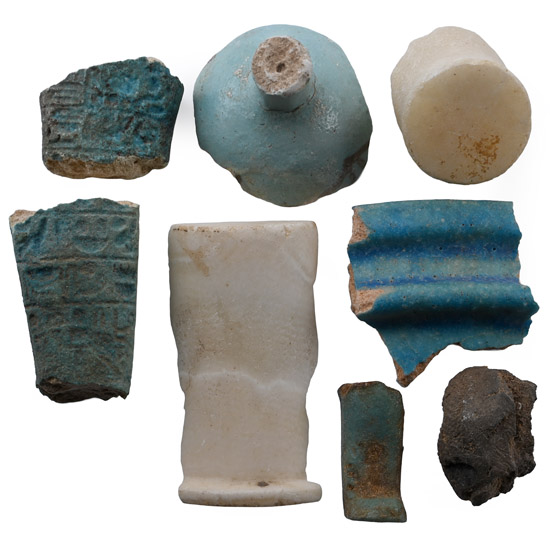
Egyptian Faience Fragment Group
Mostly Late Period, 664-332 B.C.Sold for (Inc. bp): £72
Mixed group of fragments, including two from a shabti figure. 75 grams total, 26-53 mm
From the late collection of a Cornish couple, formed from the early 1990s. -
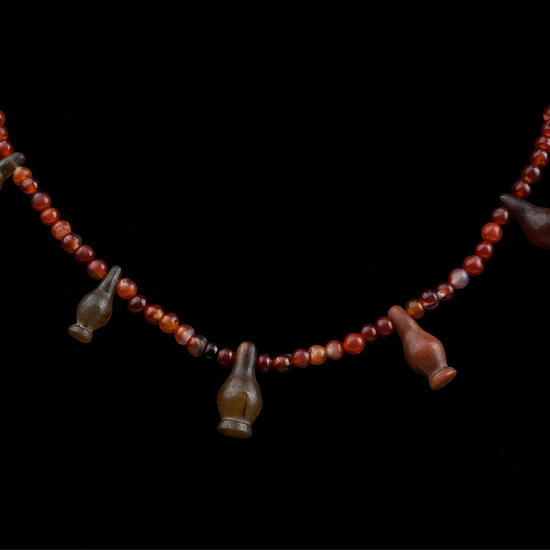
Egyptian Carnelian Bead and Poppy Amulet Necklace
Late Period, 664-332 B.C. and laterSold for (Inc. bp): £208
Poppy-head amulet necklace restrung with later seed beads. 21.9 grams, 45 cm long
From the collection of a gentleman, acquired on the London art market in the 1990s. -
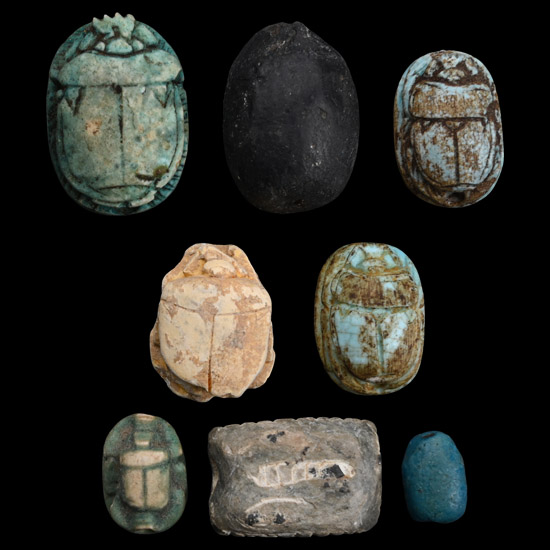
Egyptian Stone Scarab and Amulet Collection
New Kingdom-Late Period, 1550-332 B.C.Sold for (Inc. bp): £585
The group comprising scarabs, scaraboids, and other types, some with hieroglyphs on their undersides, including the throne names of Thutmose IV (Men-kheperu-re) and Ramesses II (User-maat-re Setep-en-re)., 13.65 grams total, 9-19 mm
From the collection of a gentleman, acquired on the London art market in the 1990s. -
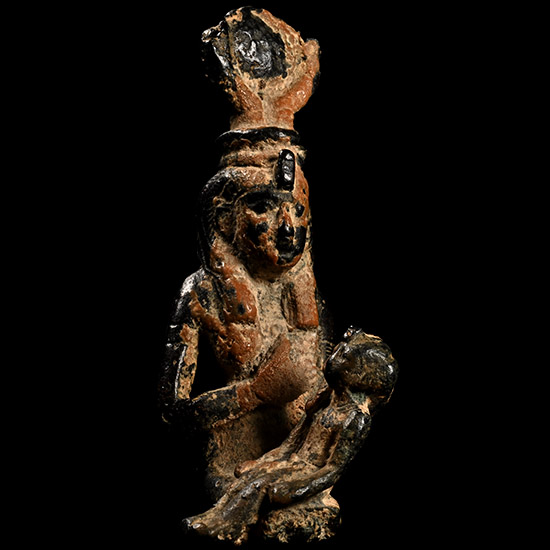
Egyptian Bronze Figure of Isis and Horus
Late Period, 664-332 B.C.Sold for (Inc. bp): £520
Isis enthroned wearing a cow's horn headdress with a solar disc fronted by uraeus, suckling the infant Horus on her lap; Horus with a side-lock of youth. 73.4 grams, 68 mm
Acquired in the mid 1980s-1990s. Private collection, Switzerland, thence by descent. Private collection, since the late 1990s.
In ancient Egyptian mythology, Isis was the sister-wife of Osiris and the mother of the sky god Horus. She is associated with aspects of fertility and motherhood and is often depicted in various artworks seated in a nursing pose with her son Horus on her lap, as here. -
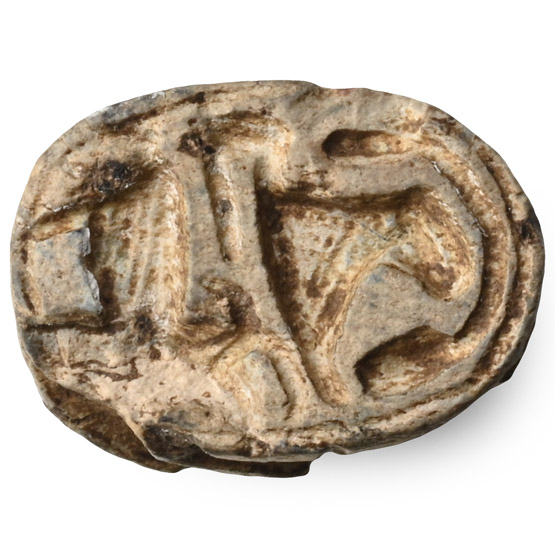
Egyptian Steatite Scarab with Lion and Stag
New Kingdom, 1550-1070 B.C.Sold for (Inc. bp): £65
With detailed head and carapace; underside with incuse ibex and crouching feline motifs. 2.11 grams, 16 mm
From an old English collection. Ex Fellows Auctions, 31 January 2023, no.950. Private collection, London, UK. -
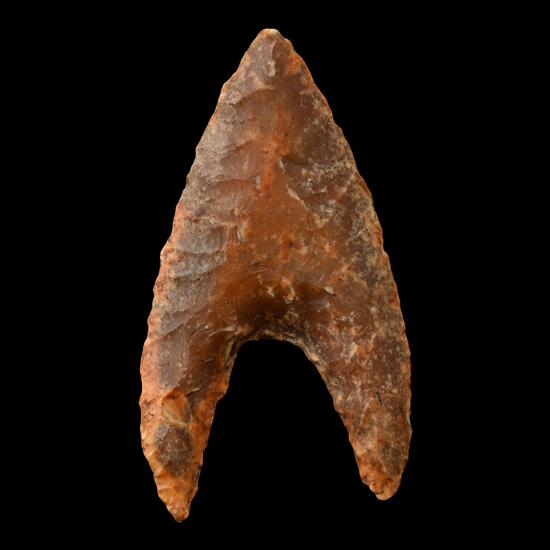
Egyptian Stone Age Hollow-base Arrowhead
Neolithic Period, 4500-3600 B.C.Sold for (Inc. bp): £163
A bifacial flint arrowhead with a pronounced hollow-base form. 2.55 grams, 35.6 mm
From the late collection of a Cornish couple, formed from the early 1990s.
Many hollow-base flint arrowheads were uncovered during excavations at Neolithic sites in Egypt, such as the Fayum region (cf. British Museum EA58736) and Merimde Beni Salama in the Delta (cf. Petrie Museum of Egyptian Archaeology UC10909).

