-
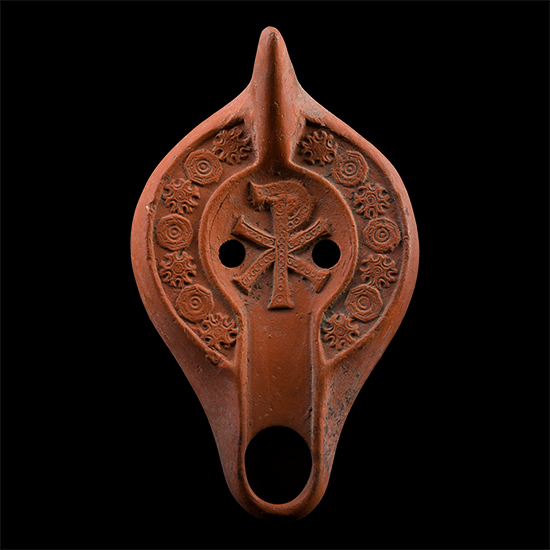
Late Roman Red Ware Oil Lamp with Chi Rho
Circa 5th century A.D.Sold for (Inc. bp): £780
Broad body with lug handle at the rear, shoulder with a border of rosettes and stars, two filler holes to discus flanking a Christogram with annulet detailing. 174 grams, 13.8 cm
From the private collection of Mr Brian Edwards, New Malden, Surrey, UK, formed from the late 1970s-early 1980s; thence by descent, with collector's reference no.A37. -
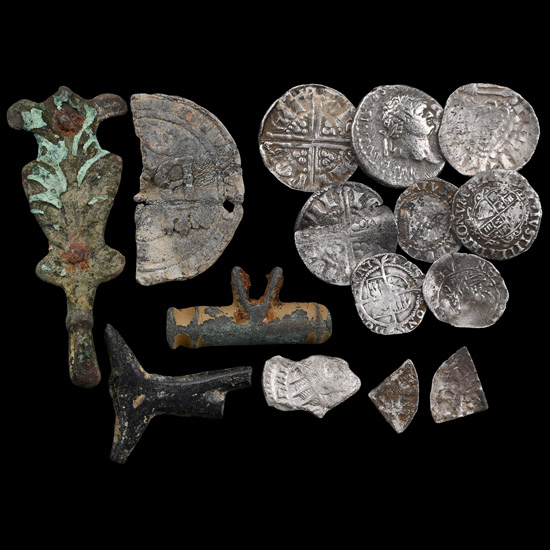
Roman to Post Medieval Coin and Artefact Group
1st-17th century A.D.Sold for (Inc. bp): £169
Including a belt-hanger and other items, coins of Vespasian, Henry III, Elizabeth I, James I, Charles I and others. 32 grams total, 13-51 mm
From a private Suffolk, UK, collection. -
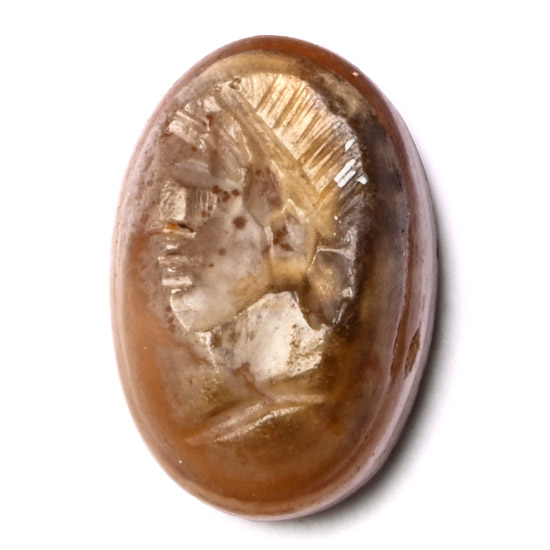
Roman Agate Gemstone with Female Bust
2nd-3rd century A.D.Sold for (Inc. bp): £91
With intaglio profile female bust with circlet to the brow; supplied with a museum-quality impression. 0.72 grams, 11.67 mm
From the private collection of a European gentleman (1942-2024), formed since the 1970s. -
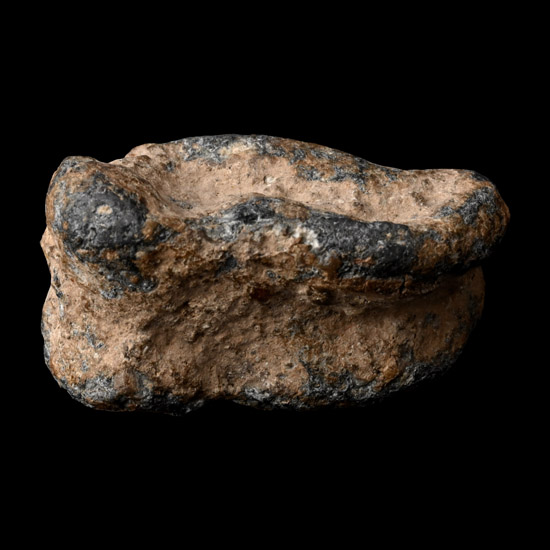
Roman Astragalus Lead Knuckle Bones Gaming Piece
Circa 1st-2nd century A.D.Sold for (Inc. bp): £26
Model of a bovine astragalus, collection sticker '184' to one side. 39.2 grams, 28.4 mm
From the Colin Narbeth collection, 1990s. Accompanied by a previous typed catalogue information card. -
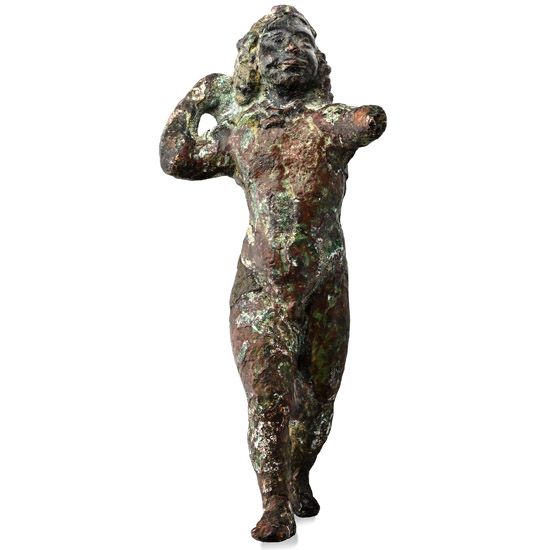
Roman Cupid Bronze Statuette Reaching for Arrows
1st-2nd century A.D.Sold for (Inc. bp): £208
Modelled in the round, standing figure of Cupid, nude in advancing pose reaching over his shoulder to take an arrow from his quiver; left arm extended to support his bow (absent). 82 grams, 78 mm
From the collection of a gentleman, acquired on the London art market in the 1990s. -
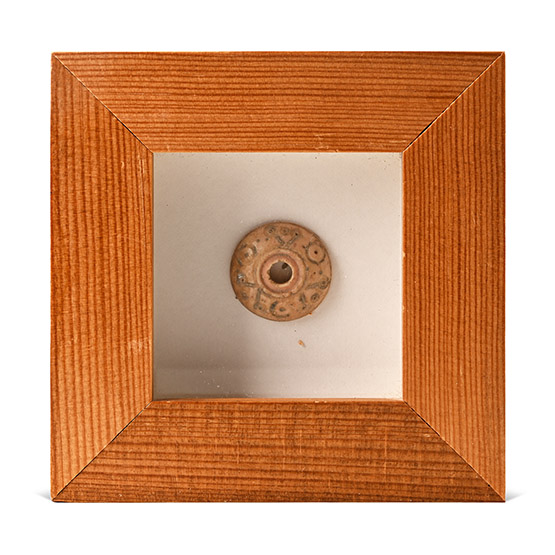
Framed Roman Decorated Stone Spindle Whorl
Circa 200 A.D.Sold for (Inc. bp): £7
Domed body with ring-and-dot and linear decoration; set in a glazed wooden frame. 117 graams total, 93 x 93 mm including frame
Acquired from Ancient Art Shop, Berkshire, UK. From the collection of a Nottingham, UK, collector, established from the early 2000s. Accompanied by the original Ancient Art Shop certificate of authenticity. -
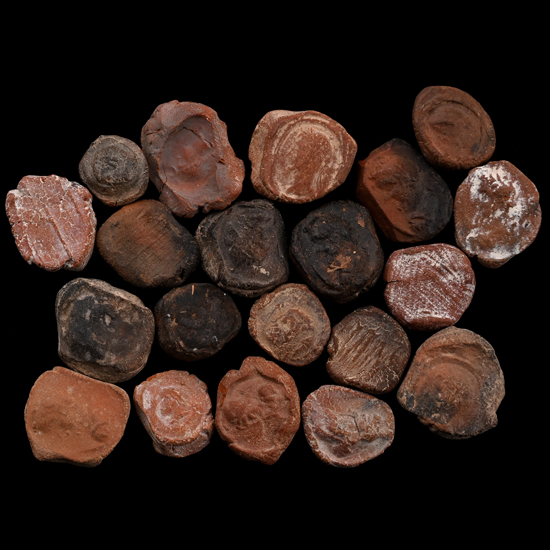
Roman Terracotta Bullae, Tesserae or Token Group
3rd century B.C.-1st century A.D.Sold for (Inc. bp): £104
A mixed group of ceramic bullae, tesserae or theatre tokens bearing low-relief motifs, mainly consisting of profile busts of deities. 31 grams total, 14-21 mm
From the private collection of a European gentleman (1942-2024), formed since the 1970s.
The term 'tessera' was used in Roman times to convey the Greek term σύμβολον (token). Small tiles are known as tokens, often shaped like coins, made of metal (copper, lead, iron), clay, bone, wood, or glass, stamped as well as engraved. The tokens, however, are not exclusively coin-shaped, as the Latin term 'tessera' suggests by etymologically referring to a square or at least a four-sided shape and confirmed in several cases by material remains of the past. Tokens and tesserae seem to have been used both in Athens and Rome for the distribution of goods. According to written sources, the term token is identified with credentials of the official authorities. They have also been interpreted as tokens of identity, as entrance tickets to theatre performances, tribunals or assemblies of citizens, archival material of seal engraving, as pawns in games, Charon’s obols and even as amulets. -
.jpg)
Roman Agate Gemstone with Seahorse
2nd-3rd century A.D.Sold for (Inc. bp): £85
With intaglio seahorse in profile with tail raised; supplied with a museum-quality impression. 0.33 grams, 11.12 mm
From the private collection of a European gentleman (1942-2024), formed since the 1970s. -
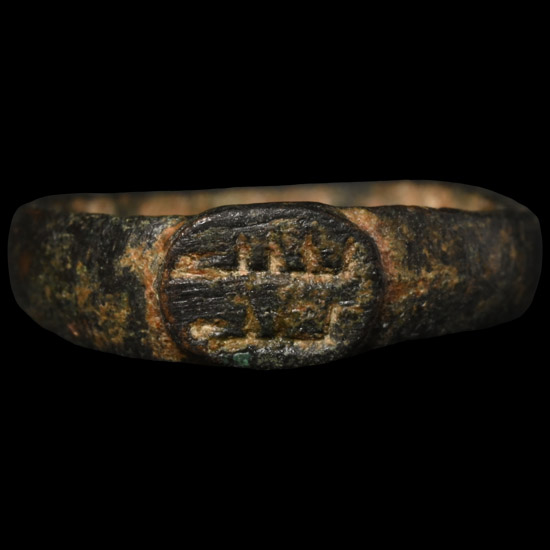
Roman Bronze Child's Ring
1st-4th century A.D.Sold for (Inc. bp): £39
Featuring a D-section hoop and an oval bezel with a pseudo-inscription(?). 1.21 grams, 14.74 mm overall, 11.80 mm internal diameter
From the private collection of a European gentleman (1942-2024), formed since the 1970s. -
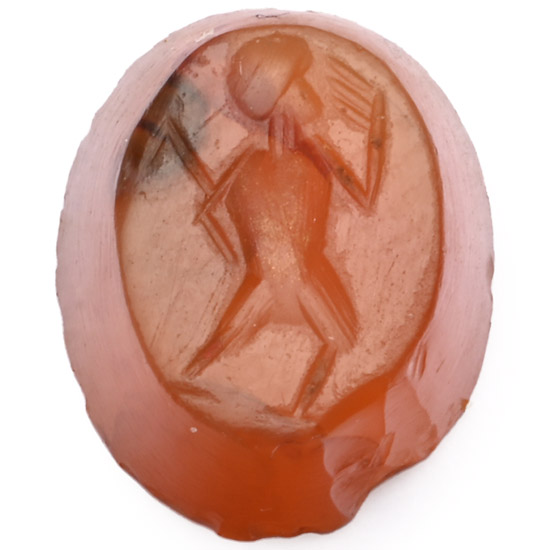
Roman Carnelian Gemstone with Nude Figure
2nd-3rd century A.D.Sold for (Inc. bp): £52
With intaglio nude figure advancing with both arms bent; supplied with a museum-quality impression. 0.65 grams, 10.15 mm
From the private collection of a European gentleman (1942-2024), formed since the 1970s. -
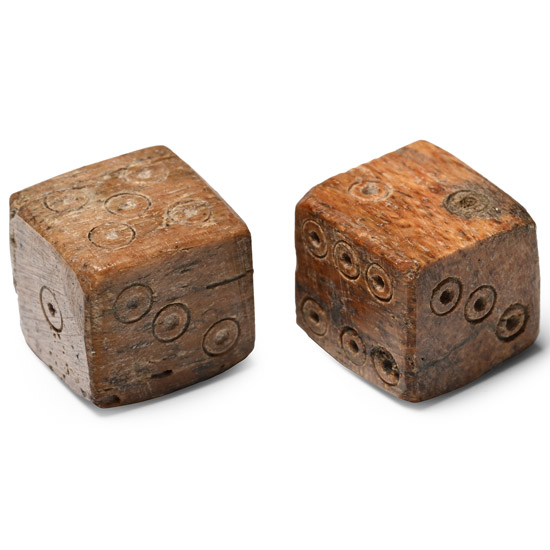
Roman Bone Gaming Dice Pair
1st-4th century A.D.Sold for (Inc. bp): £195
Each a cuboid with ring-and-dot markings disposed 1:6, 2:5, 4:3. 3.8 grams total, 10 mm each
Ex German art market, 2000s. Acquired from an EU collector living in London. From the collection of a Surrey, UK, gentleman. -
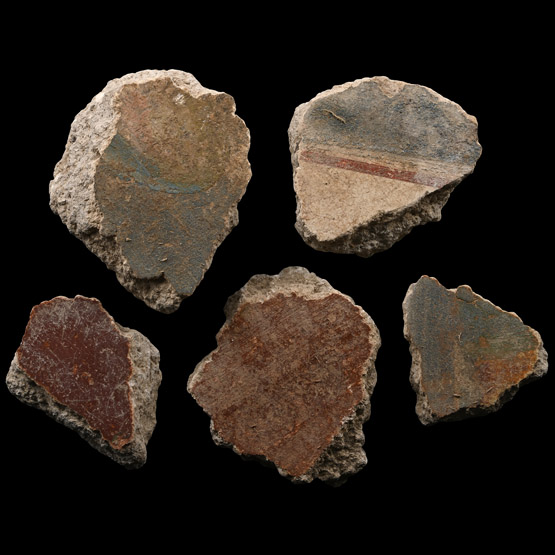
Roman Fresco Wall Plaster Collection
1st century A.D.Sold for (Inc. bp): £52
Fragments of wall plaster with rendered surface painted with mainly Pompeii red, pale blue and white detailing; some with impression of timber laths to the reverse. 613 grams total, 6.2-10.3 cm
Acquired in the 19th century. Ex Jeger collection, Switzerland. UK gallery, early 2000s.
These small fragments, for analogies with the fragments of Pompeii, seem to belong to the second style of Roman painting, red panels representing highlight and shadow, decorated with vegetal interlaces. Some panels were probably framed by a red grenade fillet. A fragment shows alternate blue and red colour over a cream background, maybe pertinent to a socle.

