-
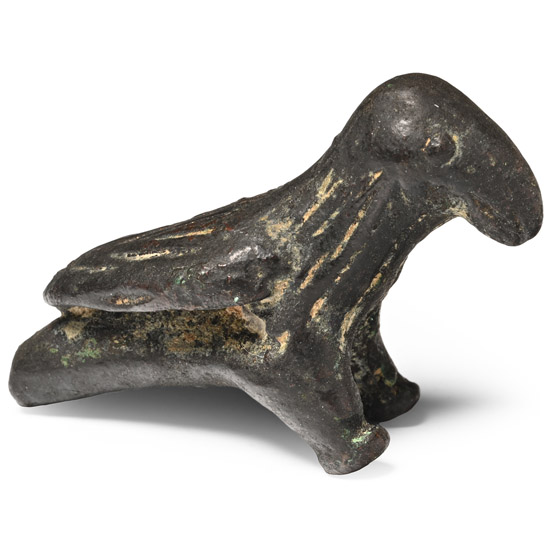
Roman Bronze Bird Figure
1st-4th century A.D.Sold for (Inc. bp): £78
Modelled as a stylised bird with slightly raised wings and a hooked beak. 39 grams, 45 mm
From the private collection of a European gentleman (1942-2024), formed since the 1970s. -
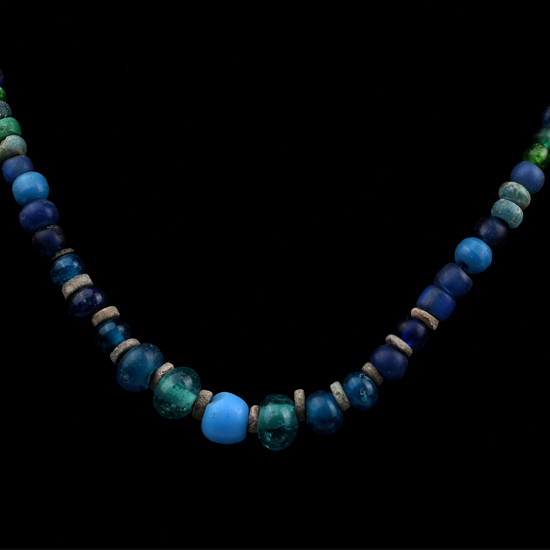
Roman Blue and Green Glass Bead Necklace String
1st-4th century A.D. and laterSold for (Inc. bp): £169
Restrung a graduated group of oblate barrel-shaped and spherical beads with disc spacers. 45 grams, 36 cm
From the collection of a gentleman, acquired on the London art market in the 1990s. -
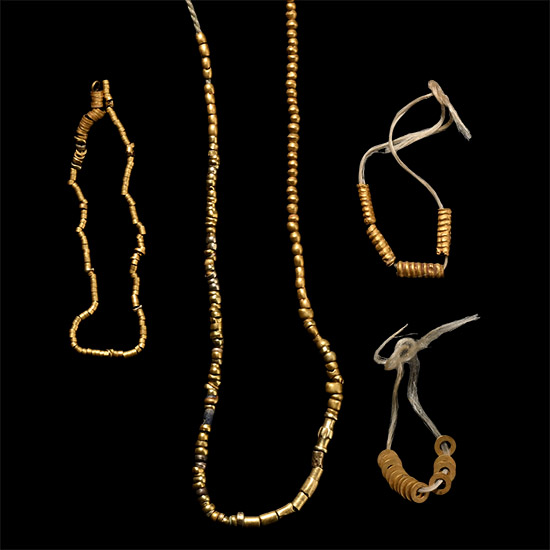
Roman Gold Bead Collection
1st-4th century A.D.Sold for (Inc. bp): £546
Comprising a number of oblate, tubular ribbed, annular and discoid beads. 7.59 grams total, 1.33-7.98 mm
From the private collection of a European gentleman (1942-2024), formed since the 1970s. -
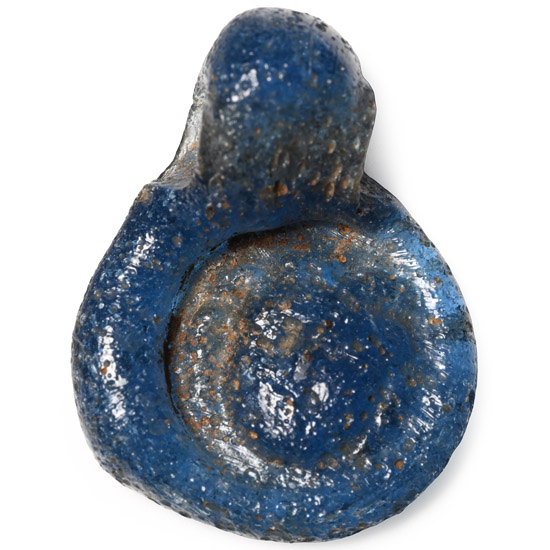
Roman Glass Pendant with Head of Medusa
2nd-3rd century A.D.Sold for (Inc. bp): £46
Cobalt blue discoid pendant with an impressed face of Medusa with coiled snakes framing her face. 1.70 grams, 21.47 mm
From the private collection of a European gentleman (1942-2024), formed since the 1970s. -
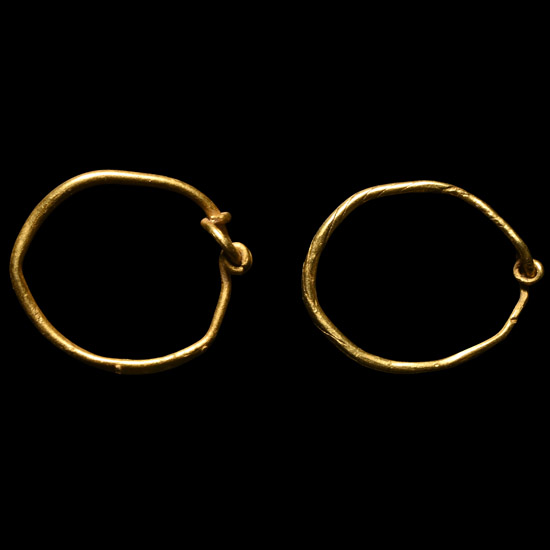
Roman Gold Hoop Earring Pair
1st-4th century A.D.Sold for (Inc. bp): £195
Matched pair of hoop earrings formed of a round-section bar with a loop closure. 1.04 grams total, 15.7-15.8 mm
Ex H. Norri collection, Milton Keynes, Bedfordshire, UK, collected in the 1980s-1990s. -
.jpg)
Roman Black Gemstone with Tropaeum
2nd-3rd century A.D.Sold for (Inc. bp): £156
With an intaglio image of an army tropaeum standing facing, supporting two round shields and spears; supplied with a museum-quality impression. 0.50 grams, 11.21 mm
From the private collection of a European gentleman (1942-2024), formed since the 1970s. -
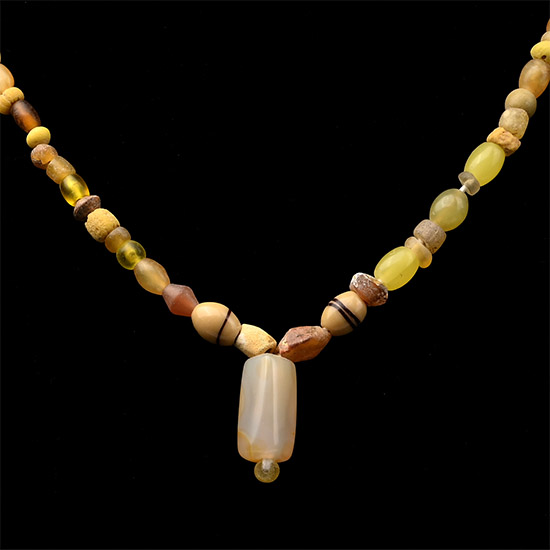
Roman Yellow Glass and Other Bead Necklace String
1st-4th century A.D. and laterSold for (Inc. bp): £85
Composed of graduated beads, the central feature a large rectangular agate bead, restrung with some modern beads. 21.3 grams, 41.5 cm
Ex London, UK, collection, 1990s. -
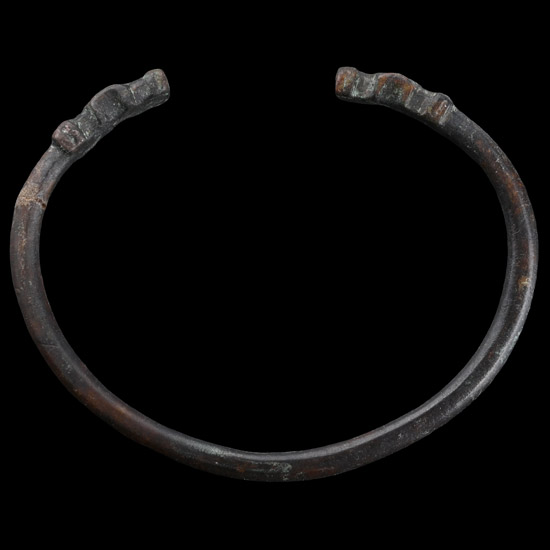
Roman Bronze Bracelet with Animal Heads
Circa 3rd-4th century A.D.Sold for (Inc. bp): £111
Round-section penannular body with stylised beast-head terminals. 14.72 grams, 65 mm
Ex German art market, 2000s. Acquired from an EU collector living in London. From the collection of a Surrey, UK, gentleman. -
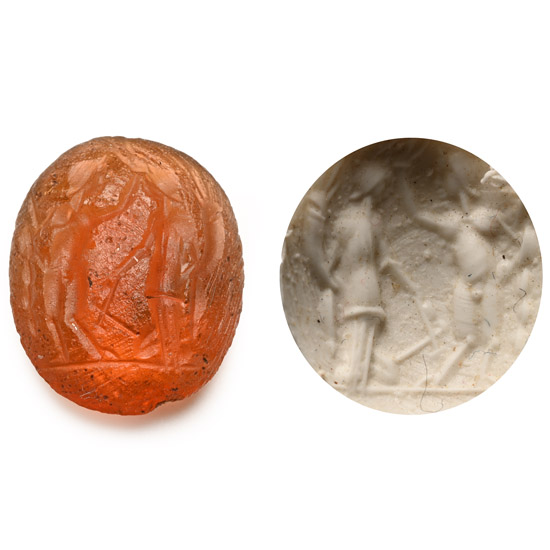
Roman Glass Gem with Fortuna
2nd-3rd century A.D.Sold for (Inc. bp): £85
Biconvex in profile with intaglio Fortuna standing holding a cornucopia beside a nude male; supplied with a museum-quality impression. 1.37 grams, 15.61 mm
From the private collection of a European gentleman (1942-2024), formed since the 1970s. -
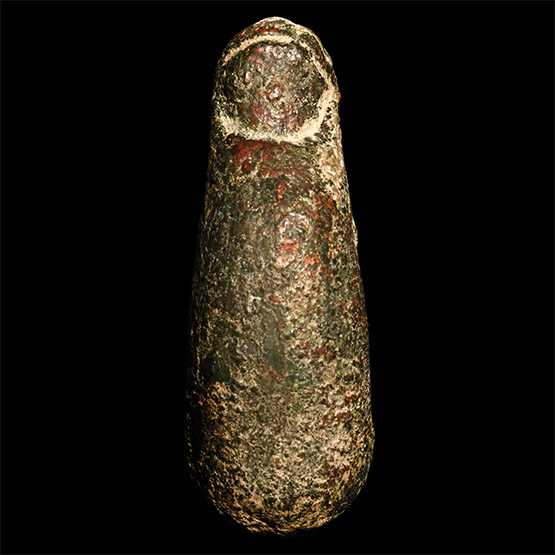
Roman Bronze Statue Finger
1st-4th century A.D.Sold for (Inc. bp): £104
Modelled in a slightly bent pose with nail detailing. 21.6 grams, 33 mm
Ex German art market, 2000s. Acquired from an EU collector living in London. From the collection of a Surrey, UK, gentleman. -
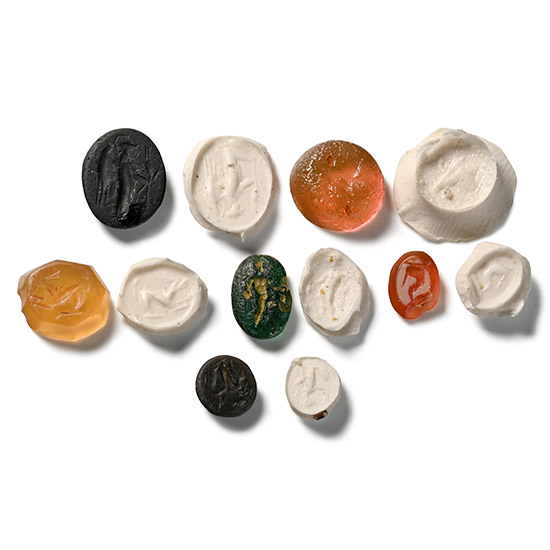
Roman Gemstone and Glass Intaglio Collection
Circa 2nd-3rd century A.D.Sold for (Inc. bp): £195
Comprising: goose; running hound; standing figure; profile hare; bird taking a fish; resting lion; each supplied with a museum-quality impression. 1.52 grams total, 5.97-10.09 mm
From the private collection of a European gentleman (1942-2024), formed since the 1970s. -
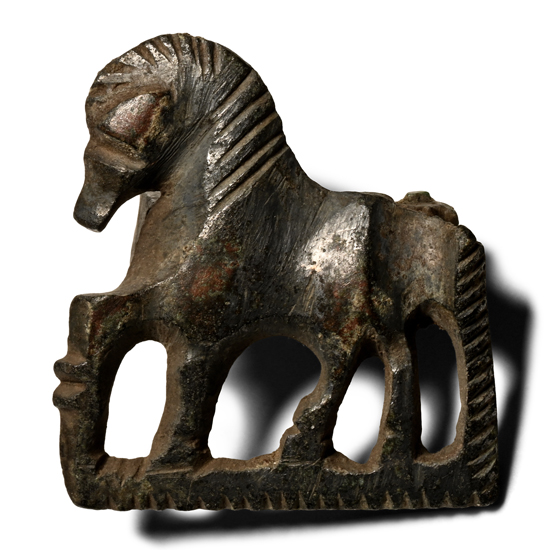
Roman Bronze Horse Plate Brooch
Circa 2nd century A.D.Sold for (Inc. bp): £140
Modelled as a prancing horse with its foreleg raised, mane and tail indicated by diagonal striations; pin and catchplate on the reverse. 15.2 grams, 34 mm
Ex German art market, 2000s. Acquired from an EU collector living in London. From the collection of a Surrey, UK, gentleman.

