-
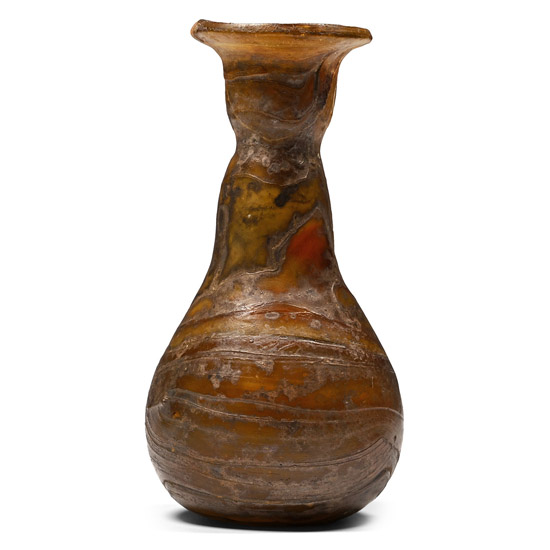
Eastern Roman Marbled Glass Bottle
4th-6th century A.D.Sold for (Inc. bp): £390
A heavy pear-shaped amber-green coloured glass vase with u-shaped neck and everted rim, decorative marbling over the body. 101 grams, 98 mm high
Acquired early 1990s. Ex private American collection; thence by descent. Private collection since 1998. -
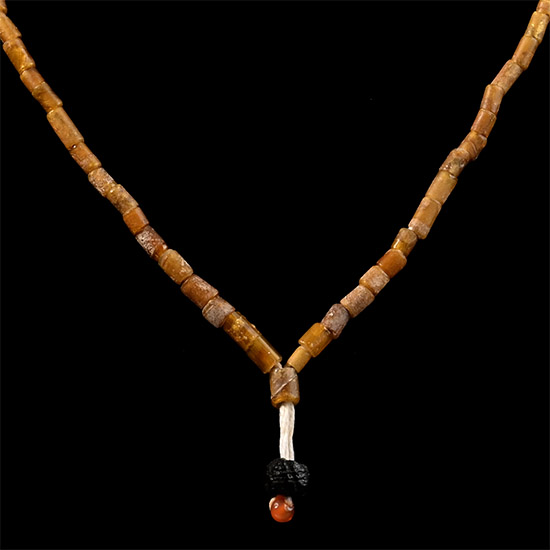
Roman Amber-Coloured Glass Bead Necklace String
Circa 1st century B.C.-1st century A.D.Sold for (Inc. bp): £59
Composed of cylindrical beads, the central feature an oblate black glass bead with a smaller carnelian bead below; restrung. 8.79 grams, 46 cm long
From an English private collection, 1980s. Property of a London, UK, antiquarian. -
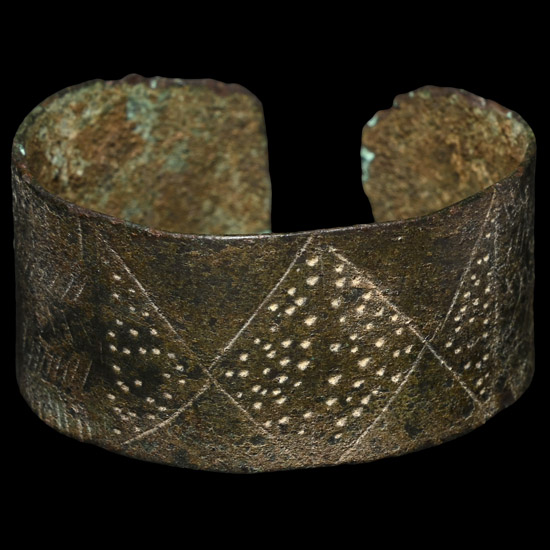
Roman Bronze Decorated Bracelet
1st-4th century A.D.Sold for (Inc. bp): £98
Featuring a wide flat-section penannular body, upper face with pointillé triangles and a lozenge, and a band of herringbone design on each finial. 19.6 grams, 45.8 mm
From the private collection of a European gentleman (1942-2024), formed since the 1970s. -
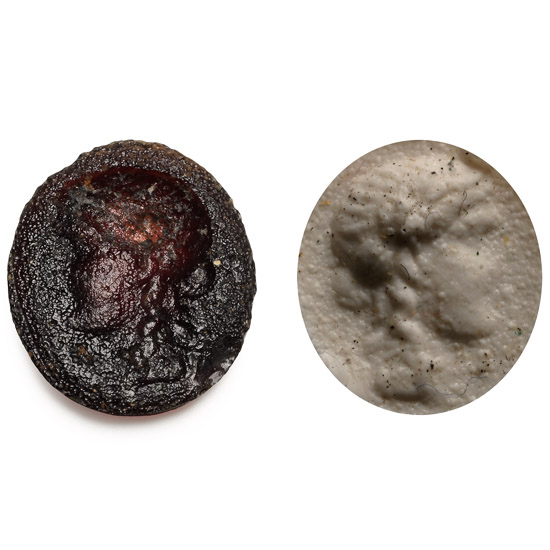
Roman Glass Gem with Female Bust
2nd-3rd century A.D.Sold for (Inc. bp): £65
With intaglio female bust in profile with wreath to the brow; supplied with a museum-quality impression. 0.48 grams, 13.38 mm
From the private collection of a European gentleman (1942-2024), formed since the 1970s. -
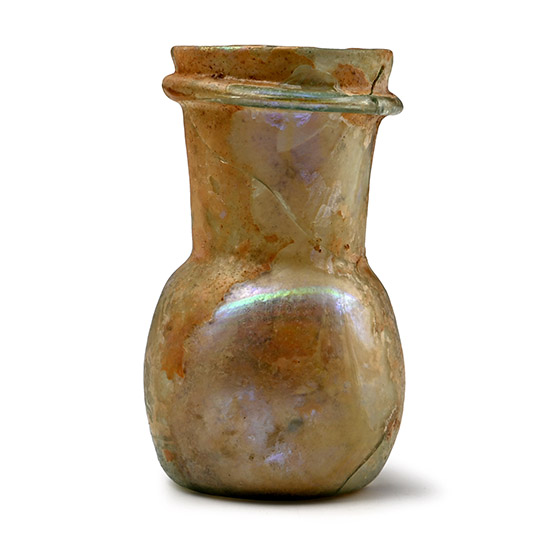
Roman Glass Flask
Circa 1st-4th century A.D.Sold for (Inc. bp): £130
With dimpled base, flared neck and carinated flange below the mouth, rounded rim. 37 grams, 86 mm
From a London, UK, collection of glass, 1970-2000s. -
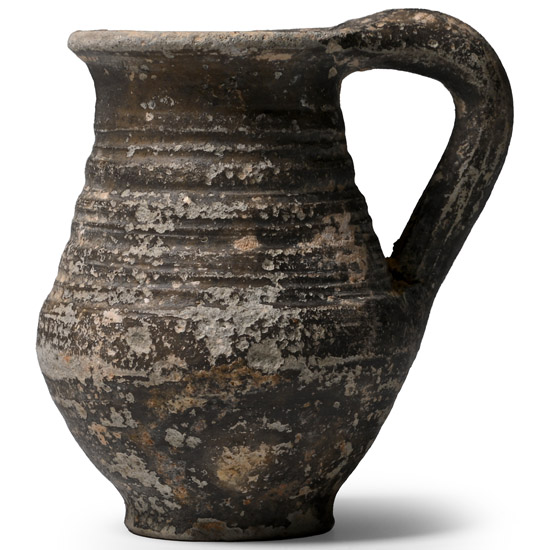
Roman Grey Ware Ribbed Juglet
Circa 1st-4th century A.D.Sold for (Inc. bp): £91
Biconical body and a low basal ring, everted rim and a handle to the rear. 50 grams, 69 mm
From the private collection of Mr Brian Edwards, New Malden, Surrey, UK, formed from the late 1970s-early 1980s; thence by descent. Accompanied by the original collector's data sheet with reference no.A18. -
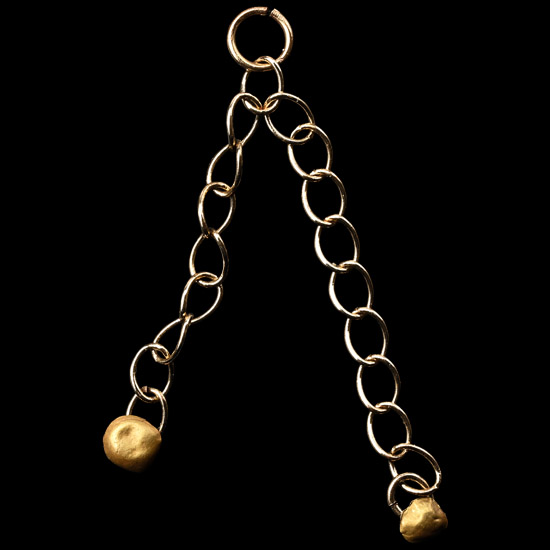
Eastern Roman Gold Pendant Bead Pair on Chain
3rd century B.C.-3rd century A.D.Sold for (Inc. bp): £85
Comprising two domed discs suspended from a length of looped later gold-coloured chain. 0.58 grams, 76 mm
Ex private British collection, formed in the 1980s. Property of a West Northamptonshire, UK, gentleman. -
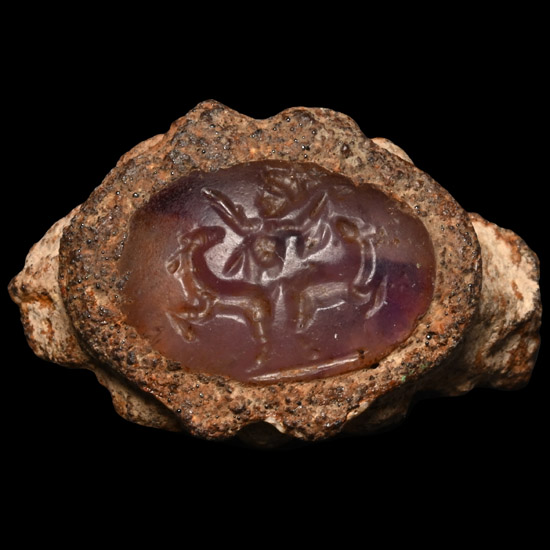
Roman Iron Ring Bezel with Master of Beasts Gemstone
3rd century A.D.Sold for (Inc. bp): £338
Bezel and fragment of the hoop, inset with an amethyst cabochon; intaglio with two addorsed prancing horses, figure above with raised arms. 2.67 grams, 21 mm
From the collection of a gentleman, acquired on the London art market in the 1990s. -
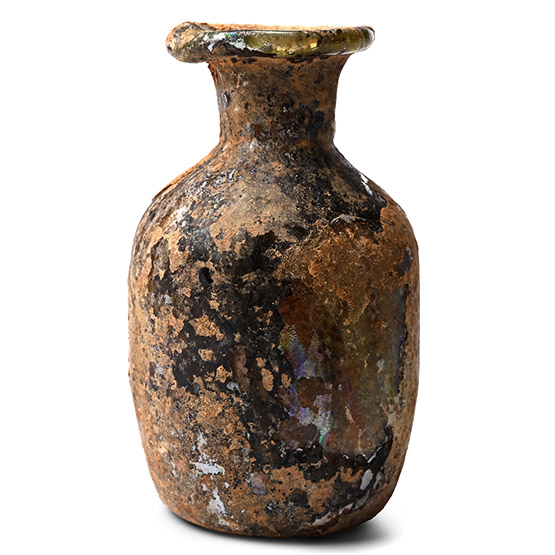
Roman Glass Flask
Circa 1st-4th century A.D.Sold for (Inc. bp): £91
Comprising a barrel-shaped body with a dimpled base, short tubular neck and an everted rim. 33 grams, 72 mm
From a London, UK, collection of glass, 1970-2000s. -
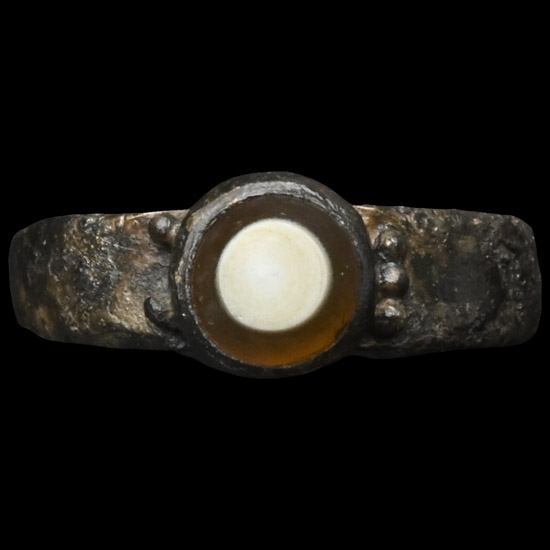
Roman Silver Child's Ring with Agate
2nd-3rd century A.D.Sold for (Inc. bp): £72
Slender hoop with a round bezel set with a conical agate, applied pellets flanking the bezel. 1.11 grams, 19.29 mm overall, 13.25 mm internal diameter (approximate size British D, USA 1 3/4, Europe 1.15, Japan 1)
Ex German art market, 2000s. Acquired from an EU collector living in London. From the collection of a Surrey, UK, gentleman. -
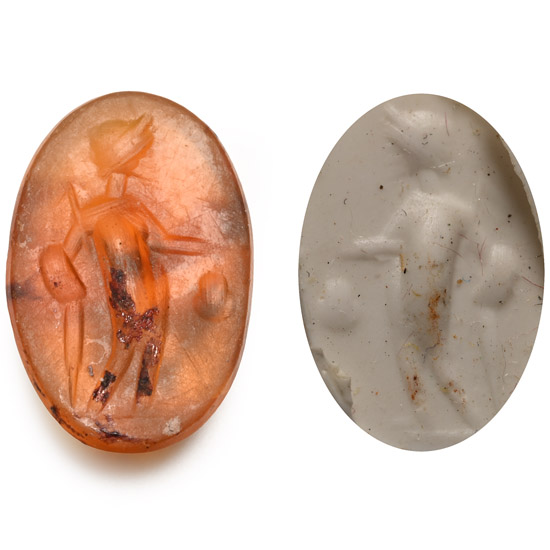
Roman Carnelian Gemstone with Mercury
2nd-3rd century A.D.Sold for (Inc. bp): £72
With intaglio standing male holding a container, possibly Mercury with the marsupium; supplied with a museum-quality impression. 0.35 grams, 11.09 mm
From the private collection of a European gentleman (1942-2024), formed since the 1970s. -
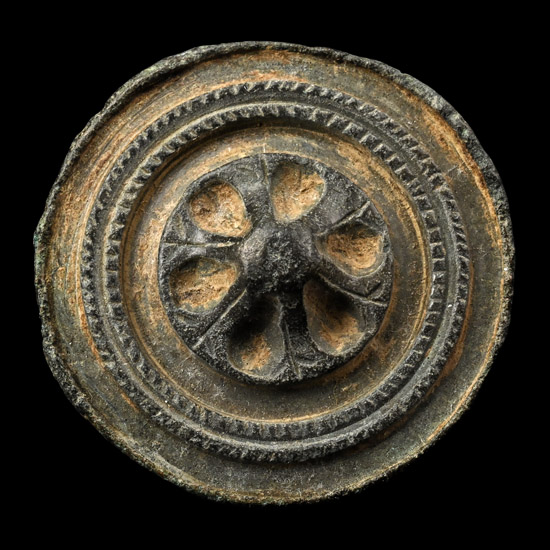
Roman Bronze Four-Way Bridle Strap Junction
1st-4th century A.D.Sold for (Inc. bp): £72
Comprising a round disc with raised concentric circles and a central six-petalled flower motif with a pointed centre; underside with a four-way strap junction. 17.4 grams, 33 mm
From the private collection of a European gentleman (1942-2024), formed since the 1970s.

