-
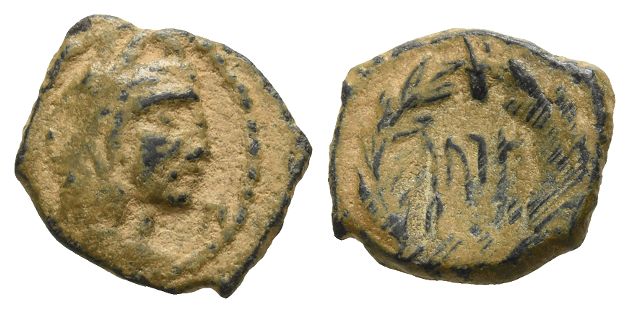
Nabataea, Aretas IV AE 15mm. Struck circa AD 17/8-39/40. Petra mint.
Sold for (Inc. bp): £26
Laureate head to right; Aramaic letter ḥēth to right / 'Aretas' in Aramaic within wreath. Meshorer, Nabataea 115; CN 189. 2.05gr, 15mm, 12h.
Very Fine.
From the collection of a gentleman, acquired on the London art market in the 1990s. -
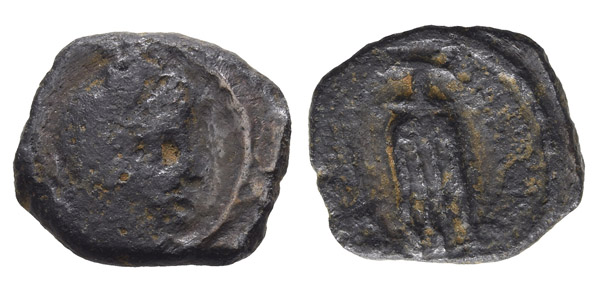
Nabataea, Aretas IV AE 14mm. Attributed to years 2-24 (8/7 BC-AD 15/16). Petra mint.
Sold for (Inc. bp): £7
Laureate head to right; [letter] to right / Bell shaped object with five fringes; ['Hagra'] in Aramaic below. Meshorer, Nabataea 87; CN, Type 149a. 1.78gr, 14mm, 6h.
Near Very Fine.
From the collection of a gentleman, acquired on the London art market in the 1990s. -
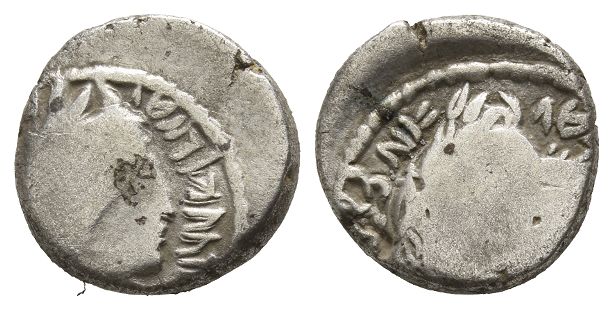
Nabataea, Aretas IV, with Huldu AR Sela'-Drachm. Circa 9/8 BC-AD 40. Petra mint.
Sold for (Inc. bp): £13
Laureate head of Aretas to right / Jugate busts right of Aretas, laureate, and Huldu, diademed, draped, and wearing Isis crown; [date to left]. Cf. CN 87 and 125 for type. 3.97gr, 15mm, 12h.
Near Very Fine.
From the collection of a gentleman, acquired on the London art market in the 1990s. -
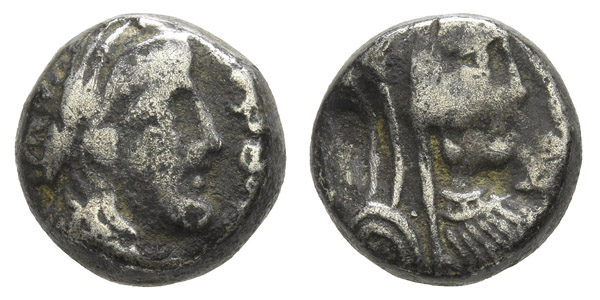
Nabataea, Aretas IV, with Huldu AR Sela'-Drachm. 9 BC-AD 40. Petra mint.
Sold for (Inc. bp): £20
Laureate and draped bust of Aretas IV to right / Diademed, veiled and draped bust of Huldu to right. Cf. CN 143. 3.44gr, 12mm, 12h.
Near Very Fine.
From the collection of a gentleman, acquired on the London art market in the 1990s. -
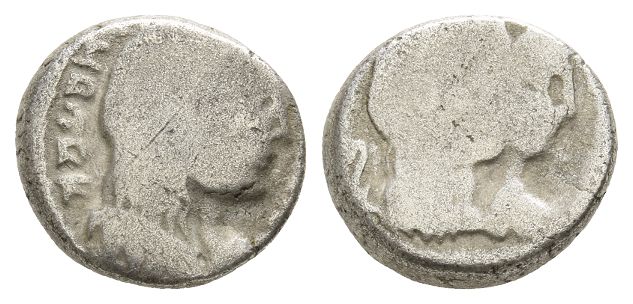
Nabatea, Aretas IV, with Shaqilat AR Sela'-Drachm. 9 BC-AD 40. Petra mint.
Sold for (Inc. bp): £13
Inscription in Nabataean around long-haired, moustached, laureate and draped bust of Aretas IV to right / Inscription in Nabataean around jugate, draped busts to right of Aretas IV, long-haired and moustached, laureate, V-shaped ornament on his forehead, and Shaqilat, veiled and wearing Isis headdress. Al-Qatanani 112; Barkay 179. 4.16gr, 15mm, 12h.
Good Fine.
From the collection of a gentleman, acquired on the London art market in the 1990s. -
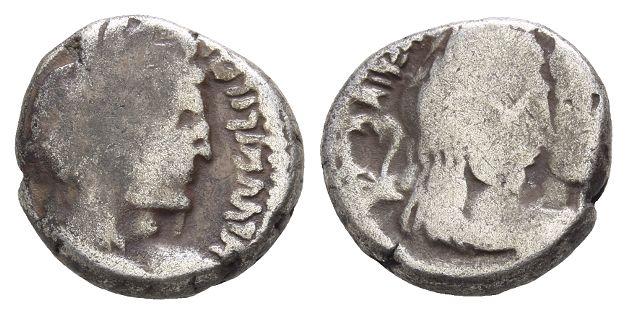
Nabataea, Aretas IV, with Shaqilat AR Sela'-Drachm. Dated RY 33(?) (AD 24/5). Petra mint.
Sold for (Inc. bp): £13
Long-haired, moustached, laureate and draped bust of Aretas IV to right; inscription in Nabataean around / Jugate draped busts to right of Aretas IV, and Shaqilat; inscription in Nabataean containing date around. Cf. Barkay 172-173. 4.13gr, 15mm, 12h.
Good Fine.
From the collection of a gentleman, acquired on the London art market in the 1990s. -
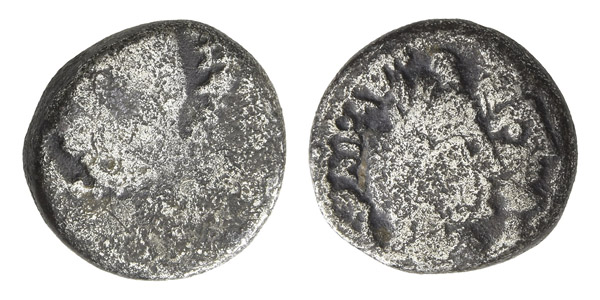
Nabataea, Aretas IV, with Shaqilat AR Sela'-Drachm. Dated RY 31(?) (AD 22/3). Petra mint.
Sold for (Inc. bp): £7
Long-haired, laureate, moustached, and draped bust of Aretas IV to right; inscription in Nabataean around / Jugate draped busts to right of Aretas IV and Shaqilat; inscription in Nabataean around containing date at end. Cf. Barkay 170; cf. DCA 975. 3.33gr, 14mm, 6h.
Fine. Obverse off-centre.
From the collection of a gentleman, acquired on the London art market in the 1990s. -
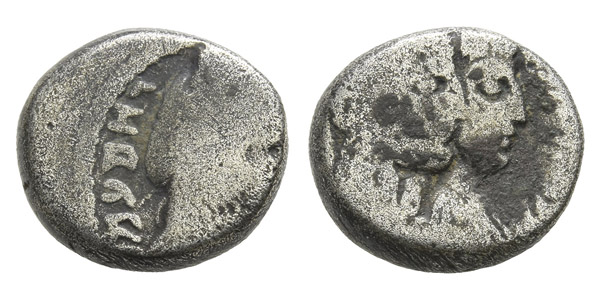
Nabataea, Aretas IV, with Shaqilat(?) AR Sela'-Drachm. Struck circa 9/8 BC-AD 40. Petra mint.
Sold for (Inc. bp): £13
Long-haired, moustached, laureate and draped bust of Aretas IV to right; inscription in Nabataean around / Jugate draped busts to right of Aretas IV and Shaqilat(?), veiled; inscription in Nabataean around. Cf. Meshorer, Nabataean 100-110. 3.85gr, 14mm, 12h.
Near Very Fine. Obverse slightly off-centre.
From the collection of a gentleman, acquired on the London art market in the 1990s. -
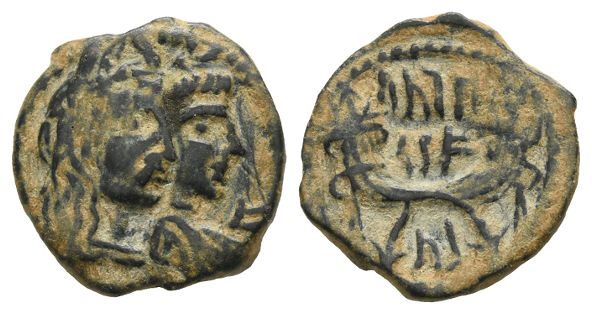
Nabataea, Aretas IV, with Shaqilat AE 18mm. Struck AD 20-40. Petra mint.
Sold for (Inc. bp): £39
Jugate busts of Aretas and Shaqilat to right; [H?]-F in Aramaic across fields / Crossed cornucopiae; legend in Aramaic between and below. Cf. Meshorer, Nabataea 114. 3.42gr, 18mm, 11h.
Very Fine.
From the collection of a gentleman, acquired on the London art market in the 1990s. -
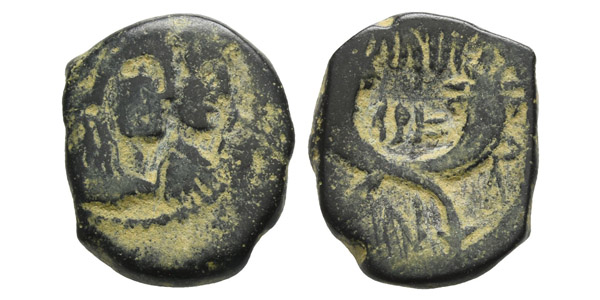
Nabataea, Aretas IV, with Shaqilat AE 17mm. Struck AD 20-40. Petra mint.
Sold for (Inc. bp): £7
Jugate busts of Aretas and Shaqilat to right; [H-F?] in Aramaic across fields / Crossed cornucopiae; legend in Aramaic between and below. Cf. Meshorer, Nabataea 114. 3.74gr, 17mm, 12h.
Near Very Fine.
From the collection of a gentleman, acquired on the London art market in the 1990s. -
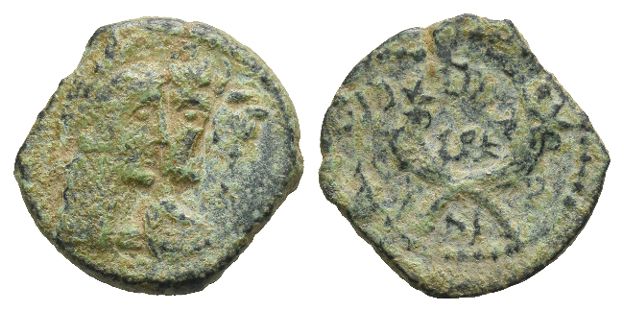
Nabataea, Aretas IV, with Shaqilat AE 16mm. Struck AD 20-40. Petra mint.
Sold for (Inc. bp): £13
Jugate busts of Aretas and Shaqilat to right; [H-F?] in Aramaic across fields / Crossed cornucopiae; legend in Aramaic between and below. Cf. Meshorer, Nabataea 114. 2.38gr, 16mm, 12h.
Near Very Fine.
From the collection of a gentleman, acquired on the London art market in the 1990s. -
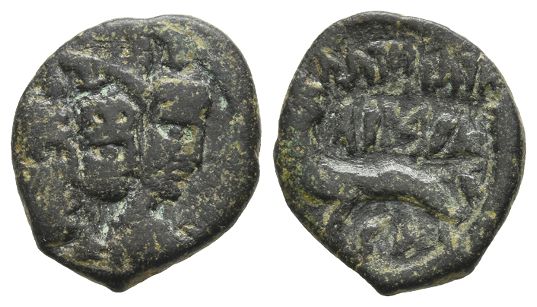
Nabataea, Aretas IV, with Shaqilat AE 20mm. Struck AD 20-40. Petra mint.
Sold for (Inc. bp): £7
Jugate busts of Aretas and Shaqilat to right; [H-F?] in Aramaic across fields / Crossed cornucopiae; legend in Aramaic between and below. Cf. Meshorer, Nabataea 114. 4.83gr, 20mm, 6h.
Near Very Fine.
From the collection of a gentleman, acquired on the London art market in the 1990s.

