-
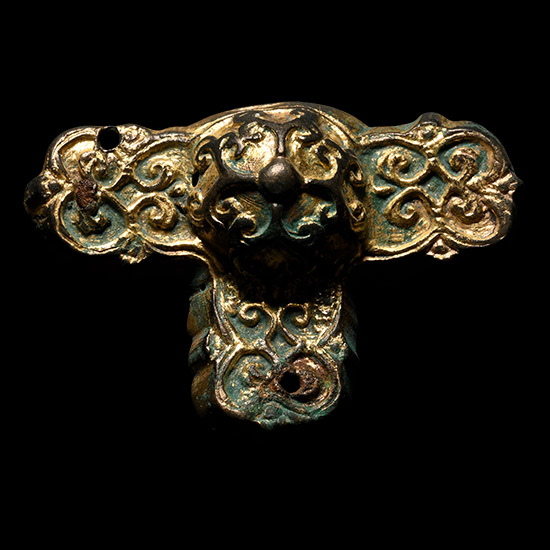
Medieval Gilt Bronze Horse Harness Mount with Floral Cross
Circa 13th-14th century A.D.Sold for (Inc. bp): £260
Hollow-formed, tau-shaped with a dome to the junction; upper face with repoussé scrolls, attachment rivets. 19.58 grams, 62.04 mm
From the private collection of a London gentleman, from his grandfather's collection formed before the early 1970s. -
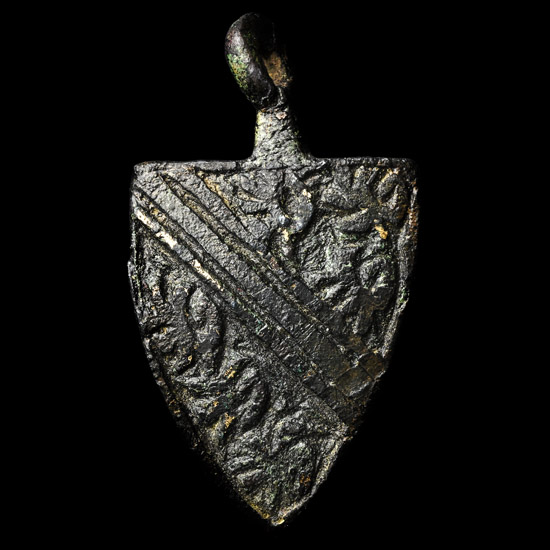
Medieval Knight's Enamelled Bronze Heraldic 'De Bohun, Earls of Hereford' Horse Harness Pendant
Circa 14th century A.D.Sold for (Inc. bp): £117
Heater-shaped with a loop above, heraldic design of two groups of three lions divided by two diagonal bands. 7.55 grams, 39.6 mm
Ex Graham Slater collection, Cambridge, 1980s-1990s. -
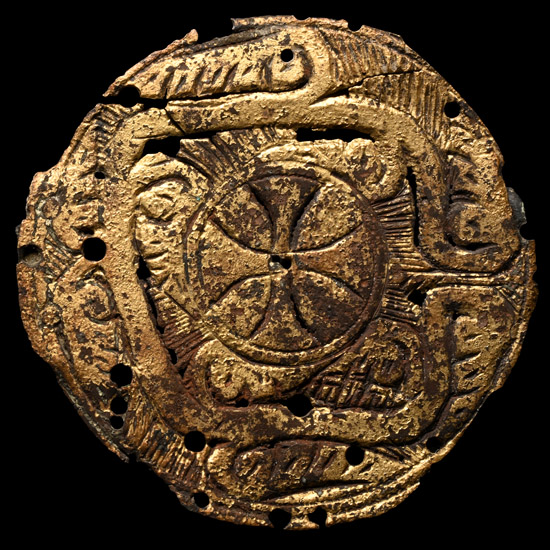
Medieval Knight's Gilt Bronze Heraldic Badge with Templar's Cross
14th-16th century A.D.Sold for (Inc. bp): £572
Discoid in plan with openwork design of scrolled bands and hatched panels, central cross pattee; reinforcing strip to reverse. 7.61 grams, 52.59 mm
From the private collection of a European gentleman (1942-2024), formed since the 1970s. -
.jpg)
Medieval Bronze Heraldic Personal Seal Matrix
Circa 13th-14th century A.D.Sold for (Inc. bp): £364
Plano-convex type, discoid in plan with loop and strap to reverse; heraldic heater shield with quartered design of lion rampant and fleur-de-lys; legend to border 'S'GERARDUS DE BINIBIO'; accompanied by a museum-quality impression. 15.08 grams, 25 mm
From an old English collection, Bournemouth, UK. Ex Parthenon Gallery, London, UK, 2001. Property of a North London, UK, private collector. -
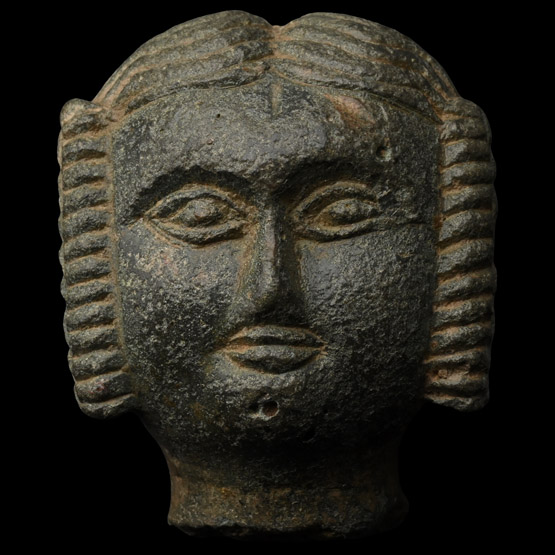
Medieval Bronze Head of a Lady
12th-15th century A.D.Sold for (Inc. bp): £143
Female head with centre-parted hair and lateral wings, deep-set lentoid eyes and small pursed mouth; neck broken; socket to rear. 105 grams, 36 mm
Found Lincolnshire, UK. -
.jpg)
Medieval 'Our Lady of the Flames' Limestone Figural Scene
15th century A.D. or laterSold for (Inc. bp): £845
Carved in the half-round frieze fragment or devotional sculpture of the Madonna del Fuoco, facing female in wimple and long robe with her right arm bent forward, left arm extended above a child gripping the folds of her robe; billowing flames surrounding the pair; mounted on a custom-made stand. 10.55 kg total, 37.7 cm including stand
Acquired Lukas Pearsie, Suffolk, 2012. Property of a Kent collector. From the N.J. collection, Leicester, UK.
One version of the legend of 'Our Lady of the Flames' concerns an image of Mary and the Infant Jesus which was saved from a house-fire at Forli, near Ravenna, Italy by a miraculous intervention. The icon burst out of the wall of the blazing house to the astonishment of the locals, who reported it to the church authorities and it was subsequently accepted by a papal legate as a miracle. The legend was propagated in an early Italian printed book by Giuliano Bezzi called "Il Fuoco Trionfante" (The Triumphant Fire) printed in 1637. The events are said to have taken place around 1420 A.D. -
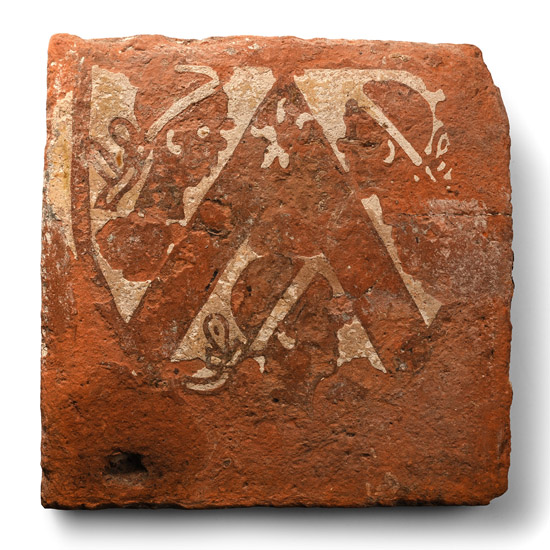
Large Medieval Heraldic Tile with the Heads of Three Africans within a Shield
Normandy, 15th century A.D.Sold for (Inc. bp): £286
Square in plan and thick in section; upper face with reserved heater shield, chevron between three profile 'Moor's head' motifs. 2.65 kg, 22 cm
Benjamin Proust, Paris, 2015.
The Moor's head motif appears on the heraldry of Sardinia, Corsica and other Mediterranean locations. -
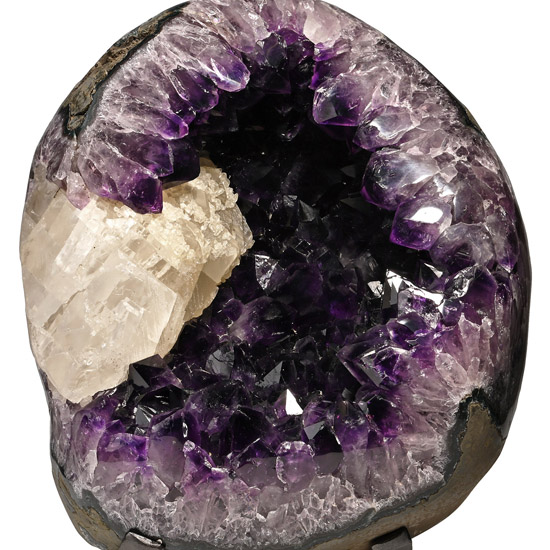
Egg-Shaped Amethyst Crystal Geode Display with Calcite
Sold for (Inc. bp): £2,210
Large, polished section of geode showing prismatic dark purple amethyst crystals on the inner surface with a large mass of calcite to one side, the calcite with clusters of small quartz crystals; mounted on a custom-made display stand. 17.1 kg total, 34.5 cm including stand
From Artigas, Uruguay. Property of a London lady. -
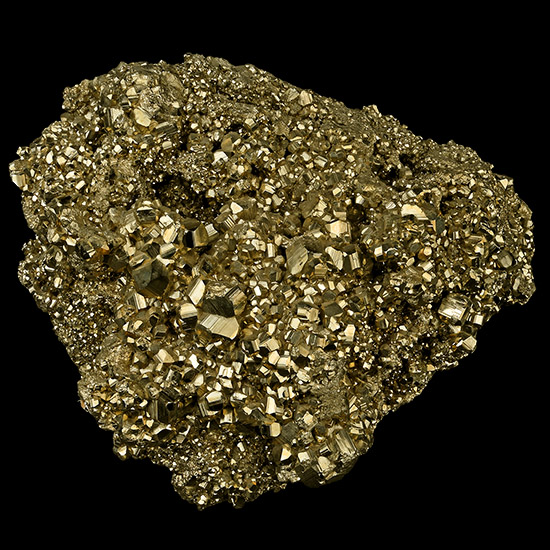
Massive Pyrite 'Fool's Gold' Cluster
Sold for (Inc. bp): £338
An intergrown mass of pyrite crystals showing bright metallic lustre. 16.1 kg, 27 cm
From a Cambridgeshire, UK, collection. -
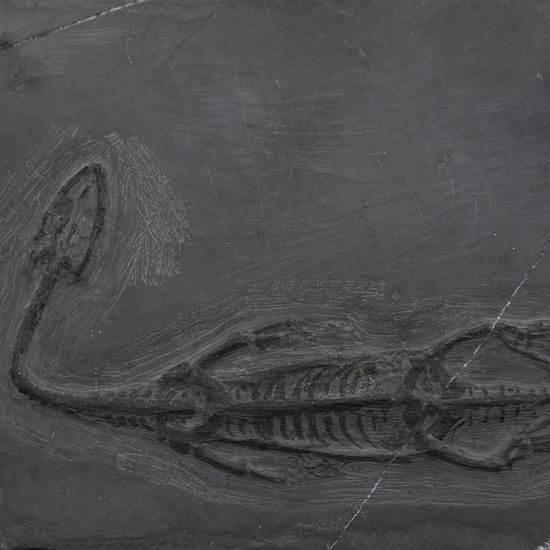
Fossil Keichousaurus Marine Reptile Skeleton
Triassic Period, circa 250 million years B.P.Sold for (Inc. bp): £312
Comprising a complete Keichousaurus hui skeleton on a rectangular matrix. 197 grams, 11.7 cm
From a Cambridgeshire, UK, collection.
Keichousaurus was a late Triassic marine reptile, a member of the Pleurosaur family, which went extinct 250 million years ago during the Triassic-Jurassic extinction event. They were specialised fish eaters, and were highly unusual amongst marine reptiles in that they gave birth to live young rather than laying eggs. -
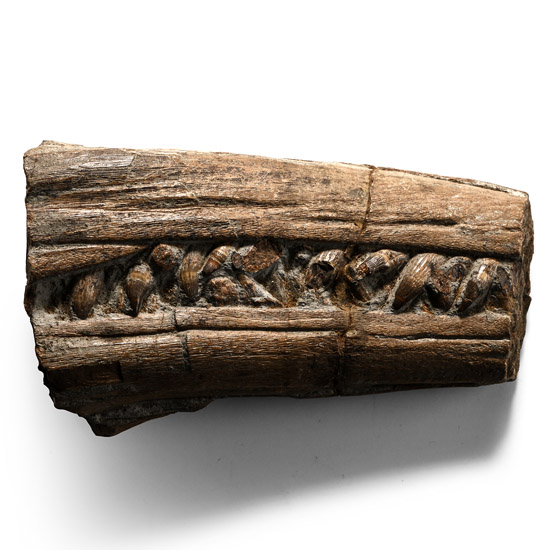
Bifacial Partial Fossil Ichthyosaur Jaw
Mesozoic-Jurassic Period, circa 250-90 million years B.P.Sold for (Inc. bp): £1,040
Showing multiple sharp teeth and a section of well-formed, slender jaws. 270 grams, 10.6 cm
Discovered at Lyme Regis, UK, during the time of Mary Anning and her family. From an old English collection. Ian Wilkinson collection, Nottinghamshire, UK, formed since 1985. With an original early 19th-century handwritten identification label ‘Nose of a Saurian’, the original discovery of this fossil can be dated to the period 1800-1830.
Originally, ichthyosaur fossils were misidentified as ‘Saurian’ - being either lizards or forms of crocodile. The term 'Ichthyosaur' was first used in 1817 by the German naturalist Karl Dietrich Eberhard Konig, and he did not publish the name until 1825. By the 1830’s, the name Ichthyosaur was widely used. Having been discovered in Lyme Regis, this dates the discovery of the fossil to the ‘Golden Age’ of fossil hunting in the early 1800s (before the use of the name ‘ichthyosaur’) made especially famous by Mary Anning and her family, who collected fossils from the coast around Lyme Regis and who sold specimens, for additional income, to tourists as well as leading naturalists and fossil collectors from around the world. -
.jpg)
Historic Spartan Basalt Cut and Polished Dark Green Porphyry Slab
Sold for (Inc. bp): £1,170
Cut and polished section, mined in Greece, cut and polished on one side, probably recycled material mined in ancient Roman times; mounted on a custom-made metal display stand. 9.82 kg total, 44 cm including stand
Acquired on the UK art market since the 1990s. From the private collection of a Somerset gentleman.
Also known as Lapis Lacedaemonius and Porfido Verde Antico, a type of green porphyry quarried in Greece. Spartan basalt is a form of andesite or volcanic rock known today only from a single source in the village of Krokees on the Peloponnese in Greece. In addition, ancient sources mention a quarry of Lapis Lacedaemonius in Taygetus.

