-
![Group of Twenty Nine [29] Rock Crystal Point Display Specimens](https://timelineauctions.com/upload/images/items/small/251100-s.jpg)
Group of Twenty Nine [29] Rock Crystal Point Display Specimens
Sold for (Inc. bp): £20
Boxed group of colourless pyramidal quartz crystal points. 2.11 kg total including box, 42-86 mm
From Brazil. Ex Mineral Imports, London, UK. Gregory, Bottley & Lloyd (Gregory's), Harwich, UK. -
![Group of Eight [8] Bags of Rose Quartz Crystal Specimens](https://timelineauctions.com/upload/images/items/small/251101-s.jpg)
Group of Eight [8] Bags of Rose Quartz Crystal Specimens
Sold for (Inc. bp): £26
Boxed group of rose quartz specimen bags. 3.62 kg total including box, 30-52 mm
From Brazil. Ex Mineral Imports, London, UK. Gregory, Bottley & Lloyd (Gregory's), Harwich, UK. -
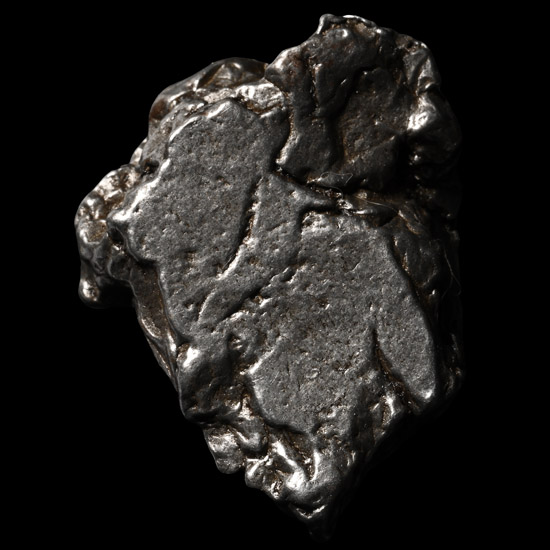
Campo del Cielo Meteorite
Fell 6000-5000 years B.P.Sold for (Inc. bp): £130
A nickel-iron meteorite (IAB). 39.2 grams, 37.7 mm
From a Cambridgeshire, UK, collection.
A crater field of roughly 26 craters was found in the vicinity of this crater, which is estimated to date to 4-5 thousand years BP. The age of the meteorite itself is thought to be c.4.5 billion years, formed as part of the development of this solar system. The largest two fragments, the 30.8-ton Gancedo and 28.8-ton El Chaco, are among the heaviest meteorite masses ever recovered on Earth. In 1576, the governor of a province in Northern Argentina commissioned the military to search for a large mass of iron, which it was believed the local people claimed had fallen from the sky and which they used for their weapon production. The expedition discovered a large mass of metal, which was assumed to be an iron mine, and brought back a few samples, which were described as being of unusual purity. Following the legends, in 1774, Don Bartolomé Francisco de Maguna rediscovered the iron mass. He himself did not believe that the stone had fallen from the sky and assumed that it had formed by a volcanic eruption. However, he sent the samples to the Royal Society of London. In 199,0 it became protected by law. -
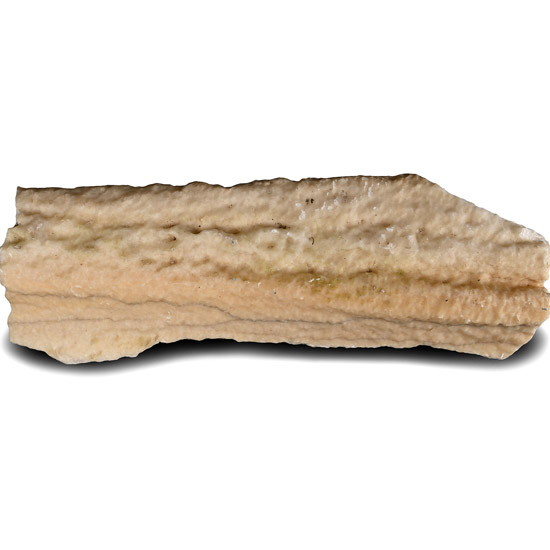
Massive Cave Stalagmite Section
Sold for (Inc. bp): £20
A colossal cut section of cream-coloured stalagmite showing natural ripples. 76 kg, 105 cm
Previously from a Hong Kong collection. Ex property of a London, UK, gentleman, 1990s.
A stalagmite is an upward-growing mound of mineral deposits growing on the floor of a cave due to the accumulation of material deposited from ceiling drippings. They are typically formed by the deposition of calcium carbonate and other minerals, which are precipitated from mineralised water solutions. Limestone is the chief form of calcium carbonate rock, which is dissolved by water that contains carbon dioxide, forming a calcium bicarbonate solution in underground caverns. -
![Collection of Ten [10] Cut and Polished Agate Geode Slices](https://timelineauctions.com/upload/images/items/small/251116-s.jpg)
Collection of Ten [10] Cut and Polished Agate Geode Slices
Sold for (Inc. bp): £26
Comprising ten translucent slices, some with crystalline areas. 1.02 kg total, 9.8-18.5 cm
From Brazil. Ex Mineral Imports, London, UK. Gregory, Bottley & Lloyd (Gregory's), Harwich, UK. -
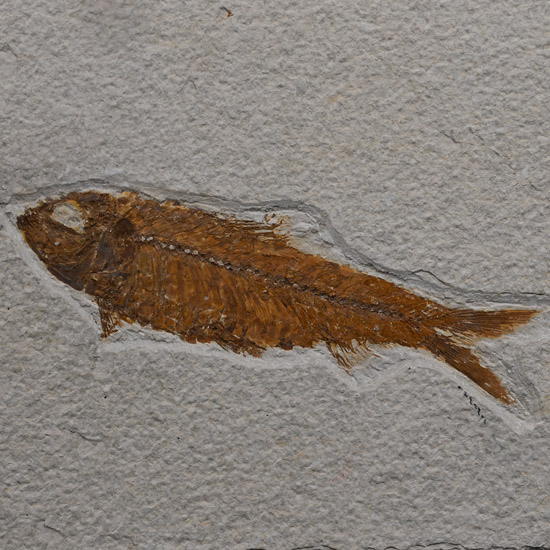
Fossil Knightia Fish in Matrix
Eocene Period, circa 58-36 million years B.P.Sold for (Inc. bp): £91
A Knightia alta fish on a rectangular limestone matrix. 589 grams, 17.8 cm
From a Cambridgeshire, UK, collection.
In southwest Wyoming (and parts of Colorado and Utah) in the Green River Formation are found some of the world's most outstanding specimens of fossil fish. The Green River system was composed of three lakes: Lake Ulinta, Lake Gosiute and Fossil Lake. These Eocene lakes lay in a series of intermountain basins formed by geological events that uplifted the Rocky Mountains during the early Tertiary time. The climate was much different from the desert-like climate of this area today. Both the fauna (crocodiles, alligators, boa constrictors and some subtropical fish families) and the flora (such as large palm trees) indicate a climate much like that found along the Gulf Coast today. Large amounts of ash found in the sediments indicate that volcanoes were particularly active at this time. -
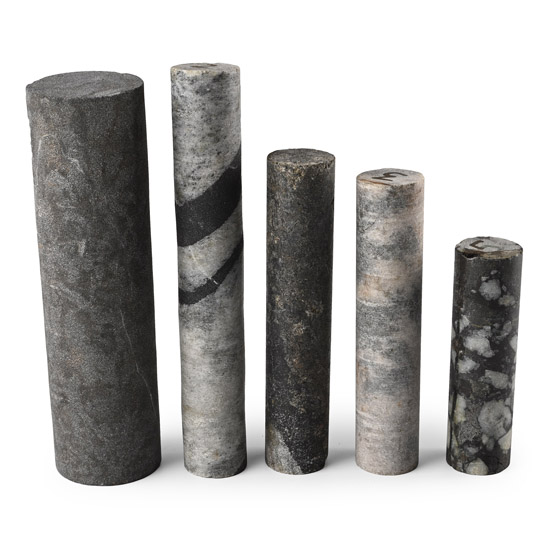
Granite Core Sample Mineral Display Specimen Group
Sold for (Inc. bp): £26
Comprising five different cylindrical core samples. 3.35 kg total. 11.5-20.5 cm
Ex property of a North West London, UK, lady. -
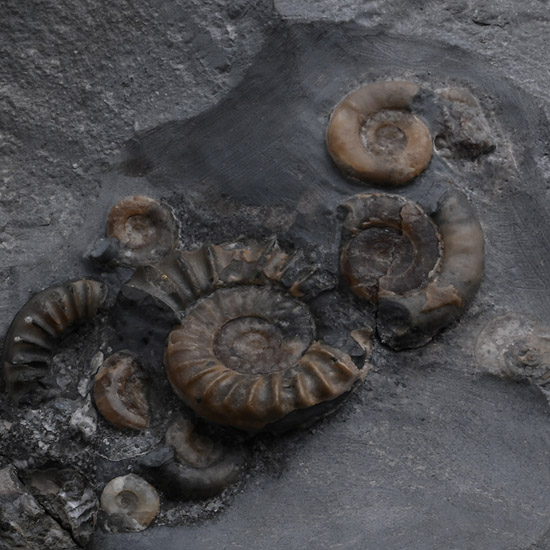
Fossil Ammonite Cluster
Lower Jurassic, Sinemurian Stage, circa 199-190 million years B.P.Sold for (Inc. bp): £59
A group of ammonites on a matrix nodule, possibly Arnioceras or Cymbites group. 899 grams, 14 cm
From Whitby, Yorkshire, UK. From a Cambridgeshire, UK, collection. -
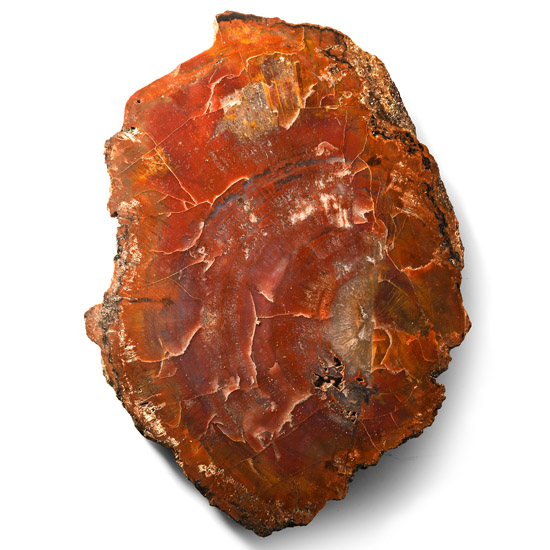
Large Madagascan Natural Unpolished Fossil Wood Section
Triassic Period, 251-199 million years B.P.Sold for (Inc. bp): £26
A thick slab of agatised wood with some bark detailing on the outside. 1.92 kg, 26.6 cm
From Madagascar. Ex Mineral Imports, London, UK. Gregory, Bottley & Lloyd (Gregory's), Harwich, UK. -
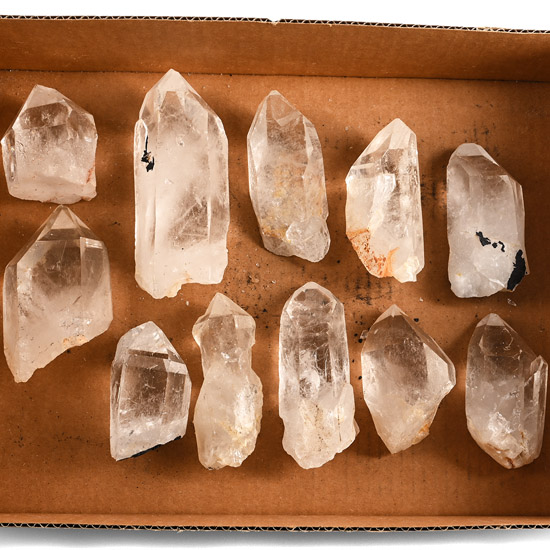
A Collection of Very Large Rock Crystal Mineral Specimens
Sold for (Inc. bp): £78
A boxed group of sizable, clear quartz crystals with pyramidal terminations. 2.85 kg total including box, 6.8-13.5 cm
From Brazil. Ex Mineral Imports, London, UK. Gregory, Bottley & Lloyd (Gregory's), Harwich, UK. -
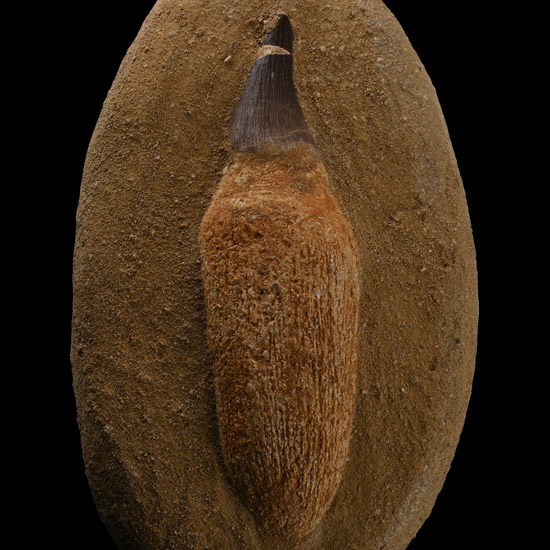
Mosasaur 'Marine Dinosaur' Fossil Tooth on Composite Rock
Cretaceous Period, circa 145-65 million years B.P.Sold for (Inc. bp): £33
The tooth showing dark brown enamel, set in a sandstone matrix with a composite root for display. 567 grams, 15 cm
From Morocco, North Africa. From a Cambridgeshire, UK, collection.
The Mosasaur is an extinct, large marine reptile dinosaur with an elongated body, long snout and paddle-like limbs. Found worldwide, they competed with other well-known sea predators of the Late Cretaceous, such as plesiosaurs and ichthyosaurs, for food, existing primarily on a diet of ammonoids, cuttlefish and fish. -
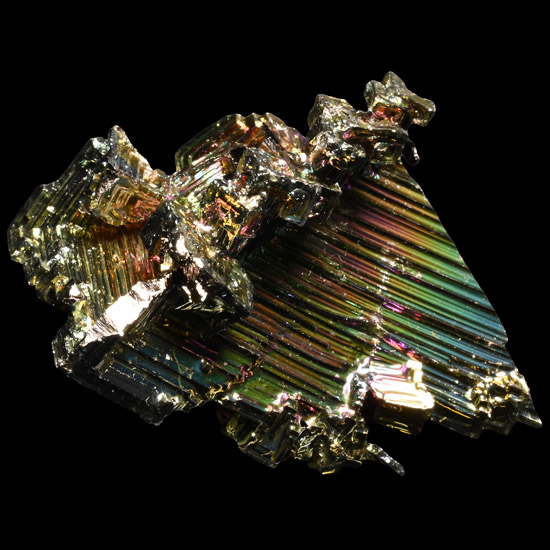
Bismuth Crystal Specimen
Sold for (Inc. bp): £26
Cluster of hopper crystals exhibiting a stairstep crystal structure and iridescent colours. 18.7 grams, 40 mm
From a Cambridgeshire, UK, collection.

