
-
![Group of Twenty One [21] Boxed Mexican Pyrite Fools Gold Crystal Specimens](https://timelineauctions.com/upload/images/items/small/251104-s.jpg)
Group of Twenty One [21] Boxed Mexican Pyrite 'Fool's Gold' Crystal Specimens
Estimate: £40 - 60 (+bp*)
Opening Bid: £5
Boxed group of pyrite specimens, each within a labelled specimen tray and some with accessory minerals. 1.21 kg total including box, 29-49 mm
From Mexico. Ex Mineral Imports, London, UK. Gregory, Bottley & Lloyd (Gregory's), Harwich, UK. -
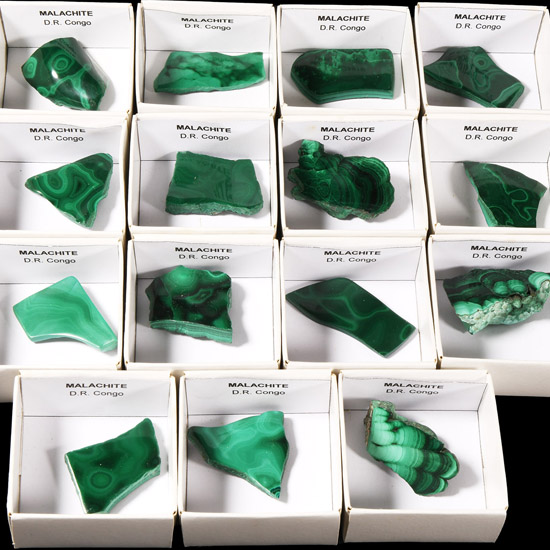
Boxed Polished Malachite Section Group
Estimate: £30 - 40 (+bp*)
Opening Bid: £5
Each cut and polished to reveal the attractive veins of the stone; each supplied in a labelled cardboard specimen tray. 297 grams total, 35-47 mm
From Democratic Republic of the Congo. Ex Mineral Imports, London, UK. Gregory, Bottley & Lloyd (Gregory's). -
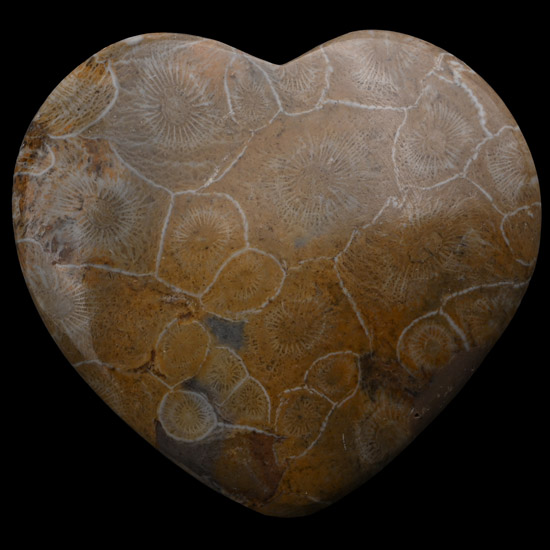
Large Polished Fossil Coral Head Heart
Devonian Period, circa 417-354 million years B.P.Estimate: £20 - 30 (+bp*)
Opening Bid: £5
Cut to a heart shape and polished to reveal the internal structure. 117 grams, 68 mm
From a Cambridgeshire, UK, collection. -
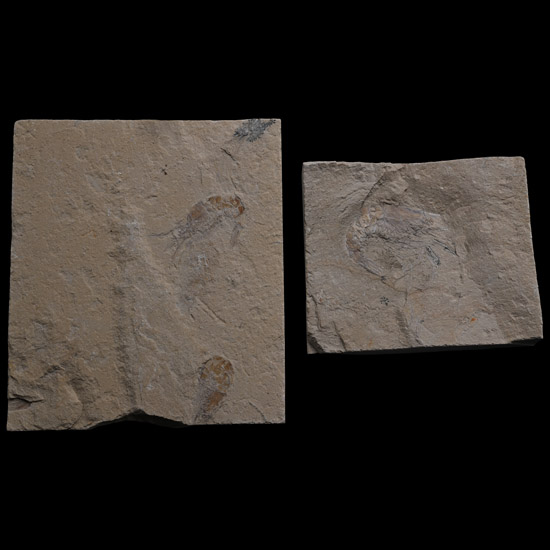
Fossil Shrimps from Lebanon
Cretaceous Period, circa 110 million years B.P.Estimate: £30 - 40 (+bp*)
Bids: 1 | Current Bid: £5
Comprising two rectangular matrices, each with a Carpopenaeus sp. specimen. 316 grams total, 8.1-11.3 cm
From a Cambridgeshire, UK, collection. -
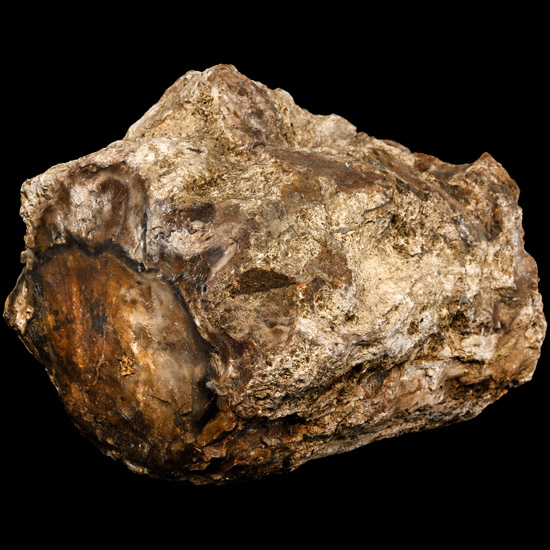
Very Large Madagascan Fossil Tree Trunk Section
Circa 135-200 million years B.P.Estimate: £80 - 100 (+bp*)
Opening Bid: £5
A cut section showing some internal banding and bark detailing on the outside. 4 kg total, 19 cm
From Madagascar. Ex Mineral Imports, London, UK. Gregory, Bottley & Lloyd (Gregory's), Harwich, UK. -
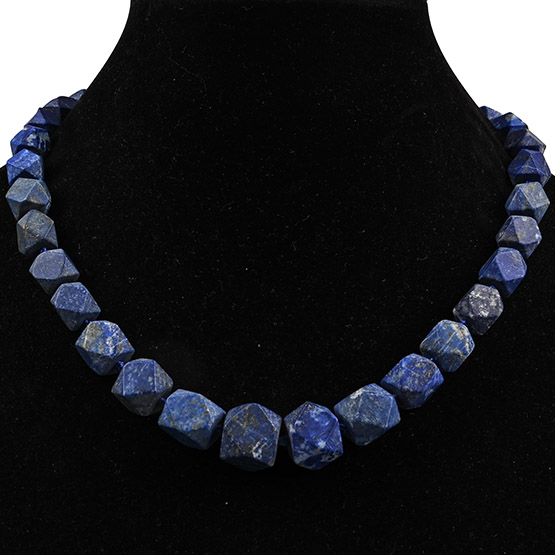
Lapis Lazuli Bead Necklace String
Estimate: £50 - 70 (+bp*)
Opening Bid: £5
Composed of graduated cornerless cube beads, restrung with a metal clasp. 104 grams, 51 cm
Ex London, UK, art market 1990s. -
![Large Beryl Mineral Specimen Group [50]](https://timelineauctions.com/upload/images/items/small/249954-s.jpg)
Large Beryl Mineral Specimen Group [50]
Estimate: £10 - 20 (+bp*)
Opening Bid: £5
Comprising fifty irregular specimens of rough beryl. 2.53 kg total, 34-58 mm
From Brazil. Ex Mineral Imports, London, UK. Gregory, Bottley & Lloyd (Gregory's), Harwich, UK. -
![Group of Four [4] Flower Quartz Display Specimens](https://timelineauctions.com/upload/images/items/small/251088-s.jpg)
Group of Four [4] Flower Quartz Display Specimens
Estimate: £30 - 40 (+bp*)
Opening Bid: £5
Comprising four matrix sections with flower-like formations of quartz. 762 grams total, 9.3-12.6 cm
From Brazil. Ex Mineral Imports, London, UK. Gregory, Bottley & Lloyd (Gregory's), Harwich, UK. -
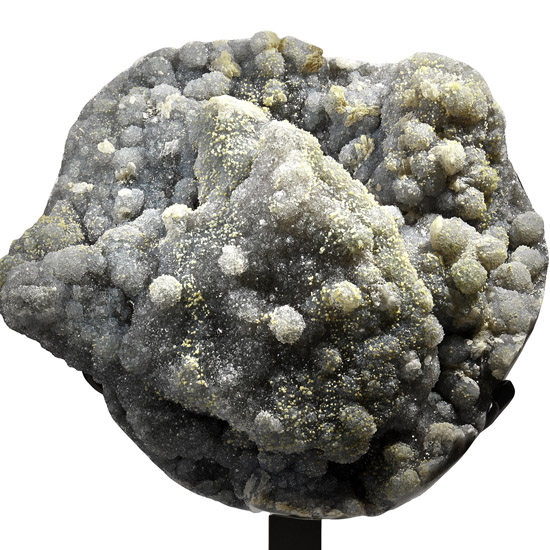
Large Geode Section with 'Snowball' Quartz
Estimate: £1,200 - 1,700 (+bp*)
Opening Bid: £660
Rounded geode section with polished borders, lined with snowball-like formations of grey, white and light blue quartz; mounted on a custom-made display stand. 23.95 kg total, 51 cm including stand
From Artigas, Uruguay. Property of a London lady. -
![Group of Twenty Nine [29] Rock Crystal Point Display Specimens](https://timelineauctions.com/upload/images/items/small/251100-s.jpg)
Group of Twenty Nine [29] Rock Crystal Point Display Specimens
Estimate: £30 - 40 (+bp*)
Opening Bid: £5
Boxed group of colourless pyramidal quartz crystal points. 2.11 kg total including box, 42-86 mm
From Brazil. Ex Mineral Imports, London, UK. Gregory, Bottley & Lloyd (Gregory's), Harwich, UK. -
![Group of Eight [8] Bags of Rose Quartz Crystal Specimens](https://timelineauctions.com/upload/images/items/small/251101-s.jpg)
Group of Eight [8] Bags of Rose Quartz Crystal Specimens
Estimate: £30 - 40 (+bp*)
Bids: 1 | Current Bid: £5
Boxed group of rose quartz specimen bags. 3.62 kg total including box, 30-52 mm
From Brazil. Ex Mineral Imports, London, UK. Gregory, Bottley & Lloyd (Gregory's), Harwich, UK. -
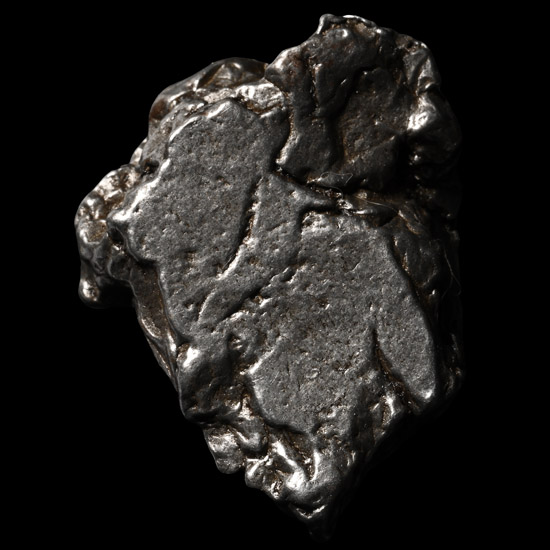
Campo del Cielo Meteorite
Fell 6000-5000 years B.P.Estimate: £60 - 80 (+bp*)
Bids: 8 | Current Bid: £65
A nickel-iron meteorite (IAB). 39.2 grams, 37.7 mm
From a Cambridgeshire, UK, collection.
A crater field of roughly 26 craters was found in the vicinity of this crater, which is estimated to date to 4-5 thousand years BP. The age of the meteorite itself is thought to be c.4.5 billion years, formed as part of the development of this solar system. The largest two fragments, the 30.8-ton Gancedo and 28.8-ton El Chaco, are among the heaviest meteorite masses ever recovered on Earth. In 1576, the governor of a province in Northern Argentina commissioned the military to search for a large mass of iron, which it was believed the local people claimed had fallen from the sky and which they used for their weapon production. The expedition discovered a large mass of metal, which was assumed to be an iron mine, and brought back a few samples, which were described as being of unusual purity. Following the legends, in 1774, Don Bartolomé Francisco de Maguna rediscovered the iron mass. He himself did not believe that the stone had fallen from the sky and assumed that it had formed by a volcanic eruption. However, he sent the samples to the Royal Society of London. In 199,0 it became protected by law.

