-
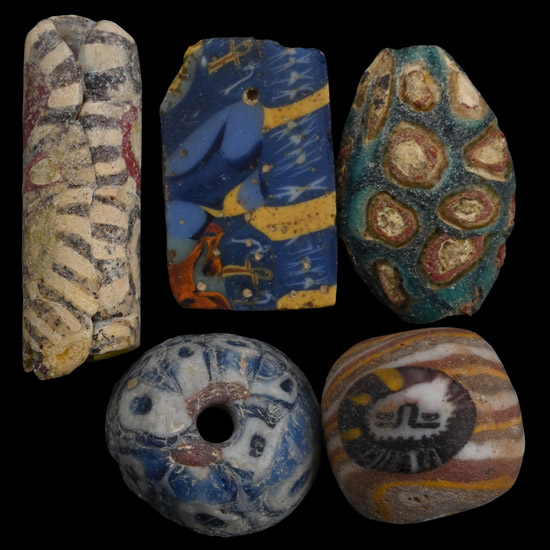
Roman Millefiori Glass Bead and Inlay Group
1st-4th century A.D.Sold for (Inc. bp): £442
Including barrel-shaped, tubular and other types. 11.89 grams total, 12-23 mm
From the collection of a gentleman, acquired on the London art market in the 1990s. -
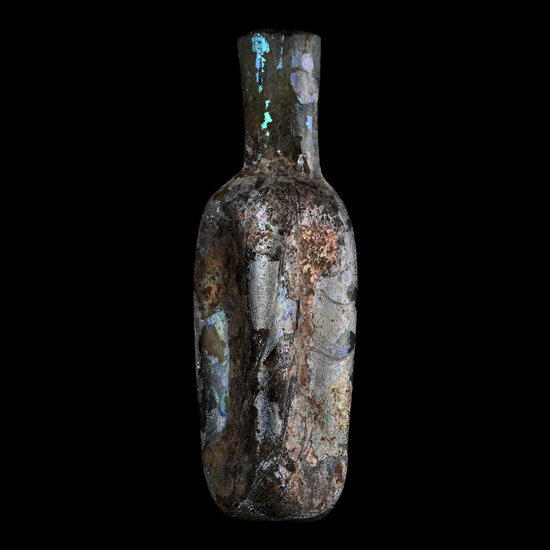
Roman Iridescent Glass Perfume Bottle
1st-2nd century A.D.Sold for (Inc. bp): £156
Comprising a square-section slightly dimpled body and tubular flared neck; iridescent surface. 18.8 grams, 74 mm
Ex London, UK, art market 1990s. -
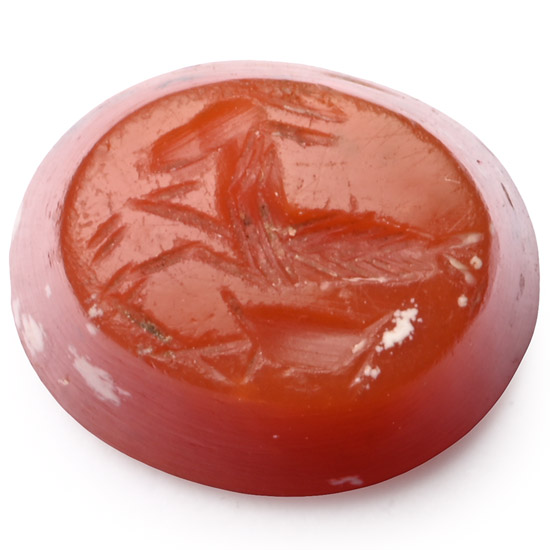
Roman Carnelian Gemstone with Capricorn
2nd-3rd century A.D.Sold for (Inc. bp): £130
With intaglio capricorn, forelegs extended; supplied with a museum-quality impression. 0.39 grams, 8.45 mm
From the private collection of a European gentleman (1942-2024), formed since the 1970s. -
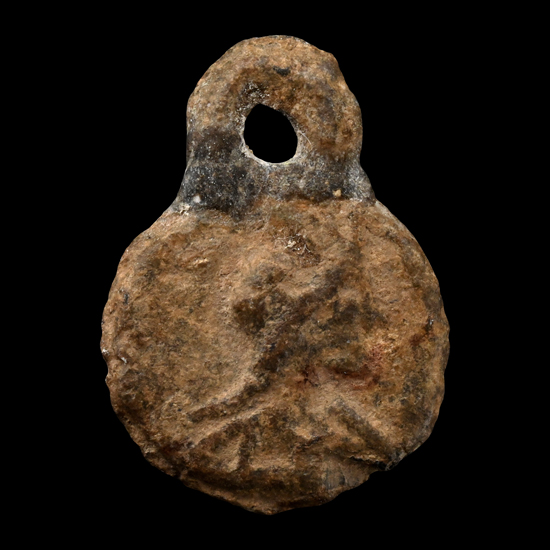
Roman Bifacial Lead Pendant with Busts
1st-4th century A.D.Sold for (Inc. bp): £33
Discoid in plan with integral suspension loop, obverse with right-facing profile bust wearing a solar crown, reverse with bearded profile bust with topknot. 4.42 grams, 21 mm
From the collection of a gentleman, acquired on the London art market in the 1990s. -
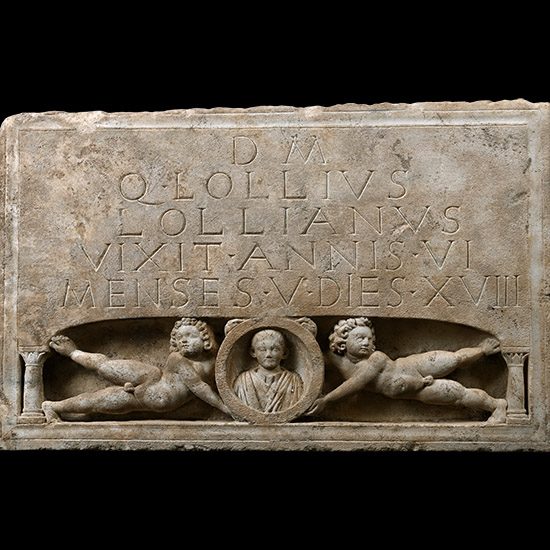
Roman Limestone Stele with Nude Putti
2nd-3rd century A.D. and laterSold for (Inc. bp): £22,100
Rectangular in plan with recessed panels to the lower edge, central bust of the deceased boy in a tondo supported by two nude horizontal putti with their legs extended towards a short column; deep undercuts to the columns and recess; later inscription in seriffed capitals 'DM / Q LOLLIVS / LOLLIANVS / VIXIT ANNIS VI / MENSES.V. DIES .XVIII.' 40.1 kg, 38 x 61.5 cm
From the private Netherlands collection of Mr Edward P. Van Dijk (1942-2024); his collection formed since the 1970s. This lot has been checked against the Interpol Database of stolen works of art and is accompanied by search certificate number no.13243-251959.
The inscription reports the usual dedication to the deceased, in this case a young boy six years of age: 'To the manes (spirits of the dead), Q(uintus) Lollius Lollianus, he lived 6 years, 5 months and 18 days'. -
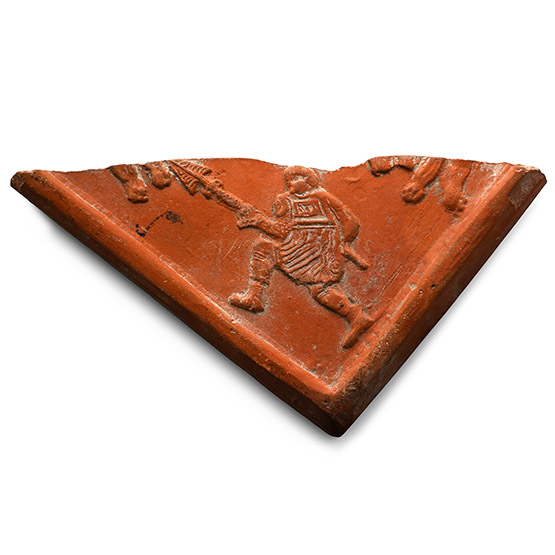
Roman Redware Tile Section with Venatore Gladiator Fighting Lions
Circa 4th century A.D.Sold for (Inc. bp): £338
The corner of a rectangular tile showing a dynamic scene of an armoured gladiator charging towards a lion with a large spear, and another lion attacking him from behind. 92 grams, 14 cm
From the collection of a late Yorkshire, UK, gentleman. -
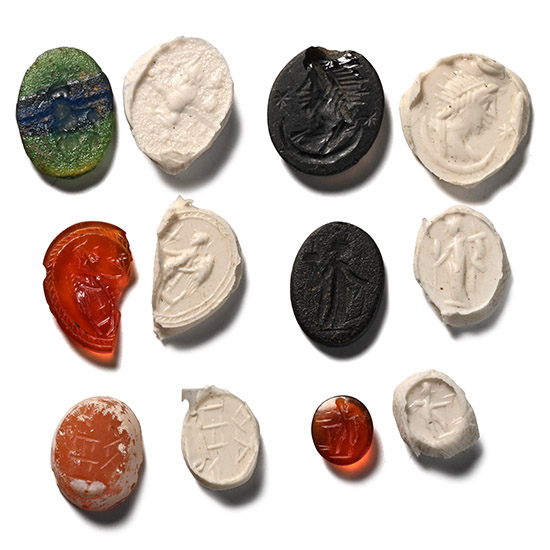
Roman Gemstone and Glass Intaglio Collection
Circa 2nd-3rd century A.D.Sold for (Inc. bp): £221
Comprising: standing Fortuna with cornucopia; two running horses; winged Victory; '[.]ET VA' legend; stooping figure; profile bust with solar crown; each supplied with a museum-quality impression. 2.07 grams total, 6.63-12.90 mm
From the private collection of a European gentleman (1942-2024), formed since the 1970s. -
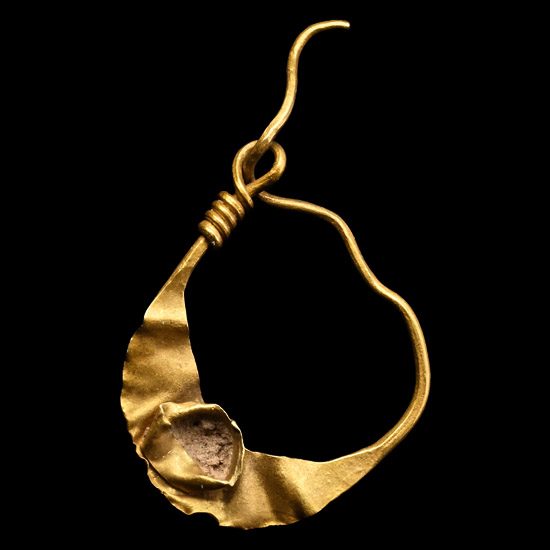
Eastern Roman Gold Earring
1st-4th century A.D.Sold for (Inc. bp): £111
Comprising a crescentic body with a cell at the centre, a hook-and-loop closure. 0.26 grams, 20 mm
Ex private British collection, formed in the 1980s. Property of a West Northamptonshire, UK, gentleman. -
.jpg)
Roman Bronze Silvered Plate Brooch
Circa 2nd century A.D.Sold for (Inc. bp): £195
Cruciform in plan with trefoil finial to each arm, punched-point border and median line, applied bone disc to each lateral arm and a larger one in a recessed cell to the centre pin-lugs, pin and catch to reverse. 5.7 grams, 39 mm
Ex German art market, 2000s. Acquired from an EU collector living in London. From the collection of a Surrey, UK, gentleman. -
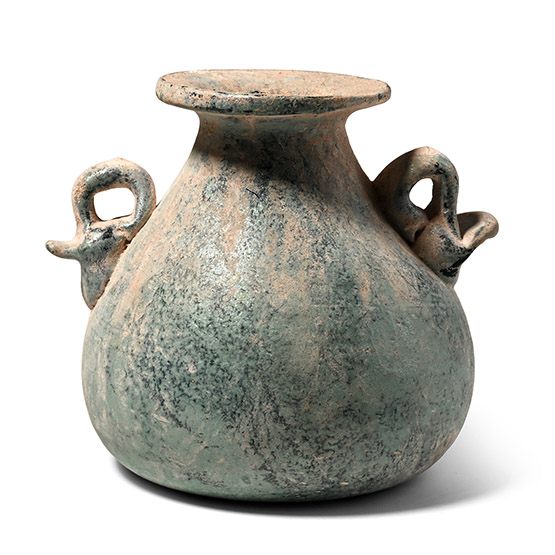
Parthian Glass Two-Handled Vessel
Circa 1st-2nd century A.D.Sold for (Inc. bp): £260
Pale blue bulbous vessel with trumpet-shaped neck, two small curving handles. 221 grams, 10.4 cm wide
Ex German art market, 2000s. Acquired from an EU collector living in London. From the collection of a Surrey, UK, gentleman. -
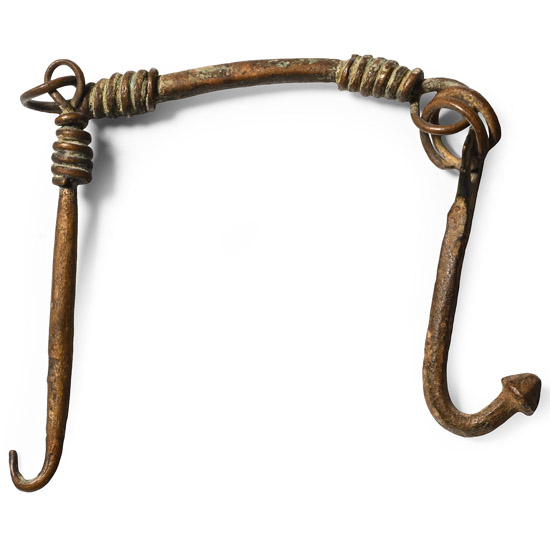
Roman Bronze Hook Mechanism
1st-4th century A.D.Sold for (Inc. bp): £91
Comprising a straight bar at the centre with two hooks suspended from each end. 5.94 grams, 12 cm
From the private collection of a European gentleman (1942-2024), formed since the 1970s. -
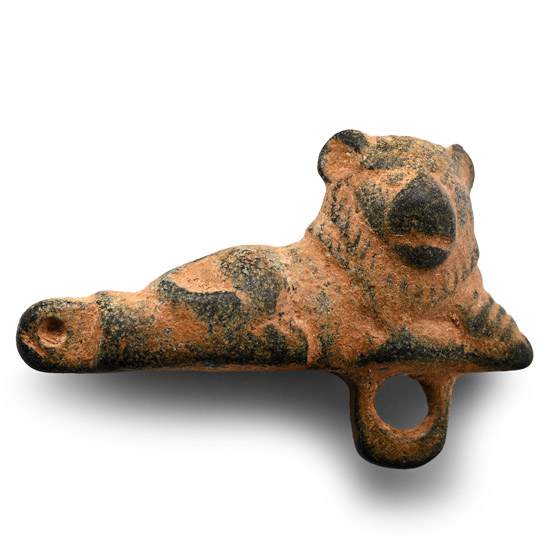
Roman Bronze Lion Lock Hasp
1st-4th century A.D.Sold for (Inc. bp): £130
Formed as a crouching lion with head turned; pierced lug at the rump for the hinge, loop below the shoulders for the hasp. 35 grams, 46 mm
From the collection of a gentleman, acquired on the London art market in the 1990s.

