-
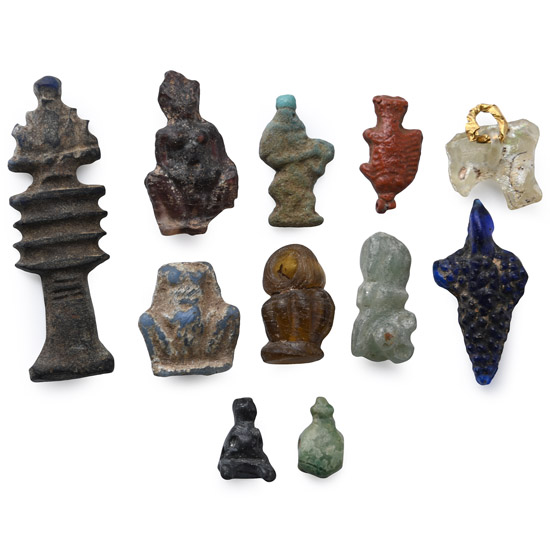
Egyptian Faience and Glass Amulet Collection
New Kingdom-Late Period, circa 1550-332 B.C.Sold for (Inc. bp): £221
Comprising eleven amulets, including two baubo amulets, a dancing Bes, a tilapia fish, a bunch of grapes, a crowned djed pillar, two lion amulets, and others. 9.11 grams total, 9.53-36.46 mm
From the private collection of a European gentleman (1942-2024), formed since the 1970s. -
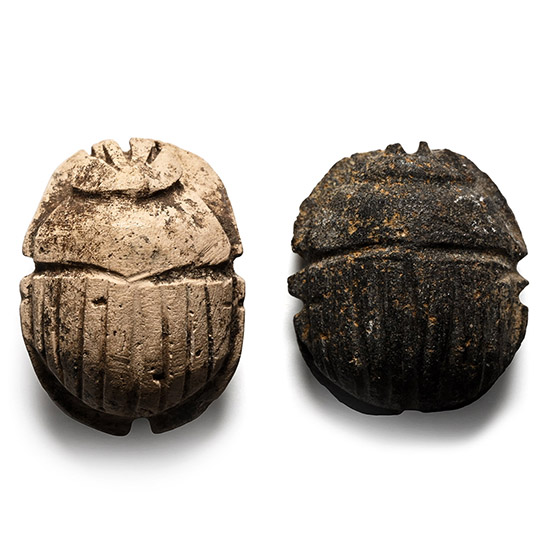
Egyptian Heart Scarab Group
Late Period, 664-332 B.C.Sold for (Inc. bp): £143
Comprising two scarabs with striated wing cases and ribbed underside. 7.5 grams total, 18-20 mm
From the collection of a gentleman, acquired on the London art market in the 1990s.
The scarab amulet was a powerful symbol of rebirth, transformation, and protection in ancient Egypt. Modelled after the beetle linked to the sun god Khepri, it represented the cycle of life and regeneration. Used from the Middle Kingdom (c. 2050 BCE) onwards, scarabs served as funerary amulets, personal charms, and seals—often inscribed with prayers or names—reflecting both spiritual beliefs and daily life. -
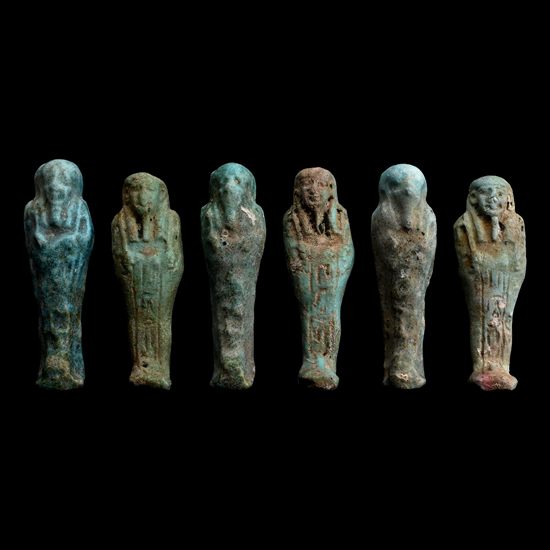
Egyptian Faience Shabti Collection
Late Period-Ptolemaic Period, 664-30 B.C.Sold for (Inc. bp): £468
Comprising mainly D-section types with moulded facial detailing some with vertical band of hieroglyphs to the lower body. 11.1 grams total, 67-72 mm
From the collection of a gentleman, acquired on the London art market in the 1990s. -
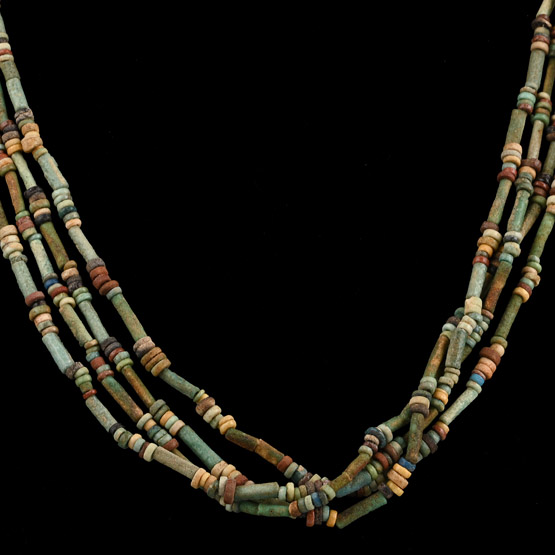
Egyptian Multi-Stranded Mummy Bead Necklace
Late Period, 664-332 B.C.Sold for (Inc. bp): £182
Four-strand designer necklace composed of polychrome beads of mainly disc and cylindrical types. 24.65 grams, 61 cm
Acquired before 1979. From the private collection of Mr F.A., South Kensington, London, UK; thence by descent 2014.
For thousands of years, artisans in Egypt created vibrant ceramics to echo the beauty of rare jewels. These ornaments were created with almost every material, colour, and texture imaginable, and they come from across Egypt and beyond: vibrant blue lapis lazuli from Afghanistan, glossy black obsidian from Turkey, and aqua-green turquoise from the Sinai. They were worn in life and, after death, they served as precious ornamentation for mummies. -
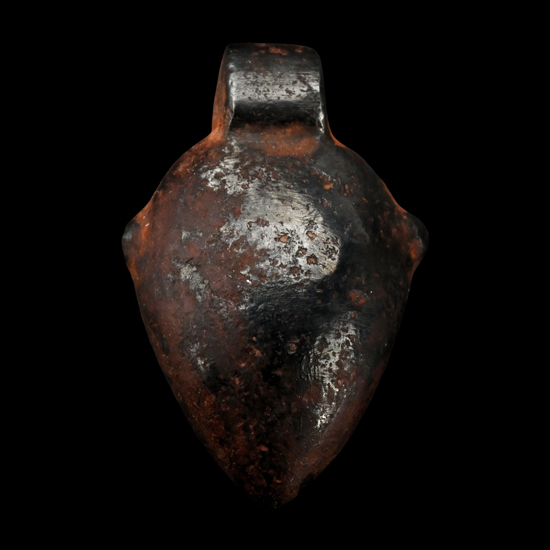
Egyptian Haematite Heart Amulet
Late Period, 664-332 B.C.Sold for (Inc. bp): £130
Carved with lateral triangular lugs and an integral bale. 2 grams, 15 mm
Ex early 20th century collection. -
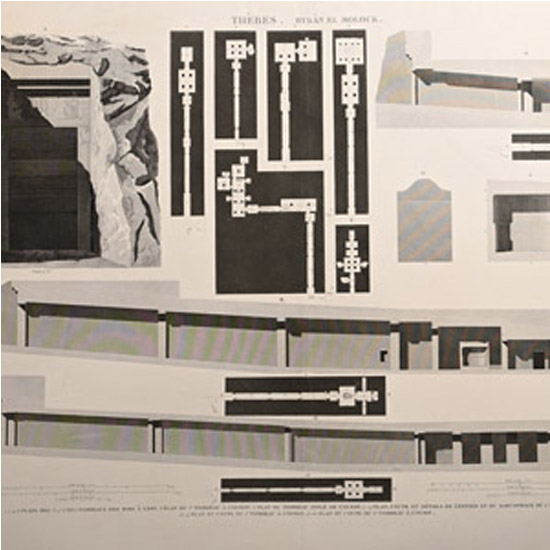
Very Large Egyptian Expedition Lithograph of Bayban el Molouk at Thebes
Early 19th century A.D.Sold for (Inc. bp): £91
Proof etching on laid paper of plate 79 Thèbes - Byban el Molouk entitled Plan des 2e, 4e, 2e et 1er tombeaux des rois a l'Est. Plan du 3e tombeau a l'Ouest. Plan du Tombeau isolé de l'Ouest. Plan, coupe et détails de l'entrée et du sarcophage du 2e tombeau a l'Ouest. Plan et coupe du 1er tombeau a l'Ouest. Plan et coupe du 6e tombeau a l'Ouest. 208 grams, 102.5 x 69 cm
From the collection of a North American priest. Acquired between 1981-1996. Property of a North American collector.
Produced between February 1802 and 1830 on the orders of Napoleon Bonaparte; published between 1809 and 1828. Just 1,000 copies were distributed to various institutions, printed on laid paper with an 'Égypte ancienne et moderne' watermark. The book is subtitled Recueil des observations et des recherches qui ont été faites en Égypte pendant l’expédition de l’Armée française, publié par les ordres de Sa Majesté l’Empereur Napoléon le Grand (Gathering of observations and discoveries which were made in Egypt during the expedition of the French army, published on the orders of His Majesty the Emperor Napoleon the Great). It was the world's first encyclopedia devoted exclusively to the remains of ancient Egypt. The plates of this book are the first to present the archaeological sites of Thebes (Luxor). This plate shows plans and sections of some of the royal tombs in the Valley of the Kings. -
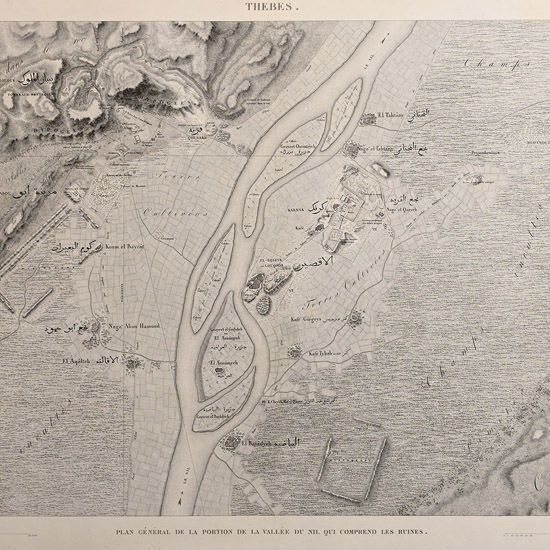
Very Large Egyptian Expedition Lithograph of Thebes
Early 19th century A.D.Sold for (Inc. bp): £94
Proof etching on laid paper of plate 1 entitled Thèbes. Plan général de la portion de la Vallée du Nil qui comprend les ruines, Volume II, Plate 1. 341 grams, 103.8 x 69.5 cm
From the collection of a North American priest. Acquired between 1981-1996. Property of a North American collector.
Produced between February 1802 and 1830 on the orders of Napoleon Bonaparte; published between 1809 and 1828. Just 1,000 copies were distributed to various institutions, printed on laid paper with an 'Égypte ancienne et moderne' watermark. The book is subtitled Recueil des observations et des recherches qui ont été faites en Égypte pendant l’expédition de l’Armée française, publié par les ordres de Sa Majesté l’Empereur Napoléon le Grand (Gathering of observations and discoveries which were made in Egypt during the expedition of the French army, published on the orders of His Majesty the Emperor Napoleon the Great). It was the world's first encyclopedia devoted exclusively to the remains of ancient Egypt. The plates of this book are the first to present the archaeological sites of Thebes (Luxor). -
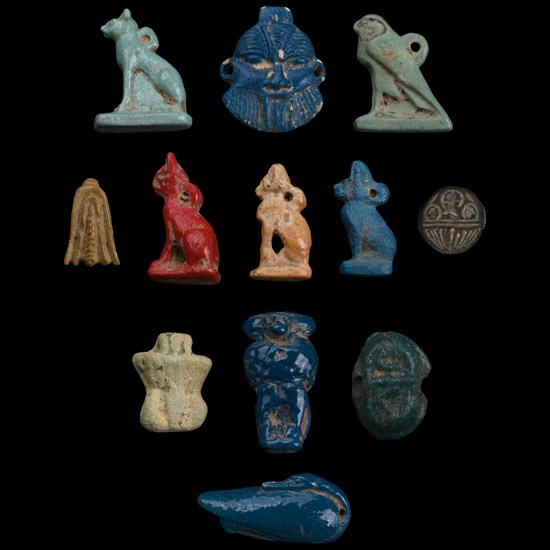
Egyptian Faience Amulet Collection
Late Period-Ptolemaic Period, 664-30 B.C. and laterSold for (Inc. bp): £3,120
Including four seated cats, a Horus falcon, a Bes head, a standing baboon, male genitalia, a trussed duck, and other amuletic types. 18.92 grams total, 15-26 mm
From the collection of a gentleman, acquired on the London art market in the 1990s. -
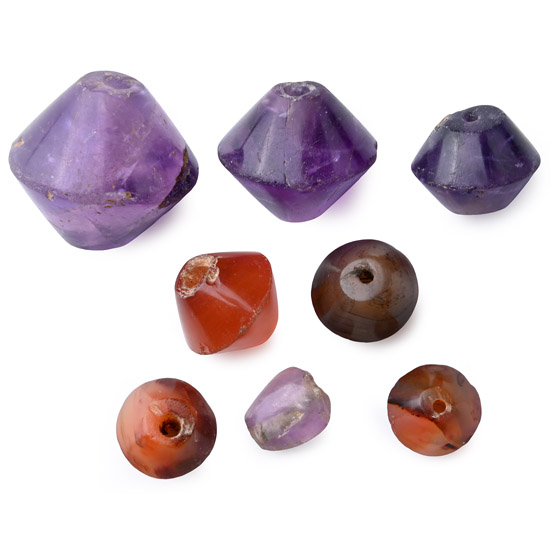
Egyptian Amethyst and Carnelian Bead Group
New Kingdom, 18th Dynasty, circa 1550-1292 B.C.Sold for (Inc. bp): £442
Comprising three biconical amethyst beads, four biconical carnelian beads and one teardrop-shaped amethyst bead. 13.57 grams total, 7.40-16.99 mm
From the private collection of a European gentleman (1942-2024), formed since the 1970s. -
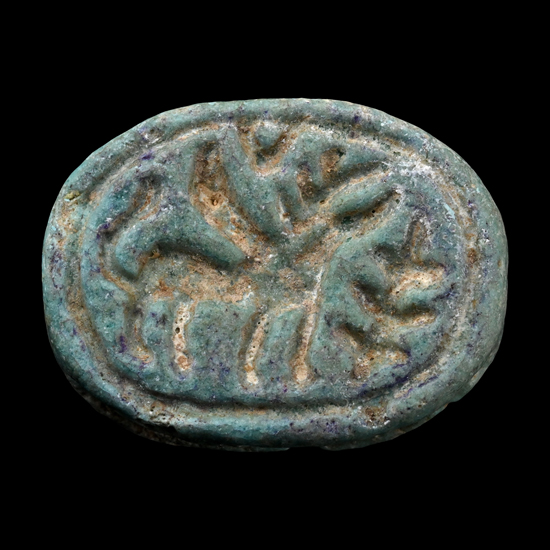
Phoenician Blue Glazed Faience Scaraboid with Winged Beast and Tree
1st millennium B.C.Sold for (Inc. bp): £72
Anatomical detailing on the body, underside with a standing quadruped with open wings and curving tail, tree before. 1.5 grams, 15 mm
From a late Warwickshire numismatic collector, his collection formed from the early 1980s. -
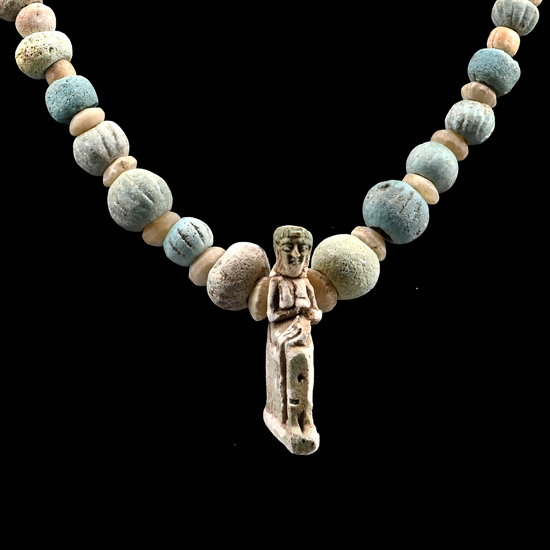
Egyptian Faience Bead and Amulet Necklace
Late Period-Ptolemaic Period, 664-30 B.C.Sold for (Inc. bp): £286
Restrung group of melon, barrel-shaped and other beads with centrepiece of Isis nursing Horus. 57 grams, 35 cm long, amulet 47 mm
From the collection of a gentleman, acquired on the London art market in the 1990s. -
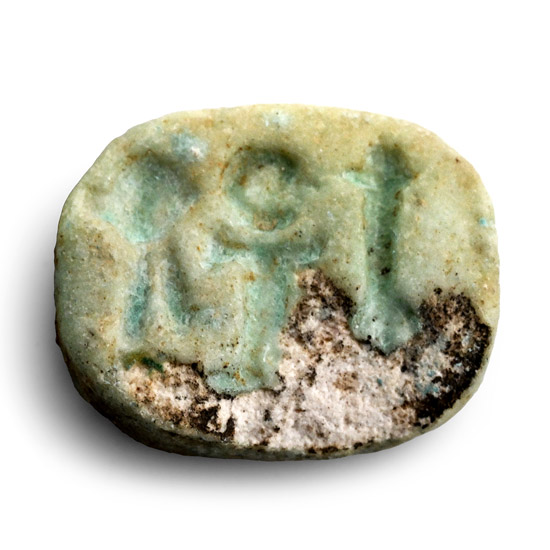
Egyptian Faience Scaraboid with Hieroglyphs
Late Period, 664-332 B.C.Sold for (Inc. bp): £52
Bifacial scaraboid with hieroglyphs including an ankh to one side and the other with a wedjat. 0.75 grams, 13 mm
From a late Warwickshire numismatic collector, his collection formed from the early 1980s.

