-
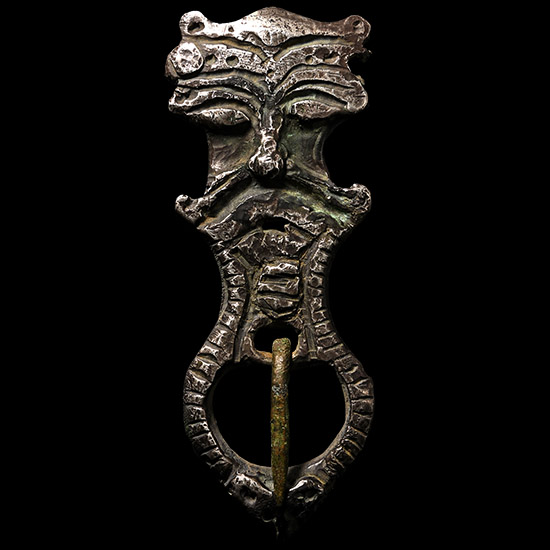
Viking Silver Buckle with Moustachioed Face
Circa 8th-9th century A.D.Sold for (Inc. bp): £546
With ovoid loop and integral buckle-plate, coiled wire tongue; loop with segmented frame, and bear-head motif to forward edge; plate with narrow neck developing to a male mask with broad flaring moustache, snub nose and lentoid eyes; fixing lugs to reverse. 35.13 grams, 75.36 mm
From the private collection of a London gentleman, from his grandfather's collection formed before the early 1970s. -
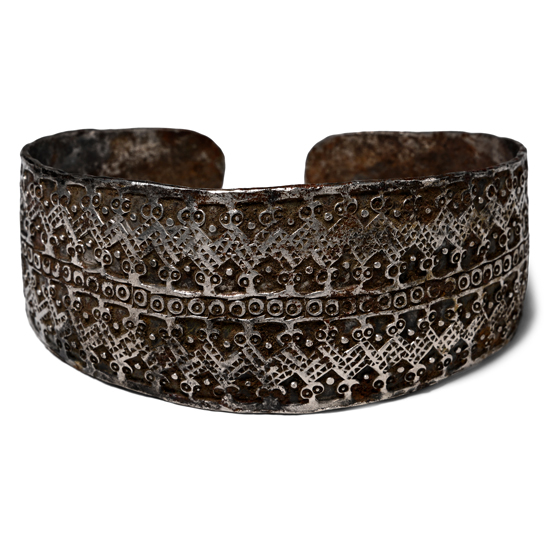
Viking Stamped Silver Bracelet
Circa 9th-11th century A.D.Sold for (Inc. bp): £442
Featuring a wide penannular body with rounded finials, the upper face divided into two fields with rich stamped decoration comprising ring-and-dot and triangular motifs. 43.11 grams, 74.13 mm
From the private collection of a London gentleman, from his grandfather's collection formed before the early 1970s. -
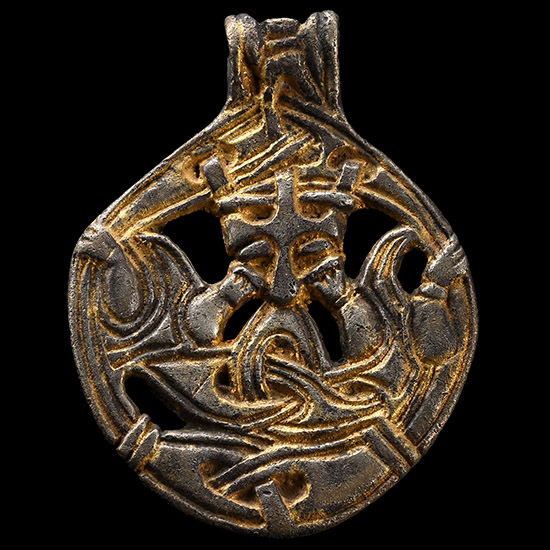
Viking Age Silver-Gilt Gripping Beast Pendant
Circa 10th century A.D.Sold for (Inc. bp): £416
Comprising an integral suspension loop; the openwork plaque with banded border and panels, internal stylised zoomorph with hatched panel to the hip, gripping three-fingered hands to the body and border, two detailed feet, clearly visible facing mask below the loop with pellet eyes. 8.69 grams, 40 mm
Private collection formed in Europe in the 1980s. Westminster collection, central London, UK. -
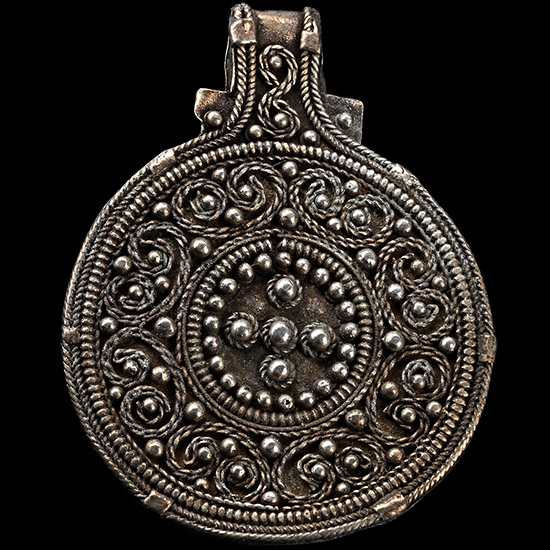
Viking Age Silver Filigree Pendant with Scroll Cross
Circa 9th-11th century A.D.Sold for (Inc. bp): £1,040
Discoid with applied filigree looped bands, granules and other detailing; cleaned and polished. 4.99 grams, 38 mm
Private collection formed in Europe in the 1980s. Westminster collection, central London, UK. -
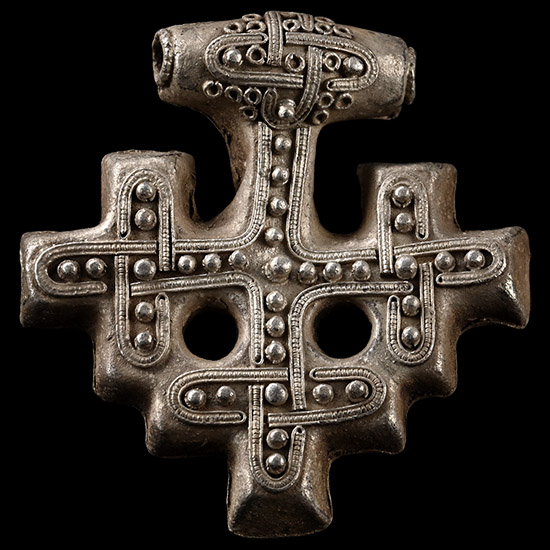
Scandinavian Viking Silver Filigree Tau Cross Pendant
Circa 10th-12th century A.D.Sold for (Inc. bp): £2,860
Cruciform hollow pendant with applied interlaced granulation to the obverse, filigree borders and scrolled interlaced 'face' design on the suspension bar. 3.62 grams, 31 mm
Private collection formed in Europe in the 1980s. Westminster collection, central London, UK. -
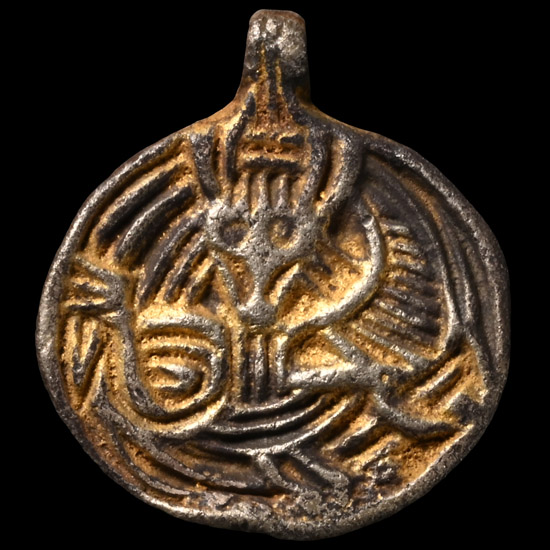
Viking Age Scandinavian Silver-Gilt Pendant with Mask
Circa 9th-11th century A.D.Sold for (Inc. bp): £975
With integral loop, border enclosing a low-relief image of a male facing mask between two birds embraced at the necks; Kipplingeberg type. 3.81 grams, 23 mm
Private collection formed in Europe in the 1980s. Westminster collection, central London, UK. -
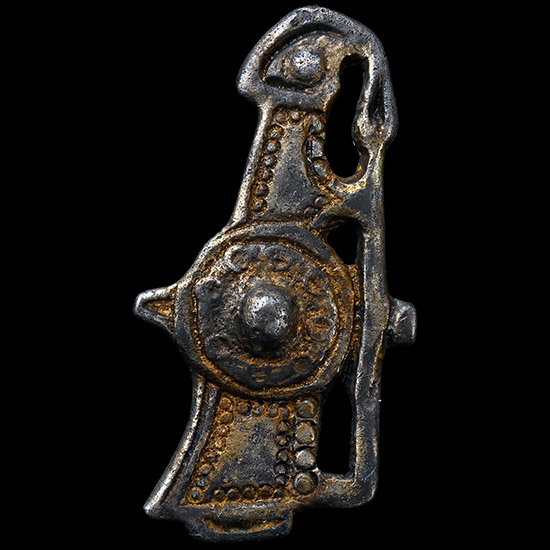
Viking Age Silver-Gilt Shield-Maiden Pendant
Circa 9th-10th century A.D.Sold for (Inc. bp): £1,170
A female in floor-length robe holding a shield in her right hand and spear in her left, stylised headdress, pointillé detailing; pierced lug to the reverse. 7.57 grams, 42.5 mm
Private collection formed in Europe in the 1980s. Westminster collection, central London, UK. -
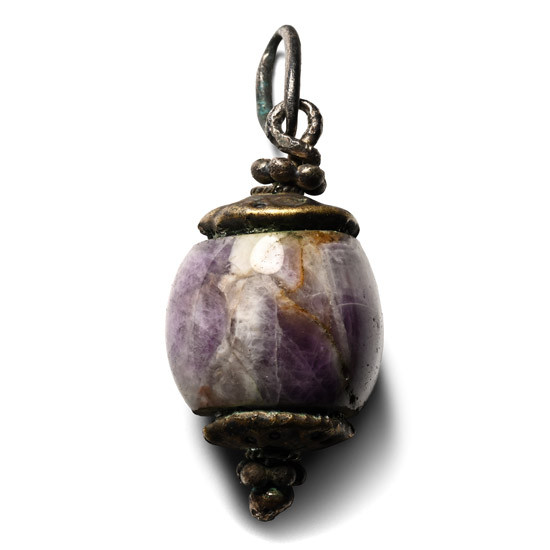
Viking Age Bronze Pendant with Polished Amethyst Bead
Circa 9th-11th century A.D.Sold for (Inc. bp): £1,105
Comprising an amethyst bead with stamped conical disc above and below, suspension pin through centre with ring and loop above. 18.93 grams, 55 mm including loop
Private collection formed in Europe in the 1980s. Westminster collection, central London, UK. -
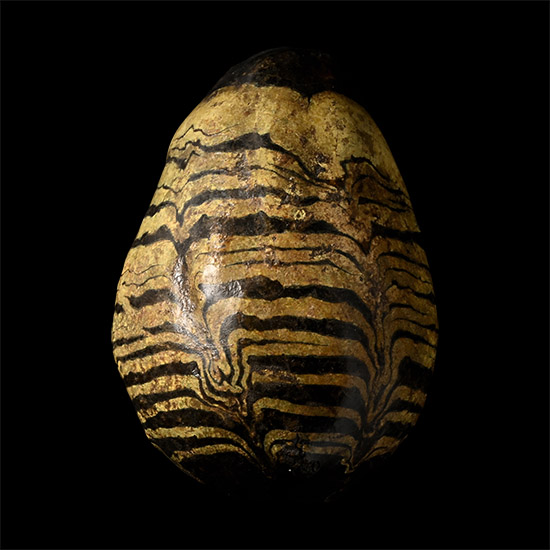
Viking Glazed 'Resurrection Egg'
Circa 9th-10th century A.D.Sold for (Inc. bp): £910
A glazed hollow ceramic egg with a hole to the underside and a smaller pellet inside; regular, dragged yellow lines to the outer face. 30.4 grams, 41 mm
From the private collection of a London gentleman, from his grandfather's collection formed before the early 1970s.
These eggs are usually assigned to Kievan Rus workmanship, but in fact, they were found in a wider geographical area. They are thought to represent an early form of a popular Orthodox tradition of painted eggs, or 'pysanka', popular during the Easter holiday as a symbol of resurrection. However, the symbolism may be pre-Christian, with a connection to an idea of a Cosmic Egg, from which the world was created. -
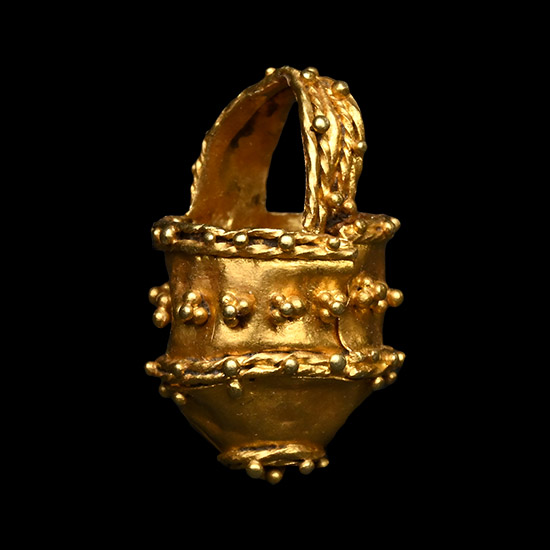
Pre-Viking Gold Aroma Bucket Pendant
Circa 4th-7th century A.D.Sold for (Inc. bp): £1,430
Miniature drum-shaped vessel covered in filigree bobbles with strap handle. 0.78 grams, 13.52 mm
Private collection formed in Europe in the 1980s. Westminster collection, central London, UK.
Pendants in the form of miniature buckets have been found in a number of pagan Anglo-Saxon and Viking contexts and are generally made of bronze or iron, with gold examples being rare; three gold examples were found with the hoard from Hoen, Norway. Bronze bucket amulets have been found at Driffield in Yorkshire, and Vimose bog in Denmark, among other places. In form they represent wooden buckets bound with bronze or iron bands which have been found in Anglo-Saxon and Viking graves and are believed to have held mead or ale and were used to replenish the cups from which warriors drank. As amulets they probably represent the ecstatic power of alcoholic drink and the role of women as the dispensers of these precious beverages. -
.jpg)
Viking Silver Bar and Coin 'Hack Hoard Group'
Circa 9th-11th century A.D.Sold for (Inc. bp): £1,820
Comprising: a quantity of dirhem and other silver coins, cut into halves, quarters and irregular fragments; a quantity of square-section and other cast bars. 275 grams total, 1.2-10.2 cm
From the private collection of a London gentleman, from his grandfather's collection formed before the early 1970s. -
.jpg)
Viking Age Bronze Odin with Ravens Fire Striker
Circa 10th century A.D.Sold for (Inc. bp): £1,170
Openwork handle depicting confronted birds of prey flanking a crouching figure, facing, on a band of pellets; iron striking face below. 25.83 grams, 58 mm
From the private collection of a London gentleman, from his grandfather's collection formed before the early 1970s.

