-

Collection of Three [3] Gift Bagged Kalahari Desert Wind Stones
Sold for (Inc. bp): £26
Comprising three wind-rounded pebbles in hollowed out 'nests'; each with a hessian draw-ribbon pouch. 335 grams total, 47-62 mm
From the Kalahari Desert. Ex Mineral Imports, London, UK. Gregory, Bottley & Lloyd (Gregory's), Harwich, UK. -
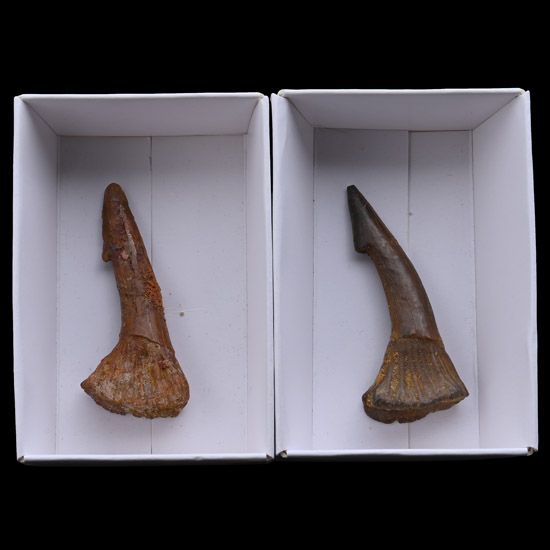
Two Fossil Sawfish Rostral Spines
Cretaceous Period, circa 100-66 million years B.P.Sold for (Inc. bp): £20
Comprising two Onchopristus numidus sawfish rostral teeth. 16.4 grams total, 53 mm
From Whitby, Yorkshire, UK. From a Cambridgeshire, UK, collection. -
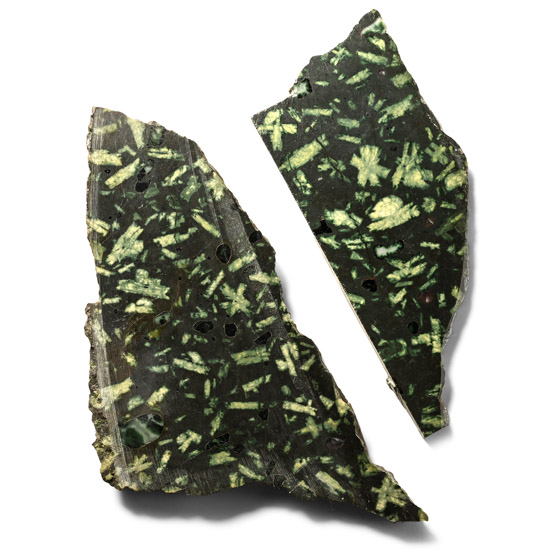
Historic Roman 'Spartan Basalt' Cut and Polished Green Porphyry Sheet Group
Sold for (Inc. bp): £143
Cut and polished sections, mined in Greece, cut and polished on both sides, probably recycled material mined in ancient Roman times. 221 grams total, 11.9-14.5 cm
Ex Mineral Imports, London, UK. Gregory, Bottley & Lloyd (Gregory's), Harwich, UK.
Also known as Lapis Lacedaemonius and Porfido Verde Antico, a type of green porphyry quarried in Greece. Spartan basalt is a form of andesite or volcanic rock known today only from a single source in the village of Krokees on the Peloponnese in Greece. In addition, ancient sources mention a quarry of Lapis Lacedaemonius in Taygetus. -

Group of Three [3] Cut and Polished Malawi Agate Geode Halves
Sold for (Inc. bp): £20
Comprising three sections with a polished cut face, each with a crystal-lined centre and showing contrasting banding. 1.57 kg total, 8.8-16 cm
From Malawi. Ex Mineral Imports, London, UK. Gregory, Bottley & Lloyd (Gregory's), Harwich, UK. -
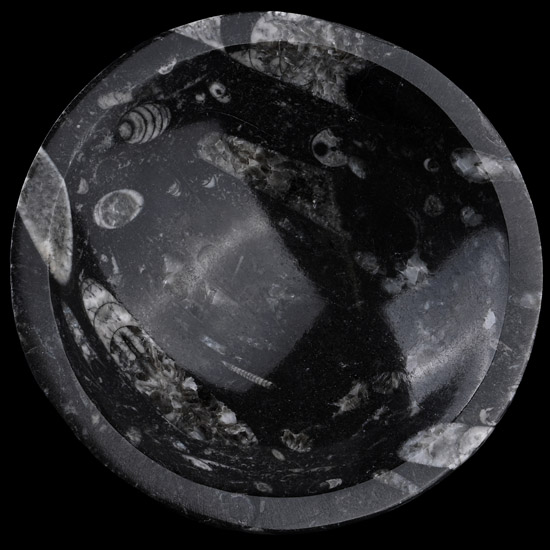
Polished Fossil Orthoceras Bowl
Devonian Period, circa 417-354 million years B.P.Sold for (Inc. bp): £52
A shallow dish carved from fossiliferous stone showing multiple Orthoceras sp. specimens. 244 grams, 12 cm
From Morocco, North Africa. From a Cambridgeshire, UK, collection. -
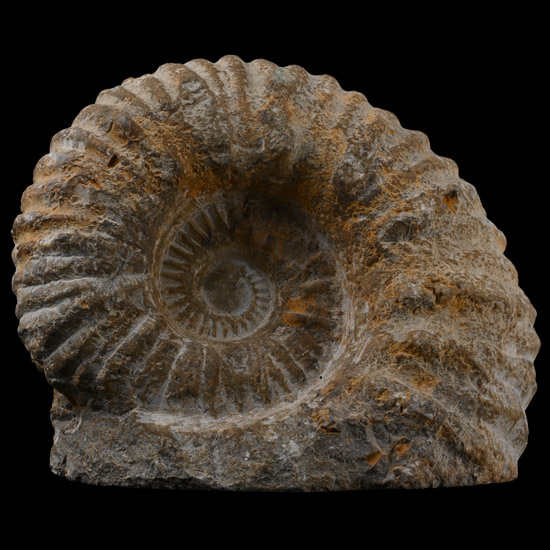
Large Fossil Agadir Ammonite with Cut Base
Cretaceous Period, circa 145-66 million years B.P.Sold for (Inc. bp): £52
With a cut base and showing characteristic ribbing, possibly Calycoceras. 2 kg, 12.1 cm
From a Cambridgeshire, UK, collection. -

Quartz Gem Tree on Amethyst Crystal Geode Section
Sold for (Inc. bp): £26
Irregular geode matrix with light purple amethyst crystals; the metal branches tipped with polished quartz pebbles. 600 grams, 17 cm
From Brazil. Ex Mineral Imports, London, UK. Gregory, Bottley & Lloyd (Gregory's), Harwich, UK. -

Fossil Spinosaurus and African 'T-Rex' Dinosaur Tooth Group
Cretaceous Period, circa 125-113 million years B.P.Sold for (Inc. bp): £143
Comprising a Spinosaurs maroccanus and a Carcharodontosaurus saharicus tooth with some root; repaired. 15.80 grams total, 39-47 mm
Found Morocco, North Africa. Property of an Essex gallery.
The Carcharodontosaurus saharicus was one of the largest predators (larger than its distant North American T-Rex cousin) of all time and is also related to Allosaurus and the South American Giganotosaurus. The Spinosaurus was both a beachcomber type scavenger and an active hunter, taking small stranded Plesiosaurs, Pterosaurs, turtles and large fish. -
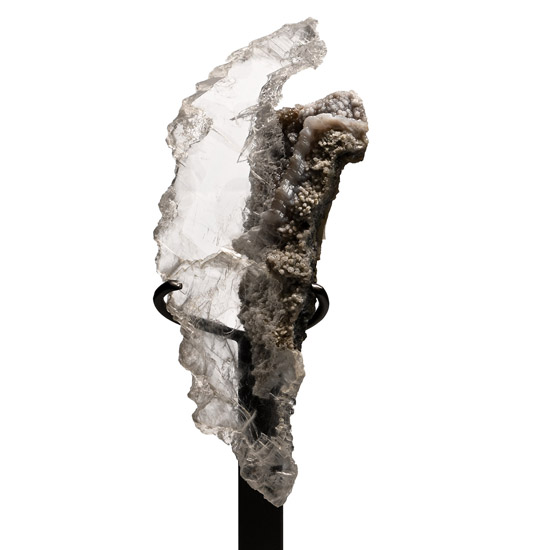
Gypsum with Quartz Display
Sold for (Inc. bp): £338
Comprising a blade-shaped curving formation of transparent gypsum attached to a matrix with druzy quartz; mounted on a custom-made display stand. 629 grams total, 26.5 cm including stand
From Artigas, Uruguay. Property of a London lady. -

Large Rose Quartz Boulder
Sold for (Inc. bp): £13
Vibrant pink boulder of microcrystalline rose quartz. 4.13 kg, 18 cm
Ex Mineral Imports, London, UK. Gregory, Bottley & Lloyd (Gregory's), Harwich, UK. -
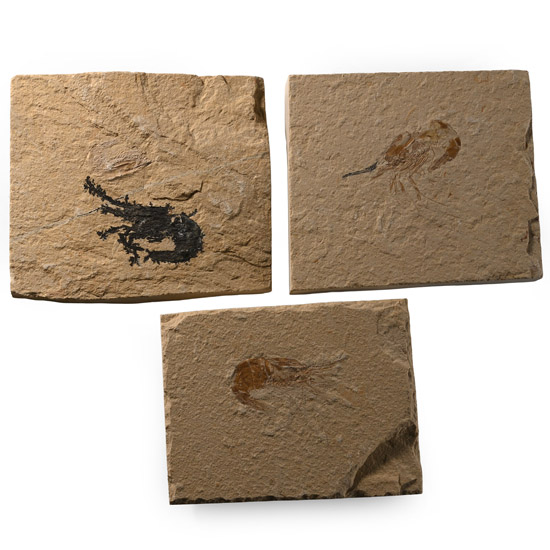
Fossil Lebanese Shrimp on Matrix Group
Cretaceous Period, circa 110 million years B.P.Sold for (Inc. bp): £59
Comprising three rectangular matrices, each with a Carpopenaeus sp. specimen, one dendritic. 447 grams total, 84-89 mm
From a Cambridgeshire, UK, collection. -

Woolly Mammoth Bone Bead Necklace String
Pleistocene Epoch, 2.6 million-11,700 years B.P.Sold for (Inc. bp): £78
Restrung, using recently polished Mammuthus primigenius spherical bone beads. 138 grams, 62 cm long
From an old Lincolnshire, UK, collection. Property of a West Northamptonshire, UK, gentleman.
The mammoth lineage branched from the Asian elephant around 6 million years ago, and later on, the Woolly Mammoth, Mammuthus primigenius, evolved in eastern Siberia. Woolly mammoths, being slightly smaller than living African elephants, were foragers and ate grass, as well as small, nutritious flowering plants that flourished in the environment where they lived. They may also have used their curved tusks to dig through snow and eat plants that other foragers were unable to reach.

