-
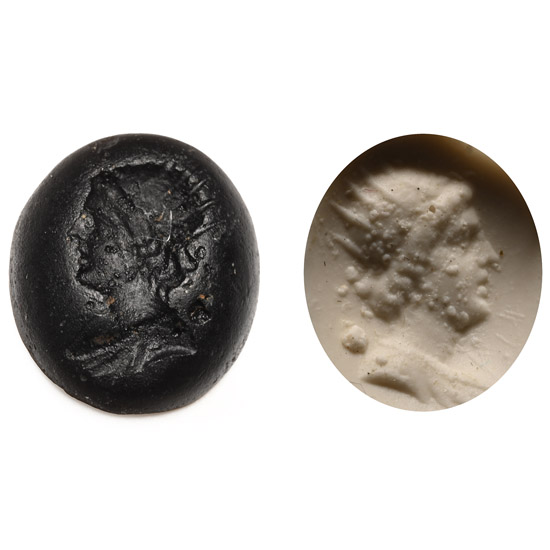
Roman Glass Gem with Bearded Bust
2nd-3rd century A.D.Sold for (Inc. bp): £124
With intaglio profile bust, bearded and wearing a solar crown; supplied with a museum-quality impression. 0.81 grams, 13.91 mm
From the private collection of a European gentleman (1942-2024), formed since the 1970s. -
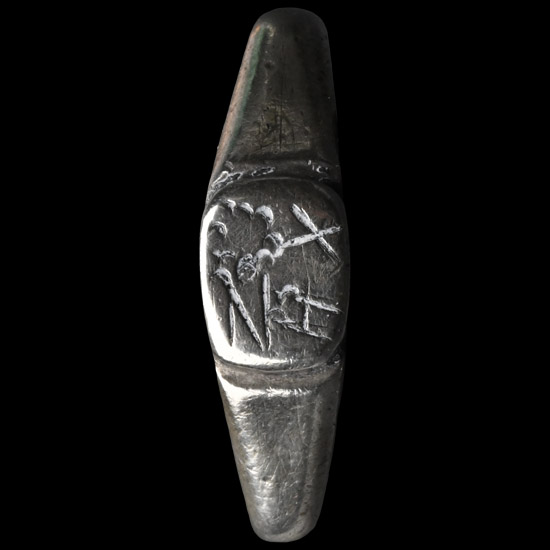
Roman Silver Inscribed Ring
2nd-4th century A.D.Sold for (Inc. bp): £98
D-section hoop with angled shoulders and raised bezel with pseudo inscription, inked collector's number on the inside 'MI574'; polished. 3.49 grams, 22.30 mm overall, 15.52 mm internal diameter (approximate size British H 1/2, USA 4, Europe 6.81, Japan 6)
Formerly in the collection of Lord McAlpine of West Green, bearing collection number M1574. Bonhams, Knightsbridge, London, Antiquities Sale, Wednesday 12th July 2000, no.9 (part). Property of a West Northamptonshire, UK, gentleman. Accompanied by a copy of the Bonhams invoice. -
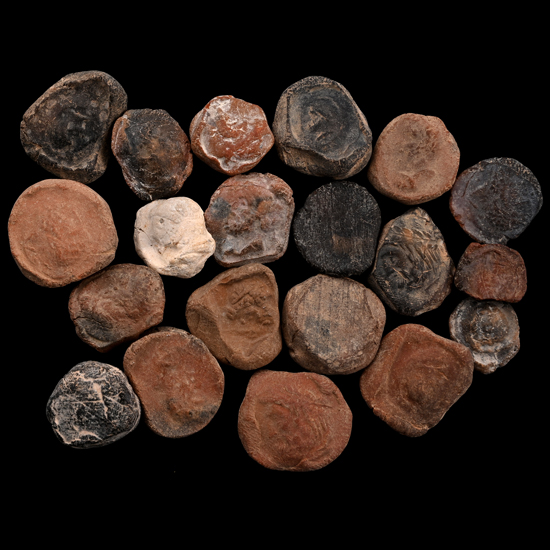
Roman Terracotta Bullae, Tesserae or Token Group
3rd century B.C.-1st century A.D.Sold for (Inc. bp): £65
A mixed group of ceramic bullae, tesserae or theatre tokens bearing low-relief motifs, mainly consisting of profile busts of deities. 32 grams total, 14-20 mm
From the private collection of a European gentleman (1942-2024), formed since the 1970s.
The term 'tessera' was used in Roman times to convey the Greek term σύμβολον (token). Small tiles are known as tokens, often shaped like coins, made of metal (copper, lead, iron), clay, bone, wood, or glass, stamped as well as engraved. The tokens, however, are not exclusively coin-shaped, as the Latin term 'tessera' suggests by etymologically referring to a square or at least a four-sided shape and confirmed in several cases by material remains of the past. Tokens and tesserae seem to have been used both in Athens and Rome for the distribution of goods. According to written sources, the term token is identified with credentials of the official authorities. They have also been interpreted as tokens of identity, as entrance tickets to theatre performances, tribunals or assemblies of citizens, archival material of seal engraving, as pawns in games, Charon’s obols and even as amulets. -
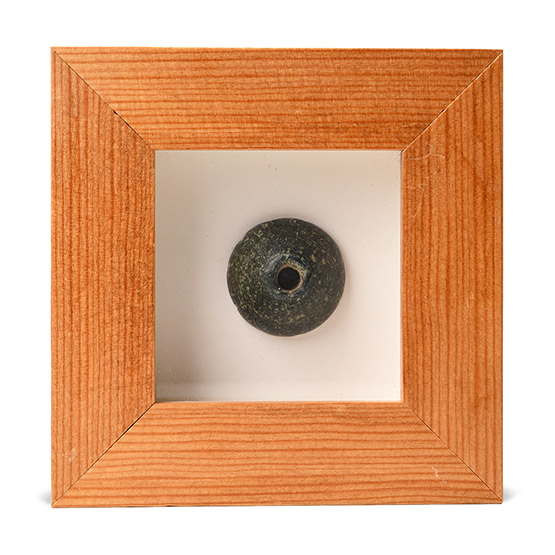
Framed Roman Black Stone Spindle Whorl
Circa 200 A.D.Sold for (Inc. bp): £26
Conical body with a circular opening; set in a glazed wooden display frame. 114 grams total, 93 x 94 mm including frame
Acquired from Ancient Art Shop, Berkshire, UK. From the collection of a Nottingham, UK, collector, established from the early 2000s. Accompanied by the original Ancient Art Shop certificate of authenticity. -
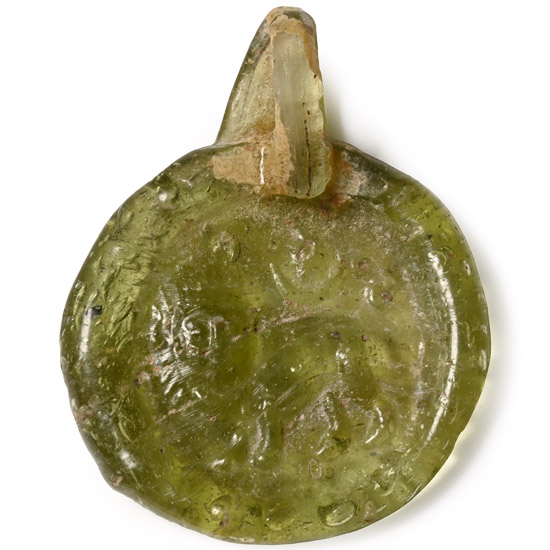
Roman Glass Pendant with Lion
2nd-3rd century A.D.Sold for (Inc. bp): £85
Pale green discoid pendant with an impressed motif of a standing lion facing, a crescent and a star above. 1.88 grams, 24.91 mm
From the private collection of a European gentleman (1942-2024), formed since the 1970s. -
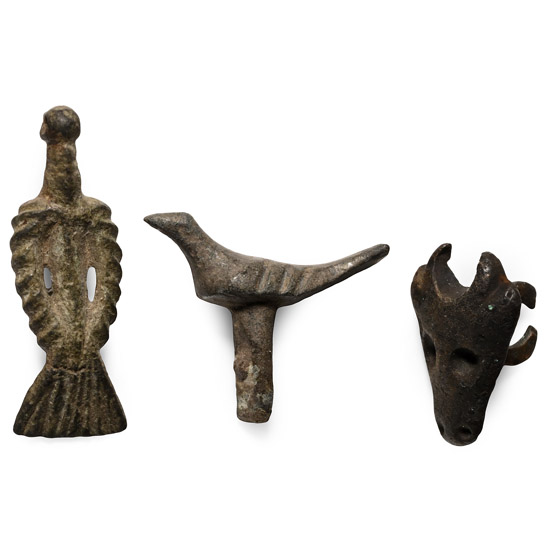
Roman Bronze Animal Finial and Mount Group
3rd-4th century A.D.Sold for (Inc. bp): £85
Comprising: a finial formed as a slender bird; a stylised bull's head mount with a loop on the reverse; an openwork bird mount with remains of a loop on the reverse. 8.56 grams, 18-28.6 mm
From the private collection of a European gentleman (1942-2024), formed since the 1970s. -
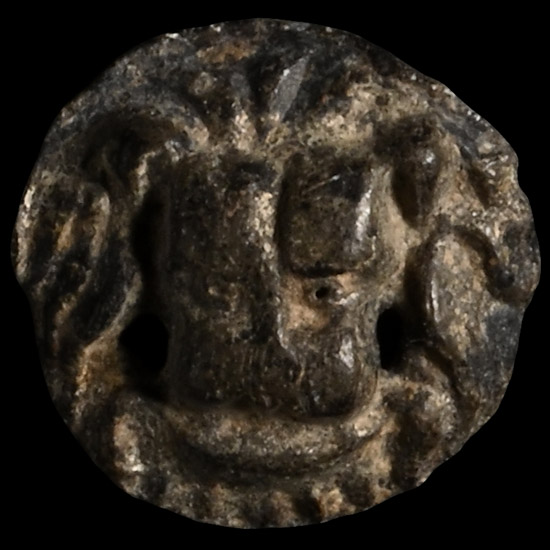
Roman Silver Lion's Head Mount
1st-4th century A.D.Sold for (Inc. bp): £33
Discoid mount with raised facial detailing framed by a striated mane. 0.46 grams, 9.61 mm
From the private collection of a European gentleman (1942-2024), formed since the 1970s. -
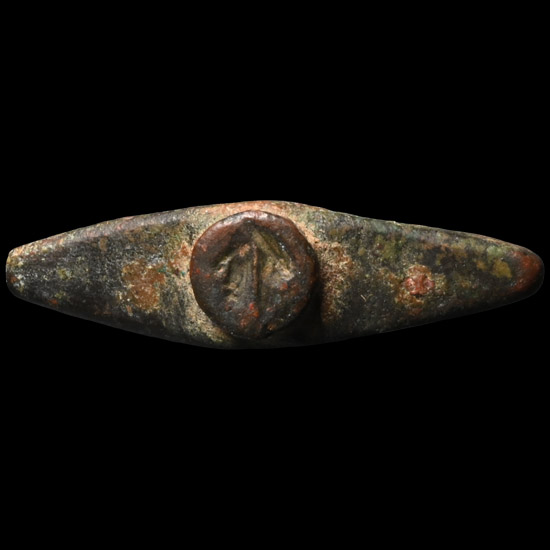
Roman Bronze Ring with Corn Stalks
1st-4th century A.D.Sold for (Inc. bp): £52
Featuring a D-section hoop with substantial angled shoulders, a small circular bezel with a pair of corn stalks(?). 6.84 grams, 29.26 mm overall, 13.90 x 17.39 mm internal diameter (approximate size British H 1/2, USA 4, Europe 6.81, Japan 6)
From the private collection of a European gentleman (1942-2024), formed since the 1970s. -
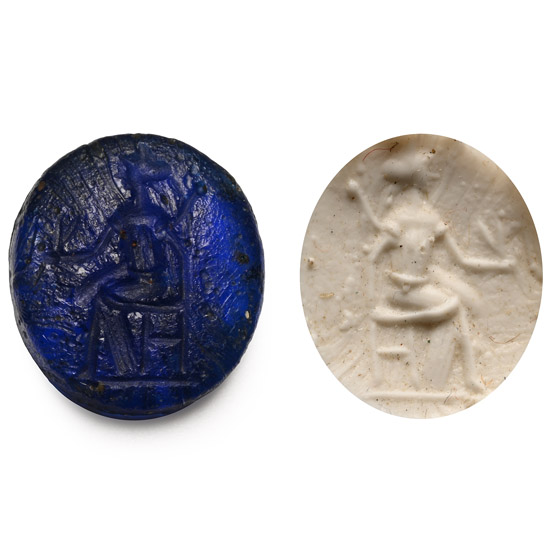
Roman Glass Gem with Juno Seated
2nd-3rd century A.D.Sold for (Inc. bp): £85
With intaglio Juno seated on a throne with a flower in her hand; supplied with a museum-quality impression. 0.83 grams, 12.80 mm
From the private collection of a European gentleman (1942-2024), formed since the 1970s. -
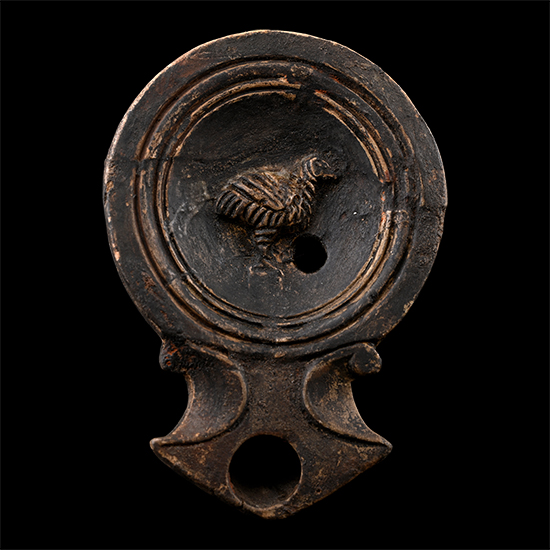
Roman Terracotta Oil Lamp with Bird
Circa 1st century A.D.Sold for (Inc. bp): £156
Shallow body with volute nozzle, narrow shoulder and rounded border to the discus with low-relief profile bird and filler hole. 72 grams, 11.1 cm
From the private collection of Mr Brian Edwards, New Malden, Surrey, UK, formed from the late 1970s-early 1980s; thence by descent, with collector's reference no.A39. -
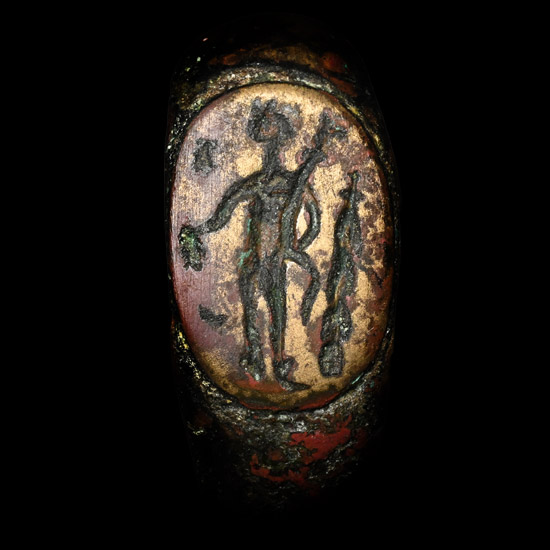
Roman Bronze Ring with Standing Figure
1st-4th century A.D.Sold for (Inc. bp): £104
D-section hoop and gently angled shoulders, oval bezel with a standing figure holding a staff and a small pouch, possibly depicting the messenger god Mercury. 7.23 grams, 25.04 mm overall, 14.56 x 18.82 mm internal diameter (approximate size British J 1/2, USA 5, Europe 9.32, Japan 9)
From the private collection of a European gentleman (1942-2024), formed since the 1970s. -
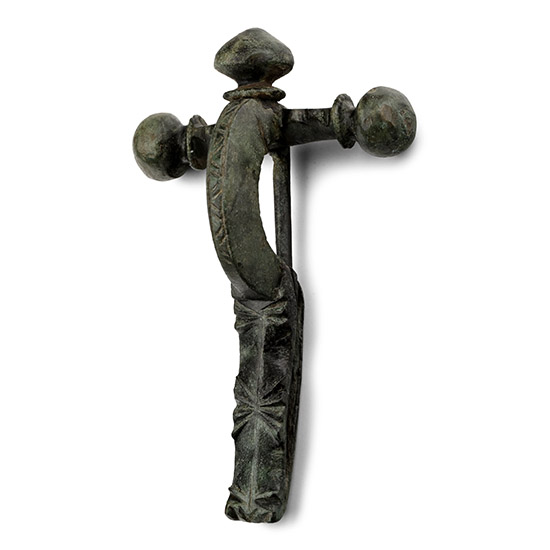
Roman Bronze Crossbow Brooch
4th century A.D.Sold for (Inc. bp): £91
With onion-knop finials, gusset to the bow, chamfered sections to the foot, hinged pin to the reverse. 21.8 grams, 56 mm
Ex German art market, 2000s. Acquired from an EU collector living in London. From the collection of a Surrey, UK, gentleman.

