-
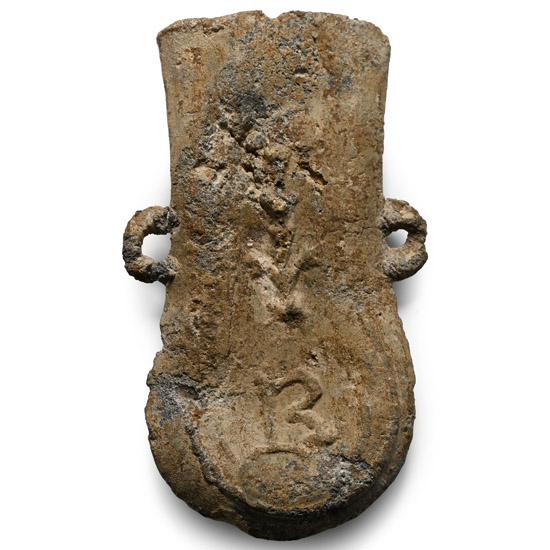
Medieval Lead Pilgrim's Holy Water Ampulla with Letter R
Circa 14th-15th century A.D.Sold for (Inc. bp): £104
Hollow-formed pouch-shaped vessel with lateral loops; obverse with capital 'R', reverse with scallop detailing. 28.80 grams, 52 mm
From a retired Lincolnshire, UK, gentleman's collection, a long time member of the Pewter Society. -
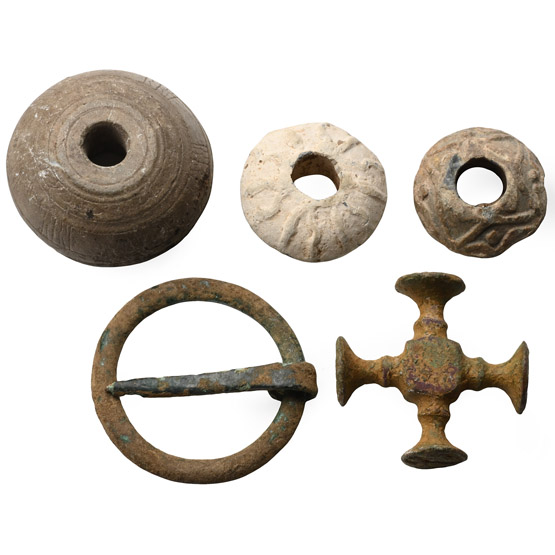
Anglo-Saxon, Medieval and Stuart Period Artefact Group
7th-17th century A.D.Sold for (Inc. bp): £20
Including: a plano-convex Anglo-Saxon stone spindle whorl; an annular brooch; a four-headed seal, and other items. 160 grams total, 26-44 mm
Found Lincolnshire, UK. Accompanied by a copy of the British Museum's Portable Antiquities Scheme (PAS) report for the Anglo-Saxon spindle whorl with report no.PUBLIC-D11069. -
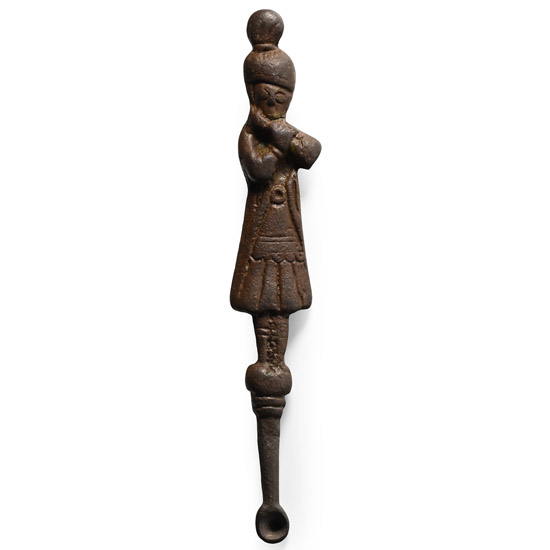
Medieval Bronze Ear Scoop Toilet Pendant with Musician
Circa 14th-15th century A.D.Sold for (Inc. bp): £124
comprising a small bowl and a tapering handle, the finial formed as a standing pipe player dressed in a knee-length dress, with a loop behind the head. 11.28 grams, 73.36 mm
From the private collection of a London gentleman, from his grandfather's collection formed before the early 1970s. -
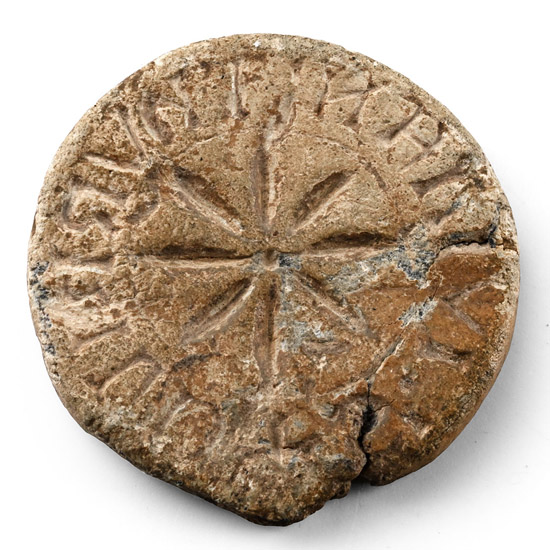
Medieval 'Thames' Lead Bifacial Seal Matrix for William
Circa 13th century A.D.Sold for (Inc. bp): £26
Discoid in plan with central floret to each face and legend to the border; Side A: '* + S'VILL DE VVE[..]' (seal of William of WE[..]); Side B: '+ [S]' [.]VIAN[.]NVR[.]LL'. 11.4 grams, 24.8 mm
Found Thames, UK. From the pewter and lead collection of the late Peter Hooper, who was a guest lecturer at West Dean College and a longtime member of the Pewter Society who contributed to the Pewter Society Magazine. -
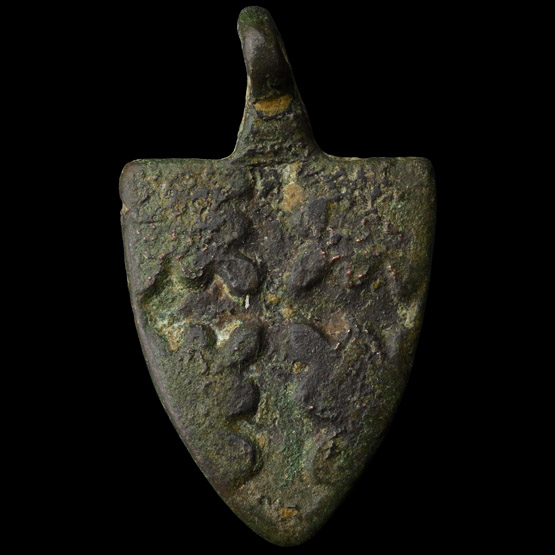
Medieval Knight's Gilt Bronze Heraldic Horse Harness Pendant
14th-15th century A.D.Sold for (Inc. bp): £221
Heater-shaped with attachment lug above, heraldic design of a cross rayonny recessed to accept enamel. 13.09 grams, 41 mm
From an old English collection formed since 1960. -
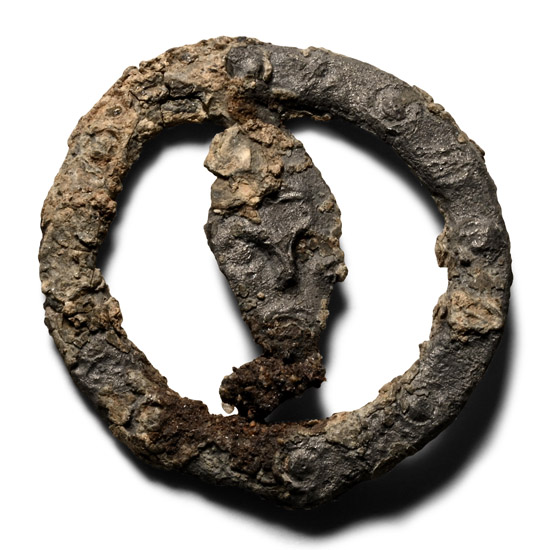
Medieval Pewter Thomas Becket Pilgrim's Badge
Circa 14th-15th century A.D.Sold for (Inc. bp): £111
Annular in form with central facing mask of Beckett. 0.93 grams, 18 mm
From a retired Lincolnshire, UK, gentleman's collection, a long time member of the Pewter Society. -
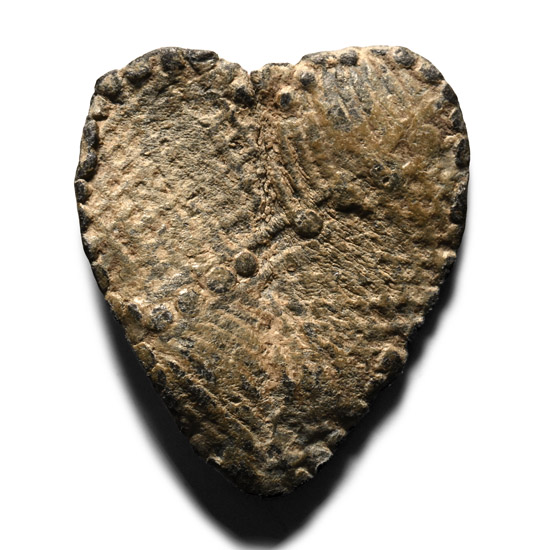
Medieval Pewter Sacred Heart Pilgrim's Badge
Circa 14th-15th century A.D.Sold for (Inc. bp): £52
With a hatched obverse surface, a transverse pelletted line. 2.51 grams, 19 mm
From a retired Lincolnshire, UK, gentleman's collection, a long time member of the Pewter Society. -
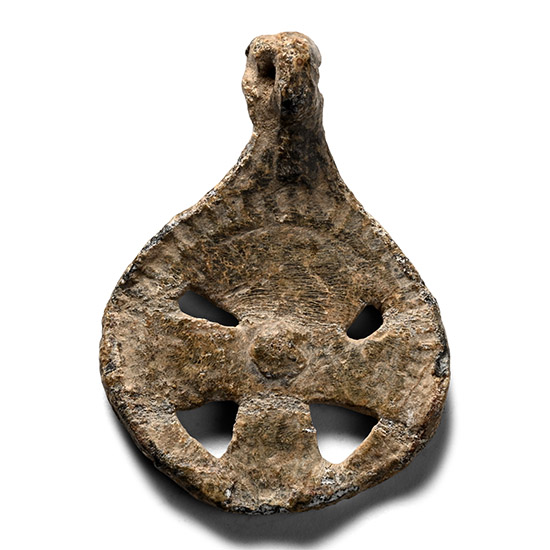
Medieval Pewter Cross Pilgrim's Pendant
Circa 14th-15th century A.D.Sold for (Inc. bp): £13
Circular billetted frame with cross and pellets to the centre, suspension lug. 3.91 grams, 26 mm
From a retired Lincolnshire, UK, gentleman's collection, a long time member of the Pewter Society. -
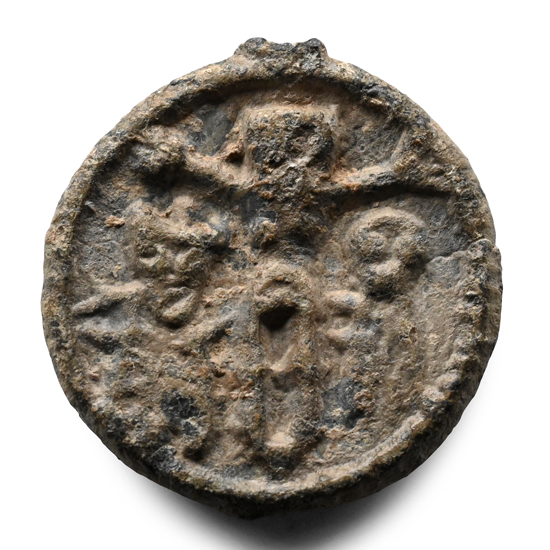
Medieval Pewter Pilgrim's Pendant with Mary and Calvary Scene
14th-15th century A.D.Sold for (Inc. bp): £33
Discoid bifacial pendant (loop absent) with low-relief images; obverse: crowned Mary and infant Jesus on a throne; reverse: Calvary scene with Mary and Mary Magdalene flanking Corpus Christi. 4.1 grams, 19 mm
From a retired Lincolnshire, UK, gentleman's collection, a long time member of the Pewter Society. -
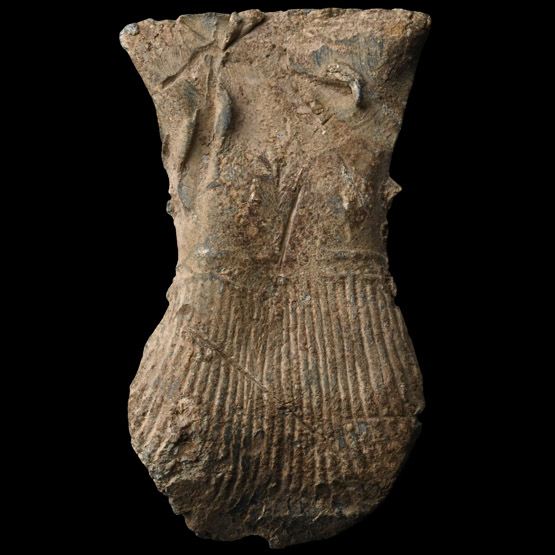
Medieval Lead Pilgrim's Holy Water Ampulla
Circa 15th century A.D.Sold for (Inc. bp): £33
With low-relief crowned rosette on a crosshatched field to obverse, vertical hatching to reverse. 49 grams, 54 mm
Found Lincolnshire, UK. -
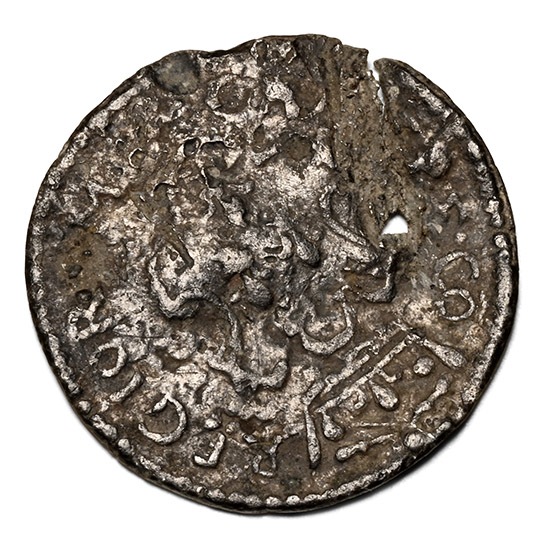
Medieval Pewter Pilgrim's Token
Circa 14th-15th century A.D.Sold for (Inc. bp): £13
Disc with stepped rim, obverse with double-headed spread eagle motif, reverse with ornate shield and scrolls, crown above and legend to border 'GLORIA ...'. 1.62 grams, 20 mm
From a retired Lincolnshire, UK, gentleman's collection, a long time member of the Pewter Society. -
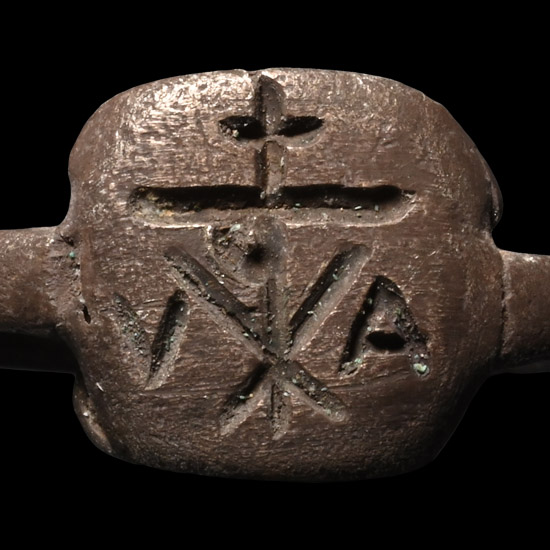
Medieval Bronze Ring with Monogram
14th-16th century A.D.Sold for (Inc. bp): £59
Round-section hoop and a rectangular bezel with a monogram with a cross symbol and letters V and A flanking the cross. 3.43 grams, 22.75 mm overall, 17.07 x 18.44 mm internal diameter (approximate size British N, USA 6 1/2, Europe 13.72, Japan 13)
From the private collection of a European gentleman (1942-2024), formed since the 1970s.

