-
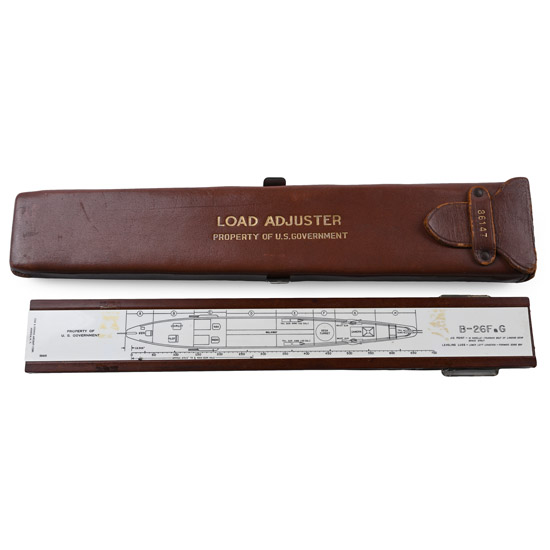
US Air Force WWII Aircraft Load Adjuster No.86147 in Original Leather Case
1939-1945 A.D.Sold for (Inc. bp): £33
Comprising a heavy-duty leather case with gilt lettering 'Load adjuster, property of U.S. Government', B-26F&G' and '86147', a metal clip to the rear, and a wooden adjust 'ruler' with a plastic slider. 357 grams, 33.5 cm.
Acquired on the UK art market. Property of an Essex militaria collector. -
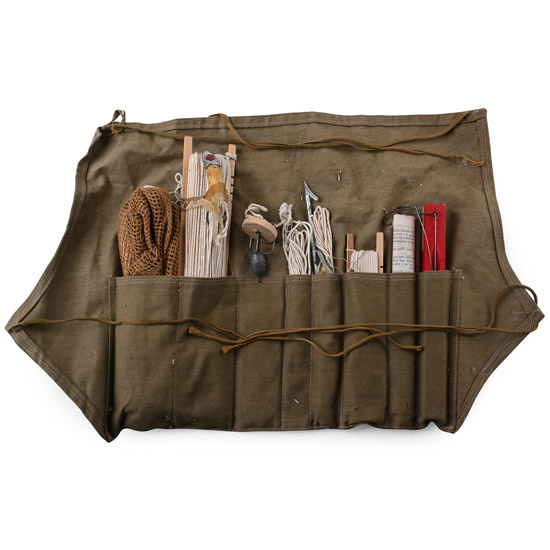
US Air Force WWII Aircraft Life Raft Fishing Kit
1944 A.D.Sold for (Inc. bp): £59
Comprising a fabric pouch with a net, fishing line with a large lure, fishing line with a weighted three-pronged hook; line with a small 'harpoon'; fishing line with a smaller lure; instruction sheet; a red wooden container with two spare hooks and a whetstone. 492 grams total, pouch: 52.5 cm wide
Acquired on the UK art market. Property of an Essex militaria collector. -
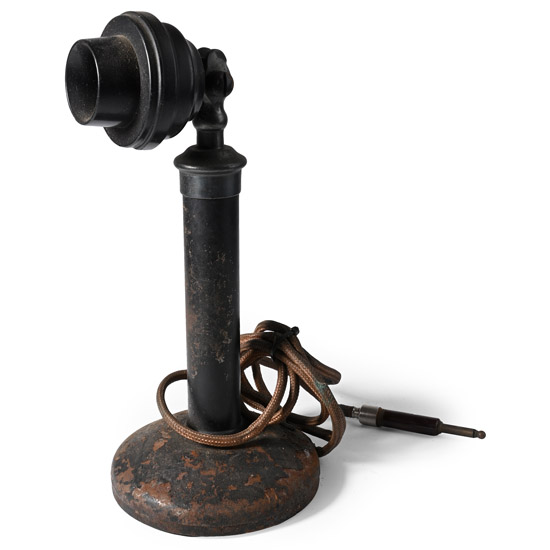
British WWII Airfield Telephone
1939-1945 A.D.Sold for (Inc. bp): £111
A candlestick-type desk microphone fitted with a type 170 plug, store reference no. 10H/9602, inspection stamp and reference number 10A/9597 on the base. 1.86 kg, 30 cm high
Acquired on the UK art market. Property of an Essex militaria collector. -
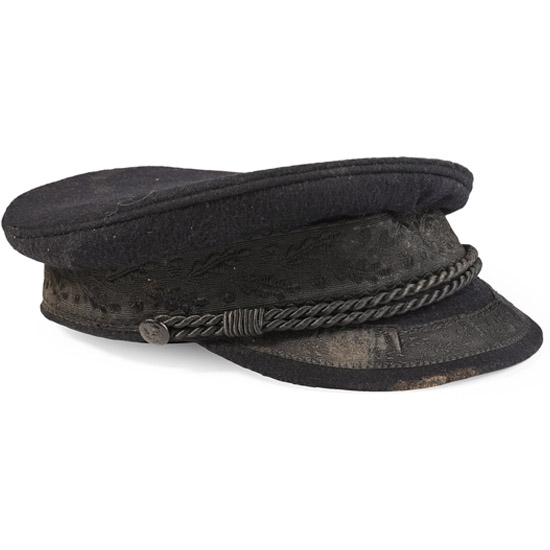
German Prinz Heinrich Cap
Early 20th century A.D.Sold for (Inc. bp): £20
Wool cap with short brim and braided chin strap with anchor buttons; maker's badge inside. 146 grams, 26.5 cm
From the private collection of author and historian Dr DeWitt Bailey, one of the global authorities on the confederate army in the US civil war; thence by descent to his grandson. -
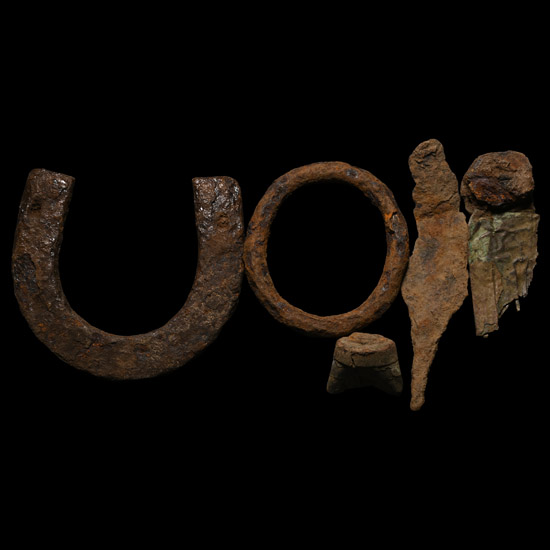
Anglo-Zulu War Artefacts from the Battle of Rorke's Drift
Circa 22nd-23rd January 1879 A.D.Sold for (Inc. bp): £546
A rare collection of battlefield artefacts, including a soldier's iron boot heel, a tiny Zulu throwing-spear blade, and Martini-Henry Boxer .450 brass cartridge bullet cases. 115 grams total, 23-82 mm
From an old South African collection, formed in the 1960s and 1970s. Ian Wilkinson collection, Nottinghamshire, UK, formed since 1985.
Under the command of Lieutenants Chard and Bromhead, a small number of British and colonial troops successfully defended the mission station from 3000 Zulu warriors. Eleven Victoria Crosses were awarded. The battle was made widely famous by the 1964 movie 'Zulu'. -
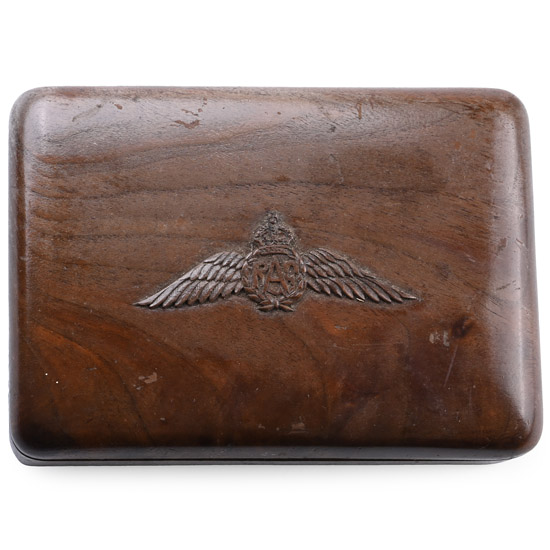
British RAF WWII Officer's Cigar Box with Insignia
1939-1945 A.D.Sold for (Inc. bp): £65
Wooden hinged box with carved insignia on the lid, the inside divided into two compartments. 458 grams, 17.9 cm wide
Acquired on the UK art market. Property of an Essex militaria collector. -
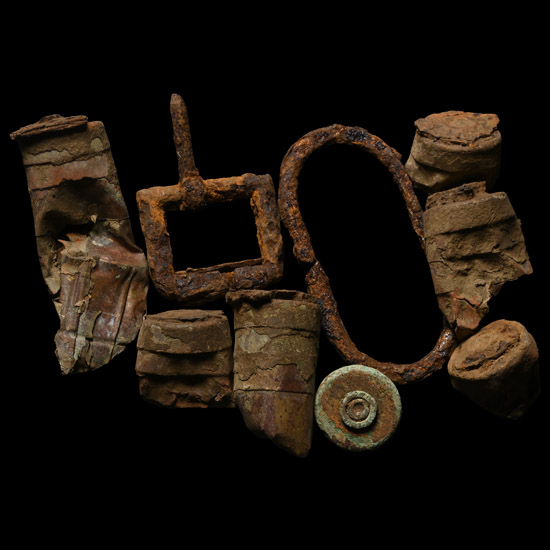
Anglo-Zulu War Artefacts from the Battle of Isandlwana
Circa 22nd January 1879 A.D.Sold for (Inc. bp): £312
Comprising seven Boxer .450 brass cartridge bullet cases and two iron buckles from a soldier's uniform. 67 grams total, 16-55 mm
From an old South African collection, formed in the 1960s and 1970s. Ian Wilkinson collection, Nottinghamshire, UK, formed since 1985.
The British camp at the mountain of Isandlwana was attacked and overrun by the main Zulu army, resulting in the death of over 1300 British and colonial soldiers and other contingents. The battle was a huge victory for the Zulus. -
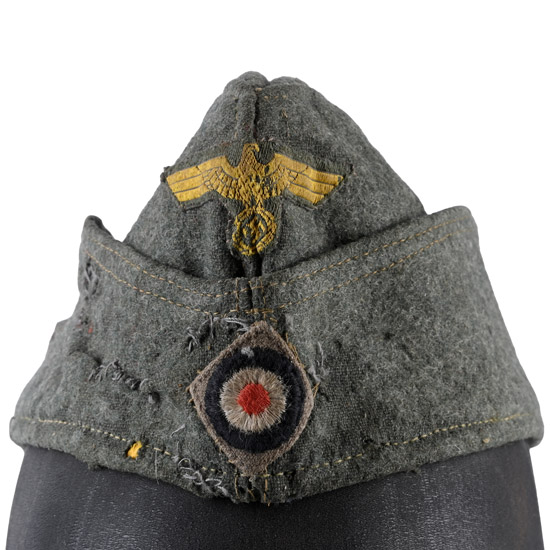
German Army WWII Garrison Cap
1939-1945 A.D.Sold for (Inc. bp): £156
M34 Heer enlisted Infantry overseas cap with cockade and Reichsadler; repaired in several places, frontal chevron absent; stamped to inner 'Sogeco Nantes'. 100 grams, 27 cm
Acquired on the UK art market. Property of an Essex militaria collector. -
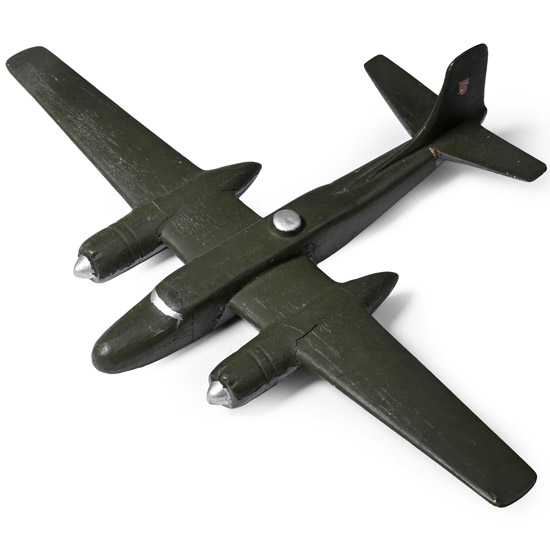
A26 Invader Bomber Wooden RAF WWII Aeroplane Identification Training Model
1939-1945 A.D.Sold for (Inc. bp): £46
Painted twin-engine light bomber model with the number '5' on the tail. 153 grams, 29.9 cm wide
Acquired on the UK art market. Property of an Essex militaria collector. -
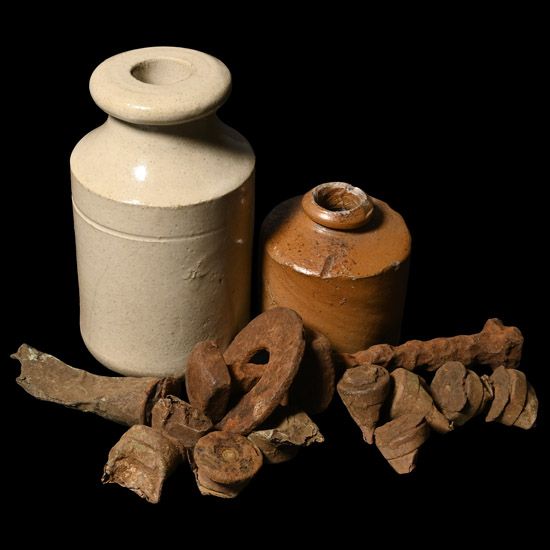
Anglo-Zulu War Artefacts from the Battle of Khambula
Circa 29th March 1879 A.D.Sold for (Inc. bp): £85
A collection of battlefield artefacts, including a stoneware soldier's inkwell, a cream-glazed vessel, and Boxer .450 brass cartridge bullet cases. 627 grams total, 1.8-10.7 cm
Found by local Zulu people living at Khambula, South Africa, 1990s-early 2000s. Ian Wilkinson collection, Nottinghamshire, UK, formed since 1985.
The battle resulted in a heavy defeat for the Zulus, who had been full of confidence from their earlier victories against the British at Isandlwana and Hlobane. -
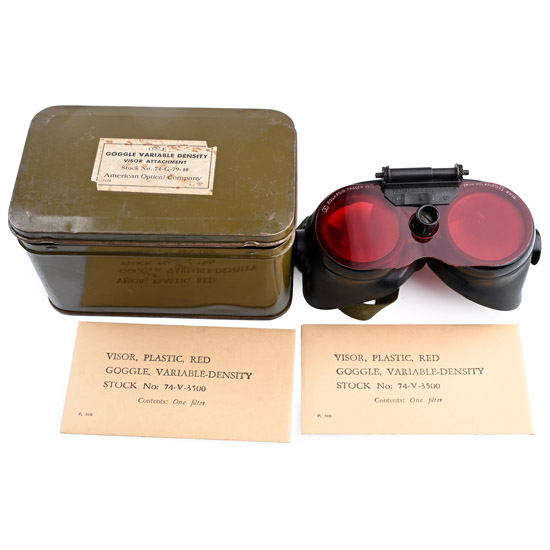
American Air Force WWII Variable Density Visor Attachment Goggles in Original Container
1944 A.D.Sold for (Inc. bp): £130
With a turning dial on the front allowing the pilot to alter the tint of the lens, and equipped with a red plastic visor for observing tracer bullets; accompanied by an original metal tin and instruction sheet, and a spare red visor in its paper pouch. 380 grams, 15.2 x 10 cm
Acquired on the UK art market. Property of an Essex militaria collector. -
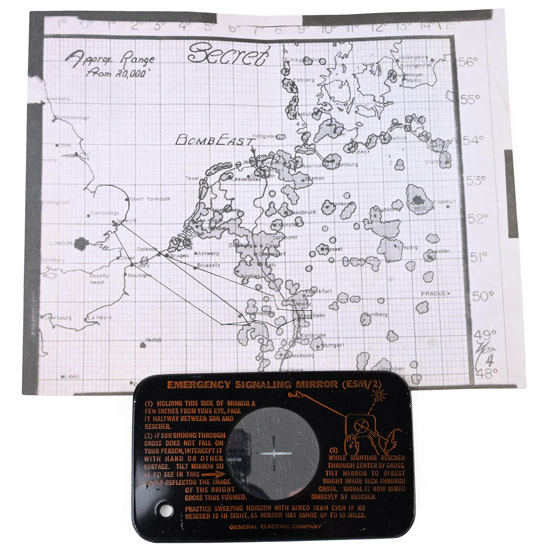
American Air Force WWII Aircraft Emergency Signalling Mirror
1939-1945 A.D.Sold for (Inc. bp): £26
Playing card-shaped with a corner hole for suspension, central crosshairs for accurate direction of the beam; instructions printed on reverse; with printed card (reproduction) map showing mission from East Anglia to German chemicals factory, inscribed to reverse (25) 5 Nov 44. I.G. Farben factory, Ludwigshaven. Hit in 3 engines over the target - unable to feather #1 hit in hub. Landed near Brussels at a Spitfire field, almost lost ~1 prop, was biting into the cowling. Had about 1 ½ engines on landing.' 124 grams, 12.5 x 7.5 cm.
Acquired on the UK art market. Property of an Essex militaria collector.

