-
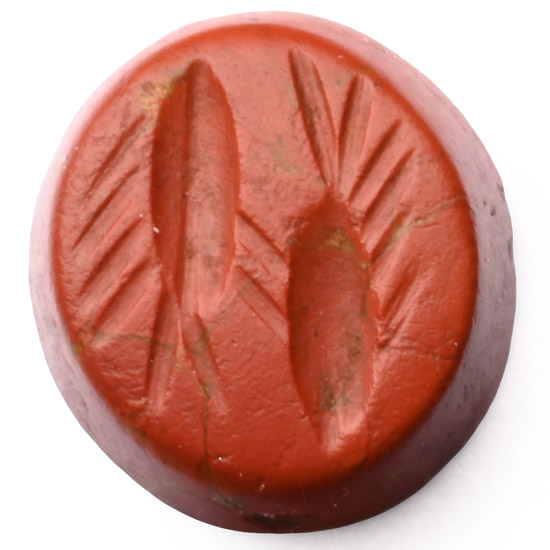
Roman Red Jasper Gemstone with Fish
2nd-3rd century A.D.Sold for (Inc. bp): £46
With intaglio pair of fish in opposite directions, the constellation Pisces; supplied with a museum-quality impression. 0.16 grams, 6.37 mm
From the private collection of a European gentleman (1942-2024), formed since the 1970s. -
.jpg)
Roman Garnet Gemstone with Female Bust
2nd-3rd century A.D.Sold for (Inc. bp): £65
With intaglio profile female bust; supplied with a museum-quality impression. 0.16 grams, 6.71 mm
From the private collection of a European gentleman (1942-2024), formed since the 1970s. -
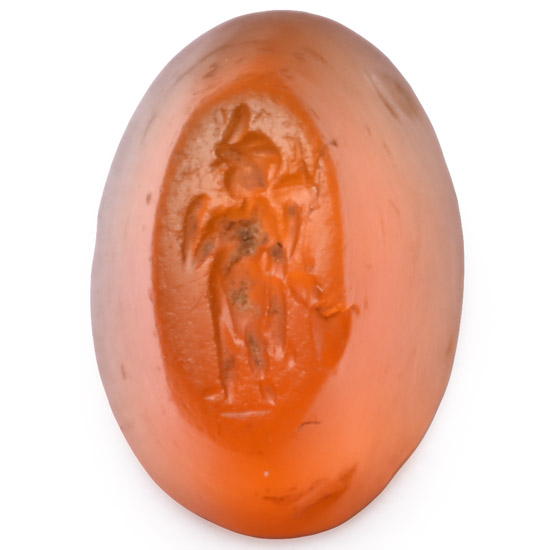
Roman Carnelian Gemstone with Venus
2nd-3rd century A.D.Sold for (Inc. bp): £52
With intaglio standing nude figure, possibly Venus, holding a cornucopia; supplied with a museum-quality impression. 0.27 grams, 8.38 mm
From the private collection of a European gentleman (1942-2024), formed since the 1970s. -
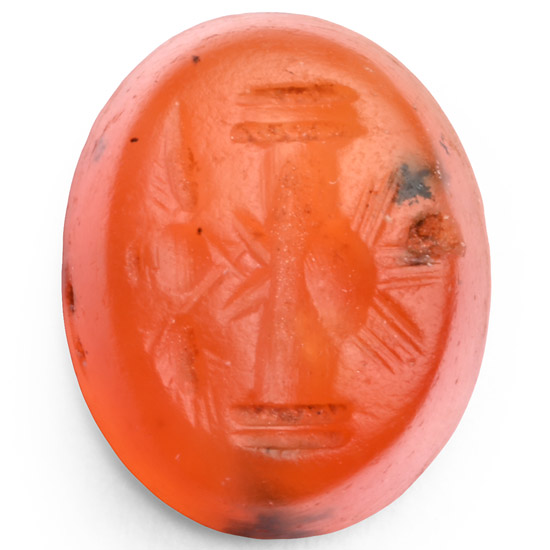
Roman Carnelian Gemstone with Jupiter's Thunderbolt
Circa 2nd-3rd century A.D.Sold for (Inc. bp): £156
With intaglio fulgur thunderbolt of Jupiter; supplied with a museum-quality impression. 0.40 grams, 9.52 mm
From the private collection of a European gentleman (1942-2024), formed since the 1970s. -
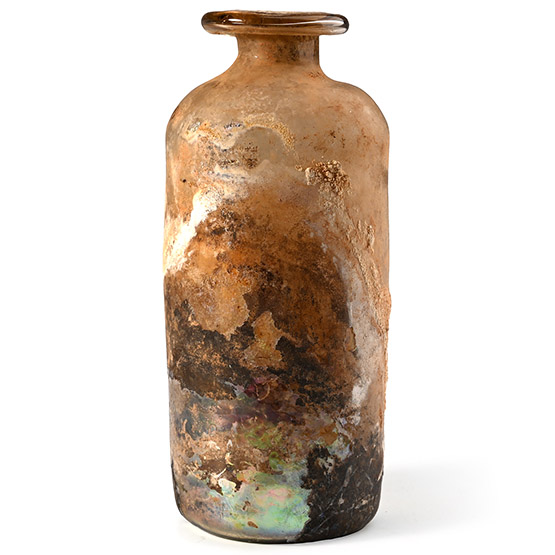
Roman Light Brown Glass Bottle
1st century B.C.-1st century A.D.Sold for (Inc. bp): £208
Mould-blown, comprising a flat-based tubular body and short neck with returned flange rim. 69 grams, 14.4 cm
From an important collection of glass, London, UK, 1990s. -
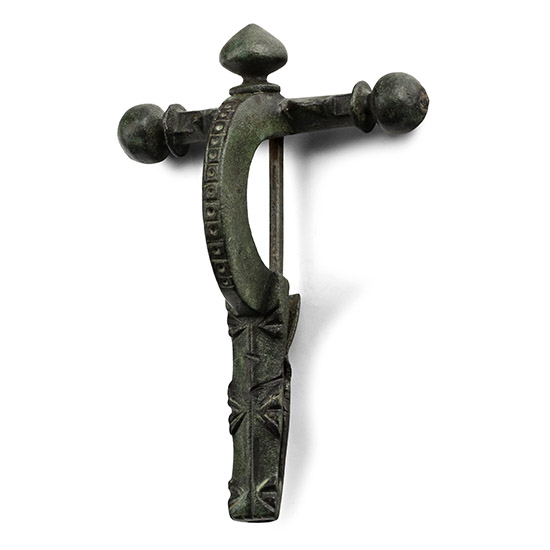
Roman Bronze Crossbow Brooch
4th century A.D.Sold for (Inc. bp): £130
With onion-knop finials, gusset to the bow, chamfered sections to the foot, hinged pin to the reverse. 31.8 grams, 67 mm
Ex German art market, 2000s. Acquired from an EU collector living in London. From the collection of a Surrey, UK, gentleman. -
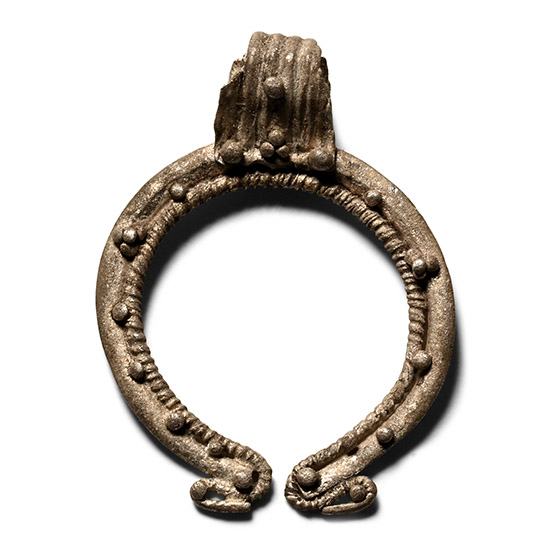
Roman Silver Lunar Pendant
Circa 1st century A.D.Sold for (Inc. bp): £117
Crescentic body with applied granules and filigree, applied ribbed loop. 2.1 grams, 31 mm
Ex German art market, 2000s. Acquired from an EU collector living in London. From the collection of a Surrey, UK, gentleman. -
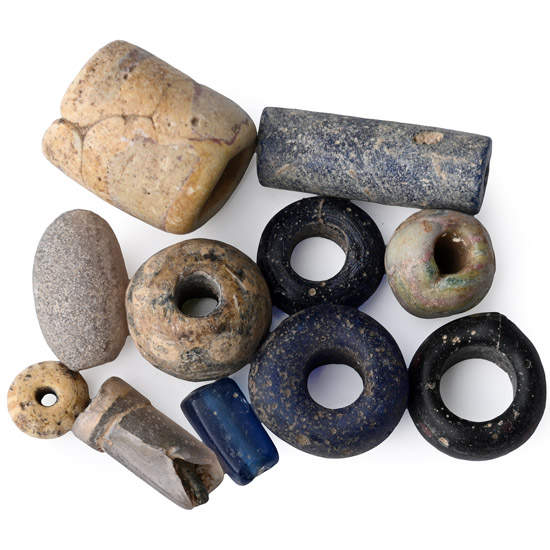
Roman Glass Bead Group
1st-4th century A.D.Sold for (Inc. bp): £59
Including annular, tubular and oblate beads in blue, cream and black, one with eye-motifs and one with trails. 13.12 grams total, 7.05-19.72 mm
From the private collection of a European gentleman (1942-2024), formed since the 1970s. -
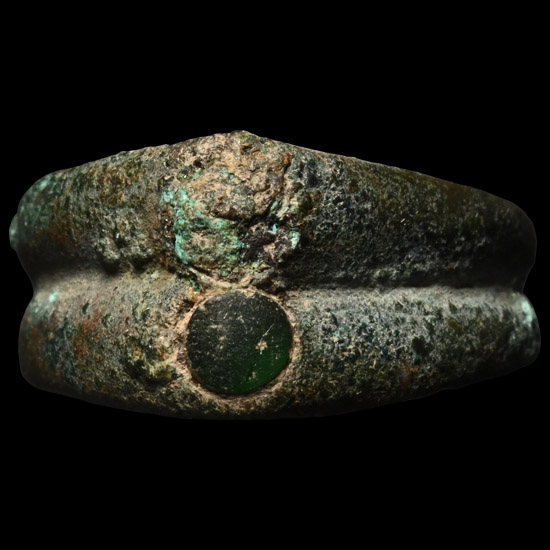
Roman Bronze Double Bezel Ring
3rd-4th century A.D.Sold for (Inc. bp): £78
The hoop with a central groove dividing into two bezels with bosses. 3.86 grams, 21.67 mm overall, 16.14 mm internal diameter (approximate size British I, USA 4 1/4, Europe 7.44, Japan 7)
From the private collection of a European gentleman (1942-2024), formed since the 1970s. -
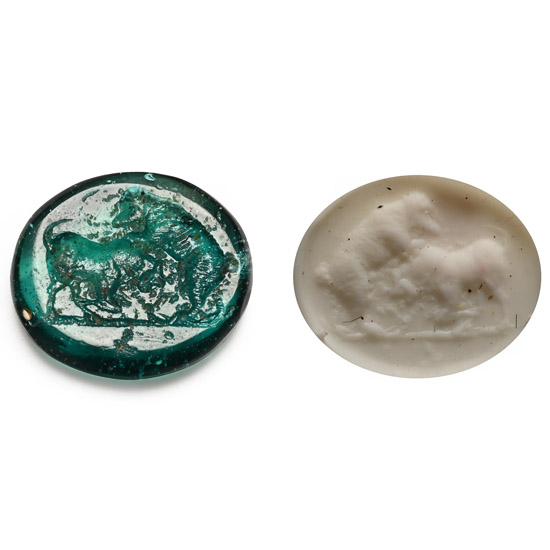
Roman Glass Gem with Bears
2nd-3rd century A.D.Sold for (Inc. bp): £111
With intaglio combat scene between two bears; supplied with a museum-quality impression. 0.59 grams, 12.43 mm
From the private collection of a European gentleman (1942-2024), formed since the 1970s. -
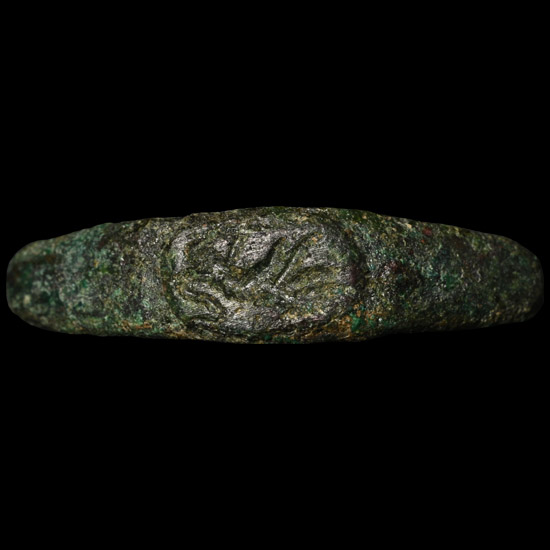
Roman Bronze Zoomorphic Ring
1st-4th century A.D.Sold for (Inc. bp): £65
Featuring a slender hoop with angled shoulders and the bezel with a standing lion(?). 1.87 grams, 21.48 mm overall, 14.29x15.89 mm internal diameter (approximate size British H 1/2, USA 4, Europe 6.81, Japan 6)
From the private collection of a European gentleman (1942-2024), formed since the 1970s. -
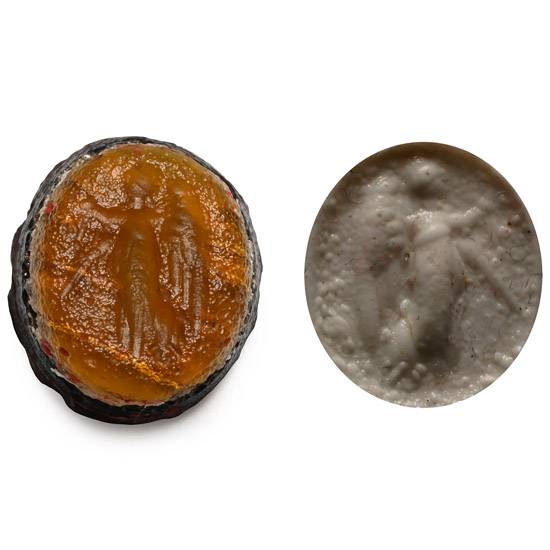
Roman Glass Gem with Winged Victory
2nd-3rd century A.D.Sold for (Inc. bp): £65
With intaglio winged Victory standing in a floor-length robe; supplied with a museum-quality impression. 0.80 grams, 11.81 mm
From the private collection of a European gentleman (1942-2024), formed since the 1970s.

