-
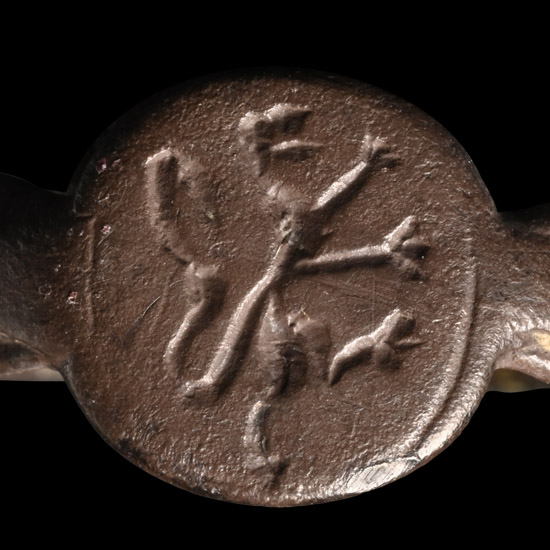
Medieval Bronze Ring with Rampant Heraldic Lion
Circa 14th-15th century A.D.Sold for (Inc. bp): £111
With median recess to each shoulder, discoid bezel with incuse lion rampant; accompanied by a museum-quality impression. 3.58 grams, 22.44 mm overall, 19.59 mm internal diameter (approximate size British T, USA 9 1/2, Europe 21.26, Japan 20)
From an old English collection, Bournemouth, UK. Ex Parthenon Gallery, London, UK, 2001. Property of a North London, UK, private collector. -
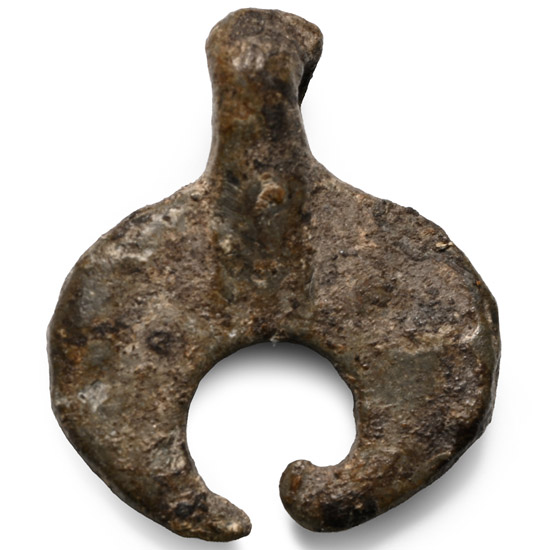
Post Byzantine Bronze Pilgrim's Badge with Ottoman Crescent
Circa 14th-15th century A.D.Sold for (Inc. bp): £33
Crescent pendant with pierced lug, pellets to obverse. 2.07 grams, 18 mm
From a retired Lincolnshire, UK, gentleman's collection, a long time member of the Pewter Society. -
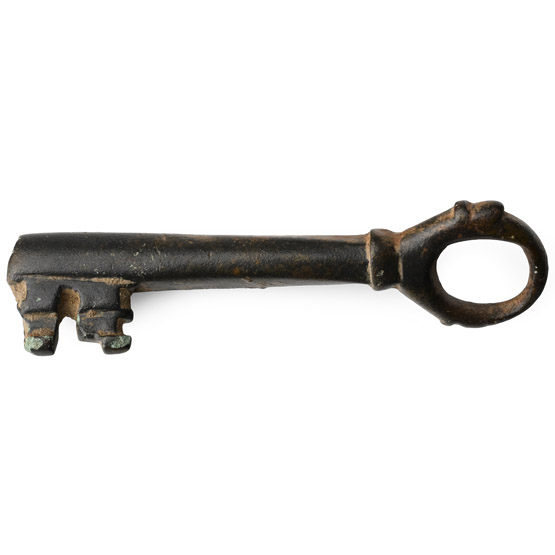
Large Medieval Bronze Door Key
14th-15th century A.D.Sold for (Inc. bp): £117
Barrel-type with lateral spurs to the bow, bit with stepped ward. 26.6 grams, 77 mm
Found Lincolnshire, UK. -
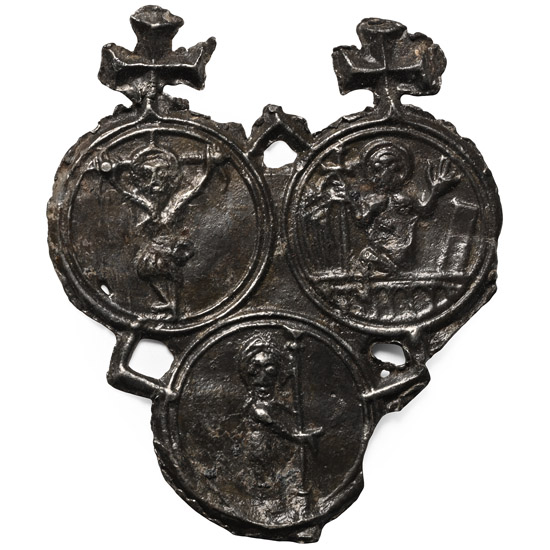
Medieval Pewter Wilsnack Pilgrim's Badge
Circa 15th century A.D.Sold for (Inc. bp): £273
Trefoil in plan with raised rim to each lobe, crosses to upper edge; low-relief images of the three hosts of Wilsnack. 3.1 grams, 38 mm
Ex European collection, 1990s. Accompanied by a previous typed catalogue information card. -
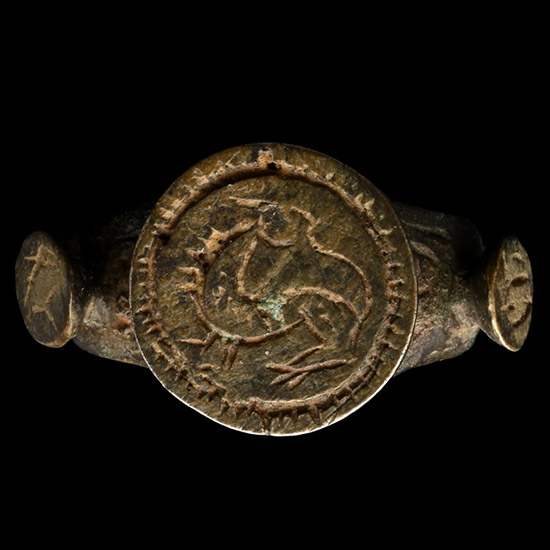
Medieval Silver Ring with Beast
Circa 15th-16th century A.D.Sold for (Inc. bp): £247
Comprising a keeled hoop with two raised discoid bosses on the shoulders, raised bezel with a regardant beast. 9.41 grams, 26.25 mm overall, 18.78 mm internal diameter (approximate size British O, USA 7, Europe 14.98, Japan 14)
Ex German art market, 2000s. Acquired from an EU collector living in London. From the collection of a Surrey, UK, gentleman. -
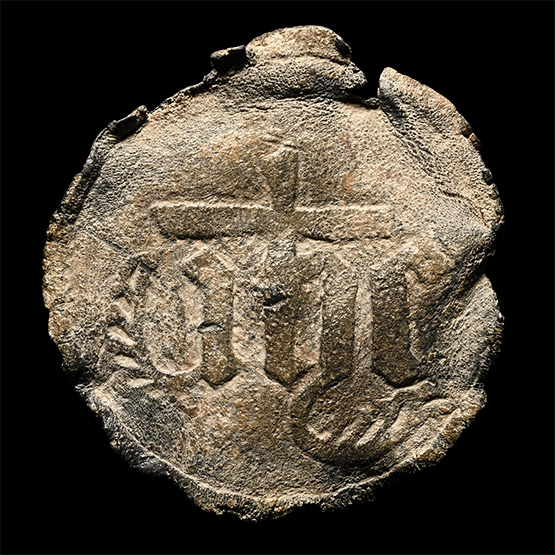
Medieval Pewter Pilgrim's Mount with Christogram
14th-15th century A.D.Sold for (Inc. bp): £33
Discoid mount with central cross forming part of the 'IHC' monogram. 23.7 grams, 48 mm
From a retired Lincolnshire, UK, gentleman's collection, a long time member of the Pewter Society. -
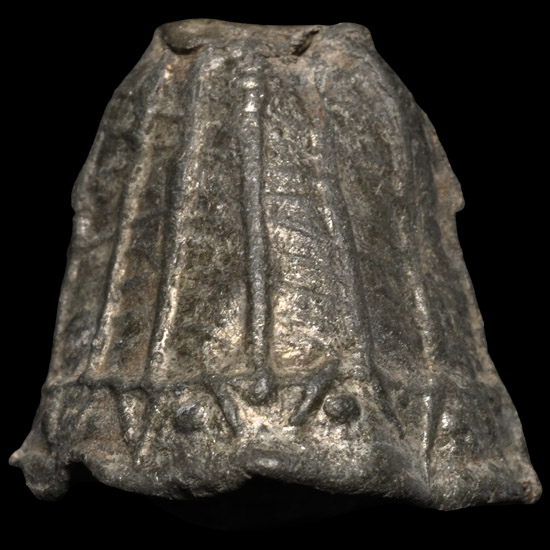
Medieval Pewter Pilgrim's Bell
Circa 14th-15th century A.D.Sold for (Inc. bp): £72
Conical body divided into hatched segments, horizontal band of pellets and triangles on the lower edge. 2.16 grams, 16.5 mm
Found on the Thames foreshore in the 1970s. From a late London, UK, gentleman's collection. -
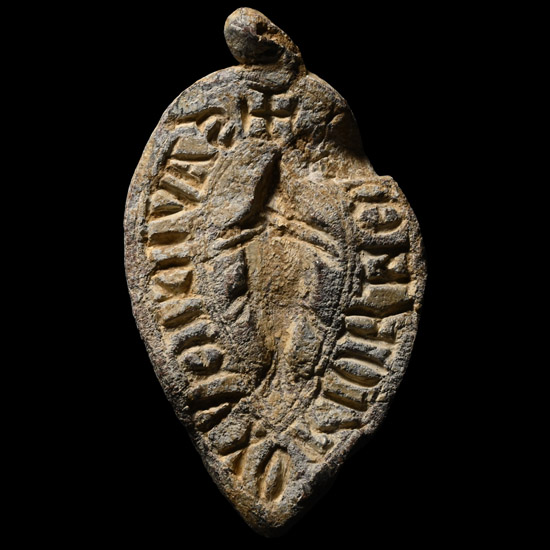
Medieval Lead Vesica-Shaped Personal Seal Matrix of a Wife
Yorkshire, circa 13th century A.D.Sold for (Inc. bp): £7
Scaphoid in plan with loop to one end; central motif of a fish with lateral fins; border with legend '+ S’AVICIE VXOR’ IOH’ ME' [seal of Avice (a common Anglo-Norman female name) wife of John the …..]. 24 grams, 47 mm
Found Yorkshire, UK. Acquired on the UK art market from the 1990s. From the private collection of a Lincolnshire, UK, gentleman. -
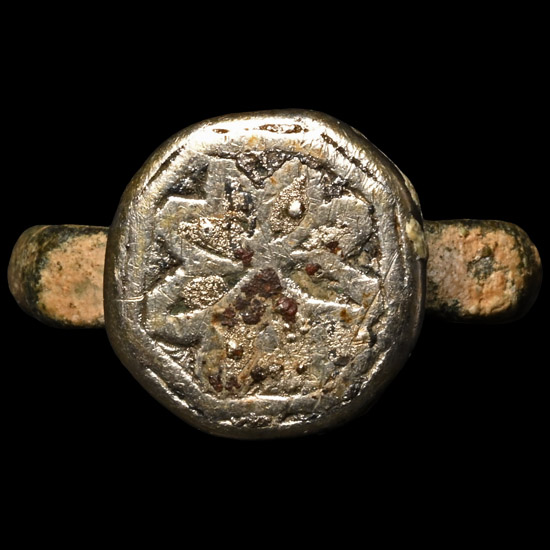
Medieval Silver Ring with Flower
14th-16th century A.D.Sold for (Inc. bp): £85
The hoop with a raised boss at the base, a round conical bezel with a floral motif. 4.57 grams, 21.80 mm overall, 14.69 mm internal diameter (approximate size British F, USA 2 3/4, Europe 3.67, Japan 4)
From the private collection of a European gentleman (1942-2024), formed since the 1970s. -
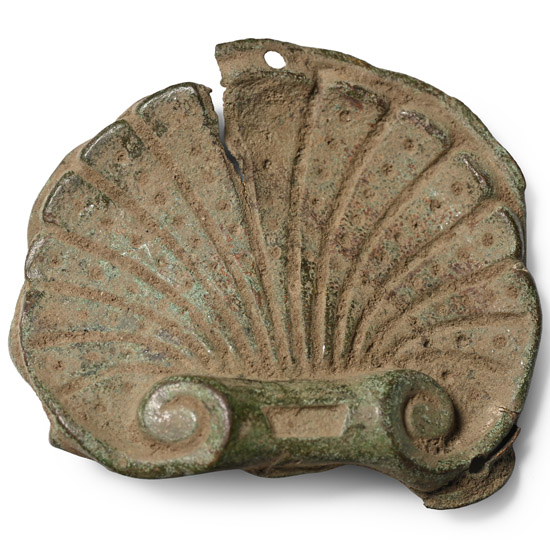
Medieval Bronze Scallop Shell Pilgrim's Badge
Circa 14th-15th century A.D.Sold for (Inc. bp): £72
Appliqué with repoussé scallop detailing, pointillé detailing, scroll to base. 4.57 grams, 38 mm
From a retired Lincolnshire, UK, gentleman's collection, a long time member of the Pewter Society. -
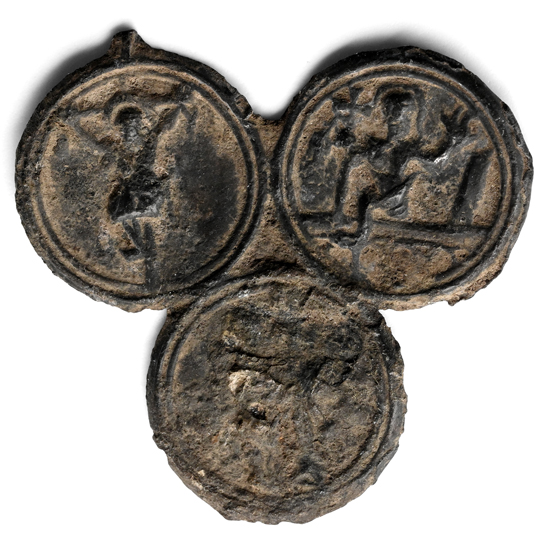
Medieval Pewter Pilgrim's Badge of the Holy Blood of Wilsnack
14th-15th century A.D.Sold for (Inc. bp): £39
Trefoil in plan with raised rim to each lobe, spur of sprue to one edge; low-relief images of the three hosts of Wilsnack. 3.58 grams, 32 mm
From a retired Lincolnshire, UK, gentleman's collection, a long time member of the Pewter Society.
The "Holy Blood of Wilsnack" refers to three sacramental cups or hosts. In 1383, they miraculously survived a fire which destroyed the church and village of Bad Wilsnack. The hosts were revered and became the object of pilgrimages. -
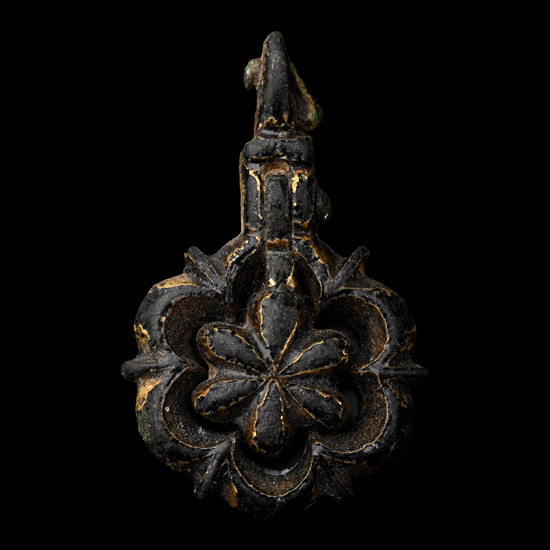
Medieval Knight's Gilt Bronze Heraldic Horse Harness Pendant with Hinged Frame
Circa 14th century A.D.Sold for (Inc. bp): £78
Comprising a central six-petalled flower within an articulated frame. 12.56 grams, 39.5 mm
Ex Graham Slater collection, Cambridge, 1980s-1990s.

