-
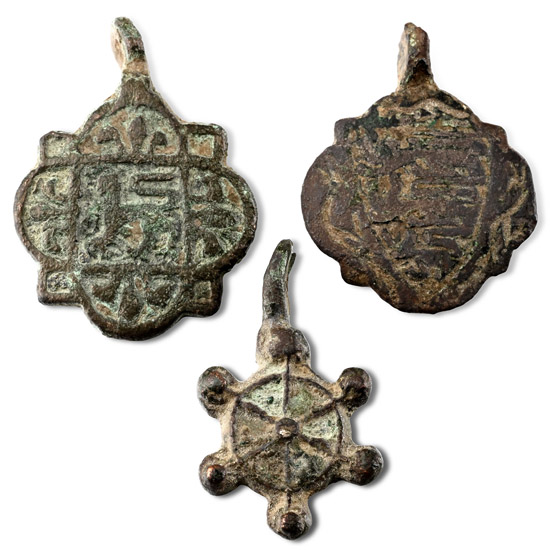
Medieval Knight's Enamelled Bronze Heraldic Horse Harness Pendant Group
14th-15th century A.D.Sold for (Inc. bp): £130
Including quatrefoil and octagonal types with heraldic motifs: lion passant and three lions passant guardant. 24 grams total, 33-36 mm
Found Gloucestershire, UK. Acquired from the early 1980s. From the private collection of a late Gloucestershire, UK, gentleman; thence by descent. -
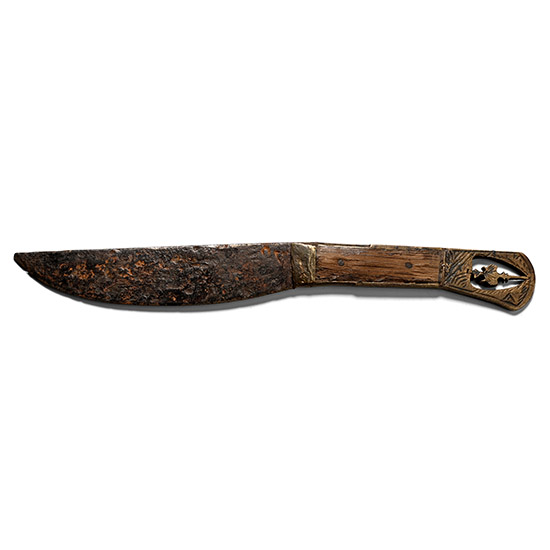
Medieval Iron Knife with Bronze Pommel
Circa 15th-16th century AD.Sold for (Inc. bp): £312
Single-edged scooped blade with bolster, scale-tang handle with wooden scales in situ, bronze pommel with openwork floral design. 46.55 grams, 18.1 cm
Ex Cambridgeshire gentleman's collection, 1990s. -
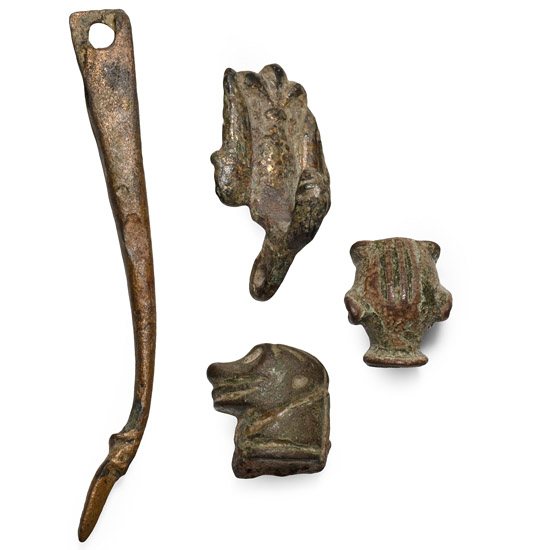
Medieval Artefact Group
Circa 14th-16th century A.D.Sold for (Inc. bp): £13
Comprising: two stylised head mounts; a hinged lid cover shaped as a bird with its head turned back; a mount formed as an elongated leg with a hoof and pierced through the other end with a slot. 19.4 grams total, 13.7-58 mm
From the private collection of a European gentleman (1942-2024), formed since the 1970s. -
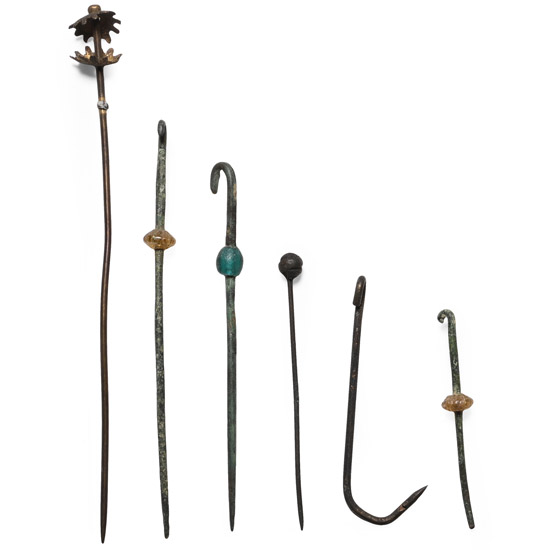
Medieval Bronze Pin and Fish Hook Group
14th-17th century A.D. and laterSold for (Inc. bp): £13
Comprising: two slender pins and four hooks, three with coloured beads. 4.76 grams, 37.5-89 mm
From the private collection of a European gentleman (1942-2024), formed since the 1970s. -
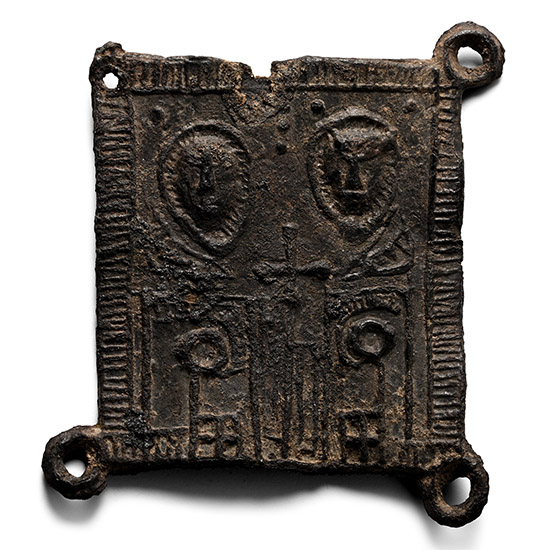
Medieval Pewter Pilgrim's Badge with Saints
Circa 14th-15th century A.D.Sold for (Inc. bp): £234
Rectangular with attachment loop at each corner (one absent), low-relief image of two facing figures with a cross between them, each with a key, Saints Peter and Paul. 9.18 grams, 45 mm high
From a retired Lincolnshire, UK, gentleman's collection, a long time member of the Pewter Society. -
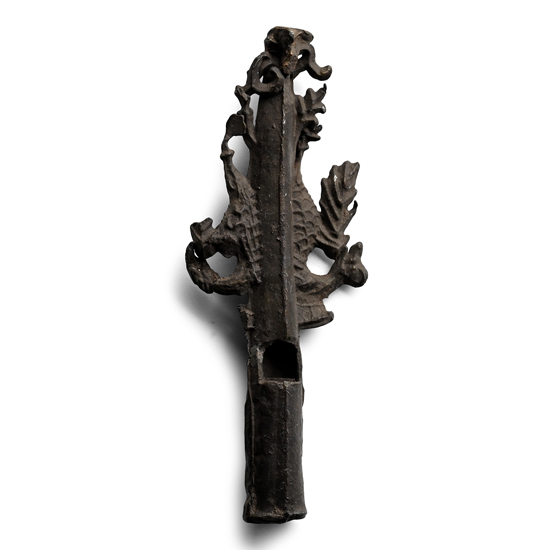
Medieval Pewter Pilgrim's Whistle
14th-15th century A.D.Sold for (Inc. bp): £234
Lozenge-section tube with regardant dragons to the lateral edges of the bore, some gilding traces; pewter blade intact. 7.3 grams, 57 mm
From a retired Lincolnshire, UK, gentleman's collection, a long time member of the Pewter Society. -
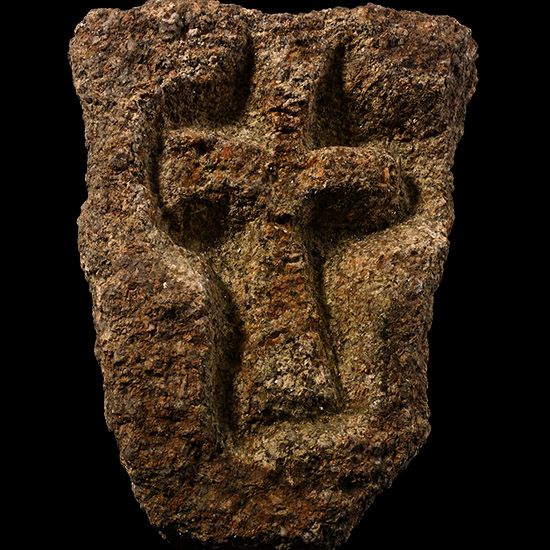
Medieval Pilgrim's Waymark Stone with Cross
Circa 13th century A.D. or laterSold for (Inc. bp): £468
Irregular stone block with one worked face, reserved expanding-arm cross in high-relief. 6.18 grams, 28.5 cm
Found Cornwall, UK, circa 1990. Property of Nottinghamshire, UK, gentleman. -
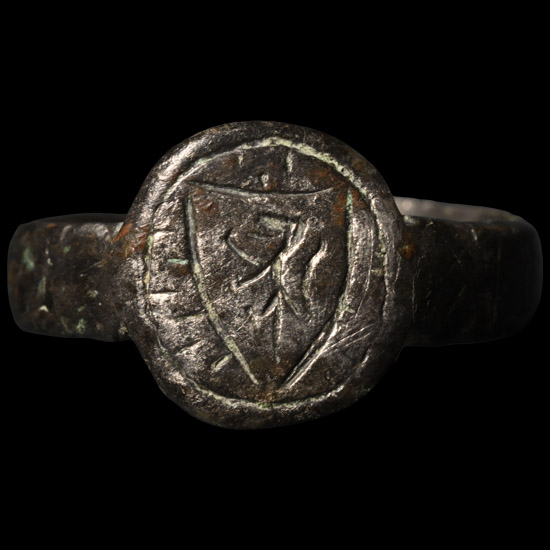
Medieval Bronze Ring with Heraldic Shield
Circa 14th-15th century A.D.Sold for (Inc. bp): £130
With bulb to each shoulder, discoid bezel and incised border, heater shield with lion rampant; accompanied by a museum-quality impression. 3.01 grams, 20.71 mm overall, 18.82 mm internal diameter (approximate size British R, USA 8 1/2, Europe 18 3/4, Japan 18)
From an old English collection, Bournemouth, UK. Ex Parthenon Gallery, London, UK, 2001. Property of a North London, UK, private collector. -
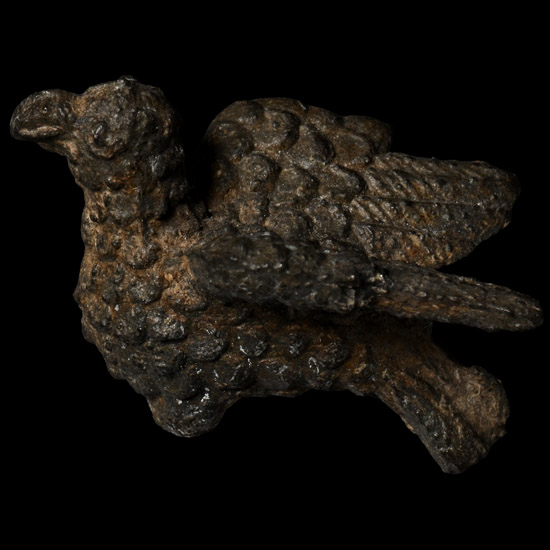
Medieval Bronze Bird Finial
14th-16th century A.D.Sold for (Inc. bp): £78
Modelled in the round with raised feather detailing, wings raised and open, an erect head with a curving beak. 18 grams, 33 mm
From the private collection of a European gentleman (1942-2024), formed since the 1970s. -
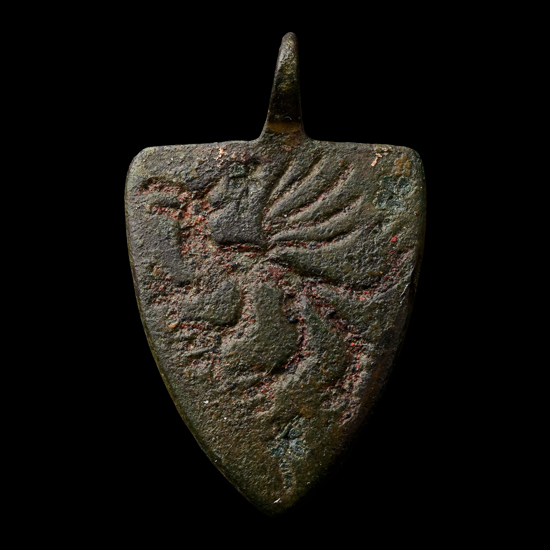
Medieval Knight's Enamelled Bronze Heraldic Horse Harness Pendant with Dragon
Circa 14th century A.D.Sold for (Inc. bp): £234
Heater-shaped with integral suspension lug; incuse dragon with wings raised. 14 grams, 45 mm
Ex Graham Slater collection, Cambridge, 1980s-1990s. -
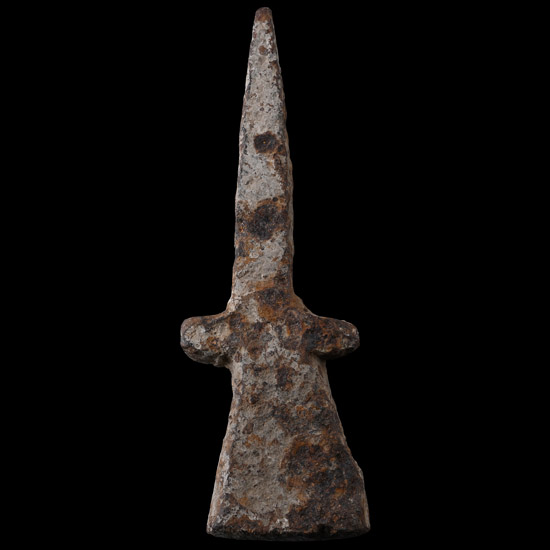
Medieval Iron Jeweller's Anvil
12th-14th century A.D.Sold for (Inc. bp): £46
Comprising a tapering rectangular-section striking block with lateral spurs and a spike below. 24 grams, 11.9 cm
From the private collection of a European gentleman (1942-2024), formed since the 1970s. -
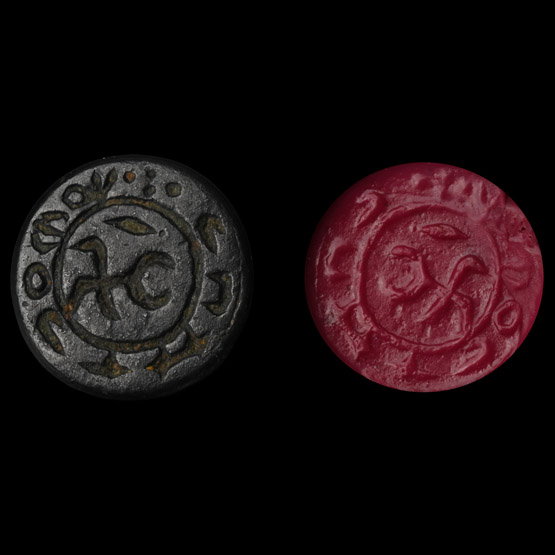
Medieval Bronze Seal Matrix
Circa 13th-14th century A.D.Sold for (Inc. bp): £39
Disc with loop to reverse, central tondo with sigil and incuse symbols to border, possibly Gnostic; accompanied by a museum-quality impression. 2.96 grams, 12 mm
From an old English collection, Bournemouth, UK. Ex Parthenon Gallery, London, UK, 2001. Property of a North London, UK, private collector.

