-
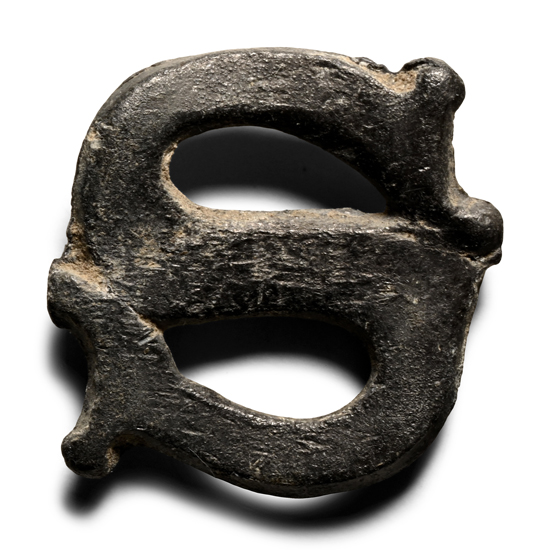
Medieval Pewter Letter 'S' Pilgrim's Badge
Circa 14th-15th century A.D.Sold for (Inc. bp): £91
Openwork plaque formed as a capital 'S' with pelletted serifs; attachment lugs to reverse. 3.13 grams, 19 mm
From a retired Lincolnshire, UK, gentleman's collection, a long time member of the Pewter Society. -
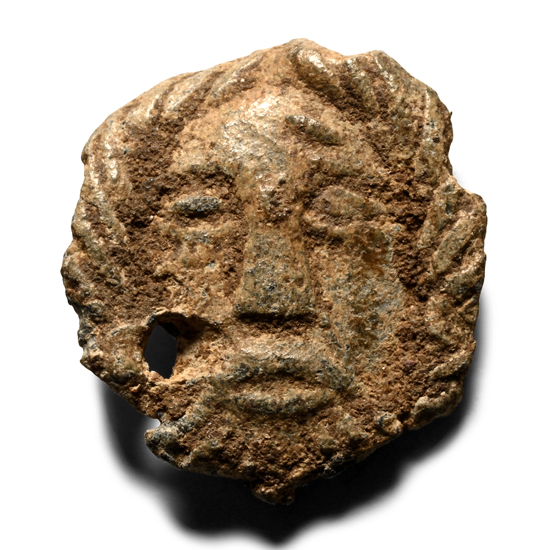
Medieval Pewter Pilgrim's Token with Vernicle
Circa 14th-15th century A.D.Sold for (Inc. bp): £33
Facing mask with ropework border and piercing; representing the Vernicle. 1.94 grams, 15 mm
From a retired Lincolnshire, UK, gentleman's collection, a long time member of the Pewter Society.
The Vernicle is the image of Christ's face on the cloth with which St Veronica wiped him. -
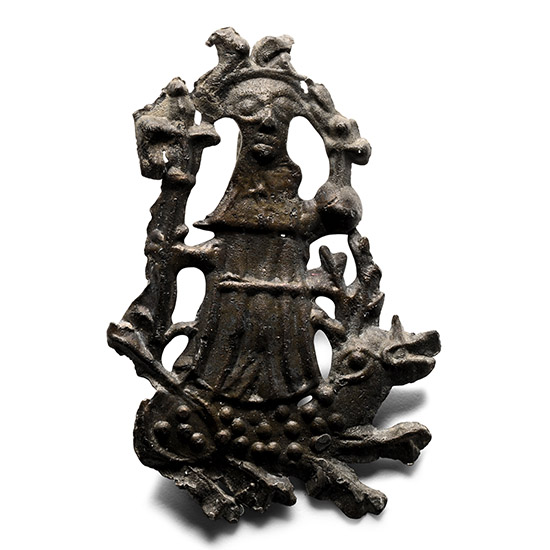
Medieval Pewter Henry VII of Windsor Pilgrim's Badge
Circa 14th-15th century A.D.Sold for (Inc. bp): £195
Openwork low-relief image of Henry standing on a dog, sceptre in one hand and orb in the other; pin to reverse; old collector's inked reference 'BWF'. 2.62 grams, 32 mm
From a retired Lincolnshire, UK, gentleman's collection, a long time member of the Pewter Society. -
.jpg)
Medieval Pewter Pilgrim's Badge with Crown and INRI
Circa 14th-15th century A.D.Sold for (Inc. bp): £13
Ellipsoid panel with reversed 'INRI' legend surmounted by a vesica flanked by extended wings; pierced for attachment. 2.48 grams, 22 mm
From a retired Lincolnshire, UK, gentleman's collection, a long time member of the Pewter Society.
INRI for 'Iesus Nazarenus, Rex Iudaeorum', which translates to 'Jesus the Nazarene, King of the Jews', this inscription having been placed above Jesus' head on the cross during his crucifixion, as recorded in the New Testament. -
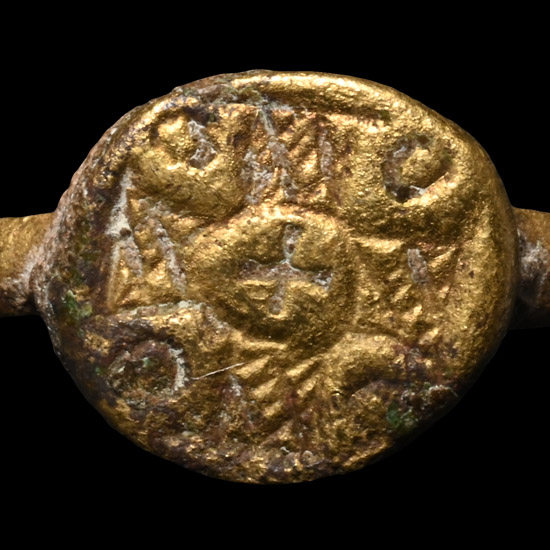
Medieval Bronze Ring with Cross
Circa 12th-15th century A.D.Sold for (Inc. bp): £52
Featuring a slender hoop and a circular bezel with a double cross motif with annulets in each corner. 1.74 grams, 20.21 mm overall, 18.10 mm internal diameter (approximate size British N 1/2, USA 6 3/4, Europe 14.35, Japan 13)
From the private collection of a European gentleman (1942-2024), formed since the 1970s. -
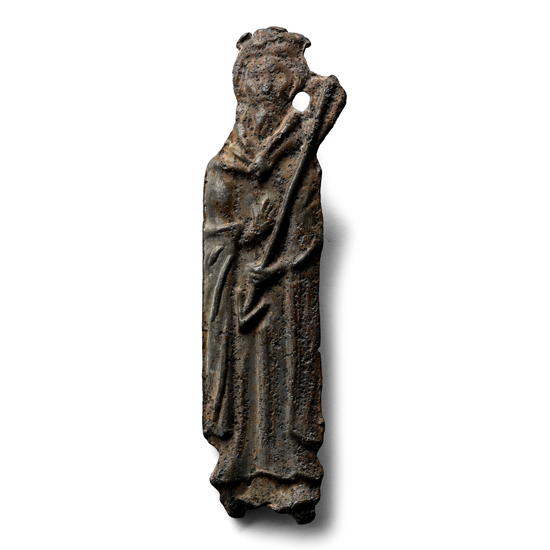
Medieval Pewter Pilgrim's Badge with Saint Edmund
14th-15th century A.D.Sold for (Inc. bp): £416
Modelled as a standing crowned and bearded figure in ankle-length robe holding a large arrow point-downwards; pin to reverse. 7.6 grams, 55 mm
From a retired Lincolnshire, UK, gentleman's collection, a long time member of the Pewter Society.
The legend of King (later Saint) Edmund was celebrated in medieval England. The king refused to submit to the Danes, who tied him to a tree and shot him with arrows thus providing him with holy martyrdom. -
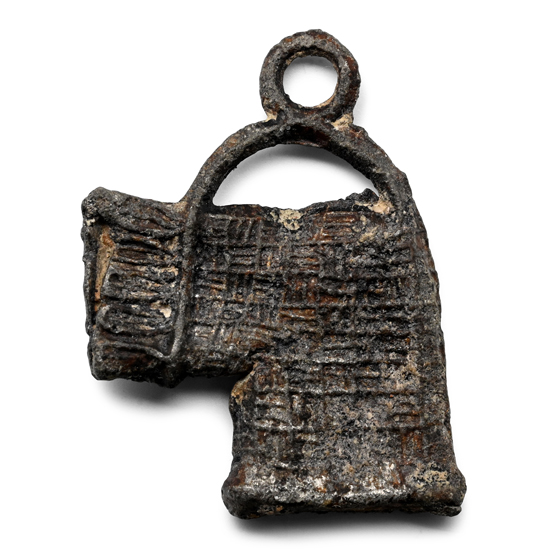
Medieval Pewter Pilgrim's Sudarium Pendant
14th-15th century A.D.Sold for (Inc. bp): £247
Comprising a stirrup-shaped band supporting right-angled bolt of fabric with woven detailing. 5.7 grams, 35 mm
From a retired Lincolnshire, UK, gentleman's collection, a long time member of the Pewter Society.
The sudarium is the cloth with which St Veronica wiped the sweat from Jesus' face in medieval legend. -
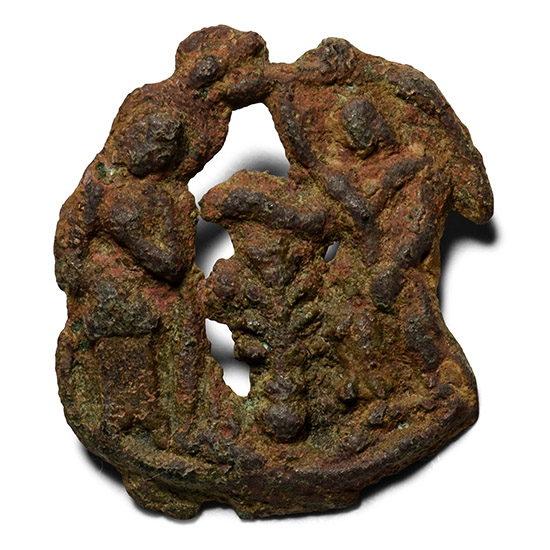
Medieval Bronze Figural Mount
Circa 14th-15th century A.D.Sold for (Inc. bp): £59
Openwork plaque formed as two standing figures flanking a tree on a crescentic base; possibly Adam and Eve with the tree and serpent; coiled attachment pin to reverse. 5.29 grams, 27 mm
From a retired Lincolnshire, UK, gentleman's collection, a long time member of the Pewter Society. -
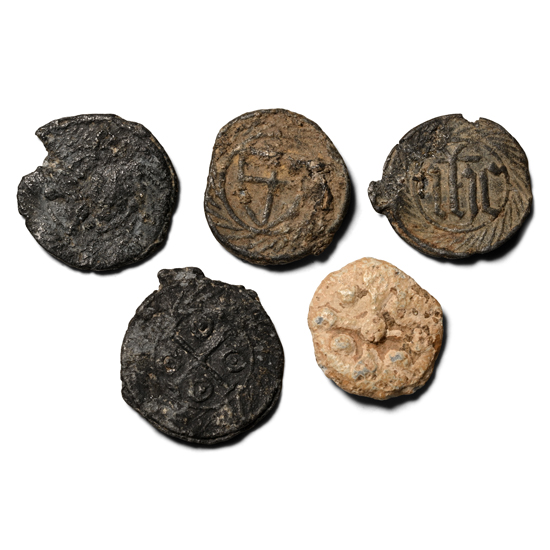
Medieval Pewter Pilgrim's Token Group
Circa 14th-15th century A.D.Sold for (Inc. bp): £26
Discoid in plan, bifacial, some with casting sprue to edge; various designs including heater shield with cross, script 'IHS' monogram, cross in pellets, and others. 3.62 grams total, 11-14 mm
From a retired Lincolnshire, UK, gentleman's collection, a long time member of the Pewter Society. -
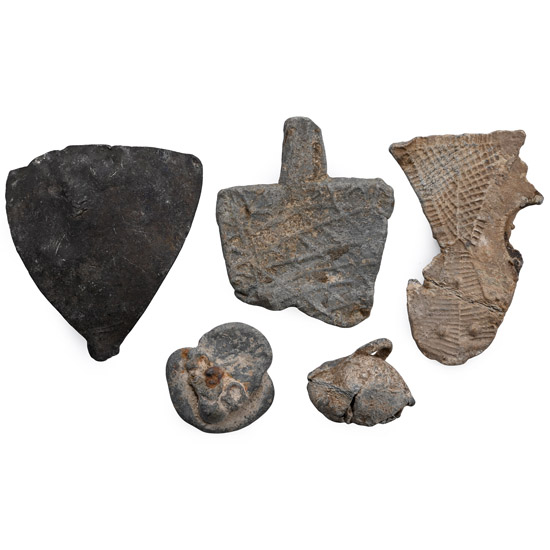
Medieval Pewter and Lead Pilgrim's Artefact Group
Circa 14th-15th century A.D.Sold for (Inc. bp): £7
Comprising: fragmentary bell with leaf decoration; part of a badge depicting a female with chequered dress; part of a spoon with fleur-de-lis maker's mark; mount with animal face; fragment of another large pilgrim badge. 66 grams total, 24-50 mm
From a retired Lincolnshire, UK, gentleman's collection, a long time member of the Pewter Society. -
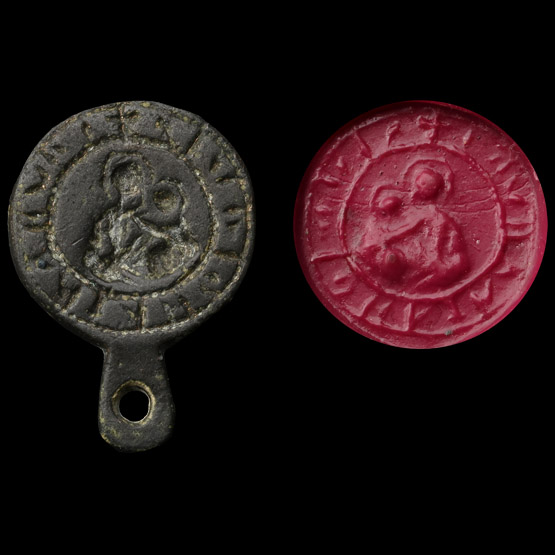
Medieval Bronze Seal Matrix with Mary and Child
Circa 13th-14th century A.D.Sold for (Inc. bp): £143
Discoid with pierced tag, central image of Mary and infant Jesus, border with cross above the figures' heads, blundered legend or pseudo-script; accompanied by a museum-quality impression. 3.89 grams, 23 mm
From an old English collection, Bournemouth, UK. Ex Parthenon Gallery, London, UK, 2001. Property of a North London, UK, private collector. -
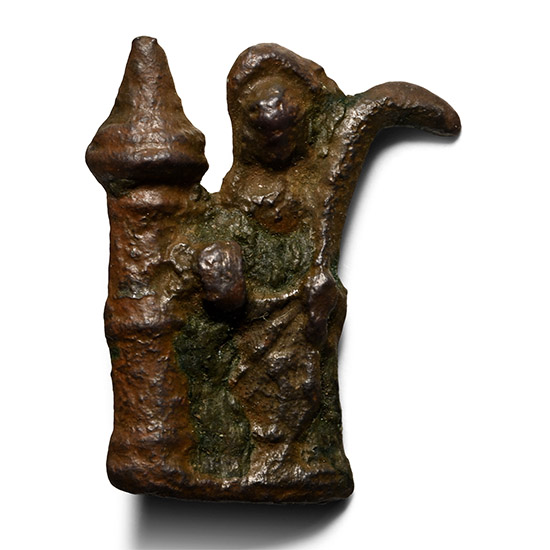
Medieval Bronze Saint Barbara Pilgrim's Badge
14th-15th century A.D.Sold for (Inc. bp): £78
Nimbate Saint Barbara standing next to a tower with three windows and holding a palm frond, modelled in the half-round. 3.53 grams, 24 mm
From a retired Lincolnshire, UK, gentleman's collection, a long time member of the Pewter Society.

