-
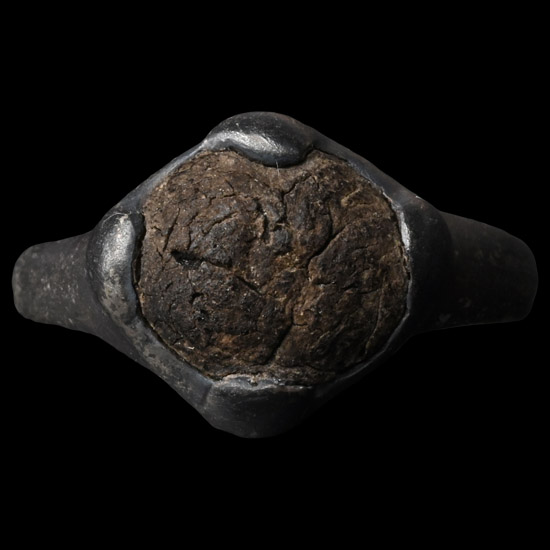
Viking Age Silver Ring with Cabochon
Circa 900-1100 A.D.Sold for (Inc. bp): £78
Comprising a slender hoop with a circular bezel set with an amber(?) cabochon. 3.34 grams, 23.43 mm overall, 18.03 mm internal diameter (approximate size British O, USA 7, Europe 14.98, Japan 14)
From an ancient art collection, formerly acquired in the UK, European, and USA art markets from pre-2000 collections. Property of a West Northamptonshire, UK, gentleman. -
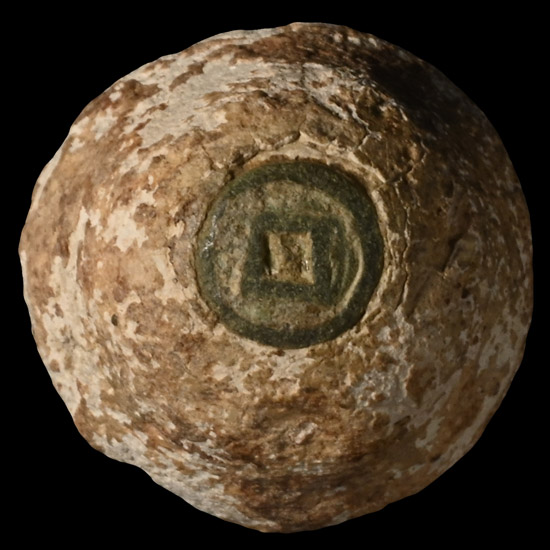
Viking Bronze Inlaid Lead Hnefatafl Gaming Piece
850-1066 A.D.Sold for (Inc. bp): £234
A conical gaming piece or trade weight with an inlaid bronze disc at the top. 22.3 grams, 17 mm
Found Wolcot near Folkingham, Lincolnshire, UK, on Tuesday, 1st April 2008. Property of a Scottish private collector. Accompanied by a copy of the British Museum's Portable Antiquities Scheme (PAS) report no.LIN-88E805.
This piece would have been used in the board game Hnefatafl. Trade weights and gaming pieces in Anglo-Scandinavian culture were often formed by taking a small and finely-made pre-existing item and embedding it into a lead matrix. The effect of this practice has been to preserve smaller pieces which would otherwise not have survived. -
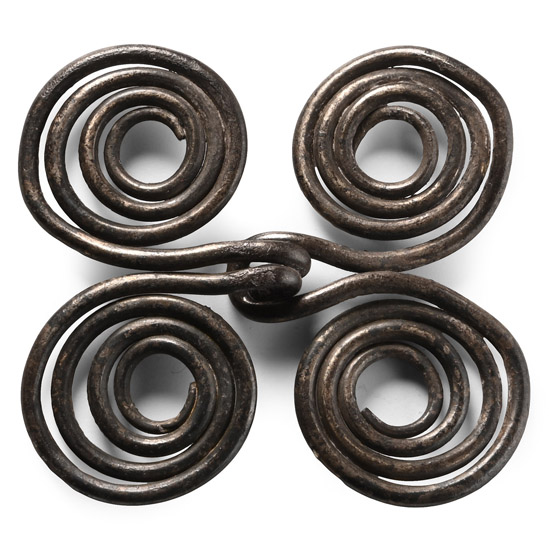
Scandinavian Pre-Viking Silver Wrist Clasp Pair
5th century A.D.Sold for (Inc. bp): £169
Spiral-coiled wrist-clasps of Hines's Class A with one broad rounded loop to the centre and one returned hooked loop. 11.5 grams total, 36-38 mm
Ex property of a gentleman; acquired in the 1970s.
The spiral-coil type of wrist clasp is the earliest form of an artefact type which became a very popular costume element in especially Norway and the English East Midlands in the early Anglo-Saxon Period. Grave-finds indicate that they were used to secure the cuffs of robes worn by high-status women. -
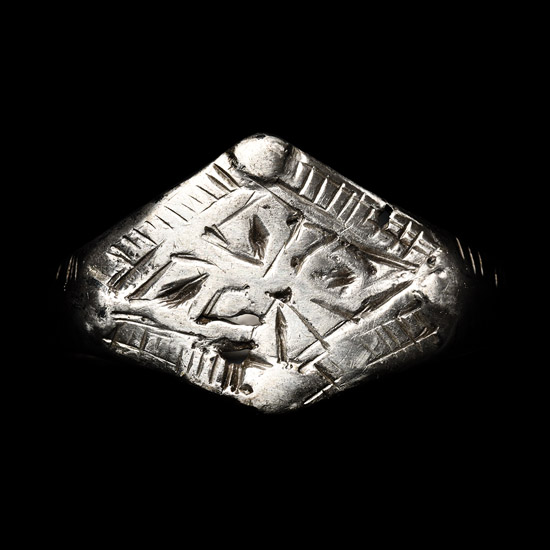
Viking Age Silver Ring
Circa 900-1100 A.D.Sold for (Inc. bp): £124
Comprising a D-section hoop and a lozenge-shaped bezel with four raised bosses and a central cross motif within a hatched border. 2.29 grams, 23.05 mm overall, 20.63 mm internal diameter (approximate size British S1/2, USA 9 1/4, Europe 20.63, Japan 19)
Ex property of an Oxfordshire art professional; previously in an old British collection, formed in the 1980s. Property of a West Northamptonshire, UK, gentleman. -
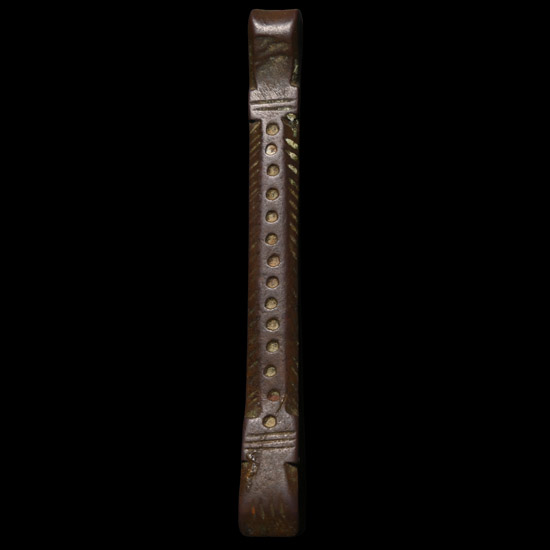
Saxon Decorated Bronze Tweezers
Circa 6th-8th century A.D.Sold for (Inc. bp): £59
With gently curving blades and a narrow returned shank with hatched edges and punched pellets at the centre. 5.13 grams, 53.7 mm
From the private collection of a European gentleman (1942-2024), formed since the 1970s. -
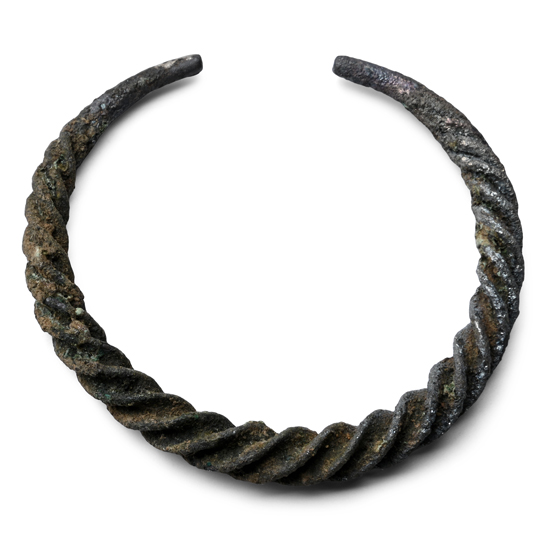
Viking Age Silver-Alloy Twisted Bar Bracelet
Circa 9th-12th century A.D.Sold for (Inc. bp): £260
Penannular twisted body and tapering finials, hollow-form. 16.5 grams, 64 mm
From the private collection of a European gentleman (1942-2024), formed since the 1970s. -
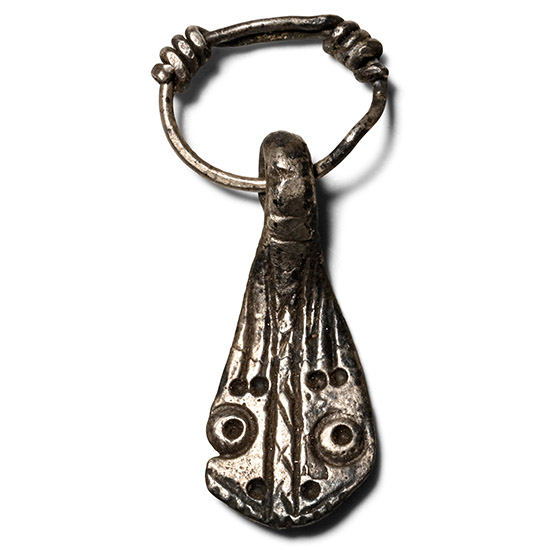
Viking Age Silver Duck Foot Pendant
Circa 9th-11th century A.D.Sold for (Inc. bp): £169
Silver ovoid pendant with incised duck-foot detailing, mounted on a wire suspension ring. 1.63 grams, 31 mm
Ex German art market, 2000s. Acquired from an EU collector living in London. From the collection of a Surrey, UK, gentleman. -
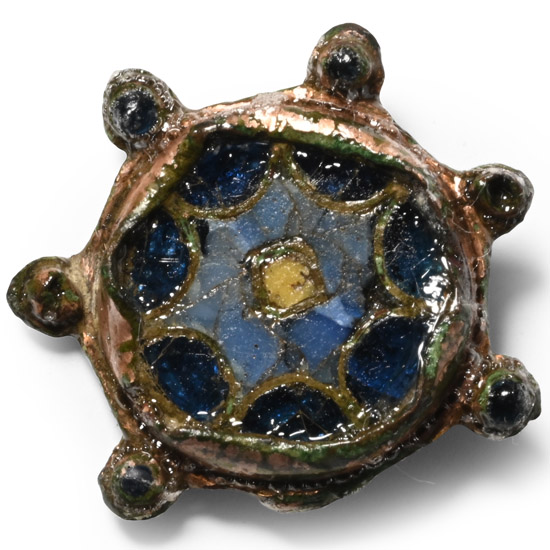
Late Anglo-Saxon Enamelled Gilt Bronze Cloisonne Brooch
Circa 11th century A.D.Sold for (Inc. bp): £221
With seven radiating knops to the rim (one absent); pin-lug and clasp to the reverse; each lug with inset blue enamel; main body divided into a central starburst with seven D-shaped cells, all filled with blue enamel, white enamel spot to the central field. 4.53 grams, 24 mm
Found UK. Acquired on the UK art market. Property of a Scottish private collector. -
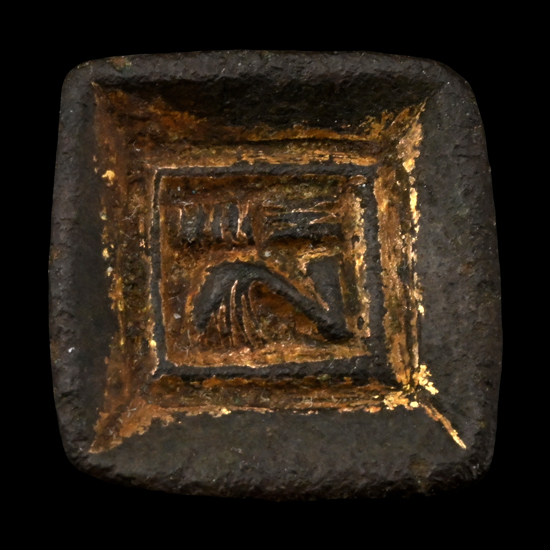
Saxon Gilt Bronze Chip-Carved Belt Mount
6th century A.D.Sold for (Inc. bp): £39
Square in plan with a broad rim and a central field, Style I beast in a frame; attachment lug to reverse. 2.07 grams, 17mm
Acquired on the UK art market before 2000. Property of an Essex, UK, gentleman. -
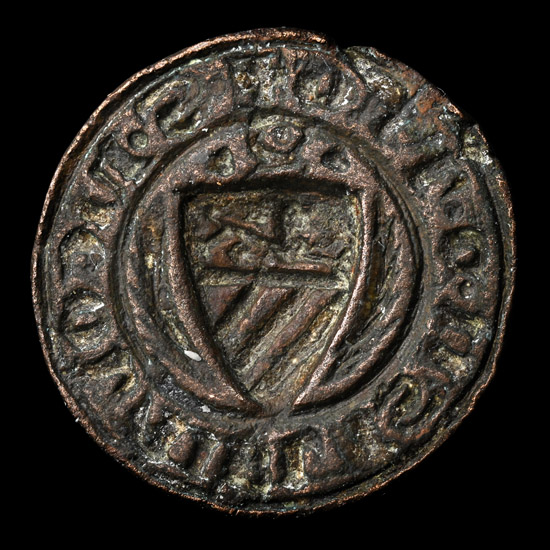
Medieval Bronze Personal Seal with Heraldic Shield
Circa 13th-14th century A.D.Sold for (Inc. bp): £72
Discoid in plan with remains of handle to reverse; incuse heater shield with a lion couchant in chief and bends below; legend to border '+ S· NICOLAI[ELIS..]'. 8.81 grams, 22.1 mm
From the private collection of a European gentleman (1942-2024), formed since the 1970s. -
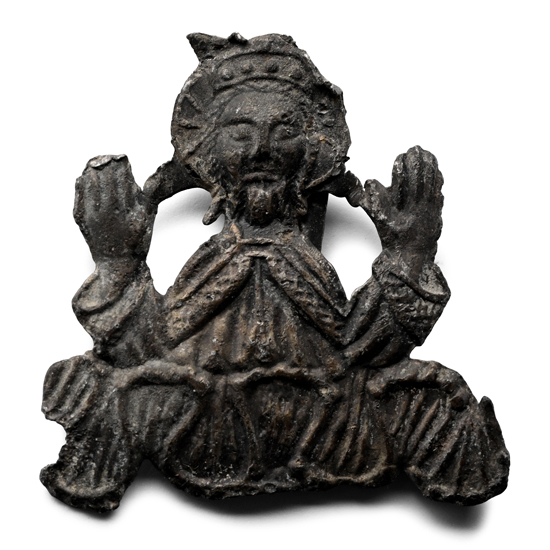
Medieval Pewter Pilgrim's Badge of Christ with Raised Hands
14th-15th century A.D.Sold for (Inc. bp): £156
Low-relief image of nimbate Christ with hands raised and palms facing, emerging above a nebuly scroll; associated with the cult of Richard Caister of Norwich; pin to reverse. 5.35 grams, 31 mm
From a retired Lincolnshire, UK, gentleman's collection, a long time member of the Pewter Society. -
.jpg)
Medieval Pewter 'Our Lady of Willesden' Pilgrim's Badge
Circa 15th-16th century A.D.Sold for (Inc. bp): £13
Fragment with beaded rim and low-relief crowned mother and child motif. 1.63 grams, 23 mm
From a retired Lincolnshire, UK, gentleman's collection, a long time member of the Pewter Society.

