-
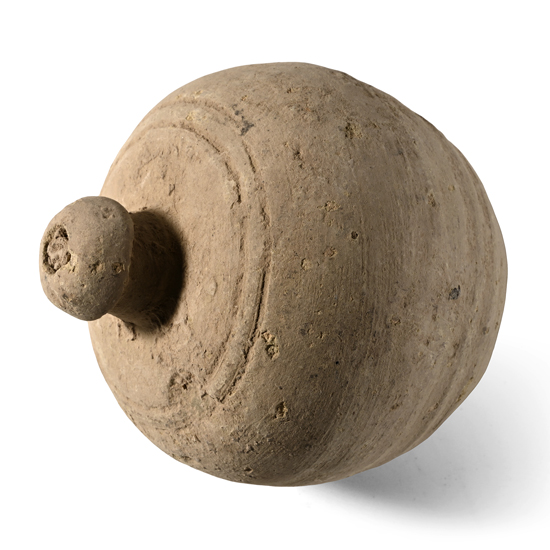
Byzantine 'Greek Fire' Ceramic Fire Bomb or Hand Grenade
9th-11th century A.D.Sold for (Inc. bp): £130
Ovoid in profile with domed filler hole, linear decoration; intended to be filled with explosive liquid and a wick, and used as a hand grenade. 667 grams, 12.8 cm
From an important specialist collection, London, UK, 1990s. Accompanied by an academic paper by military specialist Dr Raffaele D'Amato, dated 15 July 2019 and titled 'Eastern Roman Empire - Greek Fire Bomb or Hand Grenade (μεσαίον kακάβιον) 9th-11th century AD'.
Apart from the use of siphons or manual flame-throwers called cheirosiphona, special corps of Roman soldiers employed terracotta grenades, in the form of small jars, abundantly evidenced in archaeological excavations. They were called μεσαία kακαβιά or κυτροκακάβια where the former had a bulbous shape and the latter a more cylindrical form. -
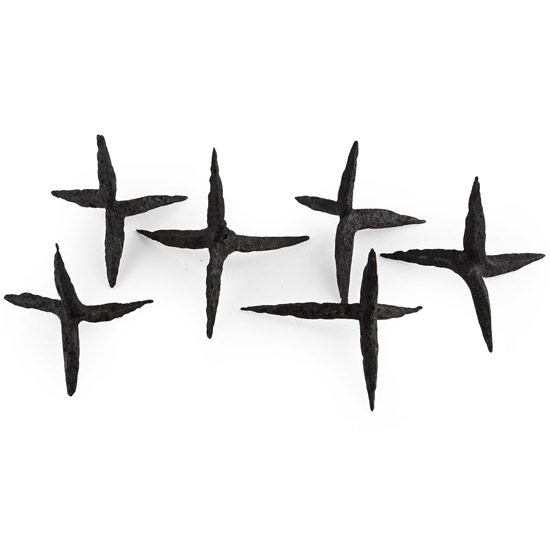
Roman Iron Anti-Cavalry Caltrop Group
3rd-4th century A.D.Sold for (Inc. bp): £286
Comprising six caltrops, hand-forged with square-section spikes. 338 grams total, 76-93 mm
From the private collection of a London gentleman, from his grandfather's collection formed before the early 1970s.
Caltrops were scattered on battlefields in an effort to stop or slow advancing enemy cavalry or foot soldiers; regardless of how a caltrop lands, one spike is always facing upwards. Caesar used them widely at Alesia (Caes., BG 7.73; 82): 'Stakes a foot long, with iron hooks attached to them, were entirely sunk in the ground before these, and were planted in every place at small intervals; these they called spurs'. -
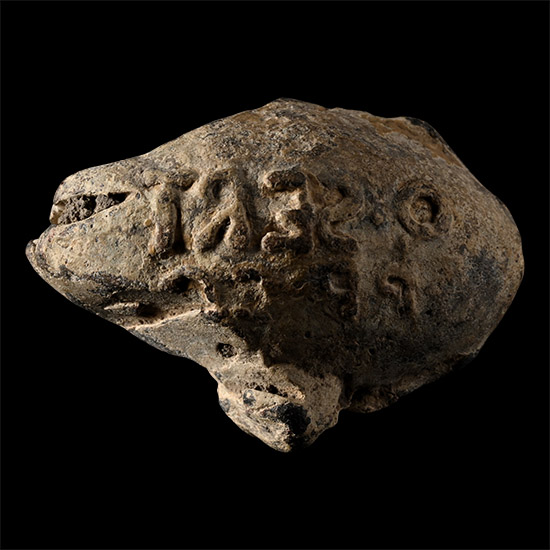
Roman Lead Slingshot of Quintus Sertorius
Sertorian Wars, 82-72 B.C.Sold for (Inc. bp): £650
Lentoid in form with raised legend to reverse: 'Q.SERT / PPOR C'; casting flange to rim. 57.2 grams, 33 mm
Acquired on the UK art market, early 2000s. Property of a London, UK, antiquarian.
The inscription refers to Quintus Sertorius, the Roman statesman and general (123-72 BC). -
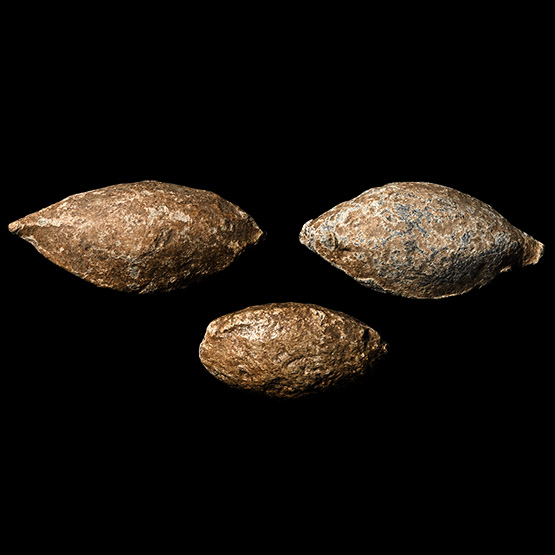
Greek Lead Slingshot Group
4th-3rd century B.C.Sold for (Inc. bp): £78
Comprising three lentoid-section bullets. 87 grams total, 27-37 mm
Ex German art market, 2000s. Acquired from an EU collector living in London. From the collection of a Surrey, UK, gentleman. -
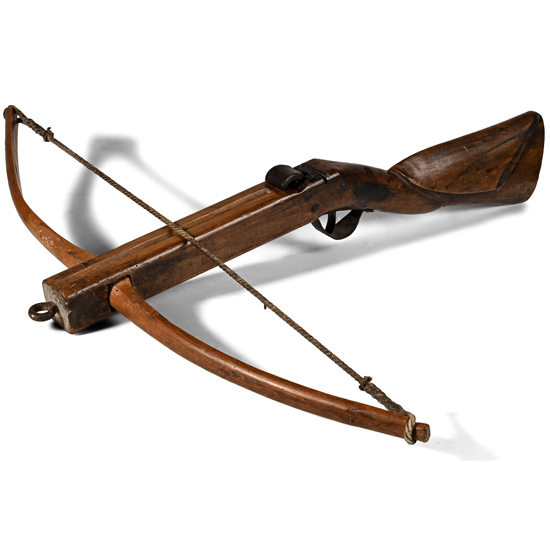
Antique Wooden Crossbow
19th century A.D.Sold for (Inc. bp): £78
Carved, stocky body with an iron suspension ring, rope cable and iron trigger. 1.38 kg, 75 cm wide
Private collection, London, UK. (For sale only to bidders of at least 18 years of age. UK buyers only.) -
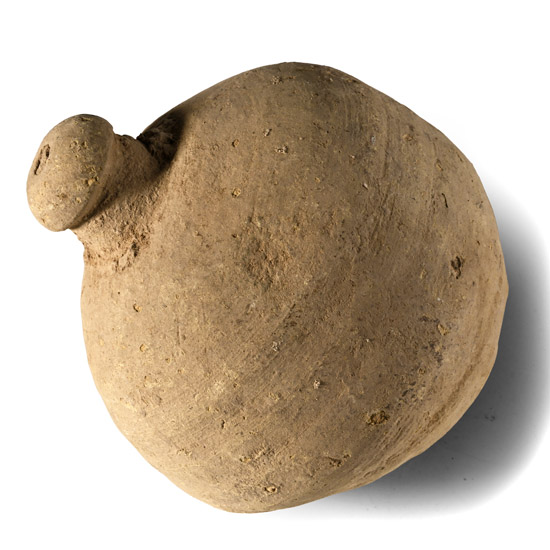
Byzantine 'Greek Fire' Ceramic Fire Bomb or Hand Grenade
9th-11th century A.D.Sold for (Inc. bp): £91
Bulbous, undecorated body with dome filler hole; intended to be filled with explosive liquid and a wick, and used as a hand grenade. 670 grams, 12.1 cm
From an important specialist collection, London, UK, 1990s. Accompanied by an academic paper by military specialist Dr Raffaele D'Amato, dated 15 July 2019 and titled 'Eastern Roman Empire - Greek Fire Bomb or Hand Grenade (μεσαίον kακάβιον) 9th-11th century AD'.
Apart from the use of siphons or manual flame-throwers called cheirosiphona, special corps of Roman soldiers employed terracotta grenades, in the form of small jars, abundantly evidenced in archaeological excavations. They were called μεσαία kακαβιά or κυτροκακάβια where the former had a bulbous shape and the latter a more cylindrical form. -
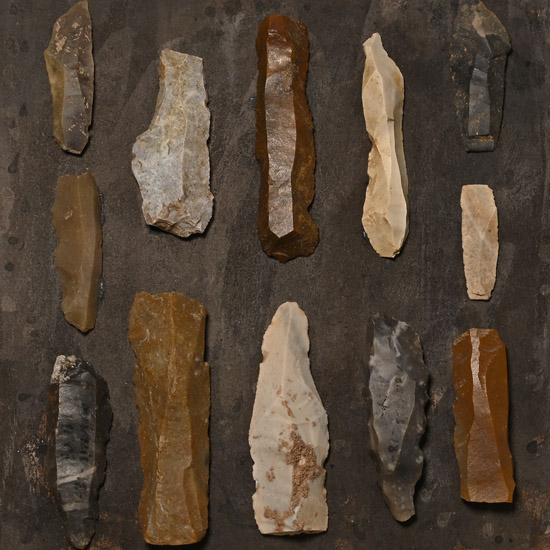
Set of French Stone Age Knapped Flint Tools from Various Locations
Upper Palaeoithic Period, circa 40,000-15,000 B.P.Sold for (Inc. bp): £286
Group of flint flakes, scrapers, burins and other tools, some with inked findspot; mounted in a wooden frame with 'Paléolithique Supérieur' (Upper Palaeolithic) to the rim. 421 grams total, 37.95-79.50 mm
Acquired in the 1970s-1990s. From the collection of the famous UK musician and amateur archaeologist, Victor Brox (1941-2023). Acquired on the UK art market at auction after being sold by Mr Brox’s family. From the private collection of an East Anglian, UK, specialist collector. -
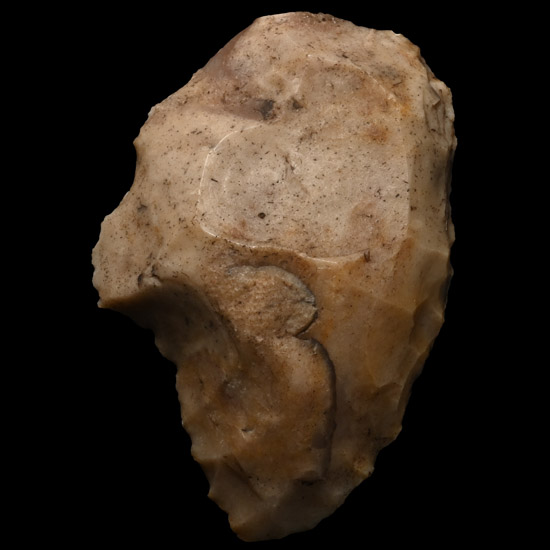
British Stone Age Crescent Knapped Flint Scraper from Farnham
Neolithic Period, circa 6000 years B.P.Sold for (Inc. bp): £468
Made from a piece of flint containing the fossil remains of a sponge, now crystallised. 24.9 grams, 54 mm
Found in 1901. From the collection of Captain Streatfield who helped to fund the archaeology excavations at Farnham, Kent. After Captain Streatfield passed away in the 1940s, his collection was sold at auction to a gentleman in Kent. The collection was then sold again in the 2020’s via a UK auction house. -
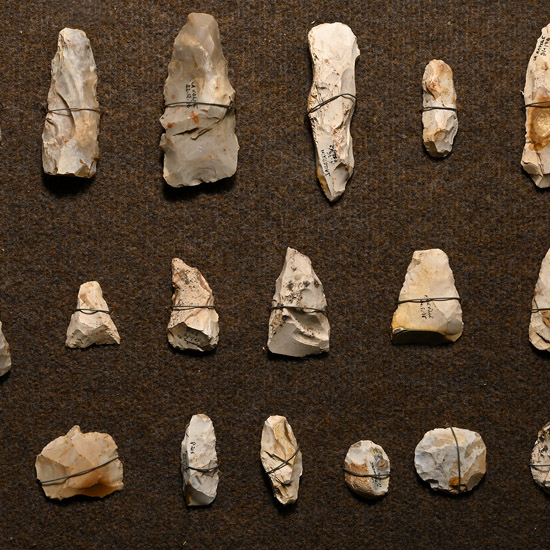
French Stone Age Axe and Other Knapped Flint Tool Display
Neolithic Period, circa 6000 B.P.Sold for (Inc. bp): £468
Group of worked flint tools on a display board; various types, some with inked date and findspot (e.g. La Volve 22.11.76). 2.45 kg total including board, 39.12-119.22 mm
From various locations in France. Purchased on the European art market. Property of a Norfolk, UK, collector. -
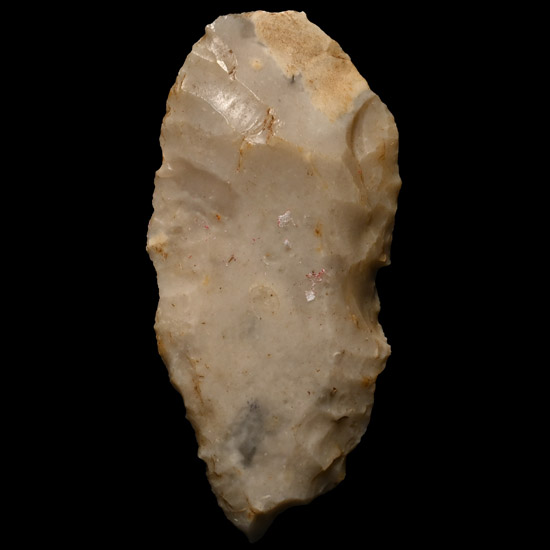
British Stone Age Knapped Flint Bifacial Knife from Farnham
Neolithic Period, circa 6000 years B.P.Sold for (Inc. bp): £156
Thin and leaf-shaped, made on a very thin flint flake. 7.73 grams, 48 mm
Found in 1901. From the collection of Captain Streatfield, who helped to fund the archaeology excavations at Farnham, Kent. After Captain Streatfield passed away in the 1940s, his collection was sold at auction to a gentleman in Kent. The collection was then sold again in the 2020’s via a UK auction house. -
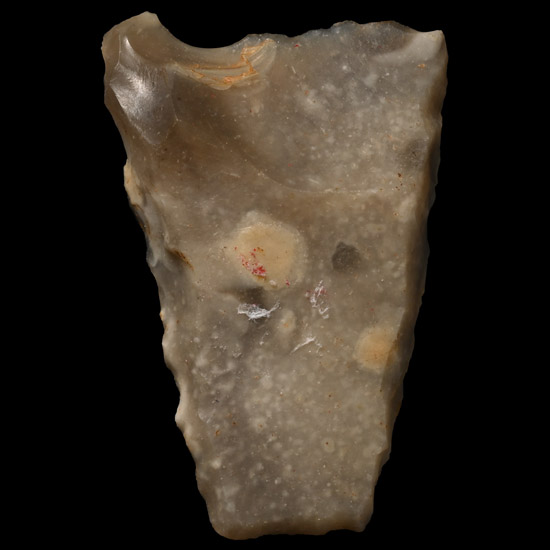
British Stone Age Knapped Flint Chisel Tip Arrowhead from Farnham
Neolithic Period, circa 6000 B.P.Sold for (Inc. bp): £286
Trapezoidal in plan with crescent cutting edge. 2.93 grams, 28.3 mm
Found in 1901. From the collection of Captain Streatfield, who helped to fund the archaeology excavations at Farnham, Kent. After Captain Streatfield passed away in the 1940s, his collection was sold at auction to a gentleman in Kent. The collection was then sold again in the 2020’s via a UK auction house. -
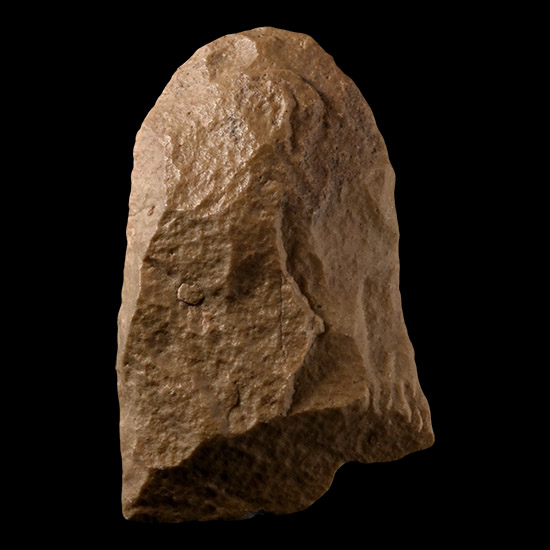
Very Large African Homo Erectus Knapped Stone Cleaver
Palaeolithic Period, circa 1,000,000-500,000 B.P.Sold for (Inc. bp): £98
Tongue-shaped in profile with a broad bevelled cutting edge and a rounded butt. 1 kg, 19.5 cm
From Western Sahara. Ex old German collection formed in the 1970s. Purchased on the European art market.

