-
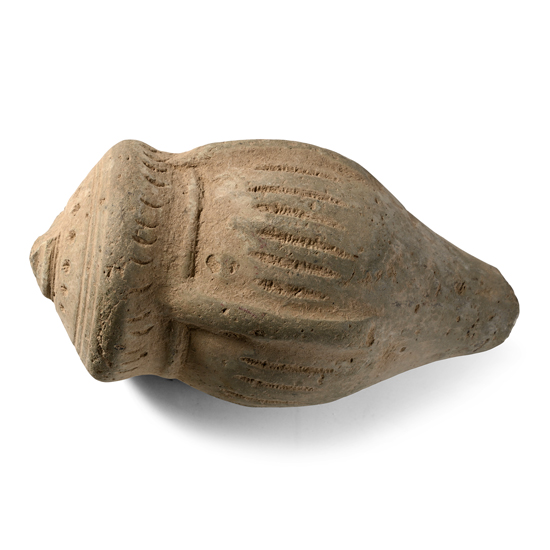
Turco-Mongol 'Greek Fire' Ceramic Fire Bomb or Hand Grenade
9th-11th century A.D.Sold for (Inc. bp): £221
Piriform in profile with a stepped neck, incised decoration and three raised lugs; intended to be filled with explosive liquid and a wick, and used as a hand grenade. 534 grams, 14 cm
From an important specialist collection, London, UK, 1990s.
Apart from the use of siphons or manual flame-throwers called cheirosiphona, special corps of Roman soldiers employed terracotta grenades, in the form of small jars, abundantly evidenced in archaeological excavations. They were called μεσαία kακαβιά or κυτροκακάβια, where the former had a bulbous shape and the latter a more cylindrical form. -
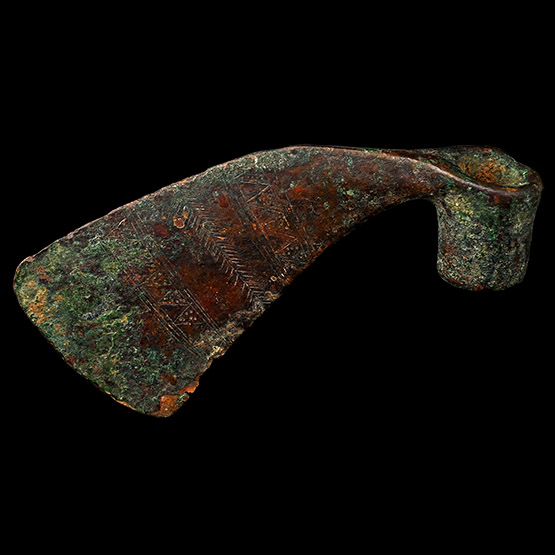
Bactrian Bronze Decorated Socketted Axehead
Bronze Age, 2nd millennium B.C.Sold for (Inc. bp): £351
Comprising a short tubular socket with flared neck to the angled blade; incised herringbone ornament to both faces flanked by pounced triangular panels in bilinear bands, 104 grams, 11.6 cm
From an old English collection formed since 1960. -
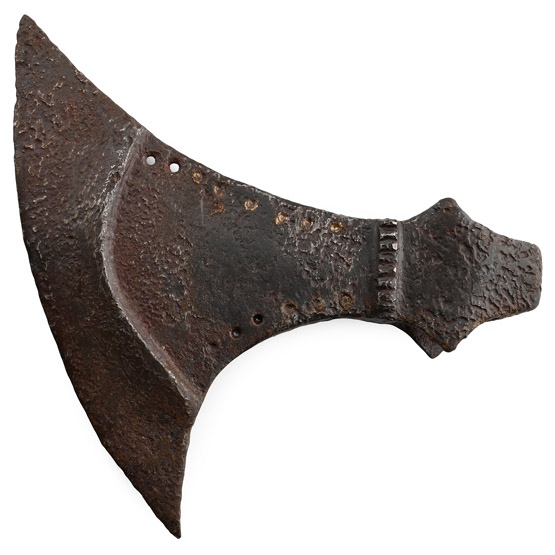
Viking Iron Fighting Broad Axehead
Circa 9th-11th century A.D.Sold for (Inc. bp): £1,560
With triangular spurs flanking the square socket, broad flaring triangular-section blade extending to a curved edge with carination to its rear, hammer extension to the reverse of socket. 474 grams, 20 cm
Ex North American private collection, 1970s-1990s. -
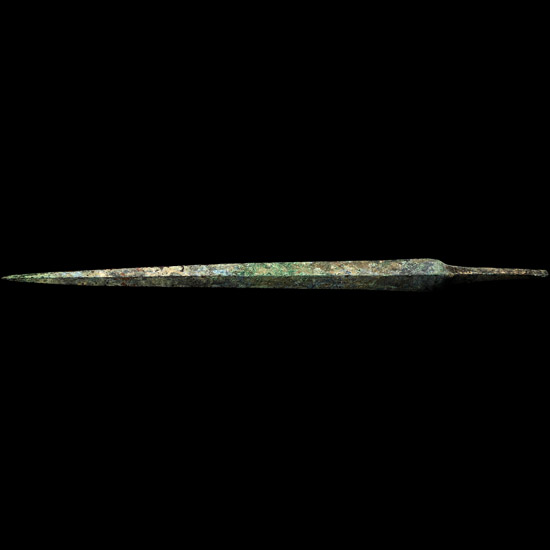
Luristan Bronze Tanged Lancehead
800-600 B.C.Sold for (Inc. bp): £124
With a tapering rectangular-section blade and a short tang. 239 grams, 31 cm
Ex Abelita family collection, 1980s-2000s.
These shoulderless spearheads are introducing the Luristan and Hamadan in the Median and Achaemenid Periods. The bronze type was cast in a mould, and the length suggests it was a throwing weapon or used in conjunction with a chariot. -
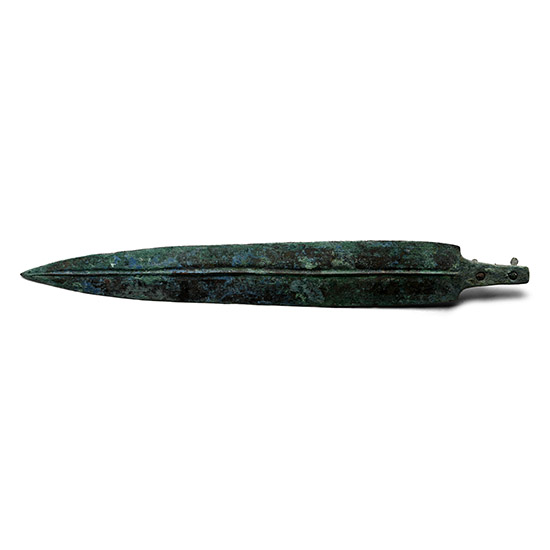
Luristan Bronze Tanged Spearhead
2nd-1st millennium B.C.Sold for (Inc. bp): £169
Comprising a triangular blade with a narrow midrib, a short tang with two piercings, and attachment studs in situ. 125 grams, 25.6 cm
Ex Abelita family collection, 1980s-2000s.
The spearhead belongs to type 2 according to the classification of Khorasani. A similar specimen was excavated by Negahban in Marlik. -
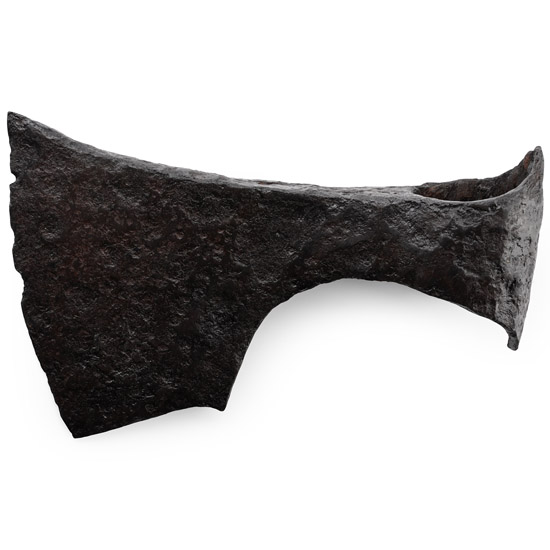
Viking Iron Bearded Axehead
9th-11th century A.D.Sold for (Inc. bp): £247
With a slender blade, chin to the lower edge with a spur to the rear, round socket with rectangular flanges; traces of the original wooden shaft inside the socket. 600 grams, 16.5 cm
From the private collection of a London gentleman, from his grandfather's collection formed before the early 1970s. -
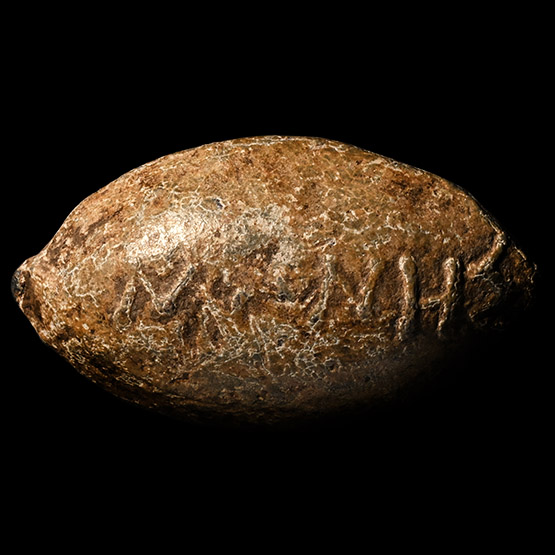
Greek Lead Slingshot with Inscriptions
4th-3rd century B.C.Sold for (Inc. bp): £156
Lenticular type with casting seam to the rim, raised 'Μ...ΝΗΣ' legend. 25.5 grams, 28 mm
Ex German art market, 2000s. Acquired from an EU collector living in London. From the collection of a Surrey, UK, gentleman.
The leaden bullets, which were thrown from slings, were called in Greek Molivdainai (μολύβδαιναι), and in Latin glandes; the former indicating the material ‘lead’, the latter the shape ‘acorns’. These bullets were cast in a mould and bore letters or devices, or both, on two sides or on only one. In form, they were more like an almond than an acorn, but many are pointed at both ends; in size, they are generally about one and a half inches in maximum length, and under one inch in maximum width. -
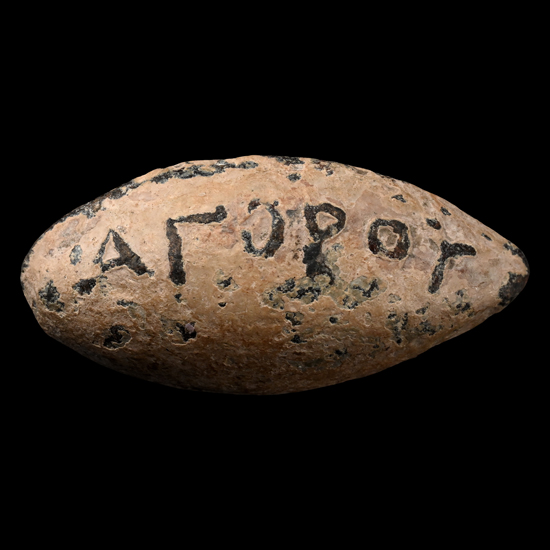
Greek Lead Slingshot with Inscription
4th-3rd century B.C.Sold for (Inc. bp): £130
Lenticular type with casting seam to the rim, raised 'AΓΟΡΟΥ' legend (genitive for Agouros = immature, unripe). 32.7 grams, 31 mm
Ex German art market, 2000s. Acquired from an EU collector living in London. From the collection of a Surrey, UK, gentleman.
Sometimes the bullet carries a joke for the enemy. Here, the bullet bears the inscription ‘immature’, signifying that the enemy will receive not a nice fruit to eat, but an unripe fruit, a fruit he never wants to get. -
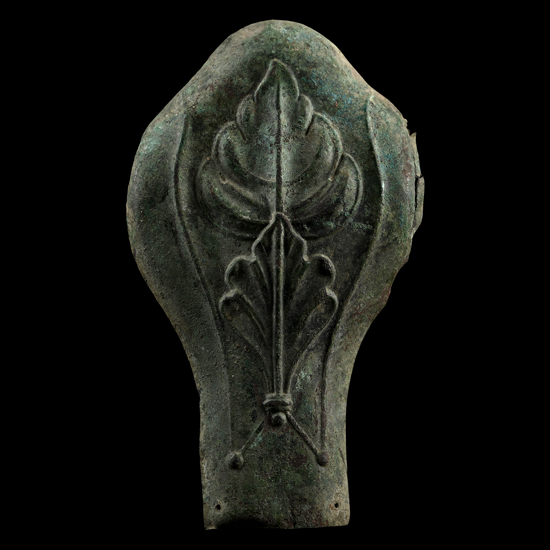
Greek Armour Plate with Palmette
Hellenistic, 2nd-1st century B.C.Sold for (Inc. bp): £546
Piriform in plan with convex surface, high-relief repoussé acanthus-leaf palmette; mounting holes at the narrow end, edge chipped. 39.6 grams, 15.3 cm
From the late collection of a Cornish couple, formed from the early 1990s. -
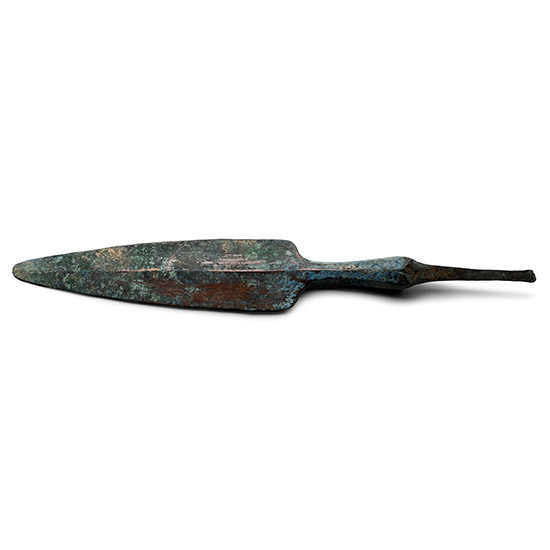
Western Asiatic Bronze Tanged Spearhead
12th-11th century B.C.Sold for (Inc. bp): £195
Comprising a triangular blade with a facetted, flaring neck and a rectangular-section tang. 288 grams, 30 cm
Ex Abelita family collection, 1980s-2000s.
The weapon belongs to the type 1 of the spear-head classification of Khorasani, mainly originating from Marlik or Amlash areas. Similar pieces have been dated by Stutzinger to 1200-1100 B.C. -
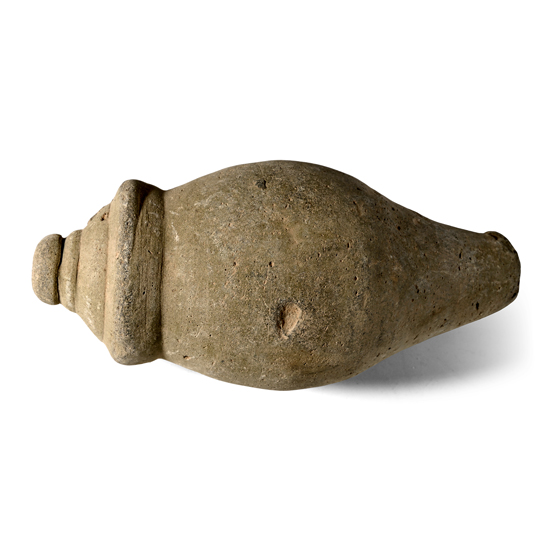
Turco-Mongol 'Greek Fire' Ceramic Fire Bomb or Hand Grenade
14th-15th century A.D.Sold for (Inc. bp): £98
Piriform in profile with a domed mouth and a stepped neck; intended to be filled with explosive liquid and a wick, and used as a hand grenade. 505 grams, 15.7 cm
From an important specialist collection, London, UK, 1990s.
Apart from the use of siphons or manual flame-throwers called cheirosiphona, special corps of Roman soldiers employed terracotta grenades, in the form of small jars, abundantly evidenced in archaeological excavations. They were called μεσαία kακαβιά or κυτροκακάβια, where the former had a bulbous shape and the latter a more cylindrical form. -
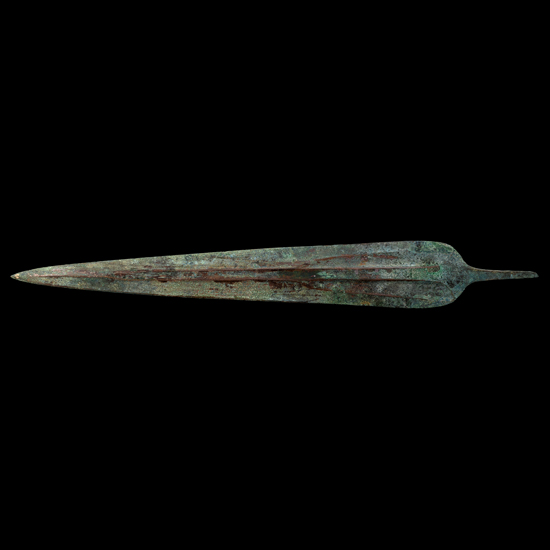
Luristan Bronze Tanged Short Sword
2nd-1st millennium B.C.Sold for (Inc. bp): £208
Substantial blade with rounded shoulders and a short rectangular-section tang. 355 grams, 42.7 cm
Ex Abelita family collection, 1980s-2000s.
Luristan was hardly an ethnic or political entity, but the people of Luri had relations through warfare and trade with Sumerians, Lullubi, Assyrians, Babylonians and Elamites over a long period of time, spanning from the 3rd to the 2nd millennium B.C. The ruling elites of warrior horsemen were buried in the graves with their weapons and horses.

