-
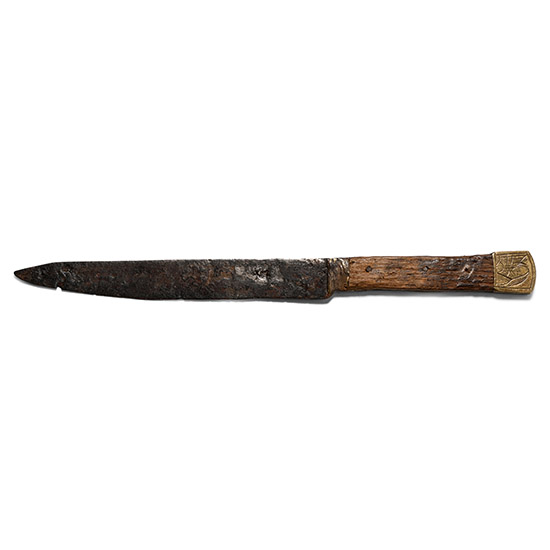
Medieval Iron Knife with Bronze Pommel
Circa 15th-16th century AD.Sold for (Inc. bp): £234
Narrow single-edged blade with integral bolster, flared scale-tang hilt with integral finial; punched 'crown' maker's mark to one face; brass finial with female bust to one face, capital 'S' to the other. 29.59 grams, 19 cm
Ex Cambridgeshire gentleman's collection, 1990s. -
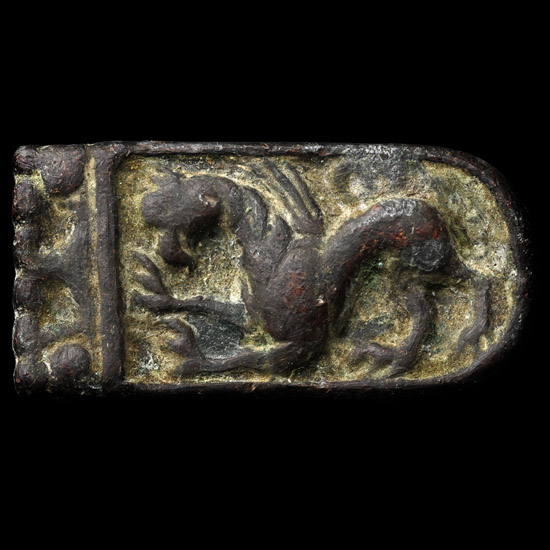
Norman Bronze Tongue-Shaped Strap End with Griffin
Circa 11th-12th century A.D.Sold for (Inc. bp): £78
Tongue-shaped in plan with notched edges to open end; low-relief griffin rampant to each face. 39.7 grams, 41 mm
From the private collection of a European gentleman (1942-2024), formed since the 1970s. -
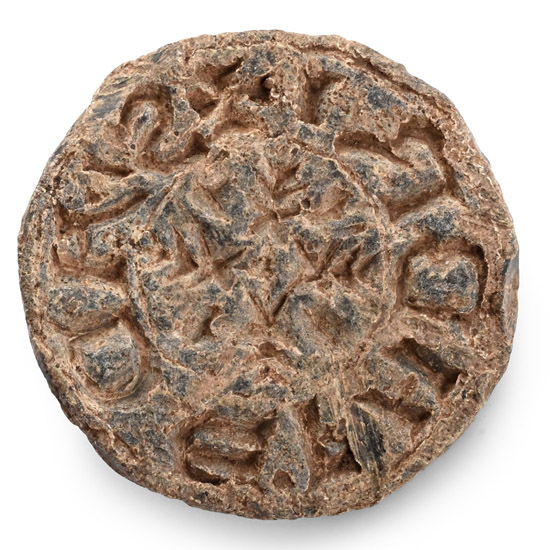
Medieval Personal Lead Seal Matrix
Circa 14th century A.D.Sold for (Inc. bp): £39
With central cross motif and legend to the border 'S’ADE:FABRI’ (seal of Adam (the) Smith). 15.3 grams, 26.5 mm
Found Gloucestershire, UK. Acquired from the early 1980s. From the private collection of a late Gloucestershire, UK, gentleman; thence by descent. -
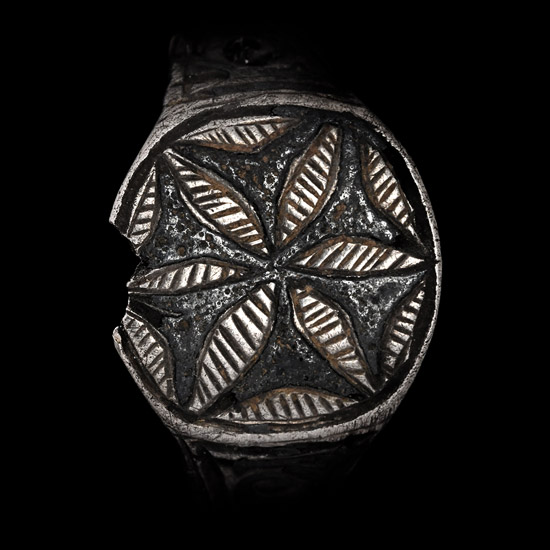
Medieval Silver Ring with Flower
15th-16th century A.D.Sold for (Inc. bp): £143
Gently tapering hoop and a discoid bezel with a six-petalled flower on a nielloed background. 4.03 grams, 21.64 mm overall, 19.46 x 18.87 mm internal diameter (approximate size British R 1/2, USA 8 3/4, Europe 19.38, Japan 18)
Ex German art market, 2000s. Acquired from an EU collector living in London. From the collection of a Surrey, UK, gentleman. -
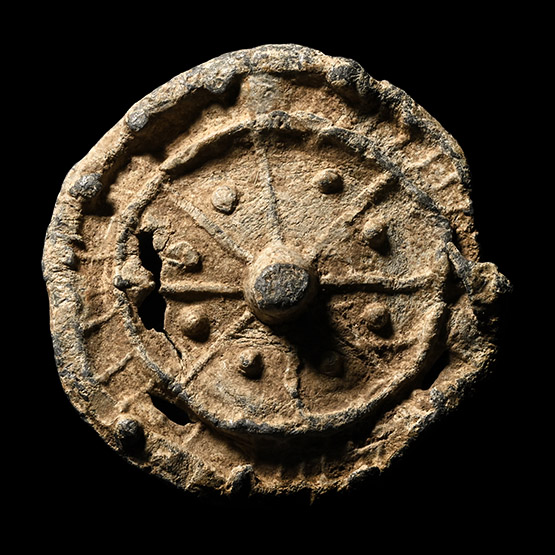
Medieval Pewter Circular Pilgrim's Badge
Circa 14th-15th century A.D.Sold for (Inc. bp): £7
Discoid in plan with raised rim and inner ring with spokes, central boss and radiating arms and interstitial pellets. 12.42 grams, 32 mm
From a retired Lincolnshire, UK, gentleman's collection, a long time member of the Pewter Society. -
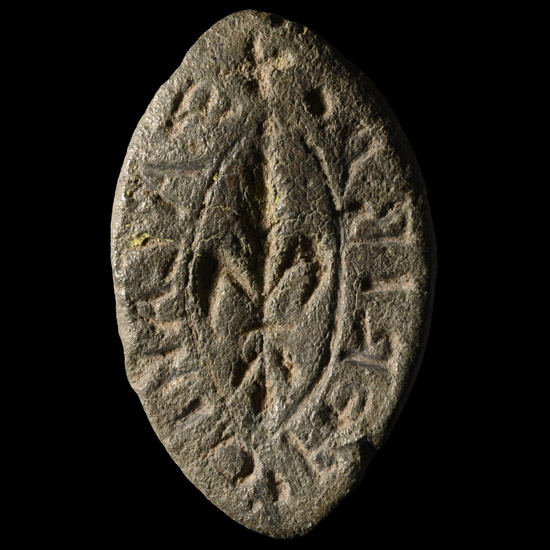
Medieval Lead Vesica-Shaped Personal Seal Matrix
Lincolnshire, circa 13th century A.D.Sold for (Inc. bp): £52
Scaphoid in plan with chamfered edges and raised fleur-de-lys motif; underside with central fleur-de-lys and border with legend '+ S' ALANI D'FERIBY' for 'seal of Alan of Ferriby'. 11 grams, 31 mm
Found Lincolnshire, UK. Acquired on the UK art market from the 1990s. From the private collection of a Lincolnshire, UK, gentleman. -
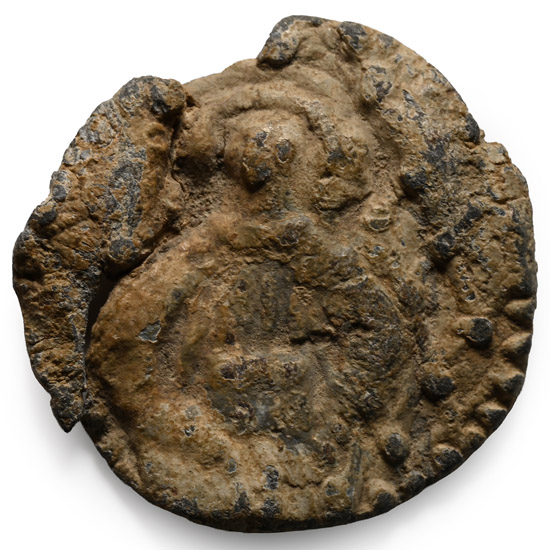
Medieval Pewter St. Audrey Pilgrim's Badge
Circa 14th-15th century A.D.Sold for (Inc. bp): £7
Discoid with beaded border, facing figure with hands holding a rectangle (book or chest); pin to reverse. 4.72 grams, 23 mm
From a retired Lincolnshire, UK, gentleman's collection, a long time member of the Pewter Society. -
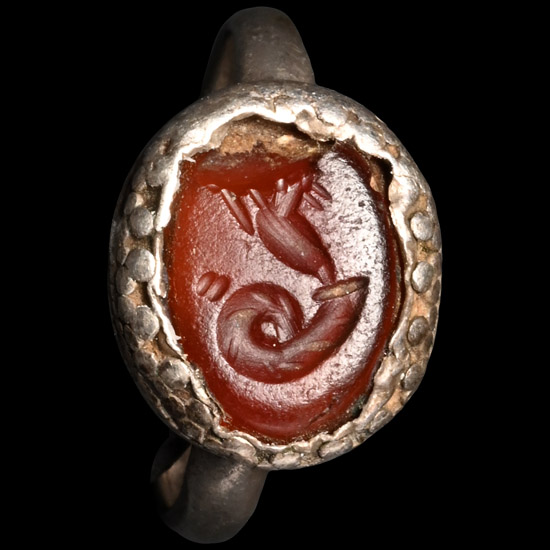
Medieval Silver Ring with Cornucopia Gemstone
14th-16th century A.D.Sold for (Inc. bp): £91
Comprising a D-section hoop and an oval bezel set with intaglio, with a cornucopia. 3.12 grams, 22.14 mm overall, 16.50 mm internal diameter (approximate size British K, USA 5 1/4, Europe 9.95, Japan 9)
From the private collection of a European gentleman (1942-2024), formed since the 1970s. -
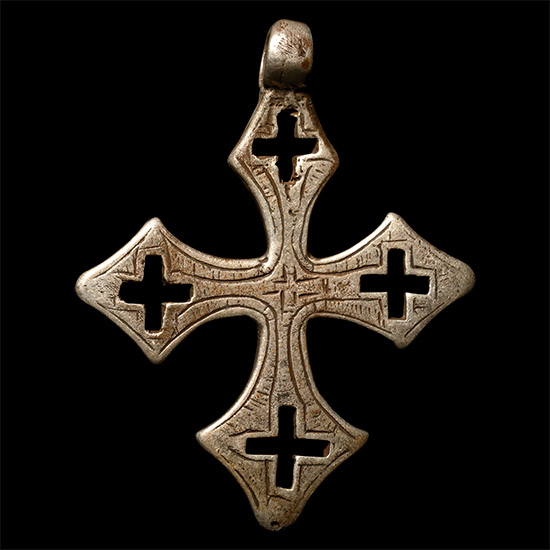
Medieval Silver Pectoral Cross Pendant
Circa 15th-16th century A.D.Sold for (Inc. bp): £338
Cross patoncé with cruciform void to each arm, hatched surface, integral suspension loop. 10.8 grams, 49 mm
Acquired on the UK art market before 2000. Property of an Essex, UK, gentleman. -
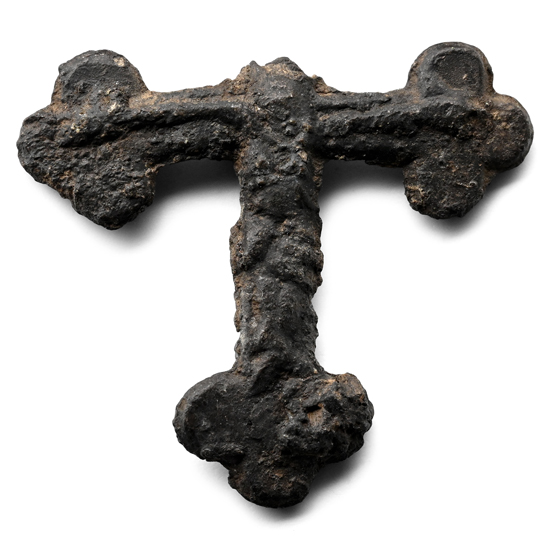
Medieval Pewter Pilgrim's Badge with Christ on Cross
Circa 14th-15th century A.D.Sold for (Inc. bp): £20
Cross pommee with Corpus Christi in low relief; top absent. 2.23 grams, 26 mm
From a retired Lincolnshire, UK, gentleman's collection, a long time member of the Pewter Society. -
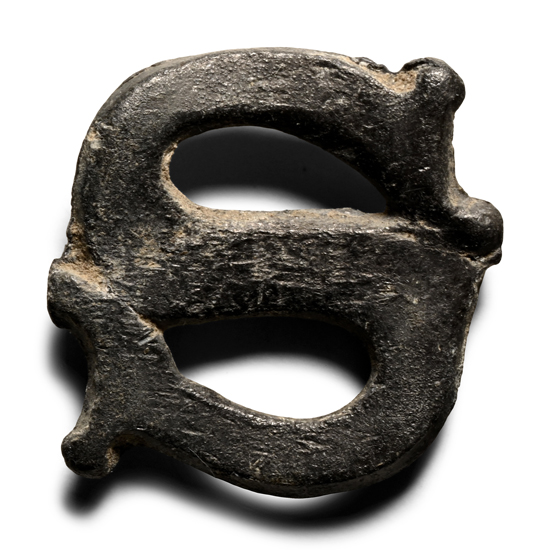
Medieval Pewter Letter 'S' Pilgrim's Badge
Circa 14th-15th century A.D.Sold for (Inc. bp): £91
Openwork plaque formed as a capital 'S' with pelletted serifs; attachment lugs to reverse. 3.13 grams, 19 mm
From a retired Lincolnshire, UK, gentleman's collection, a long time member of the Pewter Society. -
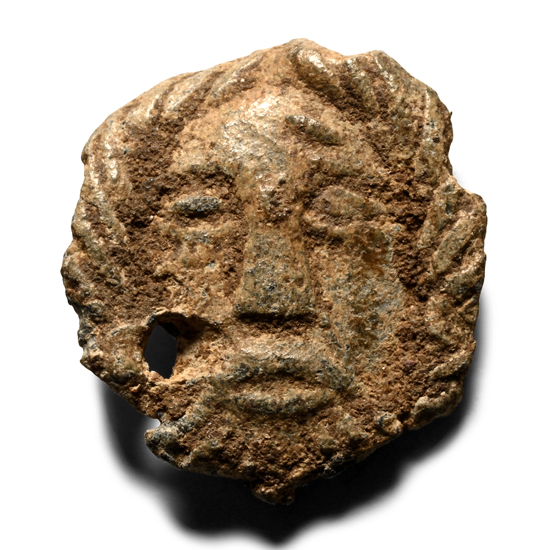
Medieval Pewter Pilgrim's Token with Vernicle
Circa 14th-15th century A.D.Sold for (Inc. bp): £33
Facing mask with ropework border and piercing; representing the Vernicle. 1.94 grams, 15 mm
From a retired Lincolnshire, UK, gentleman's collection, a long time member of the Pewter Society.
The Vernicle is the image of Christ's face on the cloth with which St Veronica wiped him.

