-
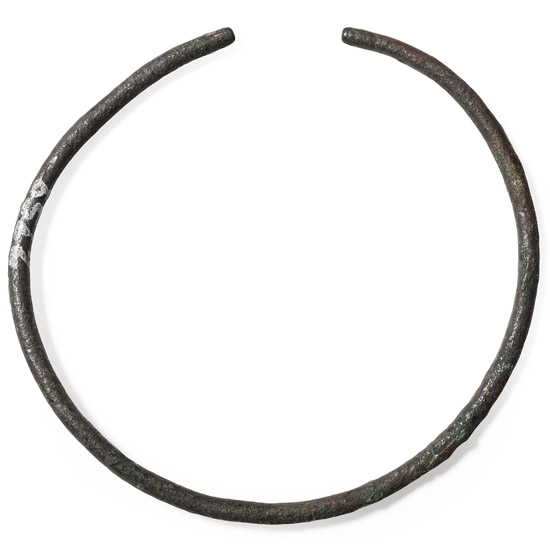
Large Bronze Age Bracelet
1st millennium B.C.Sold for (Inc. bp): £20
A round-section penannular bar with an inked collector's number '2759' to one side. 17 grams, 82 mm
From the private collection of a European gentleman (1942-2024), formed since the 1970s. -
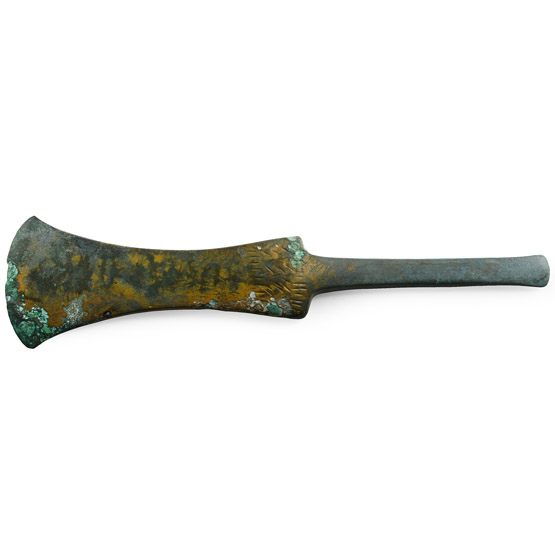
Bronze Age Tanged Copper Flat Axehead
Central Europe, 2nd millennium B.C.Sold for (Inc. bp): £117
Comprising a rectangular-section tang, flared shoulders, waisted rectangular blade with curved cutting edge. 305 grams, 22.4 cm
From an old English collection formed since 1960. -
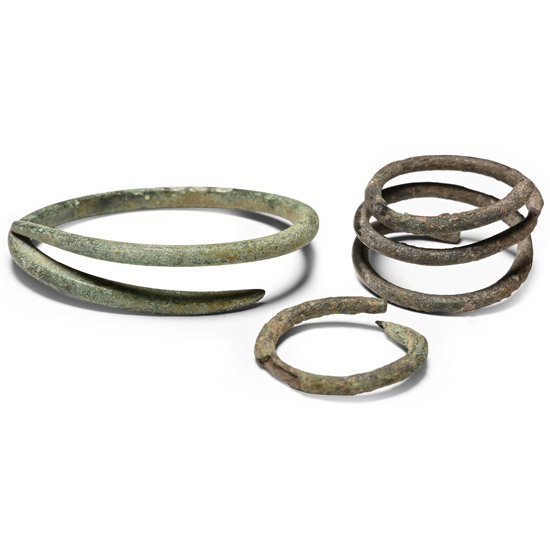
Bronze Age Ring and Bracelet Group
2nd-1st millennium B.C.Sold for (Inc. bp): £59
Comprising: round-section spiral type; flat-section overlapped type. 20.86 grams total, 23.50-43.82 mm
From the private collection of a European gentleman (1942-2024), formed since the 1970s. -
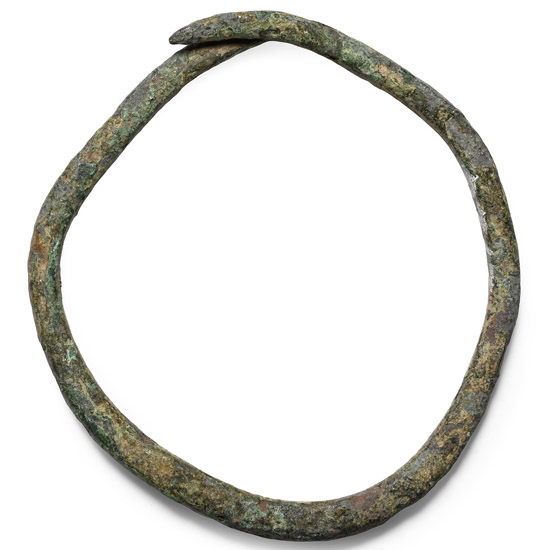
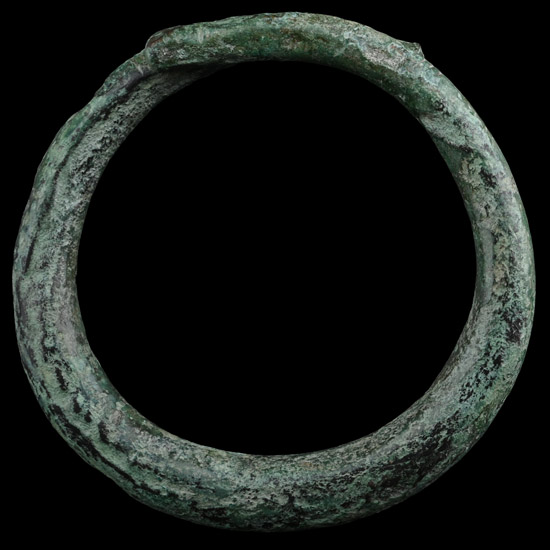
Bronze Age Bracelet
1st millennium B.C.Sold for (Inc. bp): £33
A penannular bracelet formed of a round-section bar with overlapping terminals, inked collection number '2726' on the inner face. 20.7 grams, 65 mm
From the private collection of a European gentleman (1942-2024), formed since the 1970s. -
Bronze Age Decorated Coiled Bracelet
Central Europe, 1st millennium B.C.Sold for (Inc. bp): £124
Round-section coiled bar with tapering finials decorated with incised hatching. 159 grams, 82 mm
Ex German art market, 2000s. Acquired from an EU collector living in London. From the collection of a Surrey, UK, gentleman. -
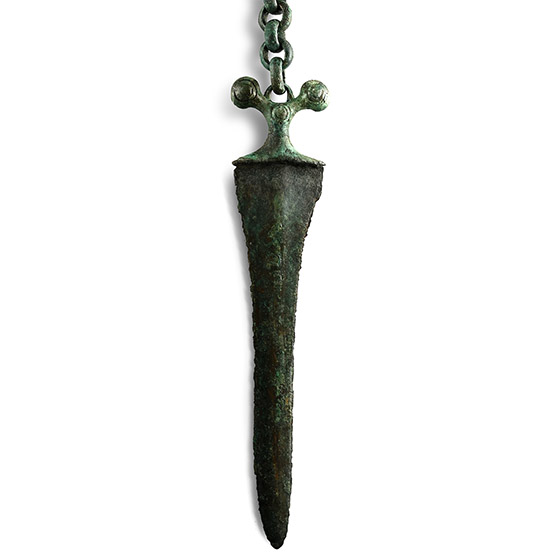
Bronze Age Ceremonial Dagger with Chain Attachment
Eastern Europe, 1st millennium B.C.Sold for (Inc. bp): £1,040
Comprising: a long triangular blade with scooped shoulders, lentoid in section and with rounded tip; integral waisted hilt formed as three conjoined lobes and loop between the upper arms; short length of bronze chain formed from D-section forged and butted links. 526 grams, 51 cm including chain
From the private collection of a London gentleman, from his grandfather's collection formed before the early 1970s. -
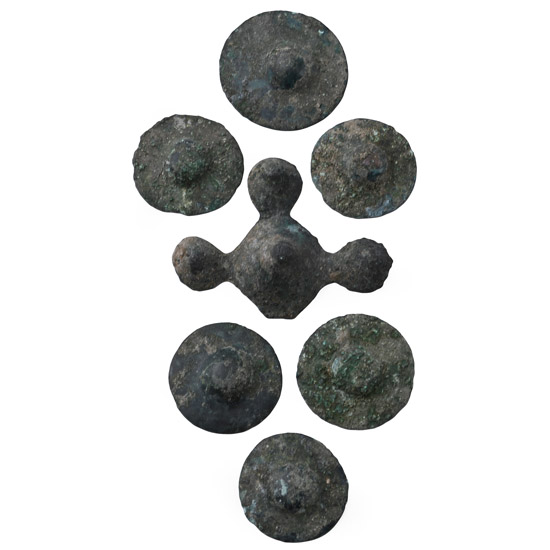
Bronze Age Horse Harness Boss Group
1st millennium B.C.Sold for (Inc. bp): £26
Comprising cruciform and disc types, with inked accession numbers to reverse. 45.81 grams total, 26.99-55.24 mm
From the private collection of a European gentleman (1942-2024), formed since the 1970s. -
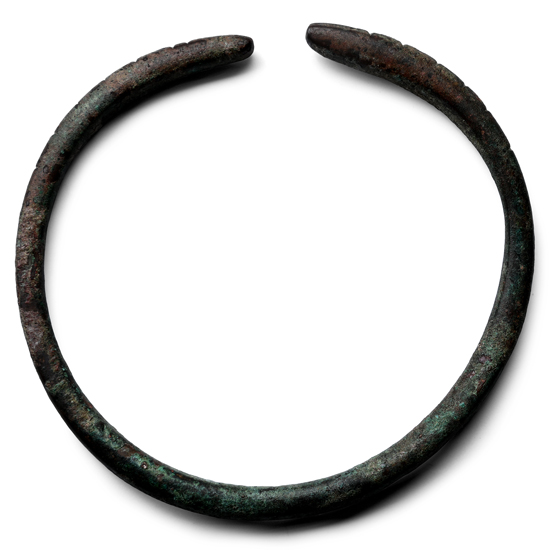
Very Large Bronze Age Bar Bracelet
1st millennium B.C.Sold for (Inc. bp): £39
Penannular round-section body, inked collection number '2749' on the underside. 66.7 grams, 93 mm
From the private collection of a European gentleman (1942-2024), formed since the 1970s. -
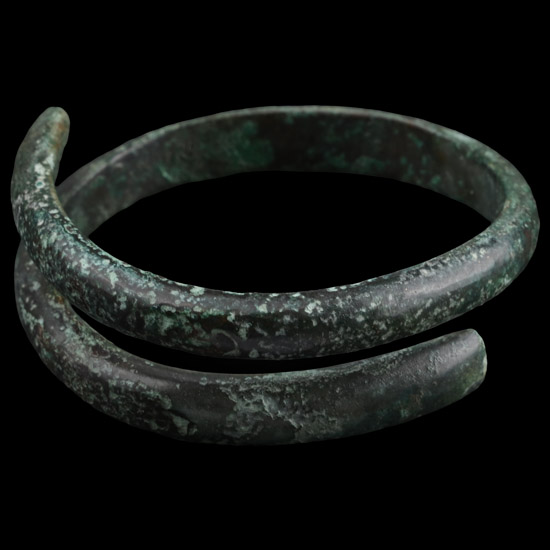
Bronze Age Coiled Bracelet
Central Europe, 1st millennium B.C.Sold for (Inc. bp): £72
Formed of a D-section bar with overlapping terminals. 37.3 grams, 53 mm
Ex German art market, 2000s. Acquired from an EU collector living in London. From the collection of a Surrey, UK, gentleman. -
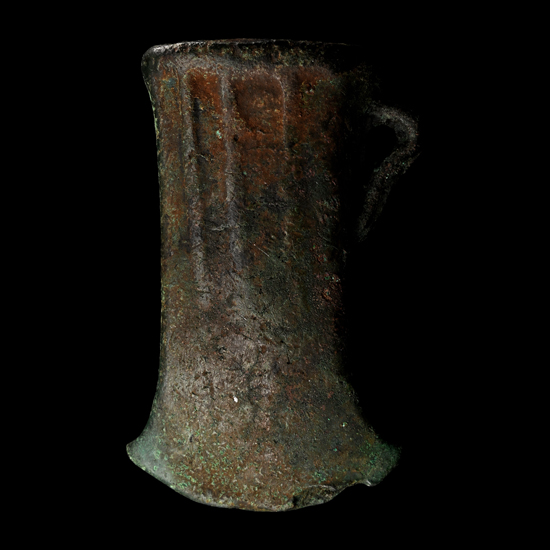
Late Bronze Age South East Variant Looped and Socketted Axehead
Southern England, 1000-800 B.C.Sold for (Inc. bp): £78
Hollow-formed and rectangular in section with rounded rim to the mouth, tapering lateral faces each with three raised ribs, flared blade with lateral spurs, narrow integral loop. 155 grams, 71 mm
Found UK. From the collection of a late West London, UK, gentleman. -
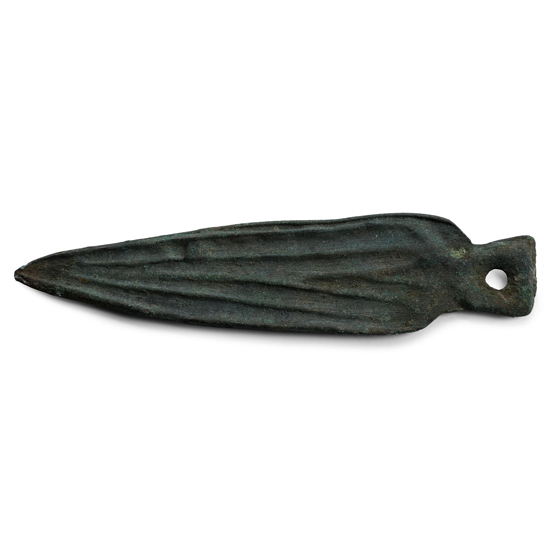
Bronze Age Sword-Shaped Pendant
Koban Culture, circa 1300-400 B.C.Sold for (Inc. bp): £72
Formed as a leaf-shaped blade with raised ribs on both sides, pierced through the tang. 41 grams, 12.2 cm
From an ancient art collection, formerly acquired on the UK, European, and USA art markets from pre-2000 collections. Property of a West Northamptonshire, UK, gentleman. -
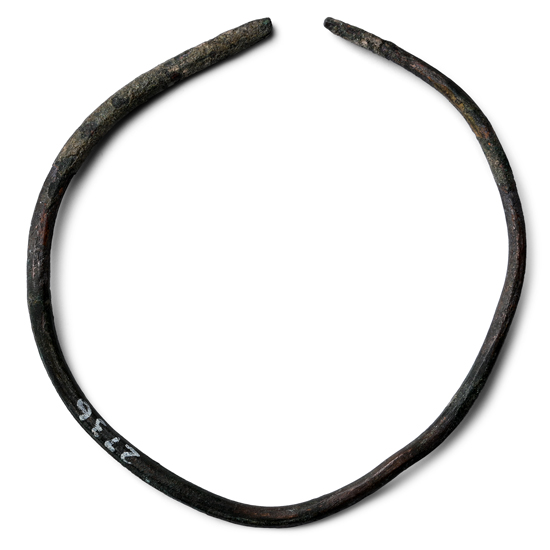
Large Bronze Age Bar Bracelet
1st millennium B.C.Sold for (Inc. bp): £20
The penannular body formed from a round-section bar; inked collection number '2736' to one side. 18.7 grams, 85 mm
From the private collection of a European gentleman (1942-2024), formed since the 1970s.

