-
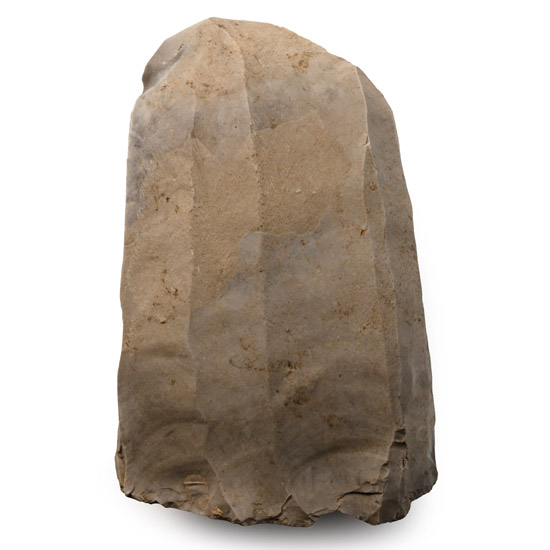
Large Belgian Stone Age Wide Flint Core
Neolithic Period, circa 6000 B.P.Sold for (Inc. bp): £111
Sturdy tongue-shaped core with parallel facets to one face, cortex to the reverse. 676 grams, 14.9 cm
Found Spiennes, Belgium. From an old Paris collection. From the private collection of an East Anglian, UK, collector.
From the world renowned and now world heritage flint factory site of Spiennes. -
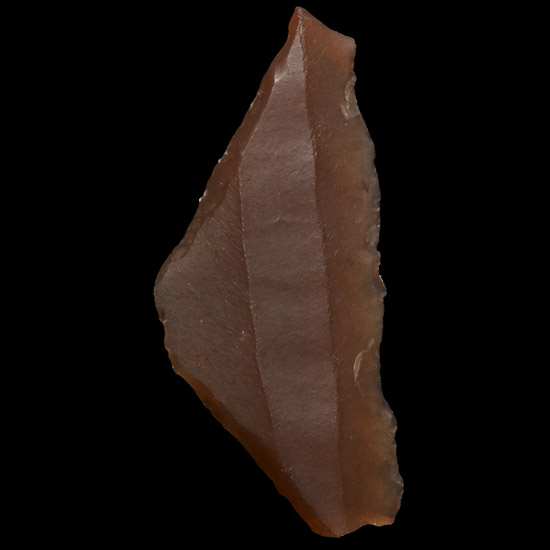
British Stone Age Knapped Flint Trapeze Arrowhead from Farnham
Mesolithic Period, circa 12,000-8,000 B.P.Sold for (Inc. bp): £338
With arched rear edge and straight cutting edge. 0.79 grams, 27.3 mm
Found in 1901. From the collection of Captain Streatfield who helped to fund the archaeology excavations at Farnham, Kent. After Captain Streatfield passed away in the 1940s, his collection was sold at auction to a gentleman in Kent. The collection was then sold again in the 2020’s via a UK auction house. -
.jpg)
Acheulean Stone Age Hand Axe
Lower Palaeolithic, circa 700,000-300,000 B.P.Sold for (Inc. bp): £143
Ovate in profile, broad butt with some cortex. 550 grams, 15.1 cm
Montesson, Île-de-France, May 1987. Collection of Jean-Claude Debenne (1936-2020), formed between the 1950s and 1990s. Accompanied by a French Ministry of Culture export licence no.CBC 242815. -
.jpg)
French Stone Age Green Stone Polished Axe Head
Neolithic Period, circa 6000 B.P.Sold for (Inc. bp): £117
With pointed butt and broad cutting edge; inked findspot '26N Clansayes, Drome'. 302 grams, 10.2 cm
From Clansayes, Drome, France. From a collection acquired at Bonhams in the 2020s. -
.jpg)
Stone Age Mousterian Hand Axe
Palaeolithic Period, 300,000-40,000 B.P.Sold for (Inc. bp): £65
Piriform type, lentoid in section with inked findspot 'Kervouter (29)'. 29.1 grams, 49 mm
Discovered in Le Bois du Rocher, Saint-Hélen, France, according to inscription. Accompanied by French Ministry of Culture export permit no.CBC 257548, and EU licence no.2026DMF0025. -
.jpg)
Stone Age Mousterian Hand Axe
Palaeolithic Period, 300,000-40,000 B.P.Sold for (Inc. bp): £111
Piriform type with twisted point, inked findspot 'St. Helen, Bois du Rocher (22)'. 44 grams, 65 mm
Discovered in Le Bois du Rocher, Saint-Hélen, France, according to inscription. Accompanied by French Ministry of Culture export permit no.CBC 257548, and EU licence no.2026DMF0025. -
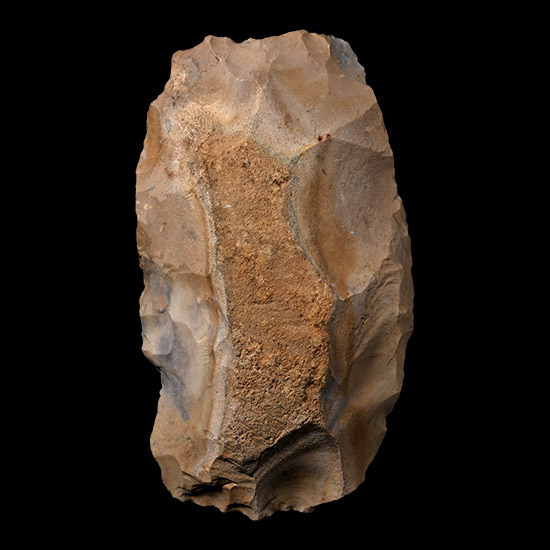
Very Large French Stone Age Knapped Flint Axe Head
Neolithic Period, circa 6000 B.P.Sold for (Inc. bp): £78
Knapped as an irregular rectangle with a large area of cortex to one face, chamfered cutting edge; inked 'NC' legend. 1.15 kg, 19.6 cm
From the Dordogne area of France. Acquired in the 1970s-1990s. From the collection of the famous UK musician and amateur archaeologist, Victor Brox (1941-2023). Acquired on the UK art market at auction after being sold by Mr Brox’s family. From the private collection of an East Anglian, UK, specialist collector. -
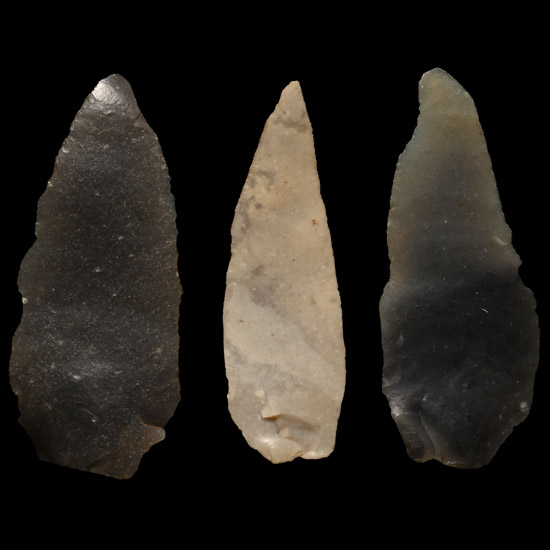
British Stone Age Knapped Flint Blades from Farnham
Mesolithic Period, circa 12,000-8,000 B.P.Sold for (Inc. bp): £416
Group of three leaf-shaped microliths. 5.69 grams total, 34-36 mm
Found in 1901. From the collection of Captain Streatfield who helped to fund the archaeology excavations at Farnham, Kent. After Captain Streatfield passed away in the 1940s, his collection was sold at auction to a gentleman in Kent. The collection was then sold again in the 2020’s via a UK auction house. -
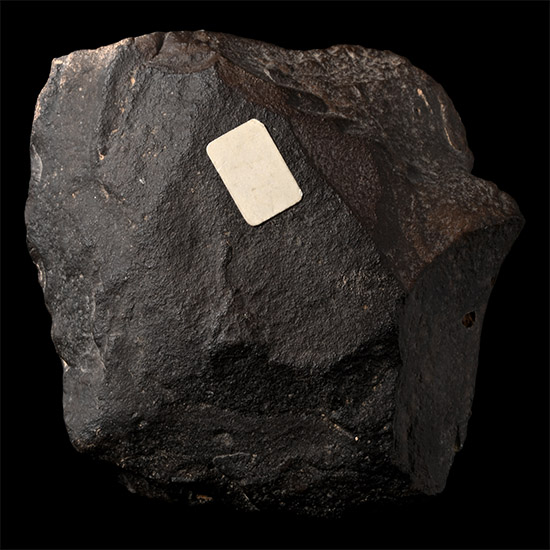
African Stone Age Homo Habilis Oldowan Stone Chopper
Oldowan Period, circa 2,600,000-1,700,000 B.P.Sold for (Inc. bp): £286
Lentoid in section and an irregular rectangle in plan with a smoothed handgrip to the rear; old faded collector's label. 490 grams, 12.7 cm
From the Sahara. Ex old German collection formed in the 1970s. Purchased on the European art market.
Oldowan tools are the oldest known stone tool industry, dating from approximately 2.6 to 1.7 million years ago (with some evidence at 2.9 Ma). Primarily associated with Homo habilis, these simple tools (choppers, flakes, hammerstones) were used for cutting, scraping, and butchering. They were largely found in East Africa, with key sites at Olduvai Gorge. Made from quartzite with minimal removals to form a direct chopping edge. -
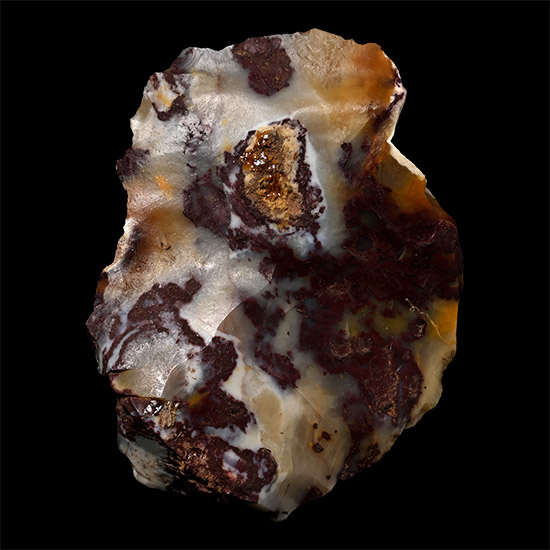
Stone Age Mousterian Knapped Fontmaure Jasper Neanderthal Tortoise-Back Knife
Middle Palaeolithic Period, circa 150,000-60,000 B.P.Sold for (Inc. bp): £208
Cordate in profile and lentoid in section with a broad cutting edge. 70.70 grams, 68.22 mm
Fontmaure, Vienne department, France. Acquired in the 1970s-1990s. From the collection of the famous UK musician and amateur archaeologist, Victor Brox (1941-2023). Acquired on the UK art market at auction after being sold by Mr Brox’s family. From the private collection of an East Anglian, UK, specialist collector.
Made by a Neanderthal; from the well-regarded area of Fontmaure, the jasper has vibrant colours and traces of chalcedony running through it. -
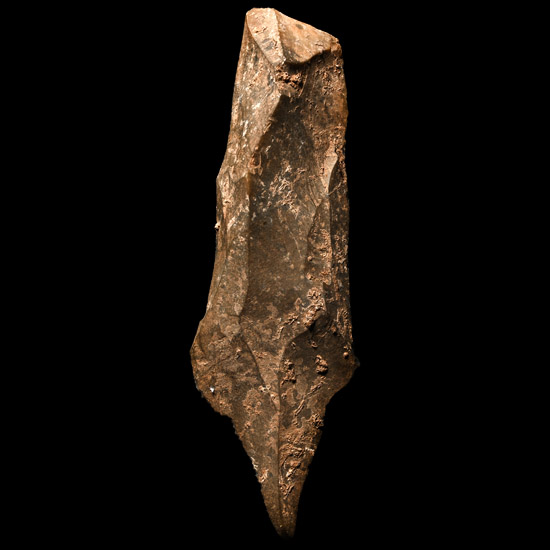
French Stone Age Knapped Flint Burin
Gravettian Period, circa 33,000-21,000 B.P.Sold for (Inc. bp): £182
Sturdy, triangular-section body with narrow point and deep shoulders. 62.44 grams, 12.6 cm
From Le Groze - Du Tay. Acquired in the 1970s-1990s. From the collection of the famous UK musician and amateur archaeologist, Victor Brox (1941-2023). Acquired on the UK art market at auction after being sold by Mr Brox’s family. From the private collection of an East Anglian, UK, specialist collector.
The Burin is a characteristic lithic tool of the Gravettian period. -
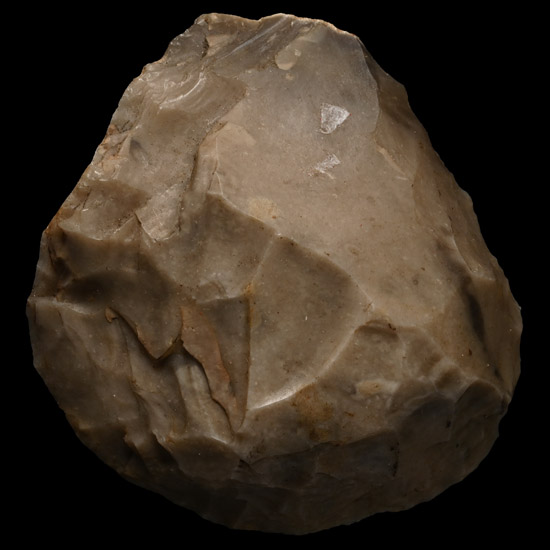
British Stone Age Knapped Flint Turtle Back Scraper from Farnham
Neolithic Period, circa 6000 years B.P.Sold for (Inc. bp): £286
Ovate in plan with intricate retouch around the majority of the piece. 22.2 grams, 41.4 mm
Found in 1901. From the collection of Captain Streatfield who helped to fund the archaeology excavations at Farnham, Kent. After Captain Streatfield passed away in the 1940s, his collection was sold at auction to a gentleman in Kent. The collection was then sold again in the 2020’s via a UK auction house.
Named ‘’Turtle Back’’ due to the whole top being worked in to a dome.

