-
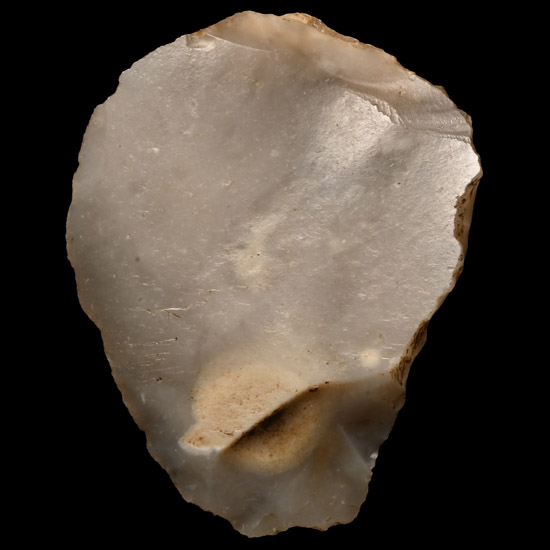
British Stone Age Knapped Flint Scraper/Knife from Farnham
Neolithic Period, circa 6000 years B.P.Sold for (Inc. bp): £247
Very thin worked edge, with area of cortex remaining for grip. 18 grams, 43.6 mm
Found in 1901. From the collection of Captain Streatfield who helped to fund the archaeology excavations at Farnham, Kent. After Captain Streatfield passed away in the 1940s, his collection was sold at auction to a gentleman in Kent. The collection was then sold again in the 2020’s via a UK auction house. -
.jpg)
Stone Age Mousterian Hand Axe
Palaeolithic Period, 300,000-40,000 B.P.Sold for (Inc. bp): £85
Piriform type with cortex to lower body, inked findspot 'Kervouter (29)'. 129 grams, 76 mm
Discovered in Kervouster, Guengat, France, according to inscription. Accompanied by a French Ministry of Culture export permit no.CBC 257548, and EU licence no.2026DMF0025. -
.jpg)
Stone Age Knapped Flint Tools from Grand Pressigny
Neolithic Period, circa 4650-4450 В.Р.Sold for (Inc. bp): £85
Including: a 20cm crested blade, removed from a "livre de beurre" core and possibly utilised as a tool in itself; two smaller tools with signs of retouch. 840 grams total, 9-20.3 cm
Found at the famous site of Grand Pressigny, France. From the collection of Maurice Chevais (1880-1943) and subsequently purchased on the French art market. Mr Chevais field-walked extensively at GP, and collected a huge variety of tools and debitage over a twenty-five-year period between 1910-1935. -
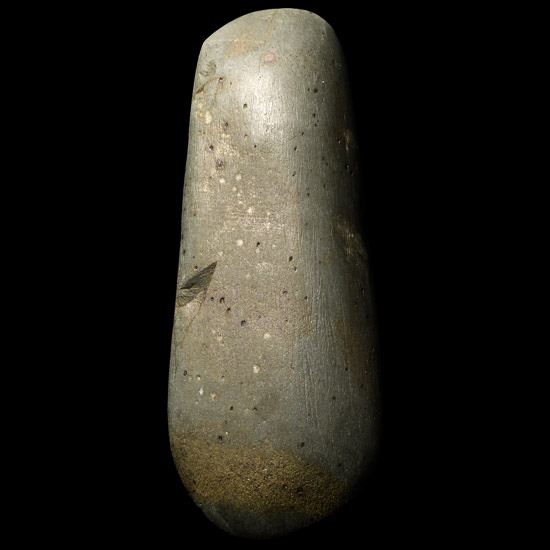
British Stone Age Polished Green Tuff Axe Head
Neolithic Period, circa 6000 B.P.Sold for (Inc. bp): £468
Biconvex in section with broad rounded cutting edge, pitted and polished surface. 120 grams, 10.3 cm
From the collection of Richard Widdowson. Richard owned an Antiquity shop in Scarborough and amassed a great and varied Stone Age collection. Purchased from Mr Widdowson in the 1980s and then more recently from the collector Mr David R in the UK. Acquired on the UK art market. From a private collection in the 2020s. -
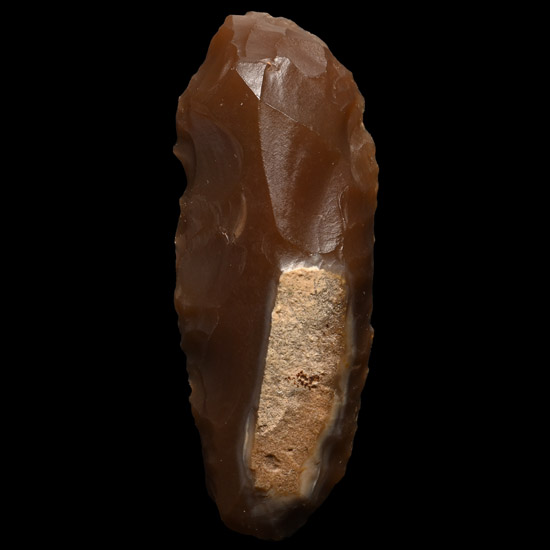
British Stone Age Knapped Flint Slug Knife from Farnham
Neolithic Period, circa 6000 B.P.Sold for (Inc. bp): £780
Plano-convex in section with cortex to the upper face. 13.8 grams, 54 mm
Found in 1901. From the collection of Captain Streatfield, who helped to fund the archaeology excavations at Farnham, Kent. After Captain Streatfield passed away in the 1940s, his collection was sold at auction to a gentleman in Kent. The collection was then sold again in the 2020’s via a UK auction house. -
.jpg)
Stone Age Knapped Bifacial Flint Handaxe with Blue-White Patina
Middle Palaeolithic Period, circa 240,000-38,000 B.P.Sold for (Inc. bp): £52
Knapped from a flint cobble, with cortex remaining at base forming a comfortable grip; some chipping to tip, either damage or usage wear, or both. 240 grams, 11.2 cm
From the private collection of Mr P.M. Wiltshire, UK. Found by the collector whilst field walking in the Salisbury area during the early 2000s. -
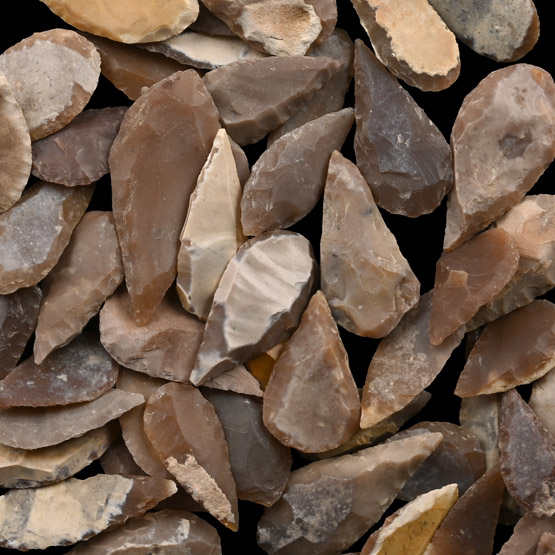
Stone Age Leaf-Shaped Arrowhead Collection
Neolithic Period, 6th-4th millennium B.C.Sold for (Inc. bp): £91
Comprising mostly bifacial and uniface leaf-shaped and piriform flint and chert arrowheads; probably from the Sahara region of North Africa. 108 grams total, 22-44 mm
UK gallery, early 2000s.
Similar specimens of arrowheads have been found in the Eastern Sahara Region of Abu Tartur Plateau. Most of the arrowheads came from the El Jarar Neolithic, c. 7700-7300 B.P. (c.6500-6100 B.C.). Other parallels occur in the region of Kharga Oasis. -
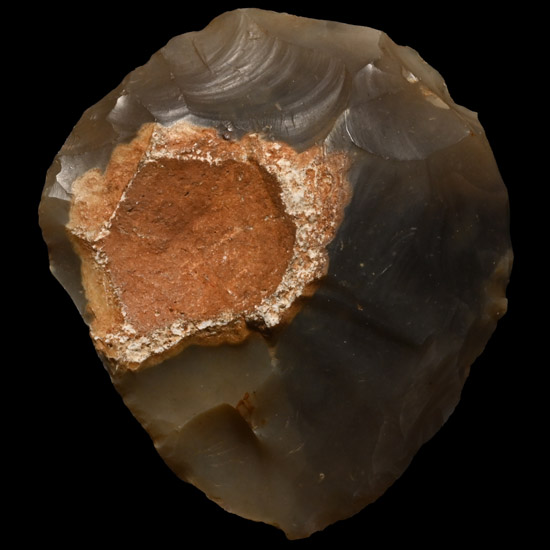
British Stone Age Knapped Flint Bifacial Knife from Farnham
Neolithic Period, circa 6000 years B.P.Sold for (Inc. bp): £442
Ovate in plan with a small patch of cortex forming a thumb-pad. 17.6 grams, 40.5 mm
Found in 1901. From the collection of Captain Streatfield who helped to fund the archaeology excavations at Farnham, Kent. After Captain Streatfield passed away in the 1940s, his collection was sold at auction to a gentleman in Kent. The collection was then sold again in the 2020’s via a UK auction house. -
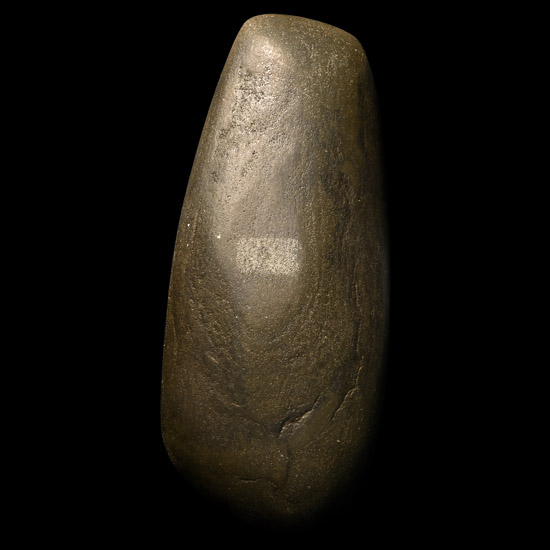
British Stone Age Polished Green Tuff Axe Head
Neolithic Period, circa 6000 B.P.Sold for (Inc. bp): £85
Tongue-shaped in plan and plano-convex in profile; fine polished finish. 255 grams, 13.2 cm
Found by Mr David near Ravenglass on the beach in the 1990s. Acquired on the UK art market. From a private collection in the 2020s. -
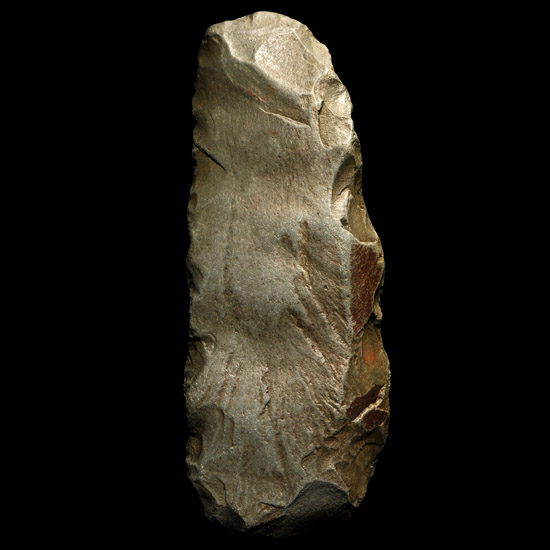
British Stone Age Knapped Langdale Tuff Axe Head
Neolithic Period, circa 6000 B.P.Sold for (Inc. bp): £65
Plano-convex in section with a narrow butt and a broad cutting edge. 345 grams, 15.6 cm
From the collection of Richard Widdowson. Richard owned an antiquity shop in Southern England and amassed a great and varied Stone Age collection. Purchased from Mr Widdowson in the 1980s and then more recently from a collector in the UK. -
.jpg)
French Stone Age Knapped Cream Flint Adze
Mesolithic Period, circa 12,000-8,000 B.P.Sold for (Inc. bp): £85
Tongue-shaped in plan with a rounded butt. 227 grams, 12.7 cm
Acquired in the 1970s-1990s. From the collection of the famous UK musician and amateur archaeologist, Victor Brox (1941-2023). Acquired on the UK art market at auction after being sold by Mr Brox’s family. From the private collection of an East Anglian, UK, specialist collector. -
.jpg)
Large Stone Age Salisbury Adze in Grey-White Knapped Flint
Late Mesolithic Period, circa 7550-4000 В.Р.Sold for (Inc. bp): £59
Slender, triangular in section with broad point; marked with 'Salisbury' findspot. 498 grams, 19 cm
From the private collection of Mr P.M. Wiltshire, UK. Found by the collector whilst field walking in the Salisbury area during the early 2000s.

