-
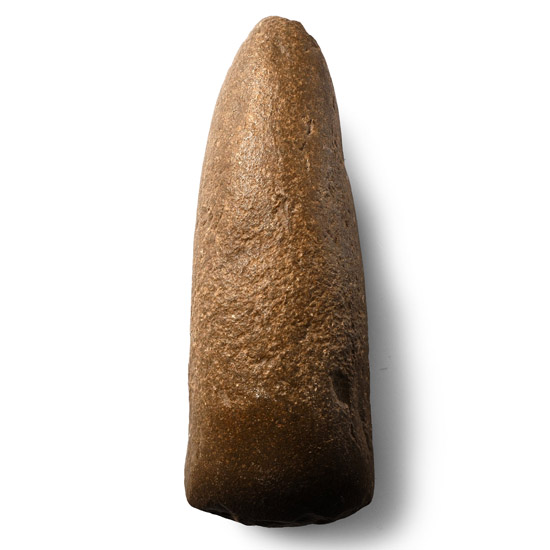
Stone Age Tenerian Pecked and Part Polished Celt Axe
Neolithic Period, 9th-7th millennium B.P.Sold for (Inc. bp): £39
With round-section pointed butt and broad curved edge. 257 grams, 12 cm
From South Central Sahara. Ex private French collection, formed 1960s-1970s. From the property of a late Lincolnshire, UK, gentleman. -
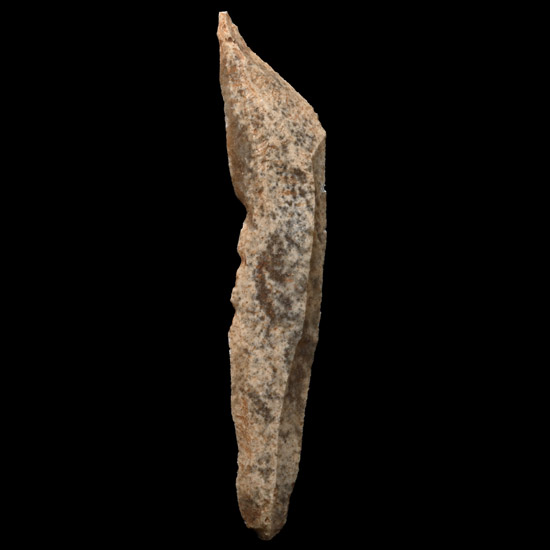
French Stone Age Knapped Flint Burin
Gravettian Period, circa 33,000-21,000 B.P.Sold for (Inc. bp): £117
Slender and pointed with facets to the outer face. 4.95 grams, 78.34 mm
From Le Groze - Du Tay. Acquired in the 1970s-1990s. From the collection of the famous UK musician and amateur archaeologist, Victor Brox (1941-2023). Acquired on the UK art market at auction after being sold by Mr Brox’s family. From the private collection of an East Anglian, UK, specialist collector.
The Burin is a characteristic lithic tool of the Gravettian period. -
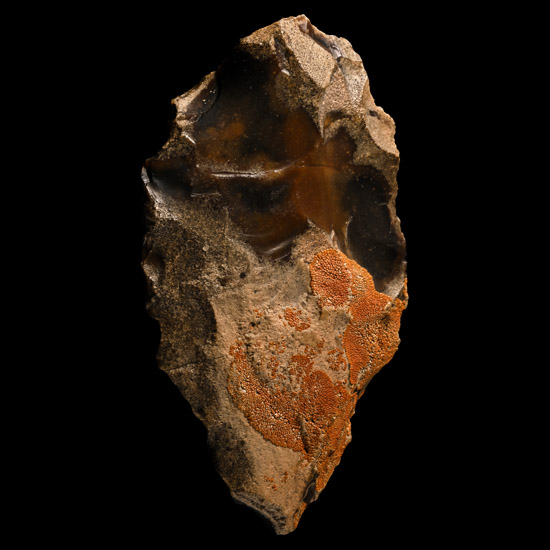
Stone Age Knapped Flint Hand Axe
Palaeolithic Period, circa 250,000-150,000 B.P.Sold for (Inc. bp): £111
Cordate in profile with extensive cortex and lichen. 215 grams, 12.2 cm
Found Hampstead, London, UK. Acquired on the UK art market before 2000. Property of an Essex, UK, gentleman. -
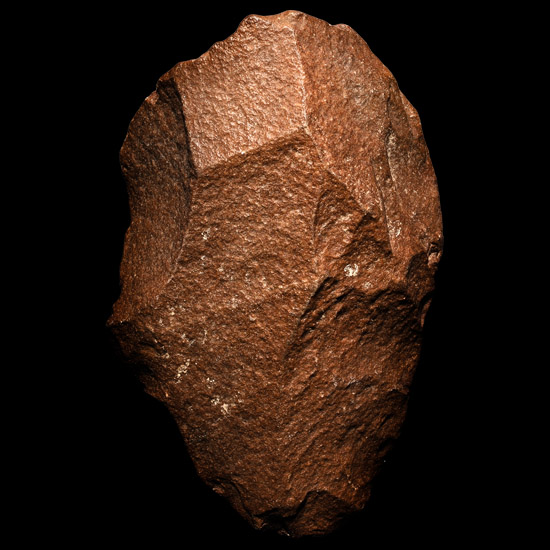
African Stone Age Homo Erectus Knapped Red Stone Handaxe
Palaeolithic Period, circa 1,000,000-500,000 B.P.Sold for (Inc. bp): £364
Cordate type with a broad cutting edge, a facetted handle to the rear. 248 grams, 11.3 cm
Purchased on the European art market. Property of a Norfolk, UK, collector. -
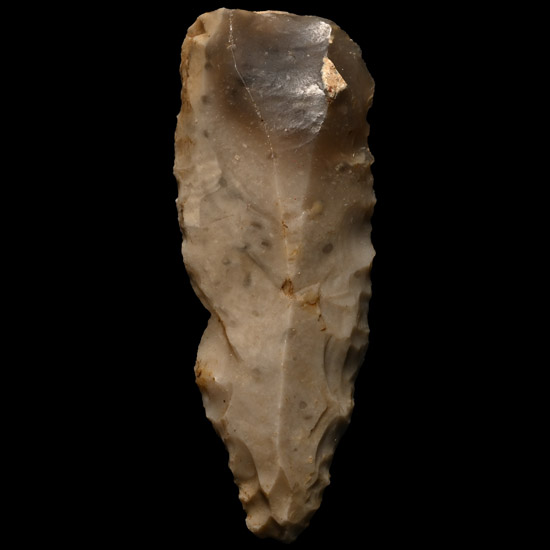
British Stone Age Knapped Flint Blade Knife from Farnham
Neolithic Period, circa 6000 years B.P.Sold for (Inc. bp): £416
Triangular in section, leaf-shaped, made on a long blade. 17.3 grams, 66 mm
Found in 1901. From the collection of Captain Streatfield who helped to fund the archaeology excavations at Farnham, Kent. After Captain Streatfield passed away in the 1940s, his collection was sold at auction to a gentleman in Kent. The collection was then sold again in the 2020’s via a UK auction house. -
.jpg)
Stone Age Knapped Flint Adze with Blue-Grey Patina
Late Mesolithic-Early Neolithic Period, circa 7550-3650 B.Р.Sold for (Inc. bp): £85
Lentoid in section with rounded edge and base; cortex still remaining on part of the tool; inked findspot 'Salisbury'. 378 grams, 13.5 cm
From the private collection of Mr P.M. Wiltshire, UK. Found by the collector whilst field walking in the Salisbury area during the early 2000s. -
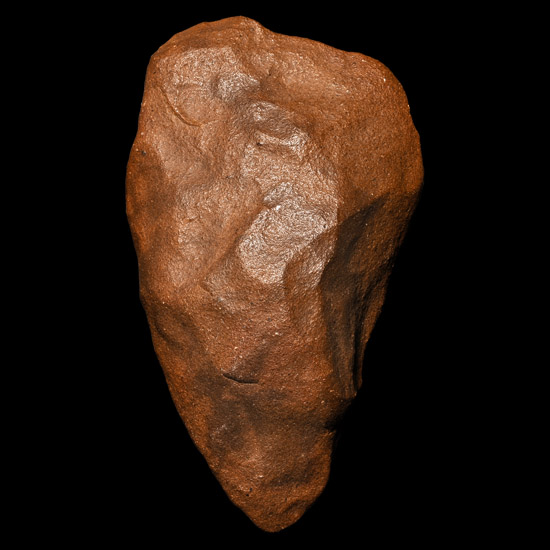
African Stone Age Homo Erectus Knapped Red Stone Handaxe
Palaeolithic Period, circa 1,000,000-500,000 B.P.Sold for (Inc. bp): £195
Piriform in plan and lentoid in section with eccentric round butt. 467 grams, 15.5 cm.
From Goezzam, Sahara. Ex old German collection formed in the 1970s. Purchased on the European art market. -
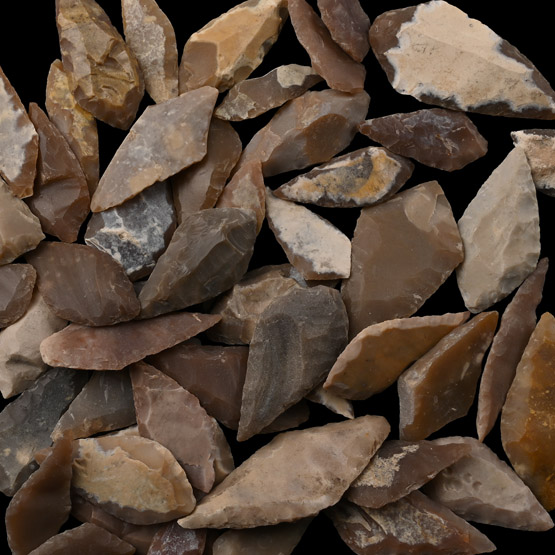
Stone Age Lozenge-Shaped Arrowhead Collection
Neolithic Period, 6th-4th millennium B.C.Sold for (Inc. bp): £85
Comprising mostly bifacial and uniface lozenge-shaped flint and chert arrowheads; probably from the Sahara region of North Africa. 101 grams total, 22-43 mm
UK gallery, early 2000s.
Similar specimens of arrowheads have been found in the Eastern Sahara Region of Abu Tartur Plateau. Most of the arrowheads came from the El Jarar Neolithic, c. 7700-7300 B.P. (c.6500-6100 B.C.). Other parallels occur in the region of Kharga Oasis. -
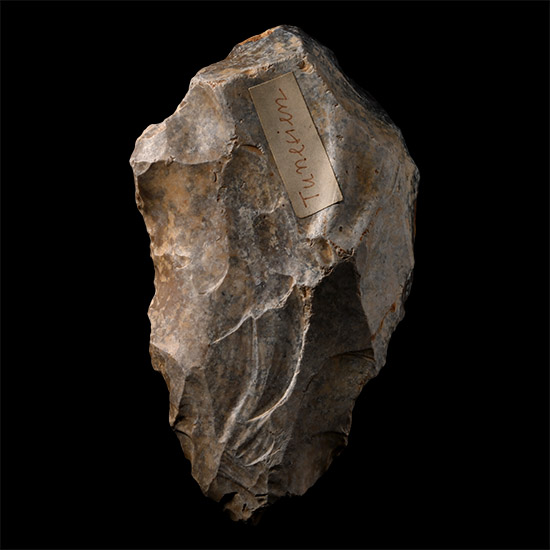
African Stone Age Homo Erectus Knapped Stone Handaxe
Palaeolithic Period, circa 1,000,000-500,000 B.P.Sold for (Inc. bp): £390
Piriform in profile with cortex to one face; old findspot label 'Tunesien'. 578 grams, 15.9 cm
From Tunisia. Ex old German collection formed in the 1970s. Purchased on the European art market.
Made from flint with a mottled cream and yellow patina. -
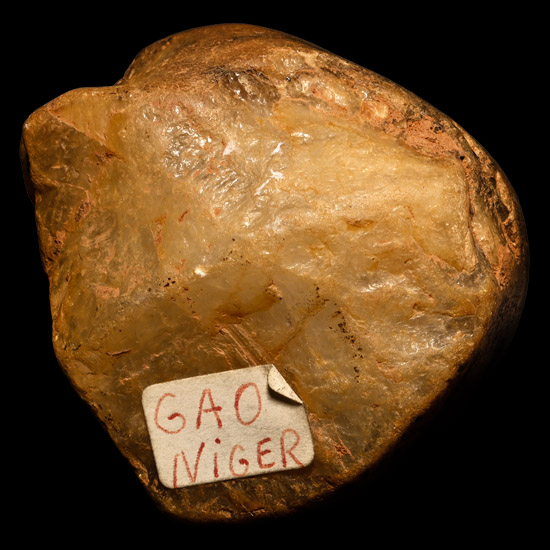
African Stone Age Homo Habilis Oldowan Stone Chopper
Oldowan Period, circa 2,600,000-1,700,000 B.P.Sold for (Inc. bp): £195
Bun-shaped pebble with cutting edge formed by chipping. 240 grams, 72 cm
Ex old German collection formed in the 1970s. Acquired on the European art market.
Oldowan tools are the oldest known stone tool industry, dating from approximately 2.6 to 1.7 million years ago (with some evidence at 2.9 Ma). Primarily associated with Homo habilis, these simple tools (choppers, flakes, hammerstones) were used for cutting, scraping, and butchering. They were largely found in East Africa, with key sites at Olduvai Gorge. Made from quartzite with minimal removals to form a direct chopping edge. -
.jpg)
British Stone Age Knapped Flint 'Ficron' Handaxe from the Thames Valley
Lower Palaeolithic Period, circa 550,000-300,000 B.P.Sold for (Inc. bp): £143
Ficron form with a deep autumnal glossy patina; with old collector's note '2 Hand Axes Lower Paleolithic Thames Valley. ?100,000 years old approx. H.H. 3-4-60 British Museum'. 250 grams, 10.2 cm
Found Thames Valley, UK, on 3rd of April 1960. Accompanied by an original, old handwritten note. Acquired on the UK art market. From a private collection in the 2020s. -
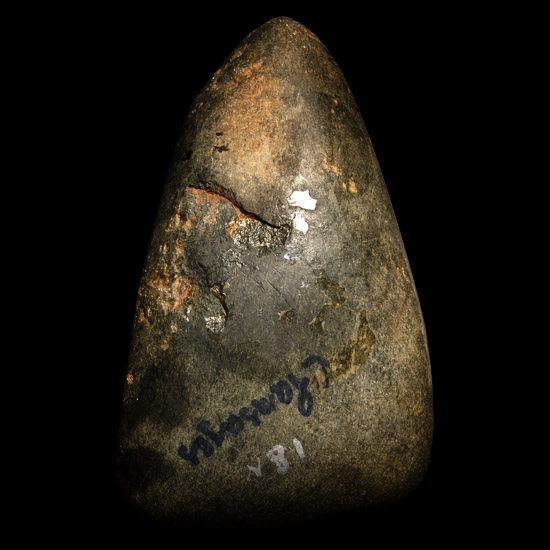
French Stone Age Green Stone Polished Axe Head
Neolithic Period, circa 6000 B.P.Sold for (Inc. bp): £124
With broad cutting edge and pointed butt; inked findspot '18 Clansayes Drome'. 92 grams, 69 mm
From Clansayes, Drome, France. From a collection acquired at Bonhams in the 2020s.

