-
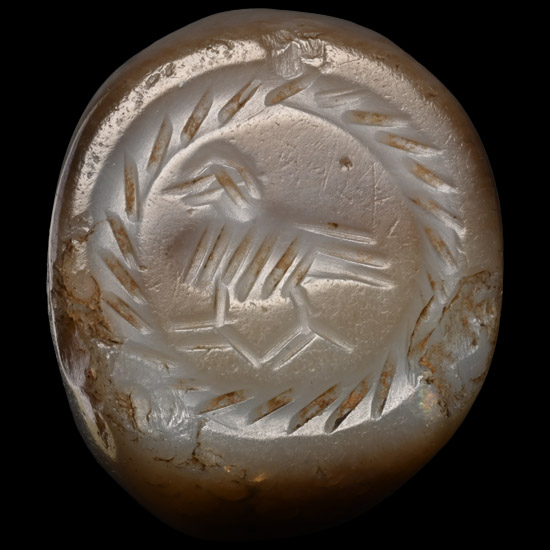
Sasanian Marbled Agate Stamp Seal with Bird
Circa 3rd-7th century A.D.Sold for (Inc. bp): £78
Plano-convex type with incuse motif of a standing bird inside a wreath. 10.02 grams, 22.85 mm
From the private collection of a European gentleman (1942-2024), formed since the 1970s. -
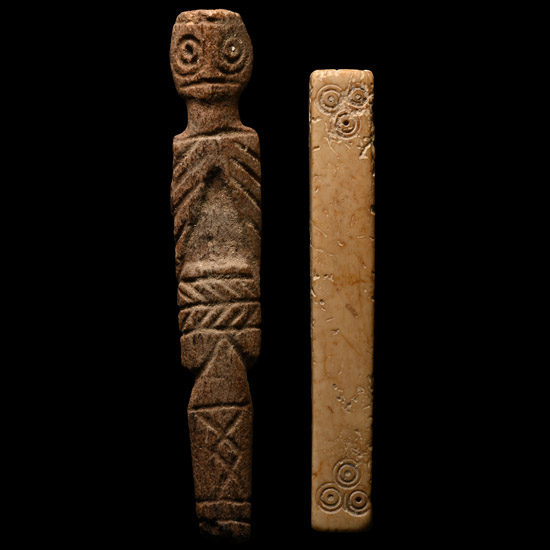
Western Asiatic Bone Idol Group
2nd century B.C.-2nd century A.D.Sold for (Inc. bp): £39
Comprising: figure of plano-convex section with hatched detailing; square-section bar with ring-and-dot motifs. 13.63 grams, 65.84-75.34 mm
From the private collection of a European gentleman (1942-2024), formed since the 1970s. -
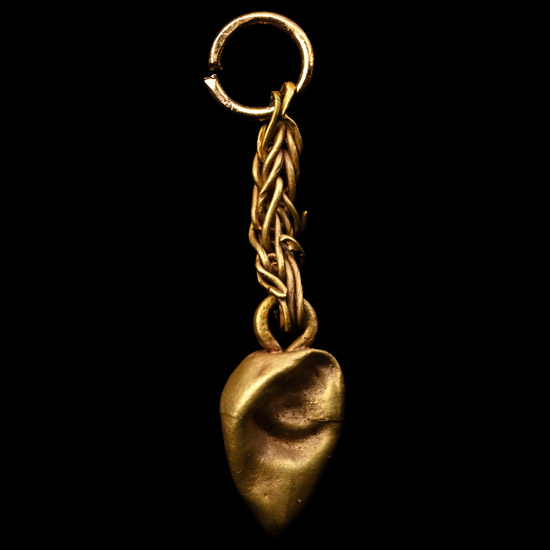
Western Asiatic Gold Teardrop Pendant
1st millennium B.C.Sold for (Inc. bp): £52
Comprising a hollow-form teardrop-shaped pendant suspended from a chain with a later gold-coloured loop. 0.55 grams, 26 mm
Ex private British collection, formed in the 1980s. Property of a West Northamptonshire, UK, gentleman. -
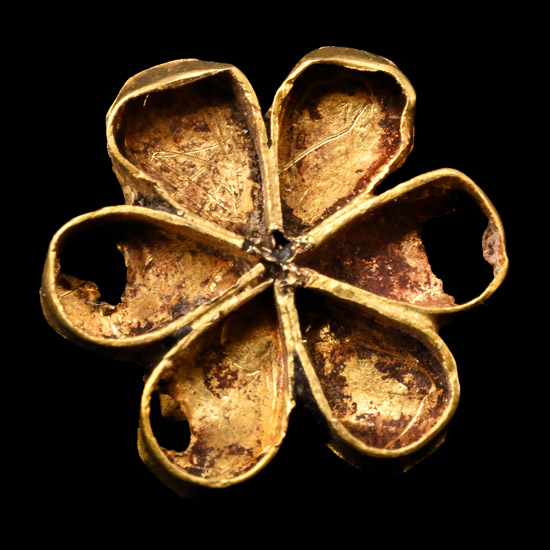
Western Asiatic Gold Flower-Shaped Pendant
1st millennium B.C.Sold for (Inc. bp): £117
Formed as a six-petalled flower with two loops on the reverse, each petal formed as a cell to accept an inlay. 0.40 grams, 10 mm
Ex private British collection, formed in the 1980s. Property of a West Northamptonshire, UK, gentleman. -
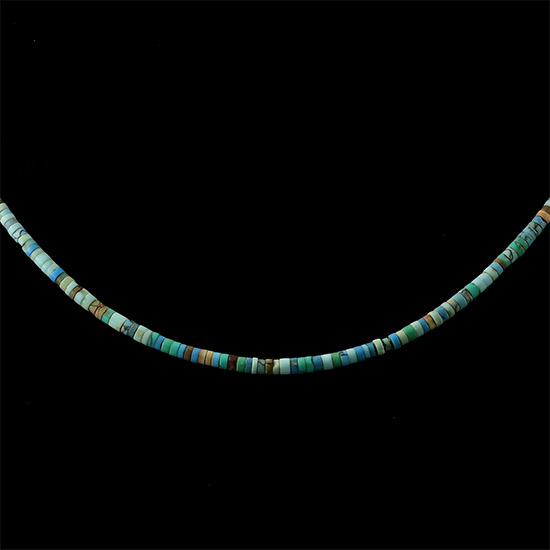
Achaemenid Blue Stone and Other Bead Necklace String
Mid 1st millennium B.C. and laterSold for (Inc. bp): £72
Composed of vibrant annular beads, restrung. 4.53 grams, 37.5 cm
Ex London, UK, collection, 1990s. -
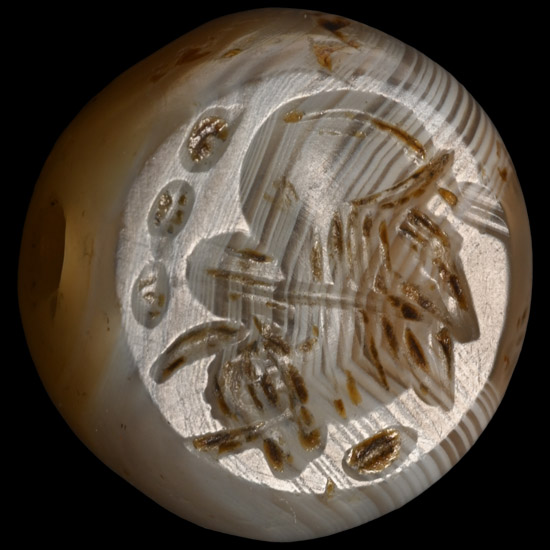
Sasanian Banded Agate Stamp Seal with Portrait
Circa 3rd-7th century A.D.Sold for (Inc. bp): £195
With incuse profile bust with beard. 1.64 grams, 11.42 mm
From the private collection of a European gentleman (1942-2024), formed since the 1970s. -
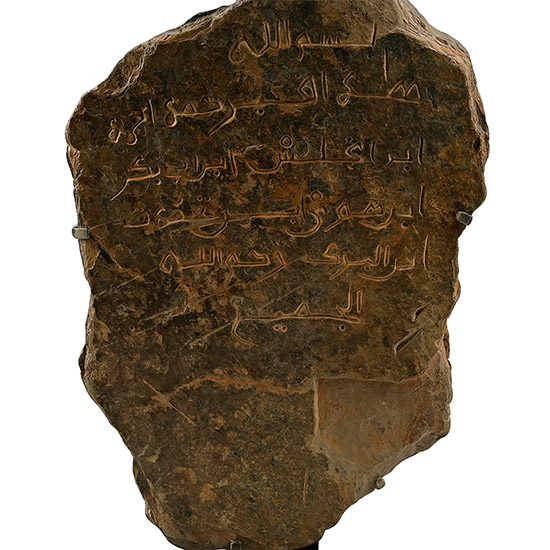
Early Arabic Inscribed Stone Fragment
North or West Africa, 13th century A.D. or laterSold for (Inc. bp): £208
Irregular fragment of sedimentary rock with six short lines of carefully incised calligraphic text; mounted on a custom-made stand. 6.31kg total, 42.5 cm high including stand
Previously in the private collection of Joseph Knopfelmacher (1923-2019), a collector of Saharan artefacts, acquired by at least 1995. -
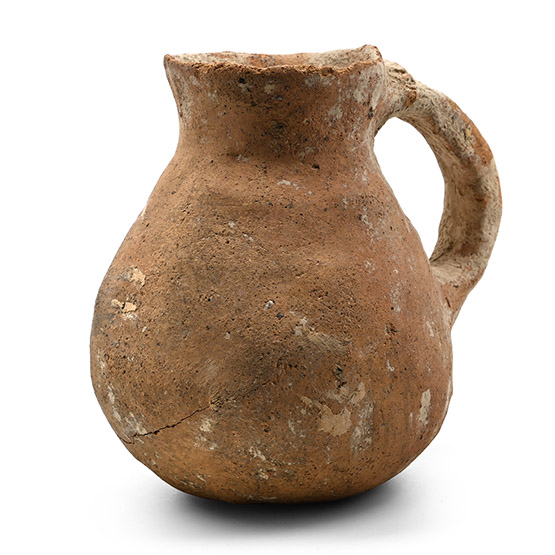
Western Asiatic Terracotta Jug
Early Bronze Age, 3200-2500 B.C.Sold for (Inc. bp): £98
Bulbous body with flattened base and tubular neck, strap handle with piecrust decoration. 192 grams, 10 cm wide
Acquired from Ancient Art, London, UK. From the collection of a Nottingham, UK, collector, established from the early 2000s. -
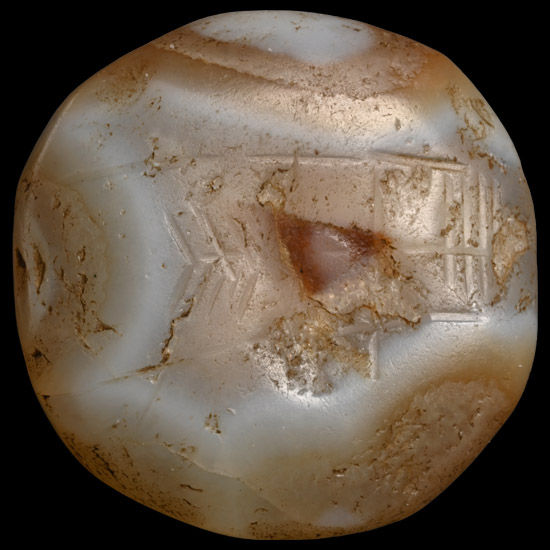
Sasanian Banded Agate Stamp Seal
Circa 4th-5th century A.D.Sold for (Inc. bp): £13
Plano-convex type with geometric band to the underside. 10.89 grams, 24.94 mm
From the private collection of a European gentleman (1942-2024), formed since the 1970s. -
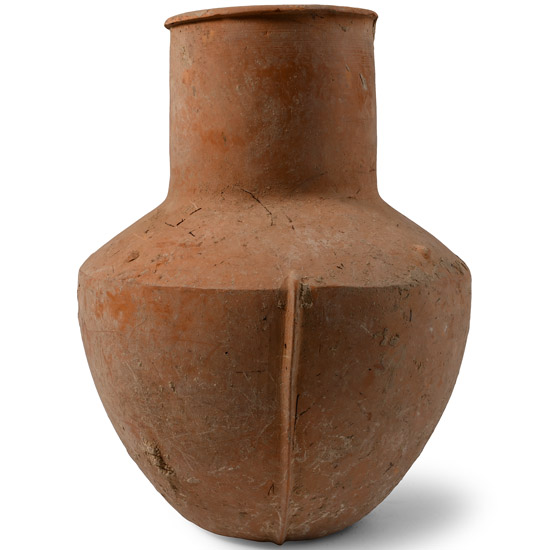
Large Luristan Ribbed Terracotta Storage Vessel
1st millennium B.C.Sold for (Inc. bp): £117
Wide body with angled shoulder, the lower body with raised vertical ribs, with small bosses above the shoulder, tubular neck with a rolled rim. 1.05 kg, 22.1 cm
Acquired on the UK art market before 2000. Property of an Essex, UK, gentleman. -
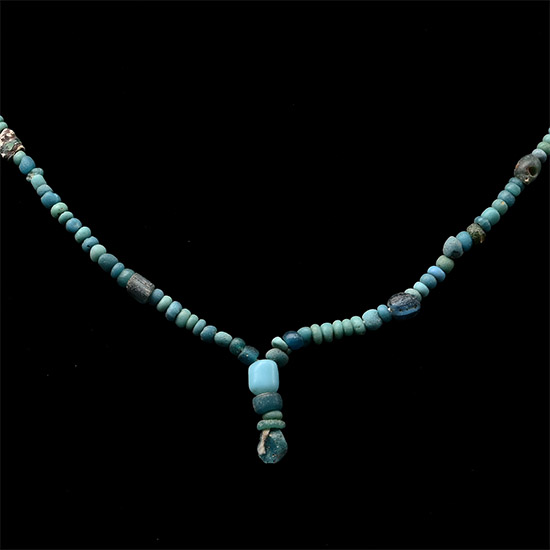
Achaemenid Blue Glass and Other Bead Necklace String
Mid 1st millennium B.C. and laterSold for (Inc. bp): £46
Composed mainly of oblate beads with larger beads forming the central feature, restrung. 7.9 grams, 38.5 cm
Ex London, UK, collection, 1990s. -
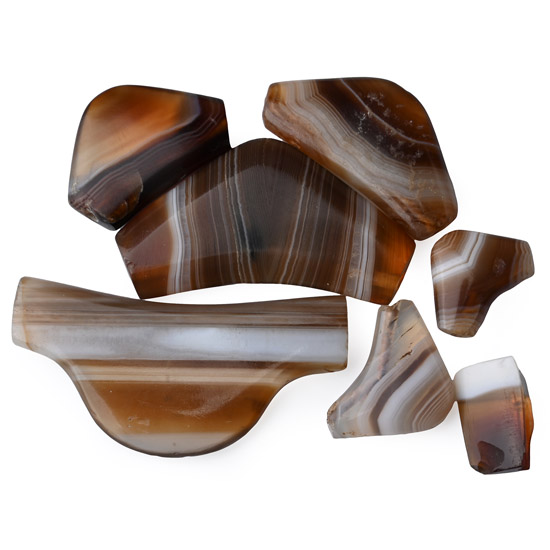
Western Asiatic Banded Agate Elbow Bead Collection
1st millennium B.C.Sold for (Inc. bp): £390
Comprising six translucent elbow beads and one triangular-section bead fragment. 12.74 grams total, 13.37-36.33 mm
From the private collection of a European gentleman (1942-2024), formed since the 1970s.

