-
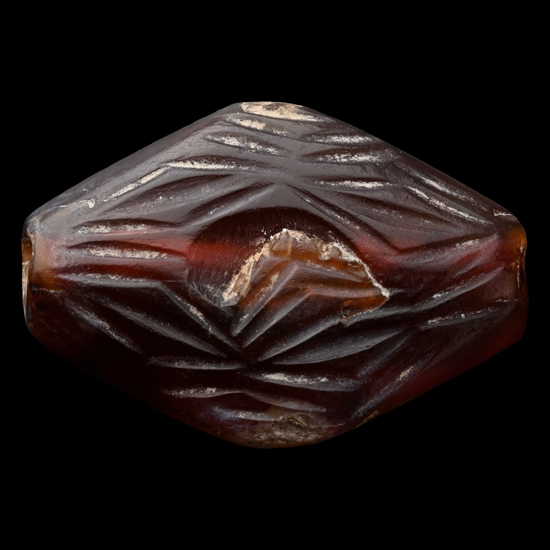
Western Asiatic Decorated Carnelian Bead
1st millennium B.C.Sold for (Inc. bp): £46
Lozengiform in plan, with a dense, grooved geometric pattern. 5.49 grams, 27.39 mm
From the private collection of a European gentleman (1942-2024), formed since the 1970s. -
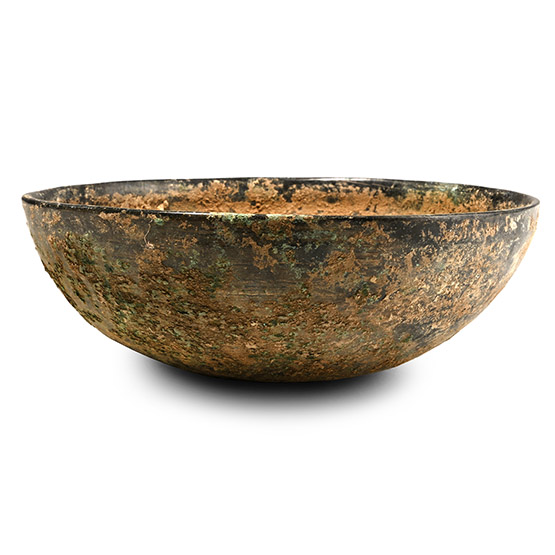
Western Asiatic Polished Bronze Bowl
Late 1st millennium B.C.Sold for (Inc. bp): £72
Hemispherical body with slightly thickened rim. 375 grams, 15.2 cm
Ex Abelita family collection, 1980s-2000s. -
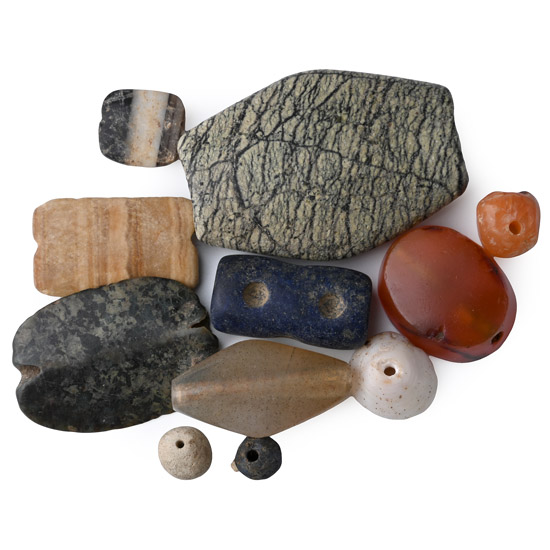
Western Asiatic Assorted Stone Bead Collection
1st millennium B.C.Sold for (Inc. bp): £46
Including tabular, oblate, lozenge-shaped beads in carnelian, agate and other materials. 27.29 grams total, 5.97-37.92 mm
From the private collection of a European gentleman (1942-2024), formed since the 1970s. -
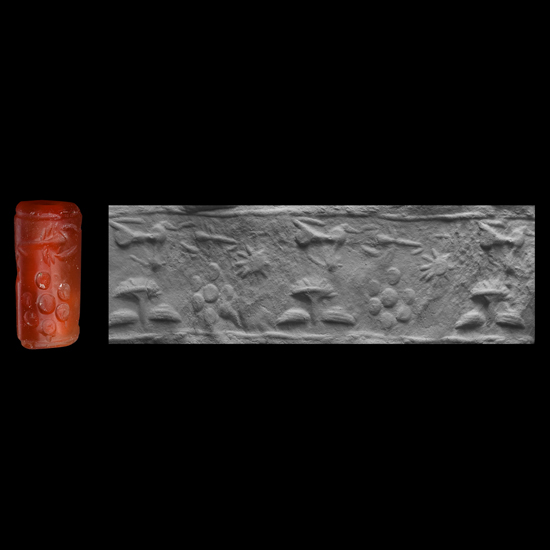
Western Asiatic Carnelian Cylinder Seal with Bird and Ibex
2nd-1st millennium B.C.Sold for (Inc. bp): £91
Frieze of a rosette of pellets beside a bird with outstretched wings, starburst and crouching ibex beneath; supplied with a museum-quality impression. 1.71 grams, 16.91 mm
From the private collection of a European gentleman (1942-2024), formed since the 1970s. -
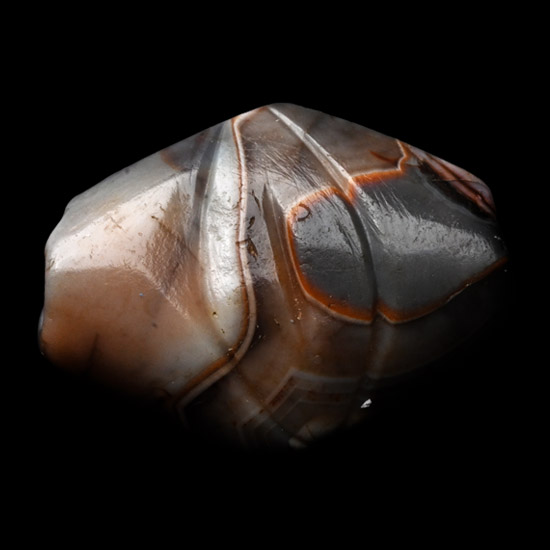
Western Asiatic Decorated Banded Agate Bead
1st millennium B.C.Sold for (Inc. bp): £13
Fusiform type with incised geometric motif. 1.98 grams, 18.99 mm
From the private collection of a European gentleman (1942-2024), formed since the 1970s. -
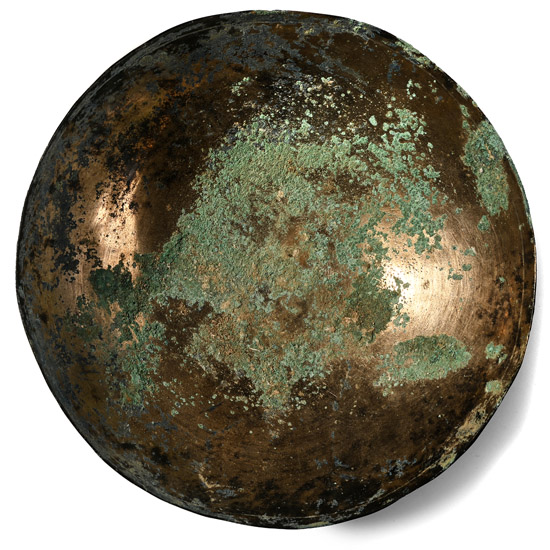
Western Asiatic Polished Bronze Bowl
Late 1st millennium B.C.Sold for (Inc. bp): £78
Shallow body with gently sloping walls. 175 grams, 17 cm
Ex Abelita family collection, 1980s-2000s. -
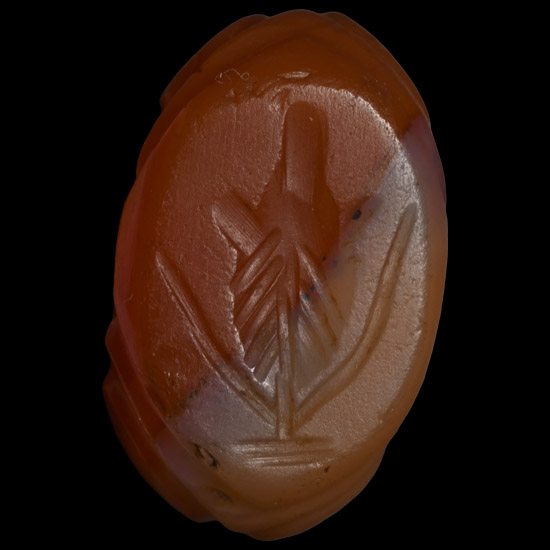
Sasanian Carnelian Stamp Seal with Flower
Circa 3rd-7th century A.D.Sold for (Inc. bp): £26
With segmented upper body, incuse floral design. 2.55 grams, 15.64 mm
From the private collection of a European gentleman (1942-2024), formed since the 1970s. -
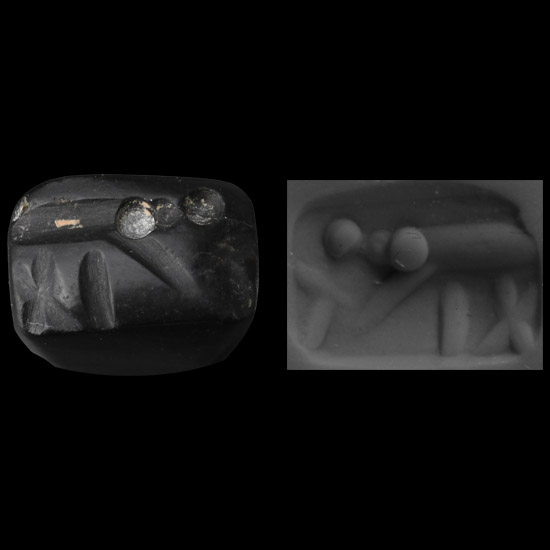
Neo-Babylonian Stone Stamp Seal
Circa 600 B.C.Sold for (Inc. bp): £20
Rectangular in section and tongue-shaped in profile with incised quadruped motif. 4.45 grams, 20 mm
From the collection of a gentleman, acquired on the London art market in the 1990s. -
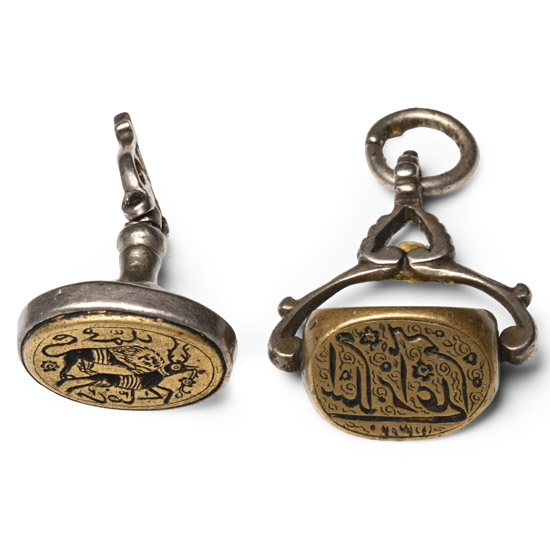
Western Asiatic Engraved Silver Calligraphic Stamp Seals
Late 19th-20th century A.D.Sold for (Inc. bp): £59
Comprising: a fob seal with a trigonal matrix, one face with a reclining facing lion with a sun behind and a crescent and a star before, inscription below, one face with an inscription on a field of tendrils, and the third face with an inscription on a field of flowers and tendrils; a chess piece seal matrix with a hinged, swivelling handle, set with a bronze intaglio showing a liuon attacking a stag from above, inscription above and below; supplied with museum-quality impressions. 17.35 grams total, 29-30 mm
Acquired in the late 1980s-early 1990s. Private collection, London. -
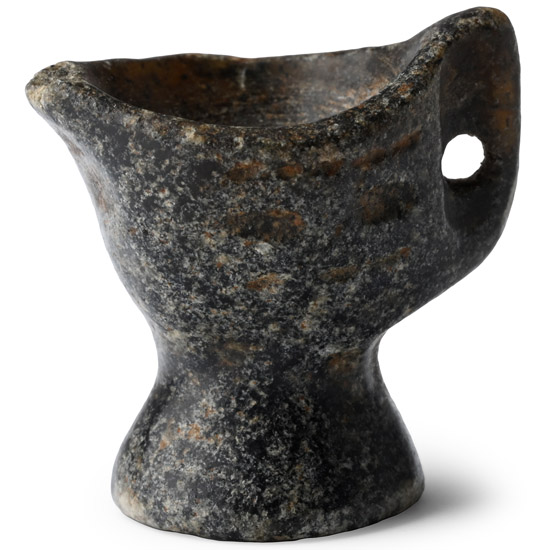
Western Asiatic Miniature Schist Cup
1st millennium B.C.Sold for (Inc. bp): £26
Carved chalice on a flared base with pierced handle to the rear, incuse ibex image to the underside. 5.53 grams, 24.00 mm
From the private collection of a European gentleman (1942-2024), formed since the 1970s. -
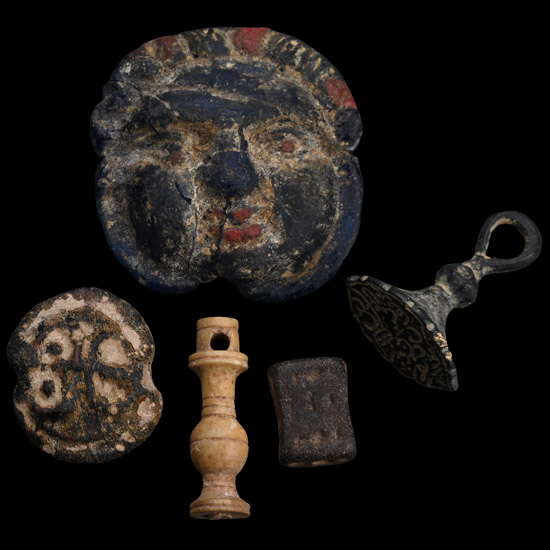
Western Asiatic Bronze and Other Artefact Collection
1st millennium B.C.-17th century A.D.Sold for (Inc. bp): £26
Including a blue glass mask with applied red detailing, a turned bone baluster, cuboid bead with holes to all four sides and other items. 15.7 grams total, 11-31 mm
From the collection of a gentleman, acquired on the London art market in the 1990s. -
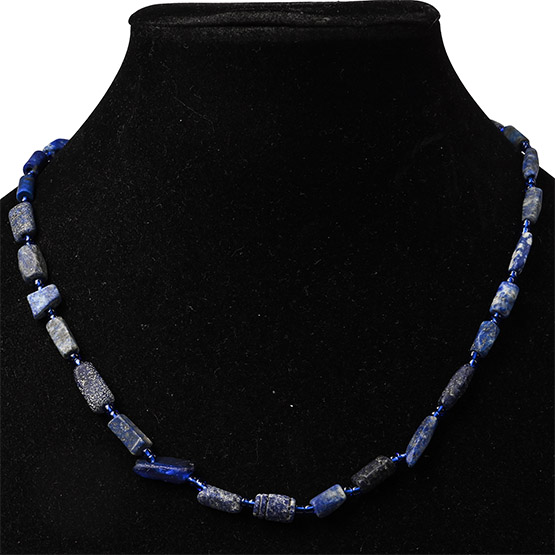
Western Asiatic Style Lapis Lazuli Bead Necklace String
20th century A.D.Sold for (Inc. bp): £26
Composed of irregular beads interspersed with small spherical glass beads; restrung. 18.7 grams, 40.5 cm
Ex London, UK, art market 1990s.

