-
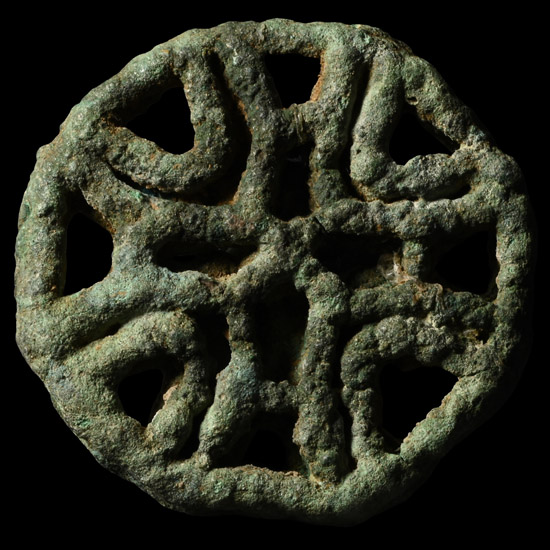
West Central Asian Bronze Stamp Seal with Cross
Bronze Age, circa 2300-2000 B.C.Sold for (Inc. bp): £20
Openwork type with voided cross and semicircles in the spandrels. 24.55 grams, 43.34 mm
From the private collection of a European gentleman (1942-2024), formed since the 1970s. -
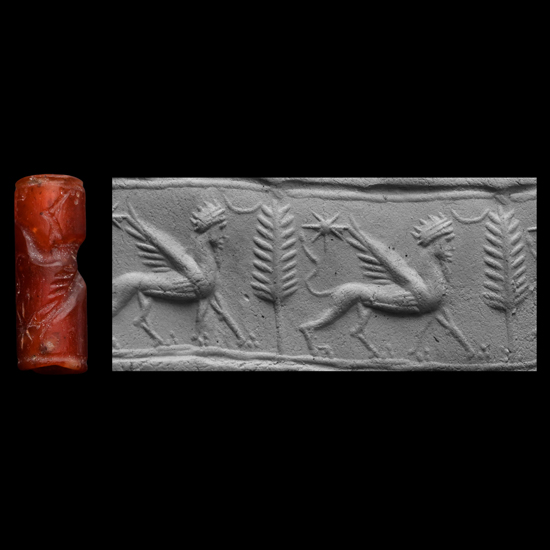
Western Asiatic Carnelian Cylinder Seal with God Lamassu
2nd-1st millennium B.C.Sold for (Inc. bp): £338
Frieze depicting a lamassu in profile advancing towards a tree with crescent above; supplied with a museum-quality impression. 0.54 grams, 14.1 mm
From the private collection of a European gentleman (1942-2024), formed since the 1970s. -
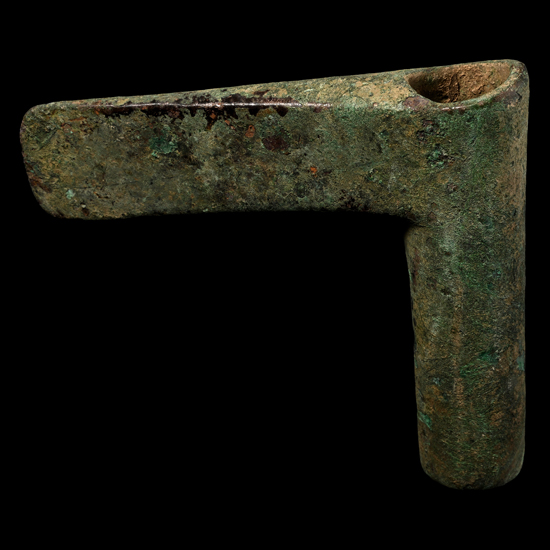
Mesopotamian Bronze Socketted Axehead
3rd millennium B.C.Sold for (Inc. bp): £143
Comprising a tubular socket and a slender triangular blade. 320 grams, 11.7 cm
Ex Abelita family collection, 1980s-2000s.
Similar axe is represented in hands of Akkadian warriors on the Stele of Victory of Naram-Sim, at the Louvre, dated at 23rd century B.C. It was a typology used by Sumerian and Akkadian warriors. -
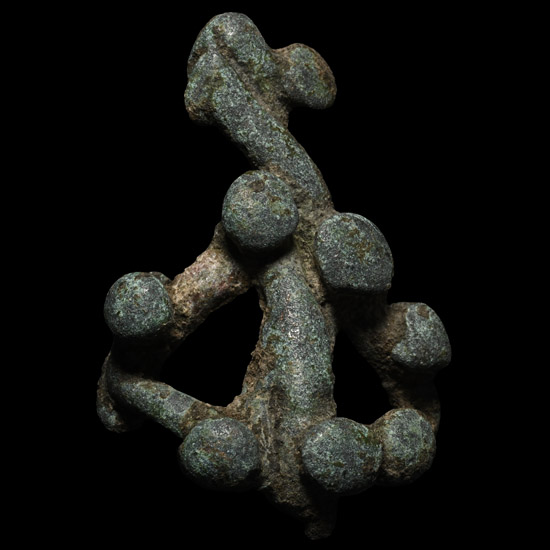
Amlash Figure Fragment
Circa 6th century A.D.Sold for (Inc. bp): £13
With openwork body and lug to reverse, cage-style torso. 20.6 grams, 42.8 mm
From the private collection of a European gentleman (1942-2024), formed since the 1970s. -
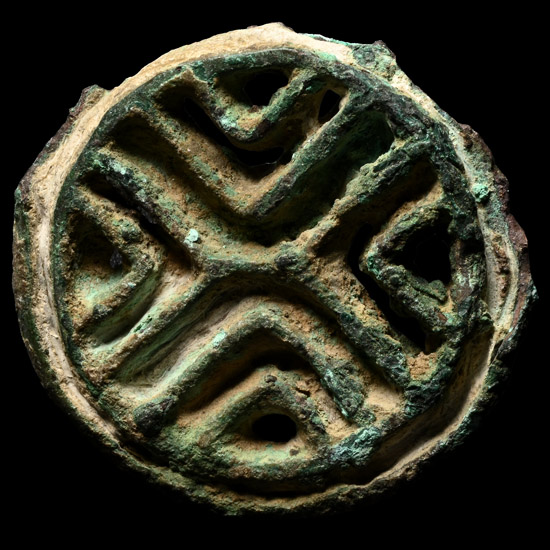
West Central Asian Bronze Stamp Seal with Cross
Bronze Age, circa 2300-2000 B.C.Sold for (Inc. bp): £20
Discoid with central cross and openwork quadrants, loop handle. 20.99 grams, 35.61 mm
From the private collection of a European gentleman (1942-2024), formed since the 1970s. -
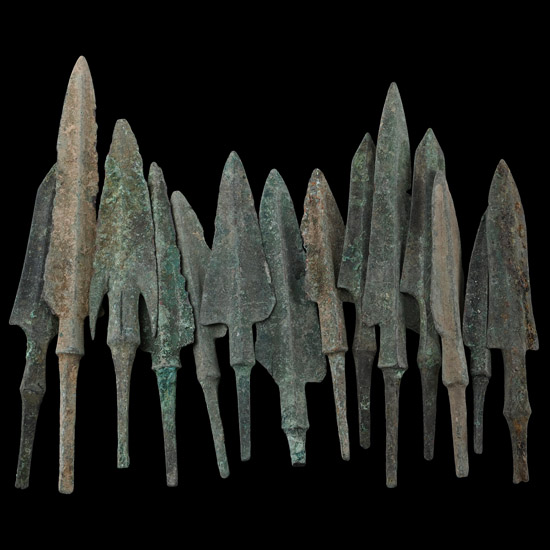
Western Asiatic Bronze Arrowhead Collection
13th-9th century B.C.Sold for (Inc. bp): £182
Comprising tanged triangular arrowheads, one with barbed shoulders. 327 grams total, 8.3-14.4 cm
London, UK, collection, 1990s.
One series of arrowheads seems to belong to the category of lanceolate head and rounded shoulders from the category Type V, i.e. triangular arrowheads with rounded or angular midrib. Some other arrowheads seem to be a subcategory of subtype A of Khorasani, but longer. -
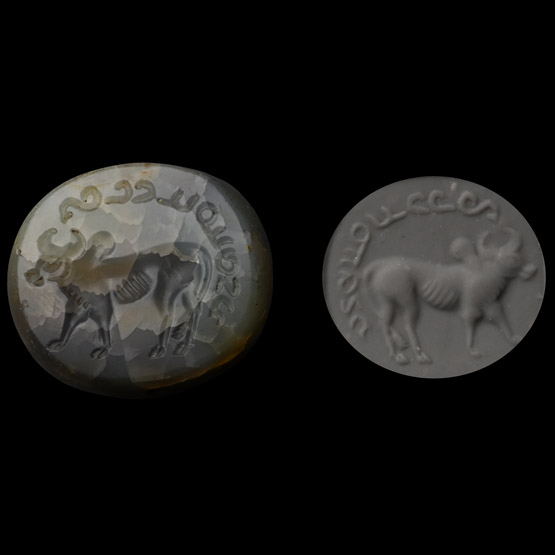
Kushan-Sasanian Chalcedony Stamp Seal
3rd-4th century AD. and laterSold for (Inc. bp): £20
Plano-convex type with narrow transverse hole; possibly later incuse zebu standing with possibly later inscription above. 13.6 grams, 24 mm
Private collection, 1970s. Acquired Chiswick Auctions, 2 February, 2016, no.109. Private collection, London, UK. -
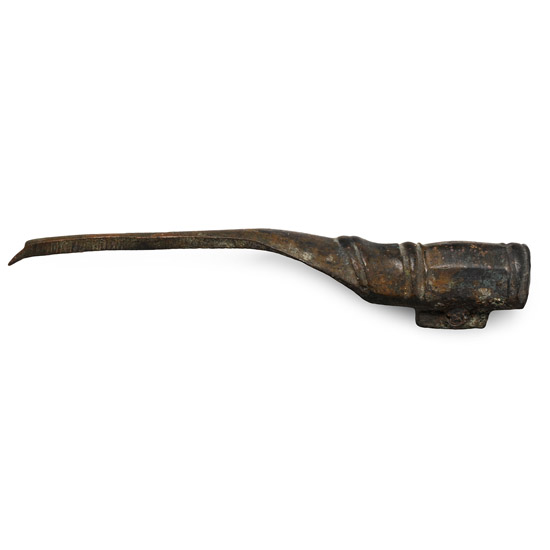
Western Asiatic Bronze Stylus
Late 1st millennium A.D.Sold for (Inc. bp): £26
Comprising a barrel-shaped facetted socket with a rivetted lug to the rear, the body extending to a tapering nib with a sharp point. 17.8 grams, 84 mm
From the collection of a gentleman, acquired on the London art market in the 1990s. -
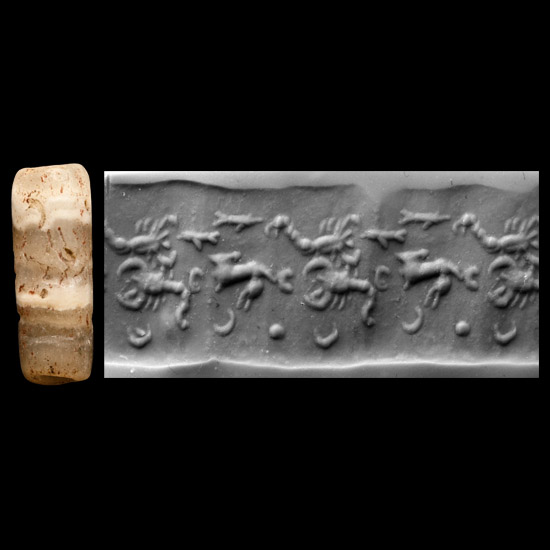
Western Asiatic Banded Agate Cylinder Seal with Scorpions
2nd-1st millennium B.C.Sold for (Inc. bp): £182
Frieze with scorpions and other animals; supplied with a museum-quality impression. 1.42 grams, 19.56 mm
From the private collection of a European gentleman (1942-2024), formed since the 1970s. -
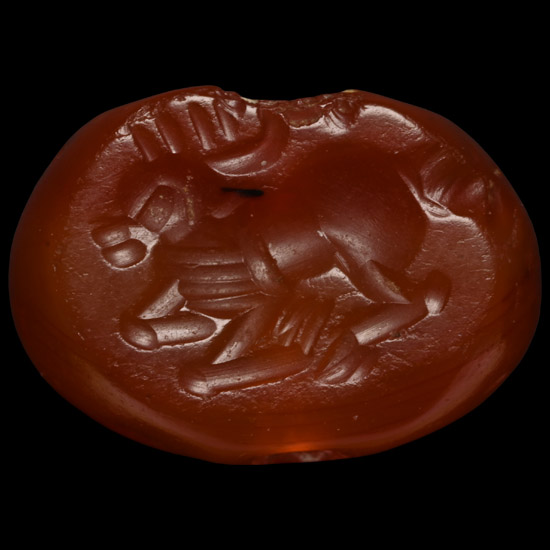
Sasanian Carnelian Stamp Seal with Recumbent Animal
Circa 3rd-7th century A.D.Sold for (Inc. bp): £26
Scaraboid type with incuse crouching stag motif. 1.56 grams, 12.41 mm
From the private collection of a European gentleman (1942-2024), formed since the 1970s. -
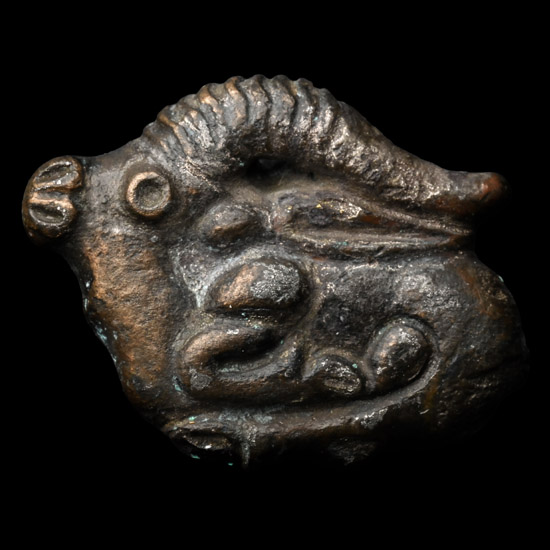
Western Asiatic Bronze Ibex Mount
1st millennium B.C.Sold for (Inc. bp): £39
Low-relief plaque of an ibex with legs folded beneath the body; discoid socket to reverse. 18.21 grams, 31.66 mm
From the private collection of a European gentleman (1942-2024), formed since the 1970s. -
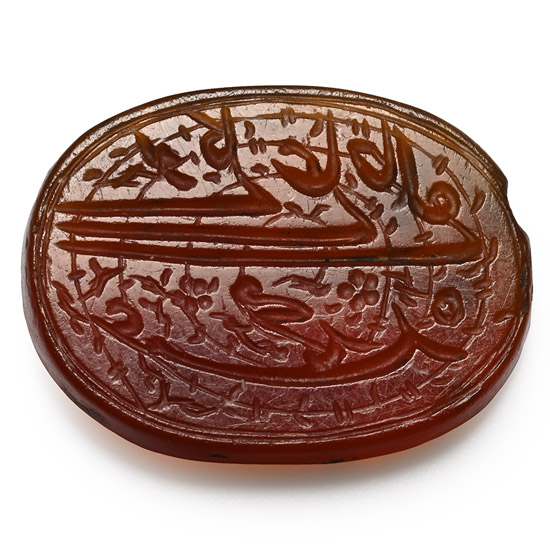
Western Asiatic Engraved Carnelian Calligraphic Intaglio
Late 19th-20th century A.D.Sold for (Inc. bp): £59
Oval intaglio with an inscription on a floral field; supplied with a museum-quality impression. 2.14 grams, 21 mm
Acquired in the late 1980s-early 1990s. Private collection, London.

