-
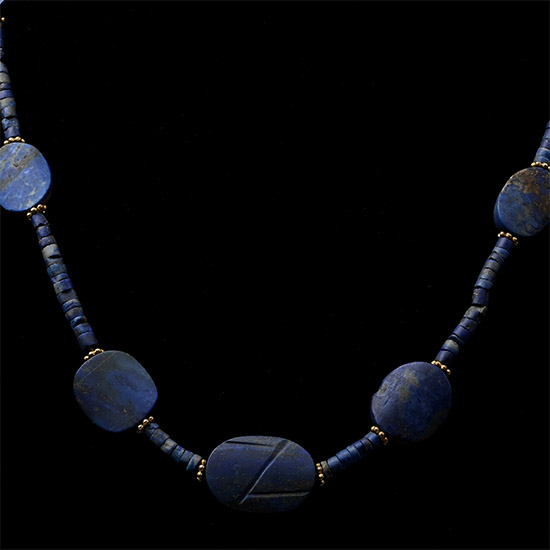
Western Asiatic Style Lapis Lazuli Bead Necklace String
20th century A.D.Sold for (Inc. bp): £13
Composed of large oval-shaped feature beads interspersed with cylindrical beads and granulated metal collars; restrung. 42 grams, 49 cm
Ex London, UK, art market 1990s. -
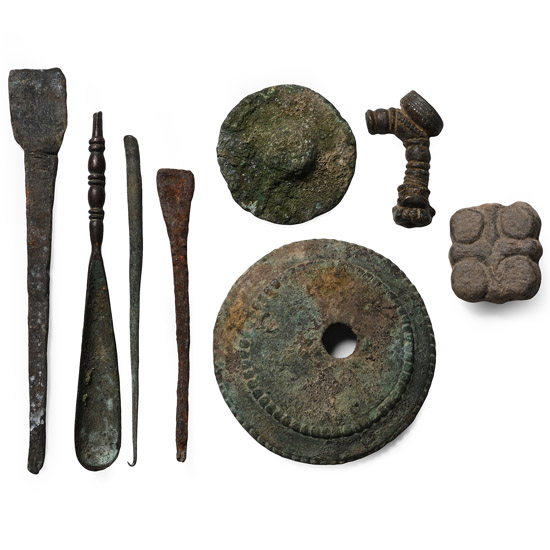
Western Asiatic Bronze Artefact Group
1st millennium A.D. or laterSold for (Inc. bp): £39
A mixed group of artefacts, including a stylus, the bowl of a spoon, a domed mount, and others. 65 grams total, 20.4-70.3 mm
From the private collection of a European gentleman (1942-2024), formed since the 1970s. -
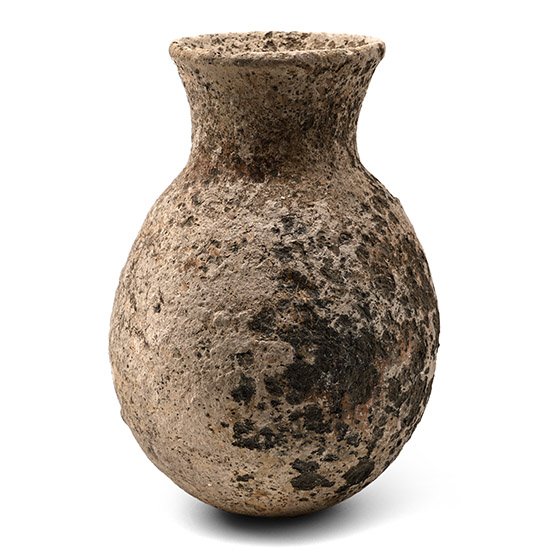
Western Asiatic Terracotta Vessel
Early Bronze Age, 3200-2500 B.C.Sold for (Inc. bp): £78
Bulbous body and short neck with everted rim. 170 grams, 11.6 cm
Acquired from Ancient Art, London, UK. From the collection of a Nottingham, UK, collector, established from the early 2000s. Accompanied by the original Ancient Art certificate of authenticity. -
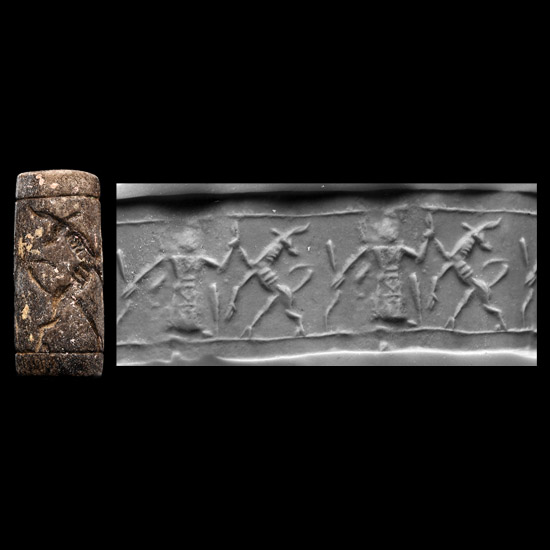
Western Asiatic Stone Cylinder Seal with Contest Scene
2nd-1st millennium B.C.Sold for (Inc. bp): £143
Frieze depicting a standing figure with knife in one hand and the other gripping the foreleg of a rearing ibex; supplied with a museum-quality impression. 2.45 grams, 21.8 mm
From the private collection of a European gentleman (1942-2024), formed since the 1970s. -
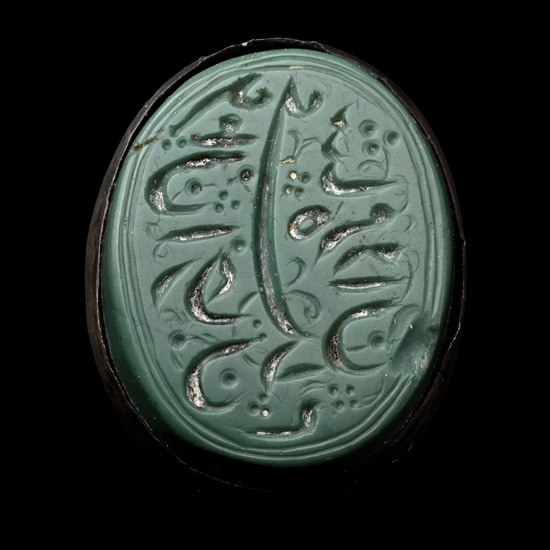
Western Asiatic Calligraphic Green Jasper Gemstone in Silver Setting
Circa 14th-16th century A.D.Sold for (Inc. bp): £52
An oval gem engraved with two lines of calligraphic text, set in a silver mount with a post. 6.21 grams, 22.07 mm
From the private collection of a European gentleman (1942-2024), formed since the 1970s. -
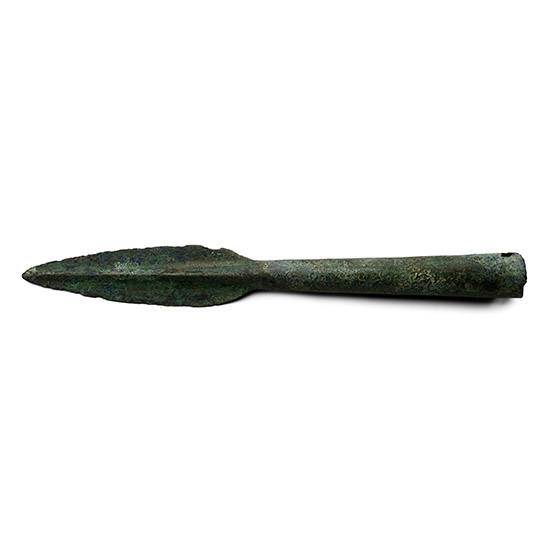
Western Asiatic Bronze Socketted Spearhead
9th-7th century B.C.Sold for (Inc. bp): £169
Leaf-shaped blade with raised midrib and a tapering round socket. 128 grams, 27.2 cm
Ex Abelita family collection, 1980s-2000s.
The spear, belonging to type 3 of the Khorasani classification, was used by chariot fighters to strike each other or the enemy infantry from above. Similar specimens with longer sockets were excavated by Negahban in the Amlash area. According to Moorey, sockets as long, if not longer than the blade, are a characteristic of spearheads in the late 2nd and early 1st millennium B.C. A similar spearhead from the Tappeh Sialk has been dated to the 9th-7th century B.C. -
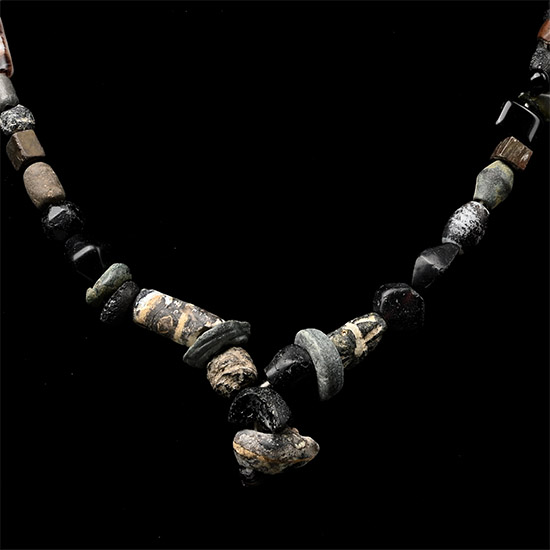
Western Asiatic Glass and Stone Bead Necklace String
1st millennium B.C. and laterSold for (Inc. bp): £39
Composed of mixed beads, including a drop-shaped pendant, restrung. 27.9 grams, 33 cm
Ex London, UK, collection, 1990s. -
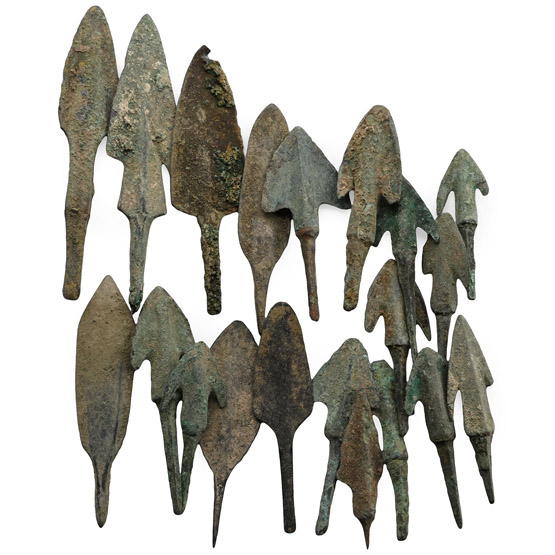
Western Asiatic Bronze Arrowhead Collection
1st millennium B.C.Sold for (Inc. bp): £143
Including barbed, barbed-and-tanged leaf-shaped and other types. 125 grams total, 40-75 mm
Ex London, UK, collection, 1990s. -
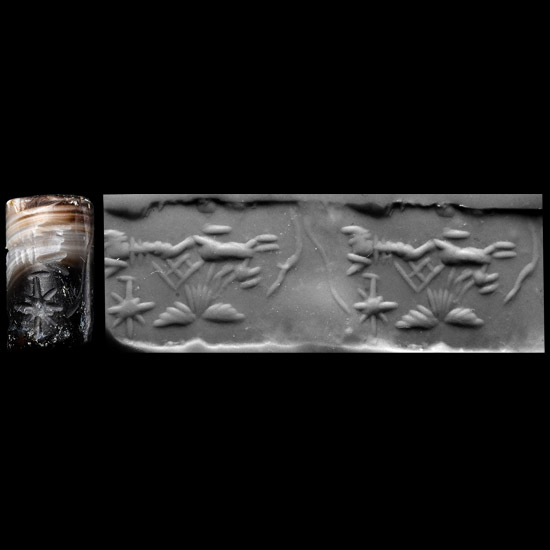
Western Asiatic Banded Agate Cylinder Seal with Animals
2nd-1st millennium B.C.Sold for (Inc. bp): £124
Frieze with bird with spread wings above two running animals, starburst and foliage; supplied with a museum-quality impression. 0.84 grams, 11.83 mm
From the private collection of a European gentleman (1942-2024), formed since the 1970s. -
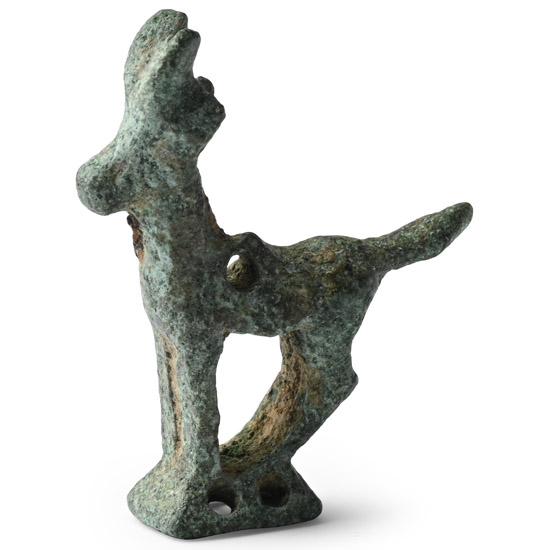
Luristan Bronze Standing Deer Statuette
1st millennium B.C.Sold for (Inc. bp): £65
Standing on a small base with an erect head and tail, pierced through the body. 12.3 grams, 36.8mm
From the private collection of a European gentleman (1942-2024), formed since the 1970s. -
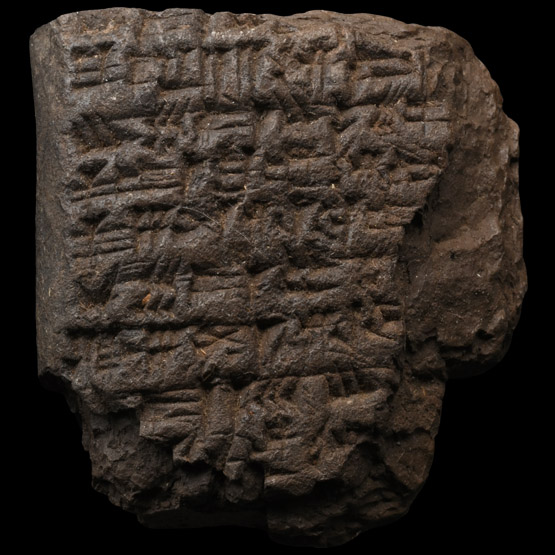
Babylonian Cuneiform Tablet Section
2nd millennium B.C.Sold for (Inc. bp): £390
Fragment of a pillow-shaped tablet with impressed cuneiform text to the outer surface. 51.8 grams, 50 mm
From an old English collection formed before 1990. Acquired from Alan Cherry, Bournemouth, Dorset. Property of an Essex, UK, gentleman. -
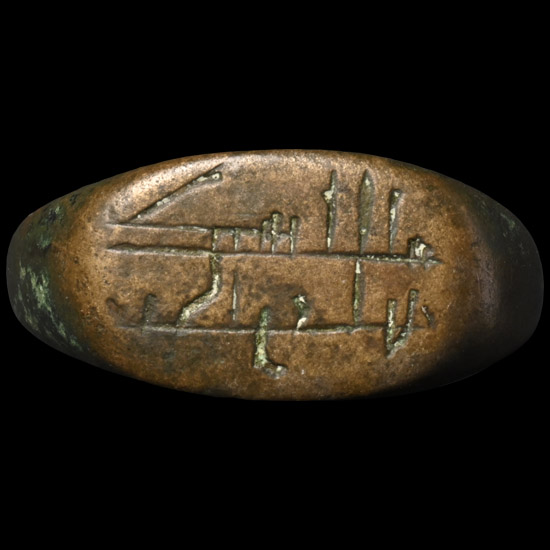
Western Asiatic Bronze Calligraphic Ring
Circa 10th-12th century A.D.Sold for (Inc. bp): £65
Featuring a D-section hoop and an oval bezel with a two-line Kufic inscription reading 'The god who is forever living. Have mercy on those who are dead and who will die'. 6.28 grams, 19.33 mm overall, 15.75 mm internal diameter (approximate size British I, USA 4 1/4, Europe 7.44, Japan 7)
From the private collection of a European gentleman (1942-2024), formed since the 1970s.

