-
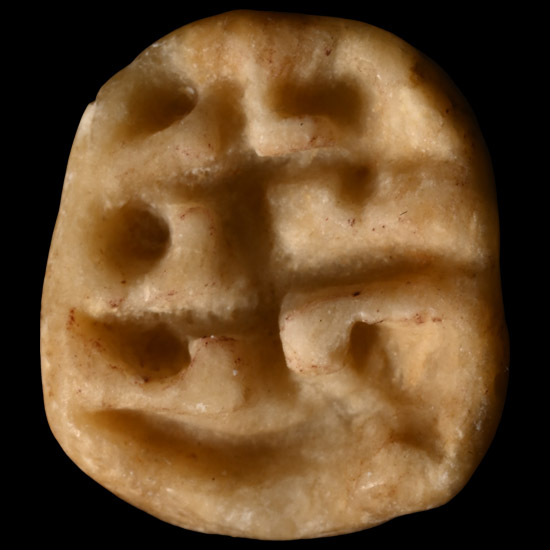
Western Asiatic Cone-Shaped Stamp Seal
2nd-1st millennium B.C.Sold for (Inc. bp): £7
Conical in section with suspension hole and pointillé texture; underside with stylised human figure. 7.32 grams, 37.26 mm
From the private collection of a European gentleman (1942-2024), formed since the 1970s. -
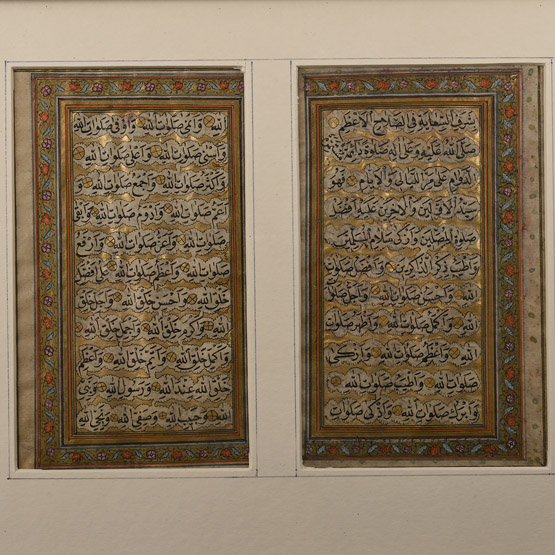
Western Asiatic Bokhara Gilt Manuscript Page
Circa 1820 A.D.Sold for (Inc. bp): £111
In a gilt wooden glazed frame with card reveal to both pages; collector's label to reverse with details: 'Dala'il al Khairat Bokhara C.1820. This superb illuminated manuscript is of the popular prayer book, the Dala'il Al Khairat and is thought to have been scribed in Bokhara, some 150 miles from Samarkand. For centuries Bokhara was a centre of Islamic scholarship in Asia. The city had some 360 mosques and nearly 10,000 pupils received their education in 140 madrasas or theological colleges. Many fine manuscripts were scribed there, principally to serve the vibrant Muslim culture. This item is a wonderful example. The script is naskh enclosed in gold clouds, an Indian influence. The central panels are bordered with a meandering vine border of the highest quality. It is sad that about a third of the book was damaged beyond repair. An essential item for collectors, a pearl almost beyond price.' 516 grams, 28.7 x 23.5 cm
Acquired on the UK art market. -
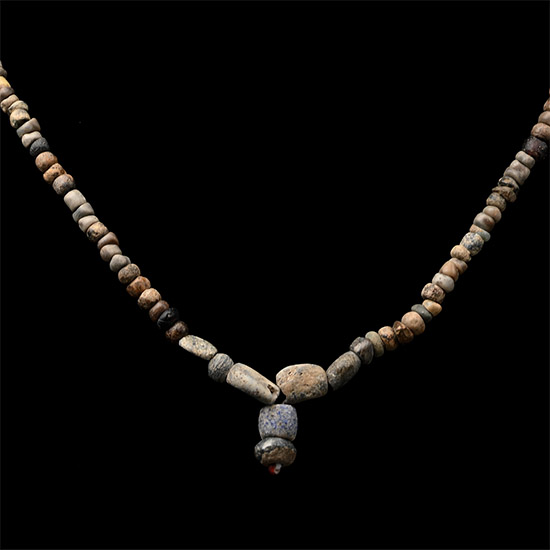
Western Asiatic Glass and Stone Bead Necklace String
1st millennium B.C. and laterSold for (Inc. bp): £20
Composed mainly of oblate and annular beads with larger beads at the centre, restrung. 16.8 grams, 44 cm
Ex London, UK, collection, 1990s. -
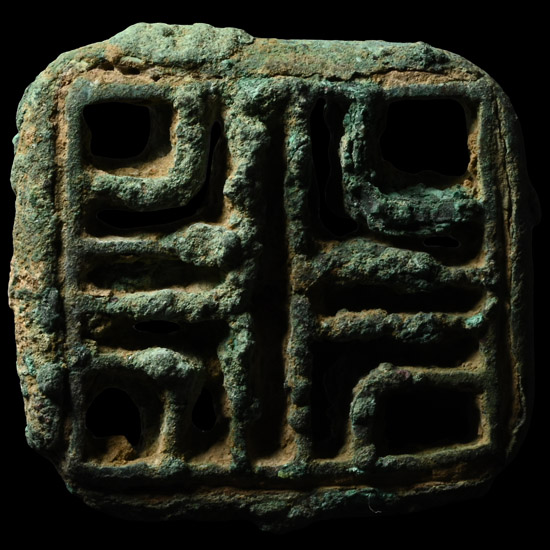
West Central Asian Bronze Stamp Seal with Cross
Circa 2300-2000 B.C.Sold for (Inc. bp): £46
Square stamp seal with segmented face; accompanied by an old scholarly note, typed and signed by W.G. Lambert, late Professor of Assyriology, University of Birmingham, 1970-1993, which states: 'Stamp Seal of Bronze 37 x 35 x 19 mm. This is a roughly square with flat face and flat back, on which a handle of inverted U-shape is mounted. The design is compartmented and open-work. It consists of an outer band within which a simple cross divided the area into quarters, though only one bar of this cross reaches both ends, the transverse bar is divided into two parts. Each quarter thus created is filled with an L-shape, creating a small square at each outer corner. This comes from west central Asia and dates to c. 2300-2000 B.C. The outer edges are dented and the corners worn, but while there is incrustations on most of the surface, this could be removed.' 26 grams, 37.6 mm
Ex London, UK, collection, 1990s. Accompanied by an old scholarly note, typed and signed by Professor W.G. Lambert with reference no.R-499. -
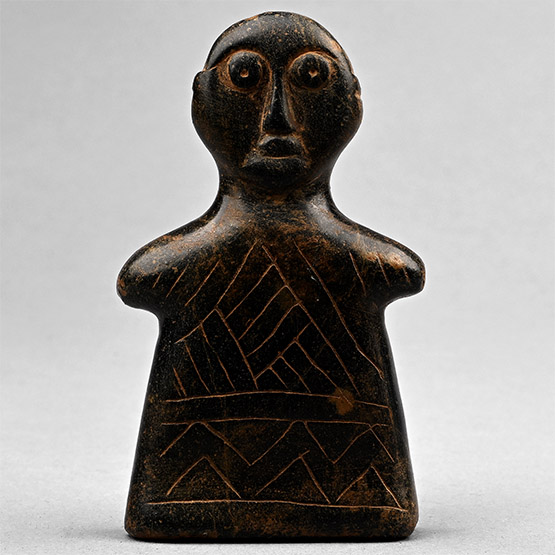
Anatolian Black Stone Idol
3rd millennium B.C.Sold for (Inc. bp): £2,340
Carved in the half-round with hatched detailing to the tunic and belt, discoid head with reserved annulet eyes and trapezoidal nose, and lateral stub ears. 156 grams, 10.1 cm
Ex Swiss collection, 1980s. Private collection, 1994. Private collection, since the late 1990s. This lot has been checked against the Interpol Database of stolen works of art and is accompanied by a search certificate number no.12874-241677. -
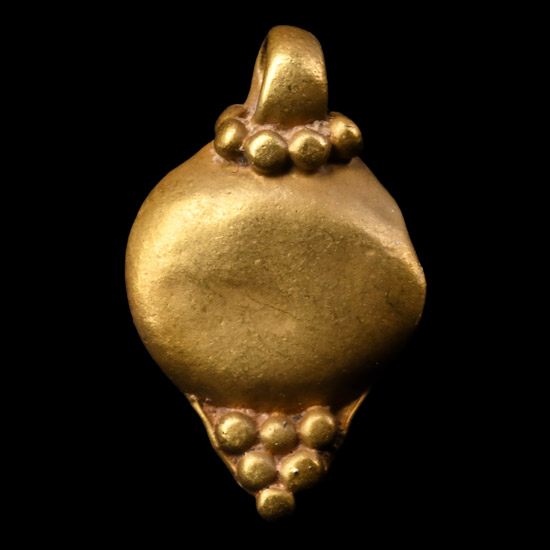
Western Asiatic Gold Grape Pendant
1st millennium B.C.Sold for (Inc. bp): £111
Formed as a domed disc with applied granules above and below. 0.35 grams, 10 mm
Ex private British collection, formed in the 1980s. Property of a West Northamptonshire, UK, gentleman. -
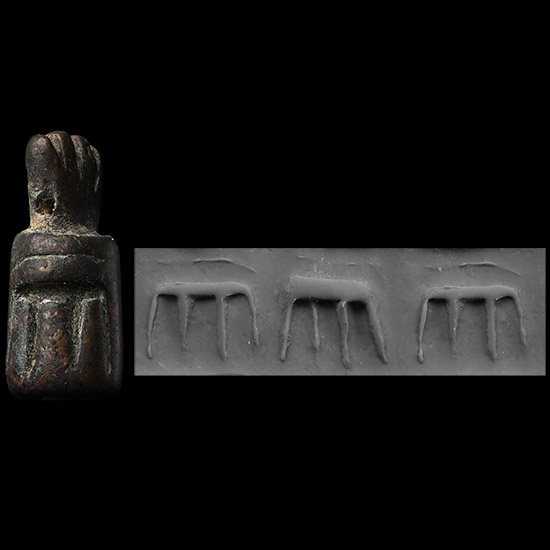
Western Asiatic Bronze Pendant Cylinder Seal
2nd-1st millennium B.C.Sold for (Inc. bp): £91
The shank formed as a drum with ring-and-dot motif to the underside, two comb motifs to the sidewall, knop finial formed as a fist; supplied with a museum-quality impression. 34.9 grams, 36.8 mm
From the private collection of a European gentleman (1942-2024), formed since the 1970s. -
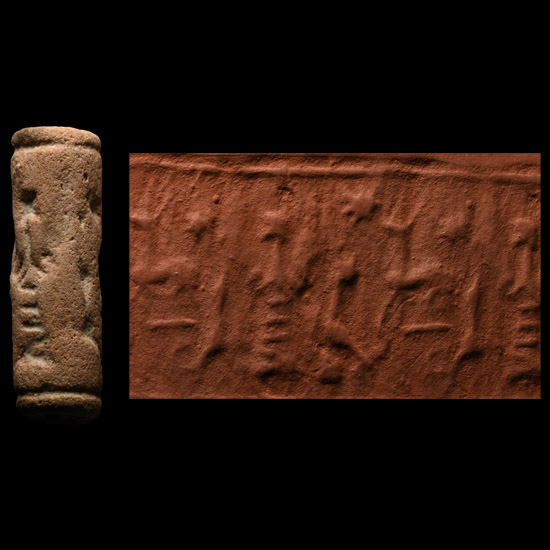
Phoenician Cream Stone Cylinder Seal
Circa 1000 B.C.Sold for (Inc. bp): £85
With frieze depicting a combat scene with human figure and rearing beasts; with collector's ticket and museum-quality impression. 5.50 grams, 36.56 mm
From the private collection of the late Mr W. Magee, Hartlepool, County Durham, UK, 1960s-1990s, thence by descent. Accompanied by a previous cataloguing information card. -
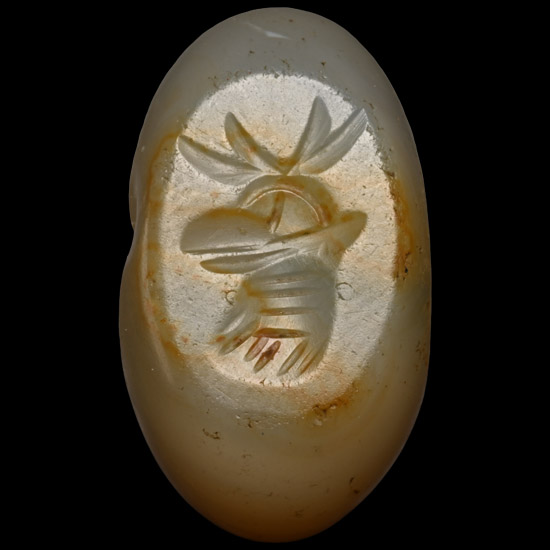
Sasanian Banded Agate Stamp Seal with Bust
Circa 3rd-7th century A.D.Sold for (Inc. bp): £46
Annular type with incuse profile bust to underside. 10.66 grams, 24.76 mm
From the private collection of a European gentleman (1942-2024), formed since the 1970s. -
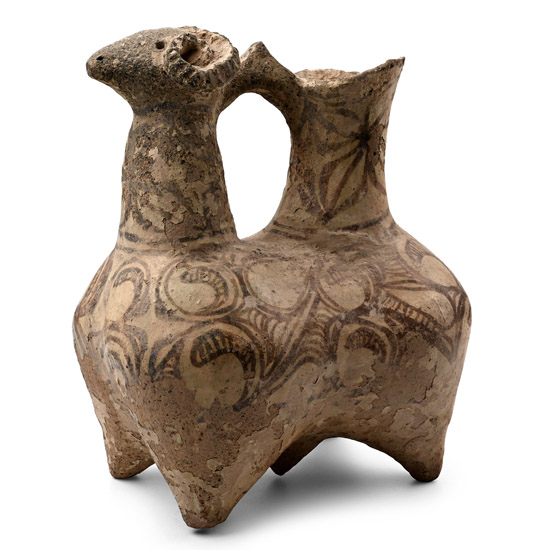
Western Asiatic Ceramic Zoomorphic Vessel
8th-9th century A.D.Sold for (Inc. bp): £468
Comprising four conical legs supporting a double globular body with conical neck and ram's head, spout to the rear with strainer connected by a bridging loop; applied painted hatched spiral detailing; old label to the underside: 'YAZDANI 211C LONDON'. 1.06 kg, 19.5 cm
UK collection, 1990s. Acquired on the UK art market, before 2000. Private collection, Mr M.V., a London-based businessman. -
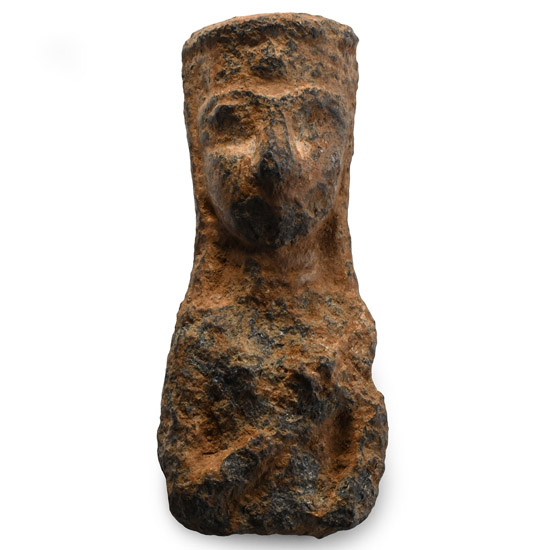
Northern Syrian Bronze Female Figure
Early 1st millennium B.C.Sold for (Inc. bp): £152
The upper part of a flat-backed female figurine, her arms crossed at the chest and wearing a conical headdress. 44.7 grams, 55 mm
From the collection of a gentleman, acquired on the London art market in the 1990s. -
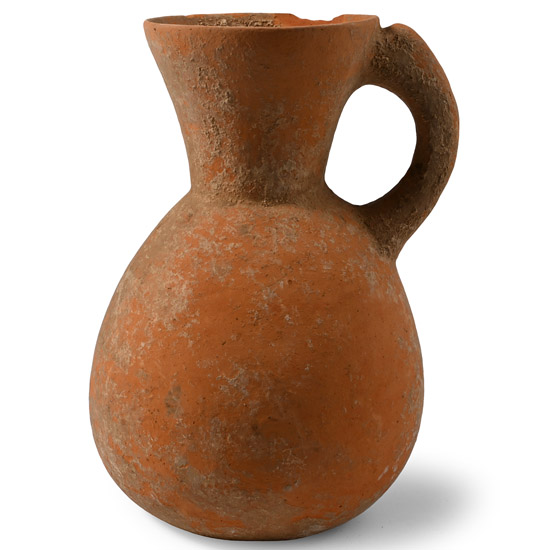
Amlash Terracotta Jug with Flared Mouth
1st millennium B.C.Sold for (Inc. bp): £39
Comprising an ovoid body with a flat base, trumpet-shaped neck and a single handle to the rear. 305 grams, 14.6 cm
Acquired on the UK art market before 2000. Property of an Essex, UK, gentleman.

