-
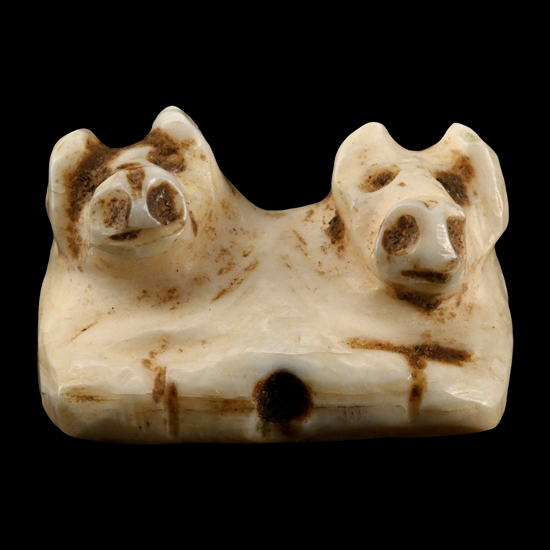
Western Asiatic Stone Double Bovine Head Amulet
2nd millennium B.C.Sold for (Inc. bp): £117
Rectangular pendant with median piercing, two feline heads with sockets for the eyes, ears and nose, to accept coloured inserts. 2.45 grams, 18 mm
From the collection of a gentleman, acquired on the London art market in the 1990s. -
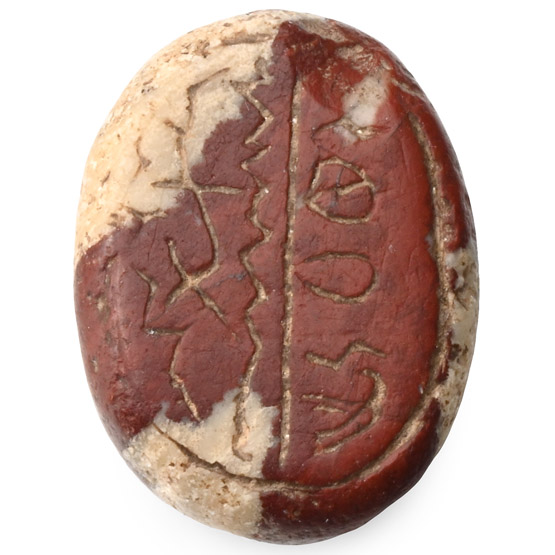
Western Asiatic Red and White Jasper Scaraboid with Semitic Inscription
1st millennium B.C.Sold for (Inc. bp): £156
Plano-convex in section with longitudinal piercing; underside with incised border and tondo in two registers with five characters. 4.41 grams, 19 mm
London, UK, art market, 1980s. Private collection, London, UK. -
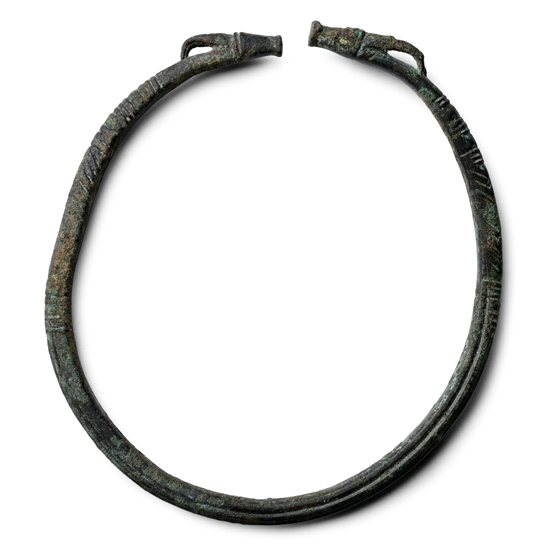
Western Asiatic Bronze Bracelet with Ibex Head Terminals
1st millennium B.C.Sold for (Inc. bp): £91
Comprising a penannular round-section body and stylised ibex-head finials with curving horns. 13.7 grams, 66 mm
From the private collection of a European gentleman (1942-2024), formed since the 1970s. -
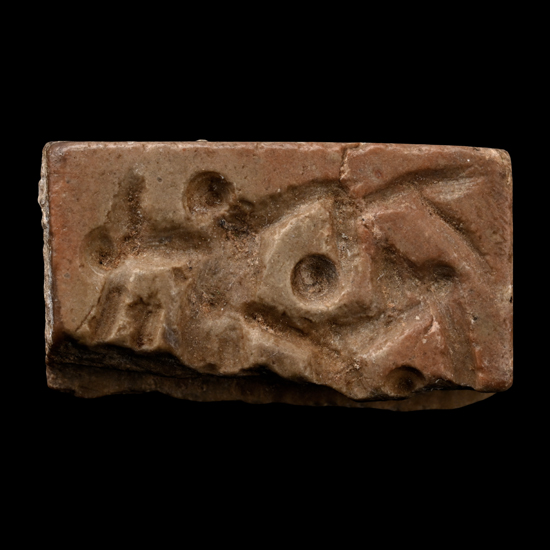
Elamite Brown Stone Stamp Seal Fragment
2nd millennium B.C.Sold for (Inc. bp): £13
Rectangular type with incuse animal frieze to the underside; supplied with a museum-quality impression. 10.45 grams, 30 mm
From the private collection of a European gentleman (1942-2024), formed since the 1970s. -
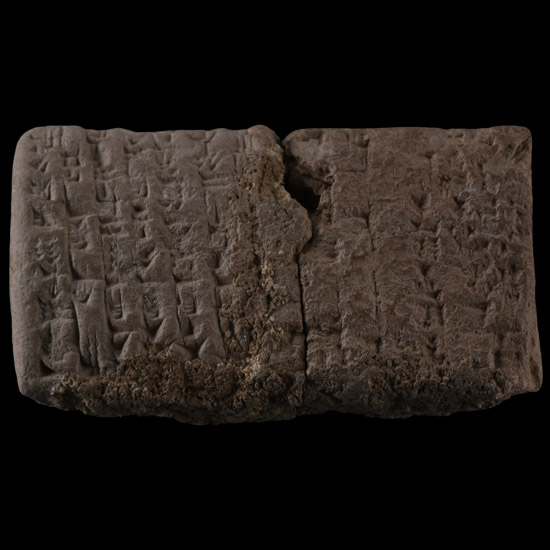
Mesopotamian Terracotta Cuneiform Tablet
Early 2nd millennium B.C.Sold for (Inc. bp): £286
Pillowform with columns of cuneiform text on both sides. 97 grams, 76 mm
Specialised collection of cuneiform texts, the property of a London gentleman and housed in London before 1992. Thence by descent to family members. Examined by Professor Wilfrid George Lambert FBA (1926-2011), historian, archaeologist, and specialist in Assyriology and Near Eastern archaeology, in the late 1980s and early 1990s. This small collection is exceptional for the variety of types, including some very rare and well preserved examples. -
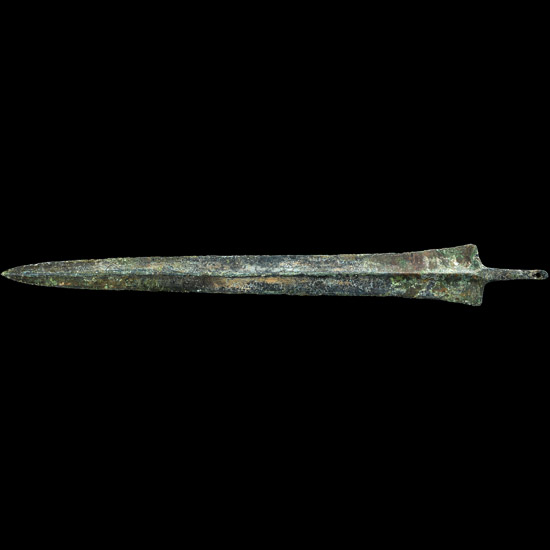
Luristan Bronze Tanged Dirk
Circa 1st millennium B.C.Sold for (Inc. bp): £221
Comprising a slender triangular blade with a raised midrib and a short rectangular-section pierced tang. 192 grams, 38.3 cm
Ex Abelita family collection, 1980s-2000s.
The Luri people produced a quantity of fine metalwork, which according to Dr. Khorasani, could be due to a settled period which arose as a result of the defeat of the Elamites by the Babylonians, leaving the Luristani people in relative peace for a period of time after 1200 B.C. According to Khorasani, 'A culture of innovation and experimentation flourished, and the repertoire of the Luristan smiths expanded in the period between 1150–1050 BC.' -
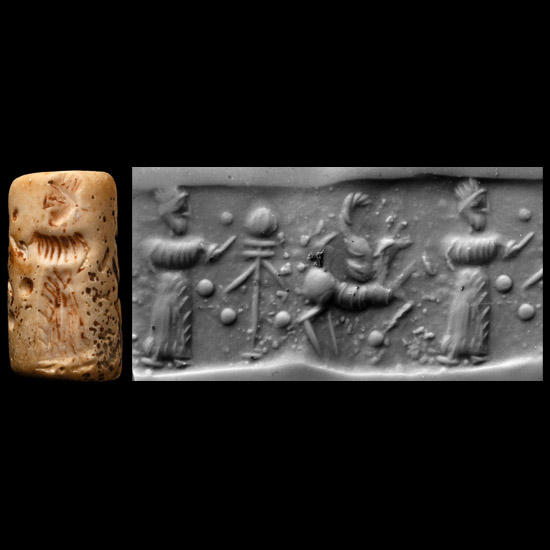
Western Asiatic Cream Stone Cylinder Seal with Figure and Gryphon
2nd-1st millennium B.C.Sold for (Inc. bp): £143
Frieze depicting a standing robed figure in profile with one hand raised to an orb above a column, advancing gryphon to the other side; supplied with a museum-quality impression. 2.33 grams, 17.06 mm
From the private collection of a European gentleman (1942-2024), formed since the 1970s. -
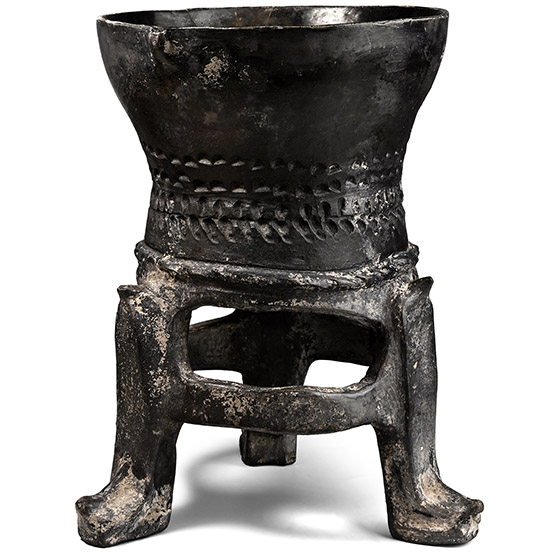
Large Azerbaijan Hasanlu Tepe Pottery Vessel
Circa 1000-700 B.C.Sold for (Inc. bp): £936
Comprising a broad bell-shaped bowl with flat rim attached by a thick trunk with four rows of angled impressions to a tripod base with sturdy curved legs with inner supporting ring and keeled finials. 5.28 kg, 35.5 cm
with Mahboubian Gallery, London, UK, 1974. Private collection, London, UK. -
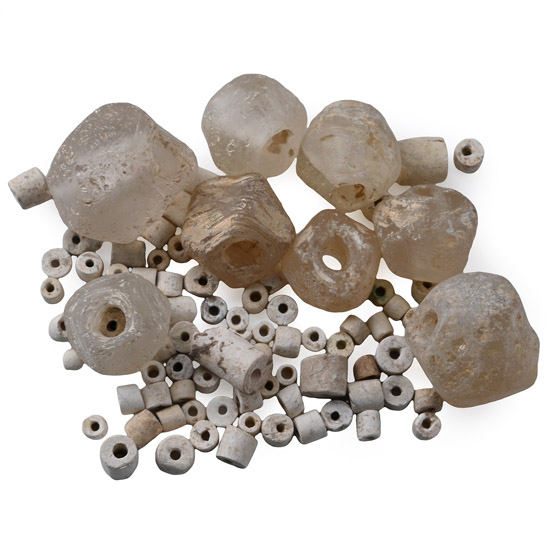
Western Asiatic Stone Bead Group
2nd-1st millennium B.C.Sold for (Inc. bp): £33
Comprising larger facetted beads and small tubular beads. 15.99 grams total, 1.94-14.93 mm
From the private collection of a European gentleman (1942-2024), formed since the 1970s. -
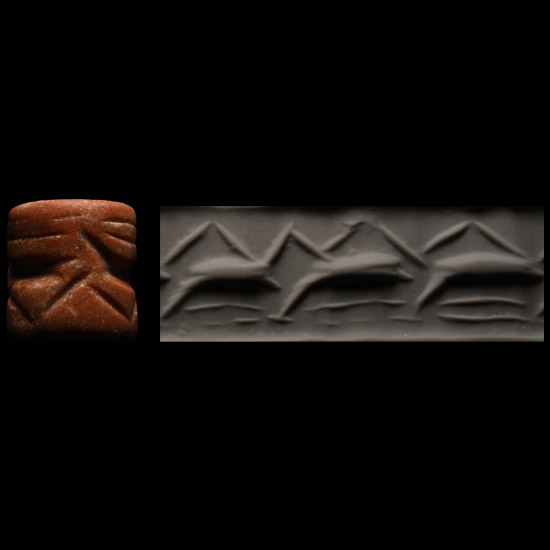
Jemdet Nasr Type Pink Jasper Cylinder Seal with Ibexes
Circa 3100-2900 B.C.Sold for (Inc. bp): £195
Carved with a band of stylised running horned quadrupeds; supplied with a museum-quality impression. 10.7 grams, 18.76 mm
Ex H. Norri collection, Milton Keynes, Bedfordshire, UK, collected in the 1980s-1990s. Accompanied by a previous typed catalogue information card. -
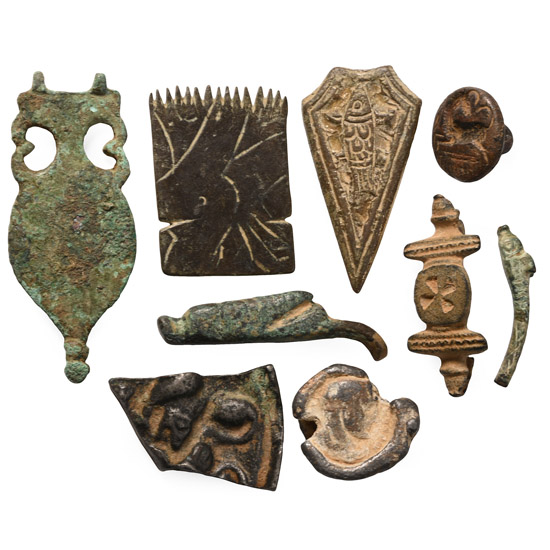
Western Asiatic and Other Bronze Artefact Group
Circa 1st millennium A.D. and laterSold for (Inc. bp): £39
Comprising: the body of a bow brooch, a kite-shaped mount with a fish, a beast-head mount or finial, a late Roman military belt strap end of 'amphora' type; a stamp seal with an ibex, and others. 76 grams total, 16-52 mm
From the collection of a gentleman, acquired on the London art market in the 1990s.
Amphora strap ends were common in the late Roman army and have been found in great numbers in Roman Britain. They are so-called because their shape resembles an amphora with handles on either side. In reality, they might represent phallic symbols, in keeping with the widespread use of such imagery in the Roman military. -
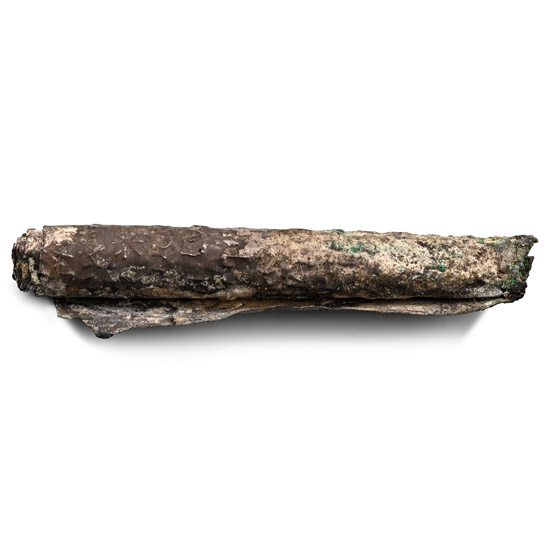
Western Asiatic Silver Scroll
Early 1st millennium A.D.Sold for (Inc. bp): £364
Rectangular thin silver sheet tightly wound into a cigar-shaped amulet; stamped starburst and other motifs to outer face 1.89 grams, 45 mm
From the collection of a gentleman, acquired on the London art market in the 1990s.

