-
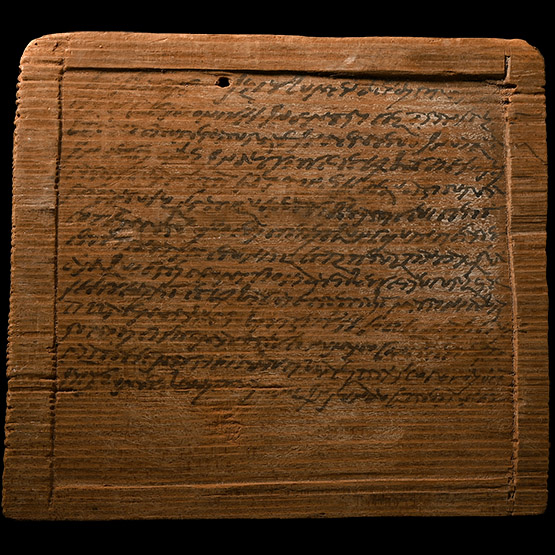
Roman Wooden Tablet with a Sales Contract Made on the Goretiano Estate in the Province of Byzacena
4th century A.D.Sold for (Inc. bp): £6,240
Well preserved rectangular tablet made of cedar wood with a recessed panel to the inner face, the outer face flat and not inscribed; the second and last tablet of a Roman sales contract; the inner face inscribed in Roman cursive script using ink and calamus, fourteen lines of Roman cursive script written within the recess; two small holes both near the upper and lower rim (for binding the tablets of this document together); the text consists of dispositions regarding the sale of a special category of land (gemiones) and ends with the obligatory stipulatio formula: 'stipulata est Macrinia B., spopondidit Iulius L. – Macrinia B. stipulated, Iulius L. (as the vendor) gave the counter promise'. 44.3 grams, 15.6 x 14.1 cm
Acquired by Albert Sfez in the early 1950s. Formerly the property of Monsieur Alain Sfez, a Belgian collector; acquired by gift from his father, Albert Sfez, in 1965. Acquired by a London dealer in 1973. From an important London collection since 1975; thence by descent. Accompanied by a copy of an illustrated academic report by Professor Dr phil. Peter Rothenhöfer. -
.jpg)
Roman Wooden Wax Tablets from a Codex
Circa 2nd-3rd century A.D.Sold for (Inc. bp): £9,100
Two well-preserved rectangular wax tablets of a polyptych, each made of dark hardwood, probably acacia; the inner leaf in two adjoining parts, with recessed panels on both sides, covered with dark layers of wax; the second is the rear cover of the polyptych, with a recessed wax covered writing panel to the inner face, the outer face flat and not inscribed; both tablets with two pairs of holes on the left frame for linking them together; remains of stylus engraved Greek script on all three writing panels; on the second tablet 11 lines in cursive Greek script, mentioning inter alia a gymnasiarchos, a local magistrate in Roman Egypt, probably from an accounting codex. 263 grams total, 18.6 x 17 cm
Property of a North London gentleman; previously in the Dean family collection since 1975. Accompanied by a copy of an illustrated academic report by Professor Dr phil. Peter Rothenhöfer. This lot has been checked against the Interpol Database of stolen works of art and is accompanied by search certificate number no.13177-248472.
Wax tablets written in Greek or Latin, were used by Romans as account registers (codices accepti et expensi); for transactions (for example, the tablets of the banker Lucius Caecilius Iucundus found in Pompeii); for lists of goods, inventories, and notes to be kept and archived; for Roman magistrates to annotate the salient events of their bureaucratical activities; for writing letters; for drawing up legal texts of various kinds: legacies, declarations of births and citizenship, reports of trials and diplomata militaria. -
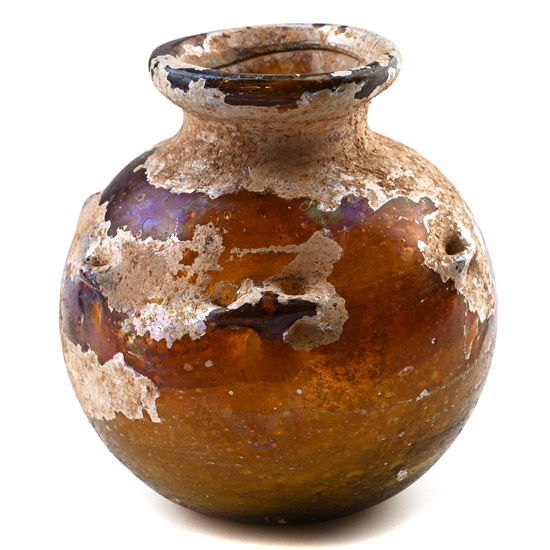
Roman Honey-Coloured Glass Jar with Fine Iridescence
1st-4th century A.D.Sold for (Inc. bp): £1,040
Squat in profile with trumpet-shaped neck and mouth, rolled rim, dimple base, pinched lobes to the shoulder; some iridescence. 125 grams, 90 mm high
From a specialist collection of glass, acquired from dealerships during the 1990s. -
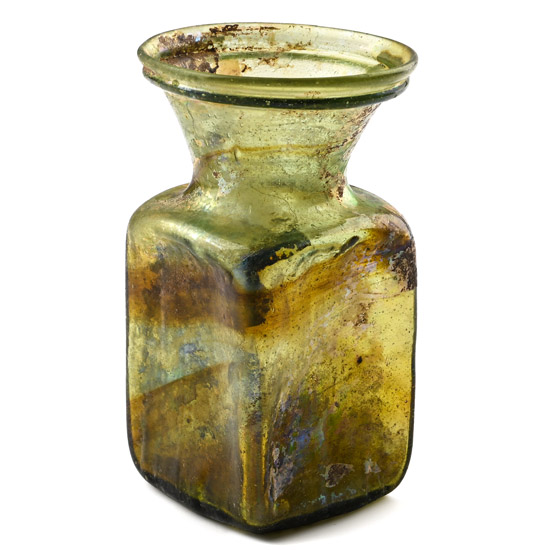
Roman Square Glass Flask
1st-4th century A.D.Sold for (Inc. bp): £338
With a dimple to the underside, a square-section body and a wide everted rim with a step to the edge. 81 grams, 93 mm
From a specialist collection of glass, acquired from dealerships during the 1990s. -
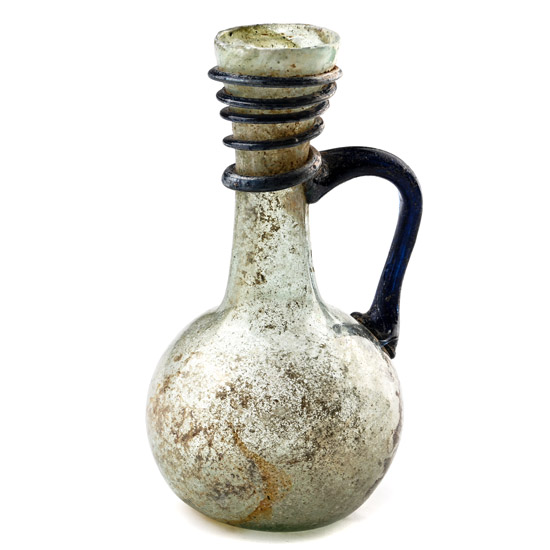
Roman Translucent Glass Jug with Trail
1st-4th century A.D.Sold for (Inc. bp): £1,170
With a dimple base; applied trail to the flared mouth forming a handle. 38 grams, 10 cm
From a specialist collection of glass, acquired from dealerships during the 1990s. -
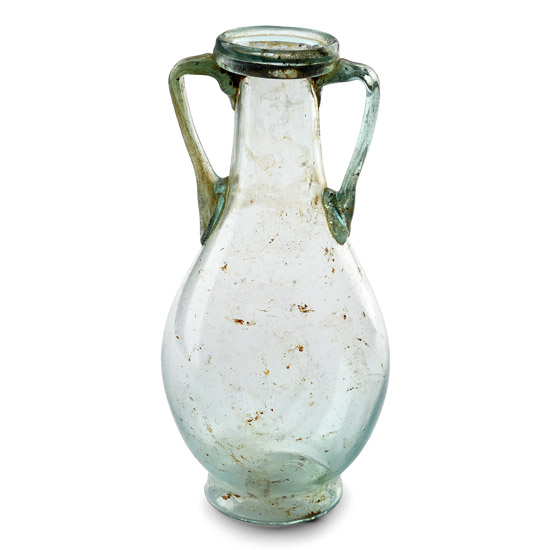
Roman Translucent Glass Amphora
1st-3rd century A.D.Sold for (Inc. bp): £624
With sloping, rounded shoulder, a globular body tapering to a flared base, a cylindrical neck and a stepped rim, applied handles. 69 grams, 12.9 cm
From a specialist collection of glass, acquired from dealerships during the 1990s. -
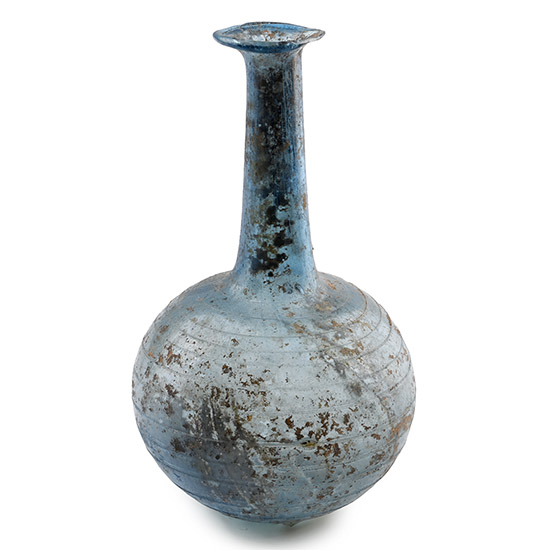
Roman Blue Glass Unguentarium with Trail
1st-4th century A.D.Sold for (Inc. bp): £624
With a spherical body, a tall tubular neck with everted rolled rim; fine applied trails across the body. 29.4 grams, 11.1 cm
From a specialist collection of glass, acquired from dealerships during the 1990s. -
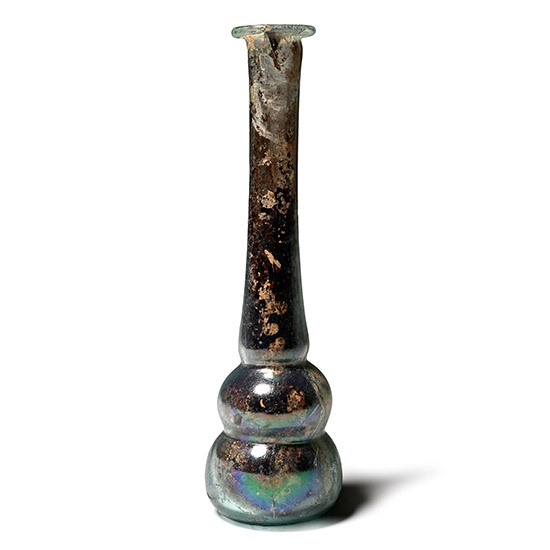
Roman Tall Glass Flask with Iridescence
2nd-3rd century A.D.Sold for (Inc. bp): £468
Tall unguentarium with a waisted body and tubular neck with rolled rim. 46 grams, 14.7 cm
Private collection, 1990s-early 2000s. -
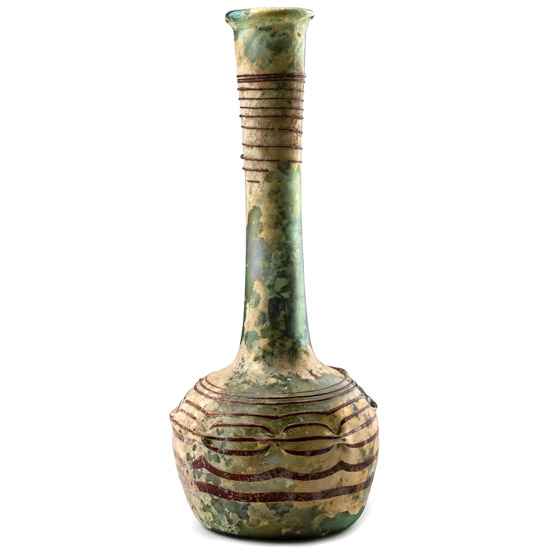
Roman Tall Glass Flask with Red Trail
1st-4th century A.D.Sold for (Inc. bp): £910
With bulbous body, tall tubular neck, broad everted rim; applied red glass trail at upper neck and from shoulder to base; extensive iridescence. 147 grams, 20.1 cm
From a specialist collection of glass, acquired from dealerships during the 1990s. -
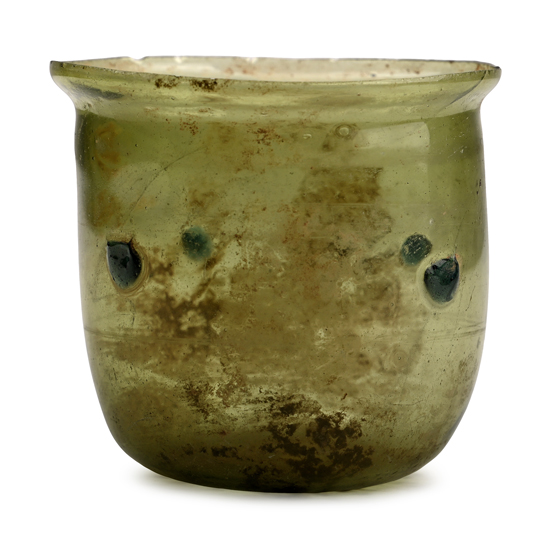
Roman Green Glass Cup with Dark Blue Applied Decoration
3rd-4th century A.D.Sold for (Inc. bp): £910
Drum-shaped jar with everted rim and dimple base; applied blue glass pellets to the equator. 71.7 grams, 86 mm
Ex German art market, 2000s. Acquired from an EU collector living in London. From the collection of a Surrey, UK, gentleman. -
.jpg)
Roman Cobalt Blue Glass Unguentarium
1st-3rd century A.D.Sold for (Inc. bp): £910
Delicate cobalt-blue glass unguentarium comprising a piriform body with slight constriction at the base of the cylindrical neck, everted folded rim and a slightly concave base; traces of earthly deposits to the surface. 15 grams, 88 mm
Private collection, 1990s-early 2000s. -
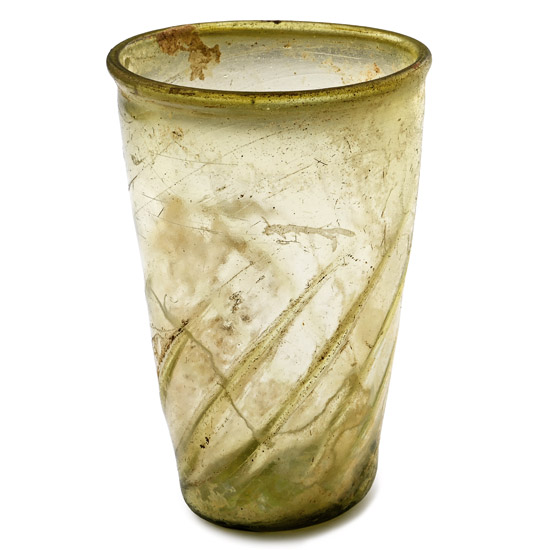
Roman Green Glass Beaker with Decorated Body
2nd century A.D.Sold for (Inc. bp): £442
With straight sides narrowing to the dimpled base, a rolled rim; the body decorated with diagonal ribbed lines. 62 grams, 11.5 cm
From a specialist collection of glass, acquired from dealerships during the 1990s.

