-
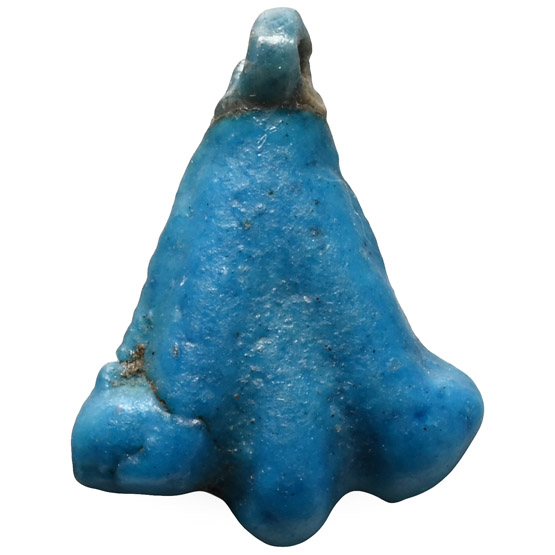
Egyptian Faience Lotus Flower Amulet
18th Dynasty, Amarna Period, 1353-1336 B.C.Sold for (Inc. bp): £59
A blue glazed composition pendant in the form of a lotus, with some repair to the suspension loop. 0.26 grams, 14 mm
Repaired.
Ex early 20th century London collection. -
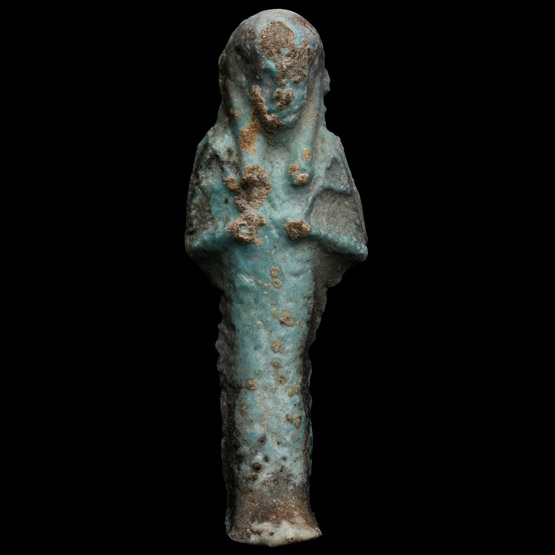
Egyptian Blue-Glazed Faience Shabti
Ptolemaic Period, 332-30 B.C.Sold for (Inc. bp): £117
Plano-convex in section with plain back, mummiform type with agricultural tools. 9.43 grams, 70 mm
Acquired on the UK art market before 2000. Property of an Essex, UK, gentleman. -
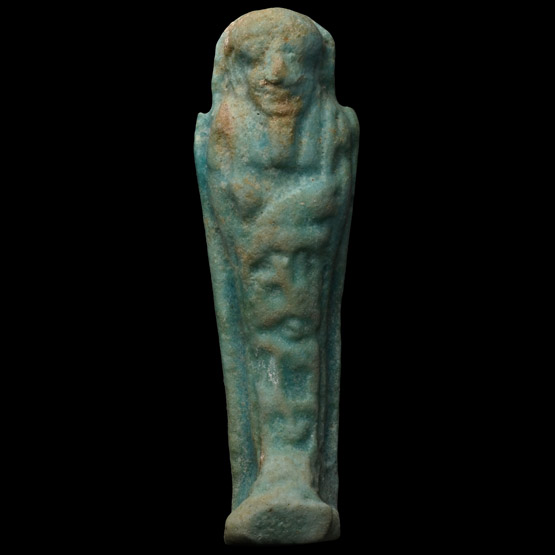
Egyptian Blue-Glazed Faience Shabti with Hieroglyphs
Late Period-Ptolemaic Period, 664-30 B.C.Sold for (Inc. bp): £144
Plano-convex in section with dorsal plaque, impressed hieroglyphs to lower body. 22.14 grams, 72 mm
Acquired on the UK art market before 2000. Property of an Essex, UK, gentleman. -
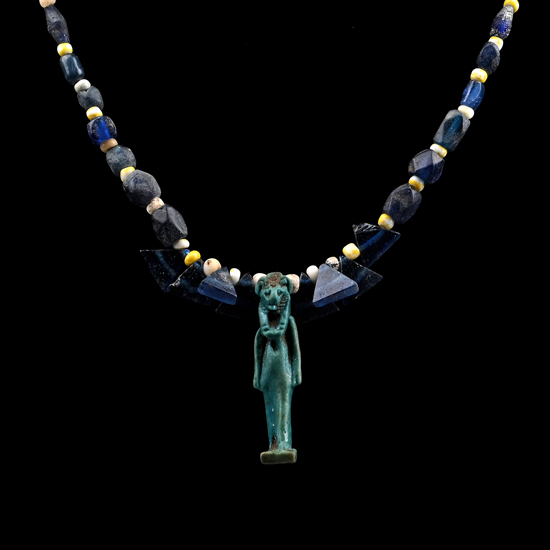
Egyptian Glass Bead Necklace with Large Sekhmet Faience Amulet
Late Period, 664-332 B.C.Sold for (Inc. bp): £1,170
Restrung group of polyhedral and tubular beads in fusiform, biconvex, tubular and other types; triangular dangles and pendant of cat-headed Sekhmet. 26 grams, 44 cm, amulet: 50 mm
From the collection of a gentleman, acquired on the London art market in the 1990s. -
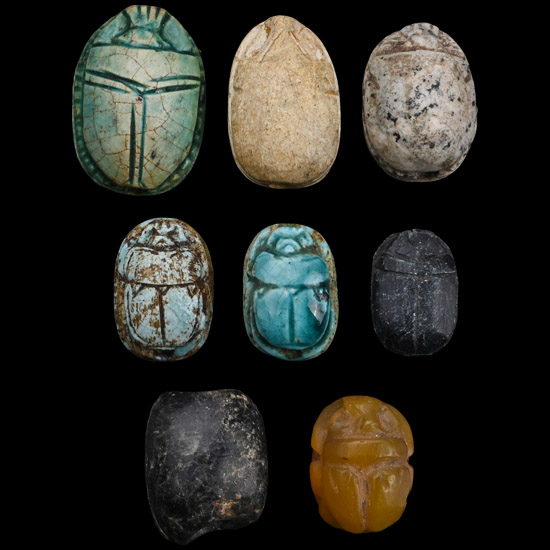
Egyptian Steatite and Other Scarab Collection
New Kingdom-Late Period, 1550-332 B.C.Sold for (Inc. bp): £585
Including carnelian, faience and other materials, some with hieroglyphs to underside. 17.1 grams total, 13-19 mm
From the collection of a gentleman, acquired on the London art market in the 1990s. -
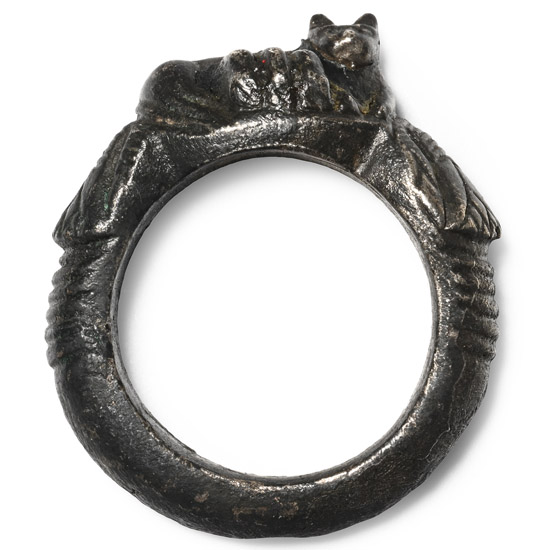
Romano-Egyptian Silver Ring with Cat and Kittens
Roman Period, 30 B.C.-323 AD.Sold for (Inc. bp): £468
D-section hoop with ribbed shoulder, papyrus-stem detailing and reclining cat with suckling kittens. 14.92 grams, 28.49 mm overall, 17.35 mm internal diameter (approximate size British M1/2, USA 6 1/4, Europe 13.09, Japan 12)
Ex Essex, UK, gentleman's collection, 1990s. -
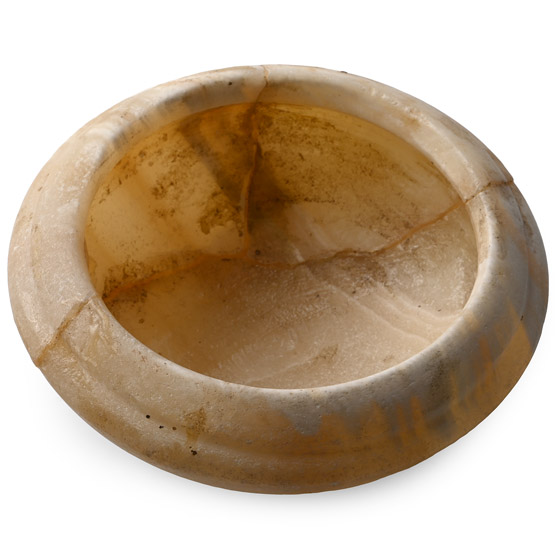
Egyptian Alabaster Bowl
2nd-1st millennium B.C.Sold for (Inc. bp): £260
Of conical profile with flattened base, carinated shoulder and stepped rounded rim. 369 grams, 11 cm wide
From a West Country, UK, collection, 1980-2020s. -
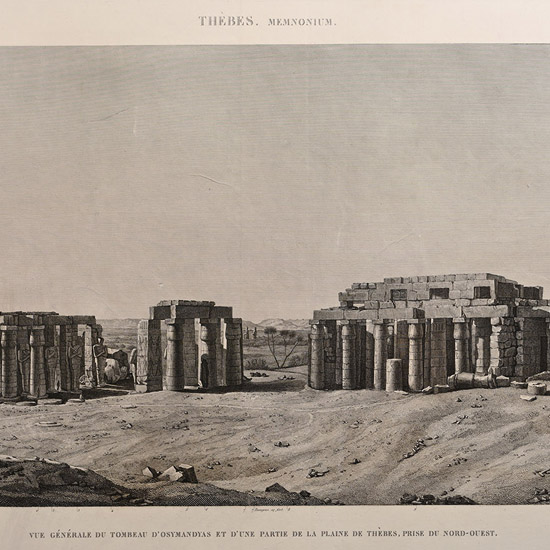
Very Large Egyptian Expedition Lithograph of the Memnonium at Thebes
Early 19th century A.D.Sold for (Inc. bp): £91
Proof etching on laid paper of plate 23 from Vol.II of Description de l'Égypte : ou, Recueil des observations et des recherches qui ont été faites en Égypte pendant l'expédition de l'armée française. entitled Thèbes. Memnonium. Vue générale du tombeau d'Osymandyas et d'une partie de la plaine de Thèbes prise du ord-ouest. 226 grams, 105 x 69.5 cm
From the collection of a North American priest. Acquired between 1981-1996. Property of a North American collector.
Produced between February 1802 and 1830 on the orders of Napoleon Bonaparte; published between 1809 and 1828. Just 1,000 copies were distributed to various institutions, printed on laid paper with an 'Égypte ancienne et moderne' watermark. The book is subtitled Recueil des observations et des recherches qui ont été faites en Égypte pendant l’expédition de l’Armée française, publié par les ordres de Sa Majesté l’Empereur Napoléon le Grand (Gathering of observations and discoveries which were made in Egypt during the expedition of the French army, published on the orders of His Majesty the Emperor Napoleon the Great). It was the world's first encyclopedia devoted exclusively to the remains of ancient Egypt. The plates of this book are the first to present the archaeological sites of Thebes (Luxor). The "Memnonium" is the Greek name for the mortuary temple of Ramesses II, now known as the Ramesseum. -
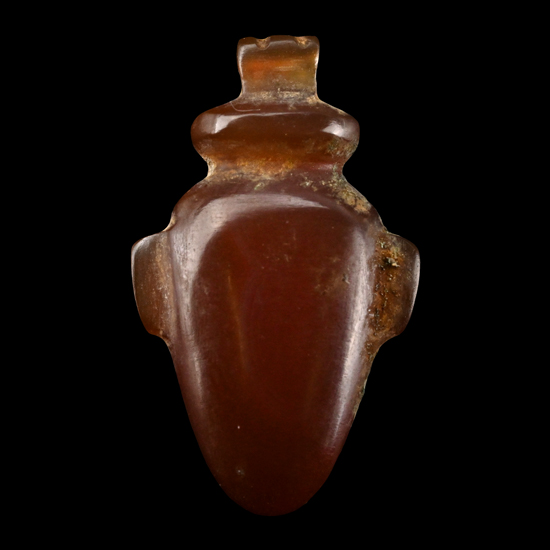
Egyptian Carnelian Bifacial Heart Amulet
Late Period, 664-332 B.C.Sold for (Inc. bp): £156
Carved with lateral triangular lugs and a ribbed bale. 1.43 grams, 19 mm
Ex early 20th century collection. -
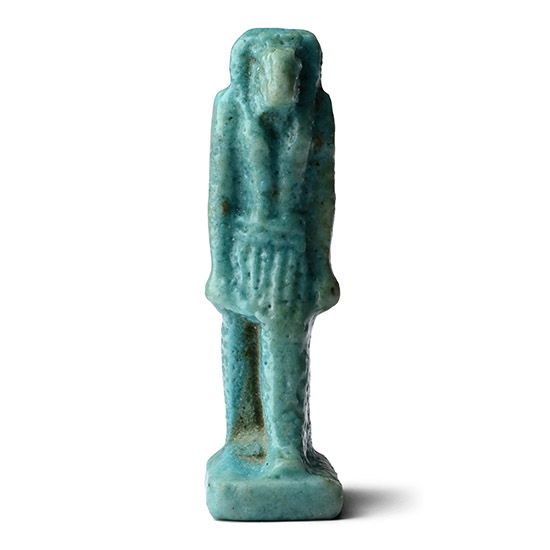
Egyptian Faience Thoth Amulet
Late Period, 664-332 B.C.Sold for (Inc. bp): £351
Modelled in the round as the ibis-headed human figure of Thoth, with a plain dorsal pillar, pierced at the top for suspension. 8.71 grams, 48.29 mm
Ex early 20th century London, UK, collection.
The ibis-headed form of Thoth is particularly significant in funerary contexts, as this depiction of the god frequently appears in Weighing of the Heart scenes, where the dead are judged before a divine tribunal for entry into the Hereafter. Thoth's role was to record the final judgement, which determined whether the deceased had led a virtuous life. -
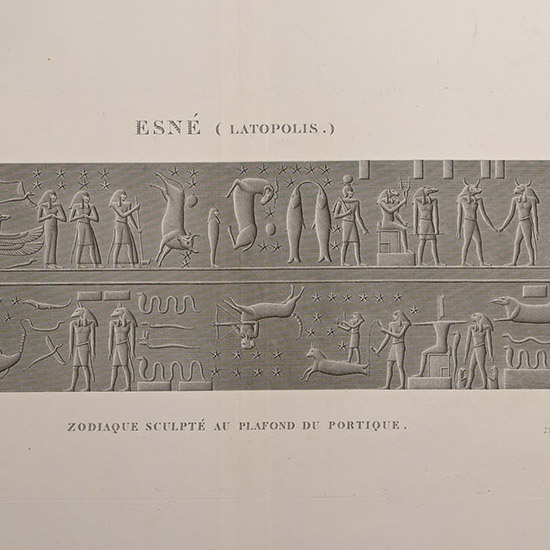
Very Large Egyptian Expedition Lithograph of Reliefs at Esna
Early 19th century A.D.Sold for (Inc. bp): £1,430
Proof etching on laid paper of plate 79 from Vol .I of Description de l'Égypte : ou, Recueil des observations et des recherches qui ont été faites en Égypte pendant l'expédition de l'armée française. entitled Esné (Latopolis) Zodiaque sculpté au plafond du portique. 187 grams, 105 x 70 cm
From the collection of a North American priest. Acquired between 1981-1996. Property of a North American collector.
Produced between February 1802 and 1830 on the orders of Napoleon Bonaparte; published between 1809 and 1828. Just 1,000 copies were distributed to various institutions, printed on laid paper with an 'Égypte ancienne et moderne' watermark. The book is subtitled Recueil des observations et des recherches qui ont été faites en Égypte pendant l’expédition de l’Armée française, publié par les ordres de Sa Majesté l’Empereur Napoléon le Grand (Gathering of observations and discoveries which were made in Egypt during the expedition of the French army, published on the orders of His Majesty the Emperor Napoleon the Great). It was the world's first encyclopedia devoted exclusively to the remains of ancient Egypt. The plates of this book are the first to present the archaeological sites of Thebes (Luxor). The Temple of Khnum at Esna in Upper Egypt has elements from the New Kingdom, but most of it dates to the Ptolemaic and Roman periods. This elaborate zodiac dates to the reign of Ptolemy III. -
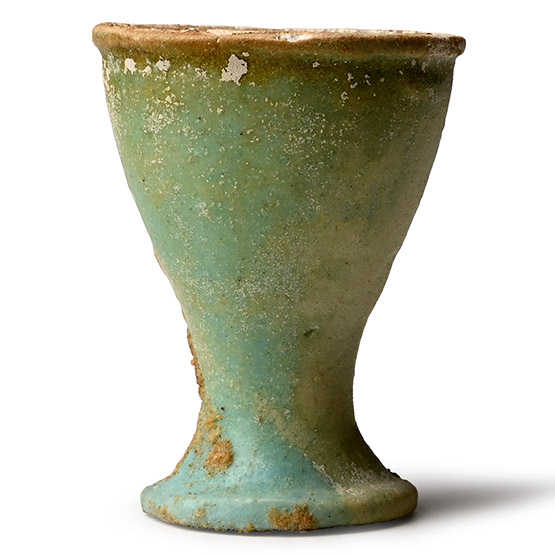
Egyptian Blue Faience Cup
Late Period-Ptolemaic Period, 664-30 B.C.Sold for (Inc. bp): £338
Conical in profile with a wide base and a shallow, hollow interior. 56.8 grams, 56 mm
Private collection, USA and Switzerland, acquired in the late 1980s-early 1990s; thence by descent.

