-
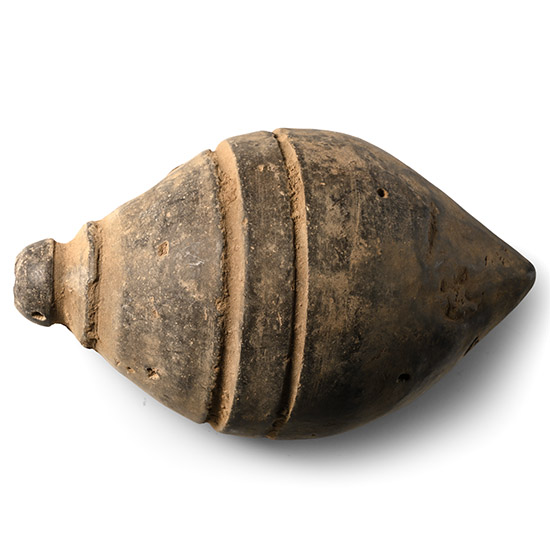
Byzantine 'Greek Fire' Ceramic Fire Bomb or Hand Grenade
9th-11th century A.D.Sold for (Inc. bp): £195
Ovoid in profile with rounded base, two deep circumeferential grooves on the body; intended to be filled with explosive liquid and a wick, and used as a hand grenade. 604 grams, 14.3 cm
From a specialist collection, London, UK, 1990-2000s. Accompanied by an academic paper by military specialist Dr Raffaele D'Amato, dated 15 July 2019 and titled 'Eastern Roman Empire - Greek Fire Bomb or Hand Grenade (μεσαίον kακάβιον) 9th-11th century AD'.
Apart from the use of siphons or manual flame-throwers called cheirosiphona, special corps of Roman soldiers employed terracotta grenades, in the form of small jars, abundantly evidenced in archaeological excavations. They were called μεσαία kακαβιά or κυτροκακάβια, where the former had a bulbous shape and the latter a more cylindrical form. -
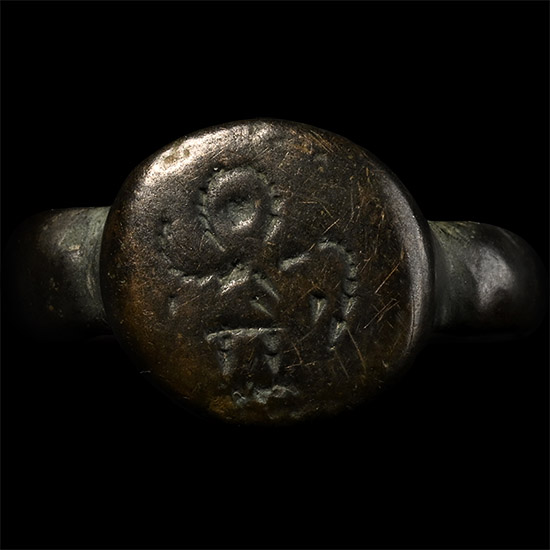
Byzantine Bronze Ring with Warrior Saint
11th-12th century A.D.Sold for (Inc. bp): £91
With an expanding D-section hoop and a raised discoid bezel with a stylised nimbate figure holding a spear and a shield. 5.15 grams, 22.16 mm overall, 19.05 mm internal diameter (approximate size British P, USA 7 1/2, Europe 16.23, Japan 15)
Acquired on the UK and EU art market before 2000. From the private collection of a Surrey, UK, gentleman.
These banded rings, made of bronze sheet with a flattened ellipsoidal head, could be decorated with geometric or animal ornaments executed by shallow carving. In this circumstance, the bezel is decorated with the stylised image, most probably of a military saint, who was asked for protection and blessing. -
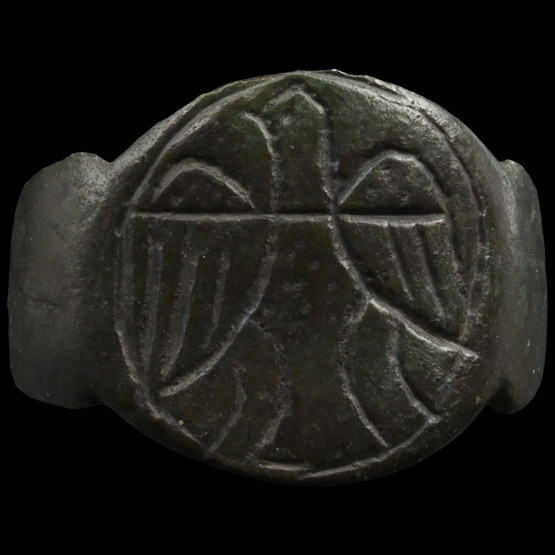
Byzantine Bronze Expandable Ring with Spread Eagle
12th-15th century A.D.Sold for (Inc. bp): £85
Flat-section hoop with butted ends, discoid plaque with low-relief bird in flight motif. 3.19 grams, 20.00 mm overall, 18.43 mm internal diameter (approximate size British K, USA 5 1/4, Europe 9.95, Japan 9)
Ex German art market, 2000s. Acquired from an EU collector living in London. From the collection of a Surrey, UK, gentleman. -
.jpg)
Byzantine Bronze Ring with Warrior Saints
11th-12th century A.D.Sold for (Inc. bp): £65
Comprising an expanding hoop and a rectangular bezel with two nimbate figures holding weapons; hoop split. 5.20 grams, 19.41 mm overall, 16.43 mm internal diameter (approximate size British I 1/2, USA 4 1/2, Europe 8.07, Japan 7)
Acquired on the UK and EU art market before 2000. From the private collection of a Surrey, UK, gentleman.
This Western Balkan category of rings gradually widens towards the rectangular bezel, which is slightly raised above the ring and flattened. The bezel is decorated with stylised images, often military saints, who were asked for protection and blessing. -
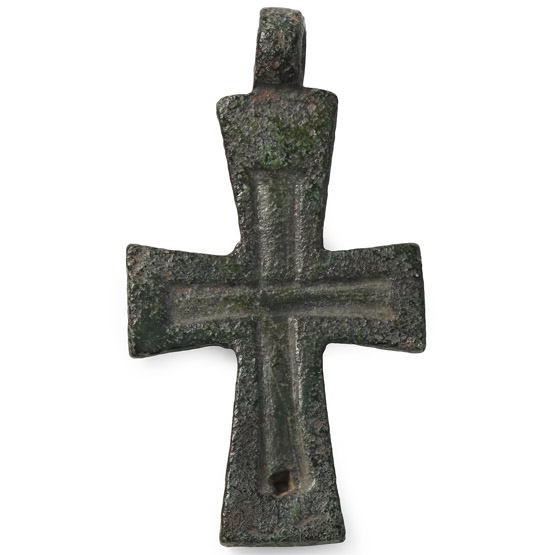
Byzantine Bronze Pendant Cross
10th-12th century A.D.Sold for (Inc. bp): £104
Expanding-arm cross with incised voided motif, pierecd to accept a suspension ring for a dangle. 3.48 grams, 33 mm
Ex German art market, 2000s. Acquired from an EU collector living in London. From the collection of a Surrey, UK, gentleman. -
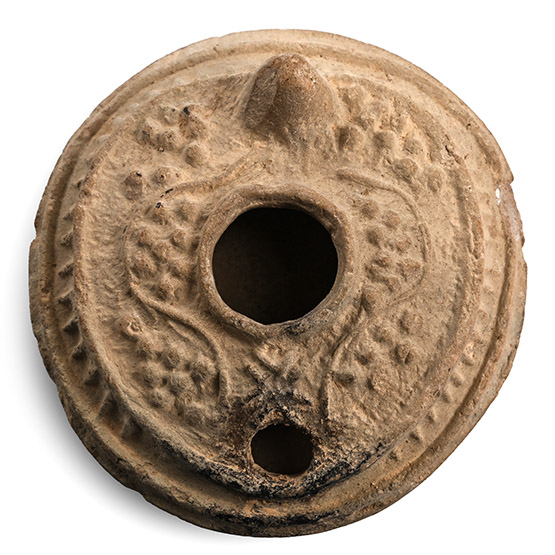
Byzantine Terracotta Oil Lamp with Grape Vines
5th-7th century A.D.Sold for (Inc. bp): £111
With a discoid body and spike handle; circular filling hole enclosed within bands of raised grape-and-vine motifs, hatched shoulder, low-relief starburst to the base. 109 grams, 88 mm
From the Lloyd and Jeanne Raport collection, Washington, D.C. and Florida, USA, formed between 1972-2000. Acquired through Bonhams, London, UK. -
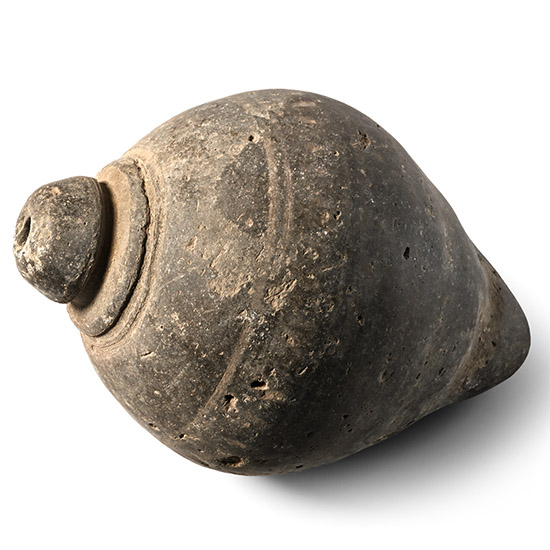
Byzantine 'Greek Fire' Ceramic Fire Bomb or Hand Grenade
9th-11th century A.D.Sold for (Inc. bp): £104
Piriform in profile with an undecorated body; intended to be filled with explosive liquid and a wick, and used as a hand grenade. 484 grams, 12.5 cm
From a specialist collection, London, UK, 1990-2000s. Accompanied by an academic paper by military specialist Dr Raffaele D'Amato, dated 15 July 2019 and titled 'Eastern Roman Empire - Greek Fire Bomb or Hand Grenade (μεσαίον kακάβιον) 9th-11th century AD'.
Apart from the use of siphons or manual flame-throwers called cheirosiphona, special corps of Roman soldiers employed terracotta grenades, in the form of small jars, abundantly evidenced in archaeological excavations. They were called μεσαία kακαβιά or κυτροκακάβια, where the former had a bulbous shape and the latter a more cylindrical form. -
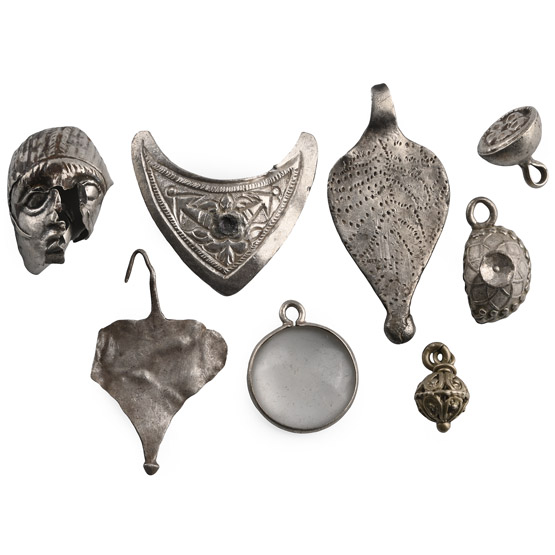
Byzantine Silver Artefact Group
6th-15th century A.D. and laterSold for (Inc. bp): £111
Including a teardrop pendant, sheet-silver miniature mask, plano-convex crystal lens and other items. 12.81 grams total, 11-40 mm
Ex German art market, 2000s. Acquired from an EU collector living in London. From the collection of a Surrey, UK, gentleman. -
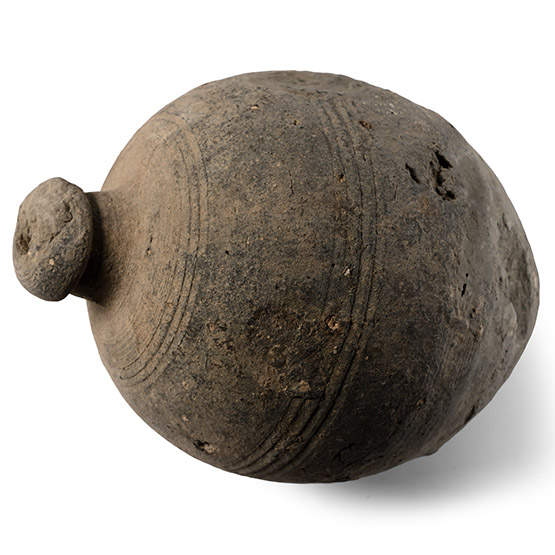
Byzantine 'Greek Fire' Ceramic Fire Bomb or Hand Grenade
9th-11th century A.D.Sold for (Inc. bp): £124
Ovoid in profile with linear decoration; intended to be filled with explosive liquid and a wick, and used as a hand grenade. 805 grams, 13 cm
From an important specialist collection, London, UK, 1990s onwards. Accompanied by an academic paper by military specialist Dr Raffaele D'Amato, dated 15 July 2019 and titled 'Eastern Roman Empire - Greek Fire Bomb or Hand Grenade (μεσαίον kακάβιον) 9th-11th century AD'.
Apart from the use of siphons or manual flame-throwers called cheirosiphona, special corps of Roman soldiers employed terracotta grenades, in the form of small jars, abundantly evidenced in archaeological excavations. They were called μεσαία kακαβιά or κυτροκακάβια where the former had a bulbous shape and the latter a more cylindrical form. -
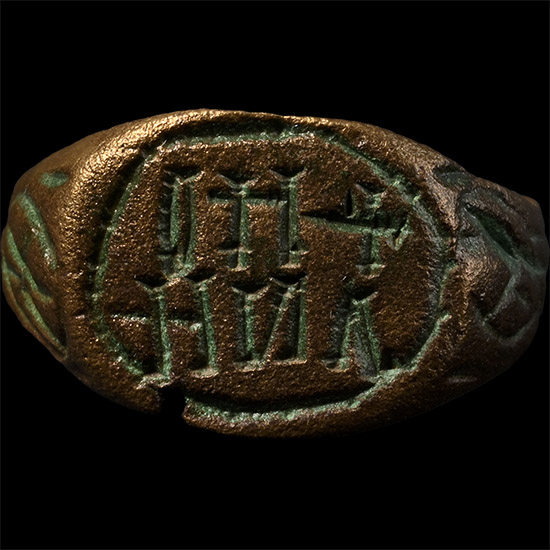
Byzantine Bronze Ring with Inscriptions
11th century A.D.Sold for (Inc. bp): £98
Flat-section hoop with incuse foliate designs on each of the shoulders, oval bezel with inscription in two lines: 'ΙΗX ΗΝΑ' = Ἰη[σοῦς] Χ[ριστός] H N[I]KA' = Jesus Christ and the Victory. 5.79 grams, 23.02 mm overall, 19.43 mm internal diameter (approximate size British T, USA 9 1/2, Europe 21.26, Japan 20)
Acquired on the UK and EU art market before 2000. From the private collection of a Surrey, UK, gentleman.
In this category of rings, the oval hoop gradually widens into a full shoulder and a massive, flattened bezel. The bezel is an ellipsoidal field, decorated with a dedicatory inscription to Christ. The letters are roughly engraved. This ring is likely to have come from a Byzantine-era provincial Balkan workshop. -
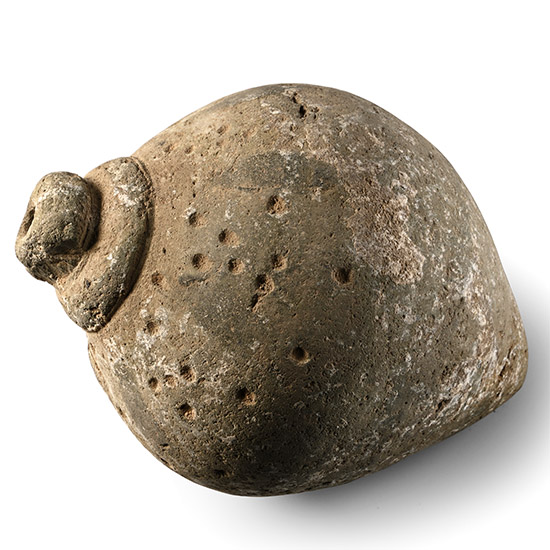
Byzantine 'Greek Fire' Ceramic Fire Bomb or Hand Grenade
9th-11th century A.D.Sold for (Inc. bp): £85
Ovoid in profile with incised dot decoration on the upper body; intended to be filled with explosive liquid and a wick, and used as a hand grenade. 912 grams, 15 cm
From a specialist collection, London, UK, 1990-2000s. Accompanied by an academic paper by military specialist Dr Raffaele D'Amato, dated 15 July 2019 and titled 'Eastern Roman Empire - Greek Fire Bomb or Hand Grenade (μεσαίον kακάβιον) 9th-11th century AD'.
Apart from the use of siphons or manual flame-throwers called cheirosiphona, special corps of Roman soldiers employed terracotta grenades, in the form of small jars, abundantly evidenced in archaeological excavations. They were called μεσαία kακαβιά or κυτροκακάβια, where the former had a bulbous shape and the latter a more cylindrical form. -
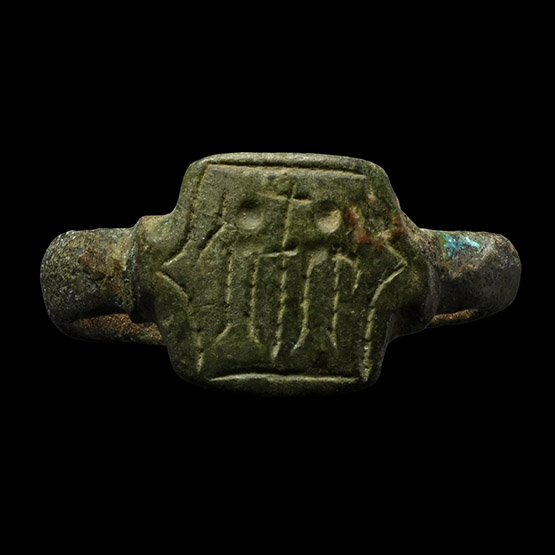
Byzantine Bronze Ring with Saints
12th-13th century A.D.Sold for (Inc. bp): £312
Comprising a D-section hoop and a hexagonal bezel with two stylised figures flanking a cross. 5.33 grams, 25.53 mm overall, 21.73 mm internal diameter (approximate size British O 1/2, USA 7 1/4, Europe 15.61, Japan 15)
Acquired on the UK and EU art market before 2000. From the private collection of a Surrey, UK, gentleman.
The bronze ring is compactly worked from a single bar. The ring link, hemispherical in section, broadens at the top, where the ring bezel was hammered. The decoration inscribed in the hexagon shows in the upper field a military saint, surrounded by lines running parallel to the hexagon, which form a further decorative element. The bezel of these rings was decorated with stylised images, very often military saints, who were asked for protection and blessing. They are usually represented as one or two human figures, schematically depicted, inscribed in a circle, decorating the bezel.

