-
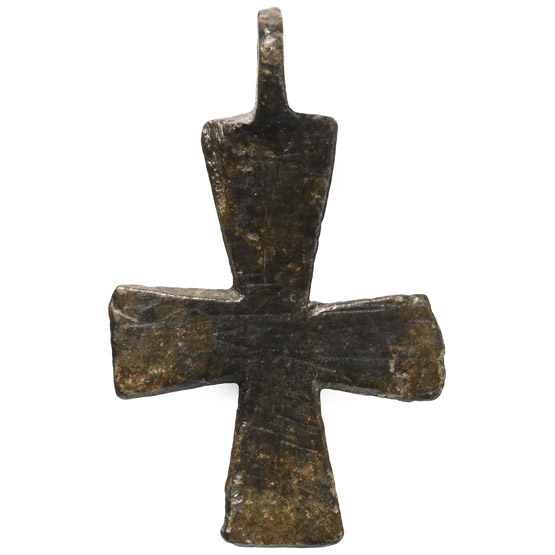
Byzantine Bronze Pendant Cross
6th-8th century A.D.Sold for (Inc. bp): £72
Expanding-arm type with integral loop. 2.82 grams, 32 mm
Ex German art market, 2000s. Acquired from an EU collector living in London. From the collection of a Surrey, UK, gentleman. -
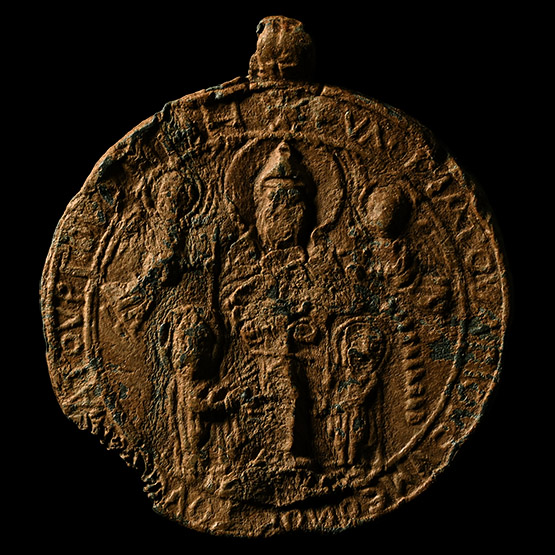
Byzantine Lead Pendant with Simeon Stylites
12th century A.D.Sold for (Inc. bp): £715
Discoid with integral loop, tondo with figural scene of Simeon Stylites standing on his column, two worshippers at the base and two angels above; legend to the rim. 22 grams, 48 mm
Acquired in the mid 1980s-1990s. Private collection, Switzerland, thence by descent. Private collection, since the late 1990s. -
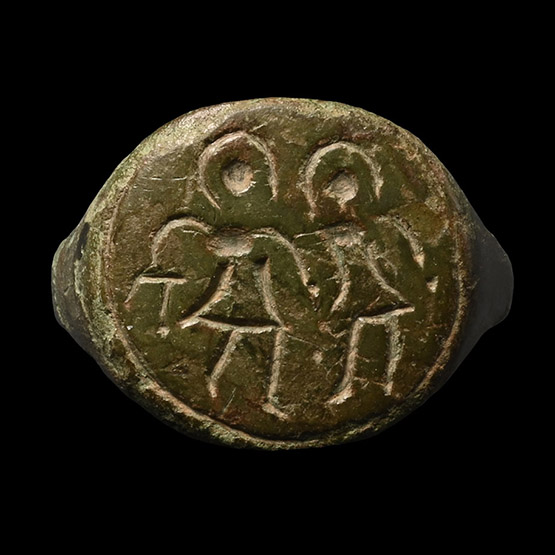
Byzantine Bronze Ring with Saints
11th century A.D.Sold for (Inc. bp): £442
Comprising a D-section hoop and a large discoid bezel with two stylised nimbate figures dressed in short tunics. 6.46 grams, 22.33 mm overall, 19.15 mm internal diameter (approximate size British R 1/2, USA 8 3/4, Europe 19.38, Japan 18)
Acquired on the UK and EU art market before 2000. From the private collection of a Surrey, UK, gentleman.
The oval hoop, in this category of rings, gradually widens into a full shoulder and massive flattened head. The bezel is ellipsoidal, decorated with stylised images, most probably of military saints, invoking protection and blessing. -
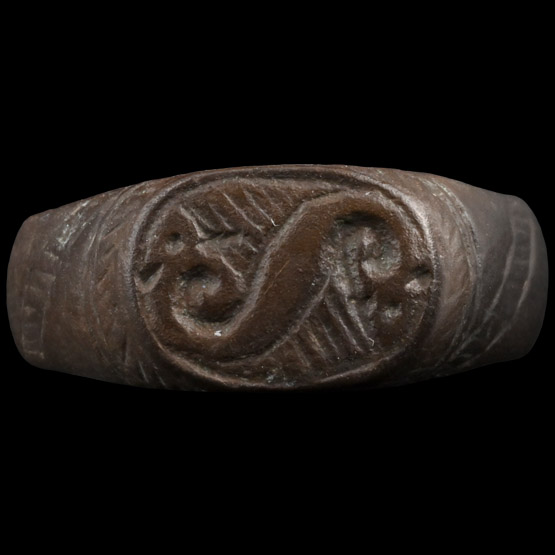
Byzantine Bronze Ring with S-Shaped Dragon
12th-15th century A.D.Sold for (Inc. bp): £124
With hatched border to the tiered bezel, reserved S-scroll on a hatched field. 8.03 grams, 26.07 mm overall, 18.72 mm internal diameter (approximate size British R 1/2, USA 8 3/4, Europe 19.38, Japan 18)
Ex German art market, 2000s. Acquired from an EU collector living in London. From the collection of a Surrey, UK, gentleman. -
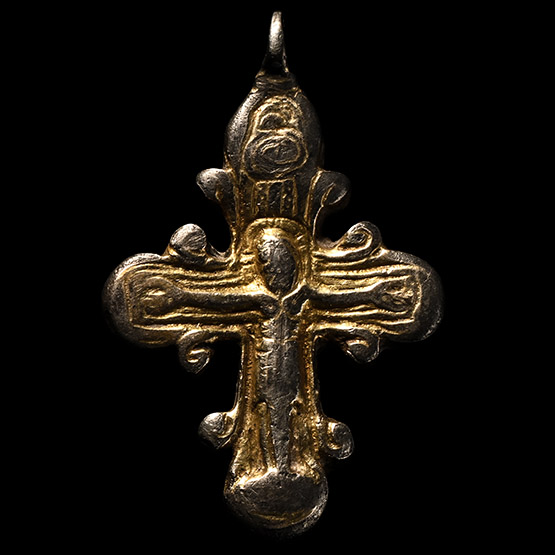
Byzantine Silver-Gilt Inscribed Pectoral Cross Pendant
Circa 12th-13th century A.D.Sold for (Inc. bp): £312
Cross pommee type with moulded detailing; obverse: Corpus Christi reserved on gilt field; reverse: legend with pointillé detailing 'KEBEHPωφPαΤω'. 11.2 grams, 40 mm
From a London, UK, private collection since the 1990s. -
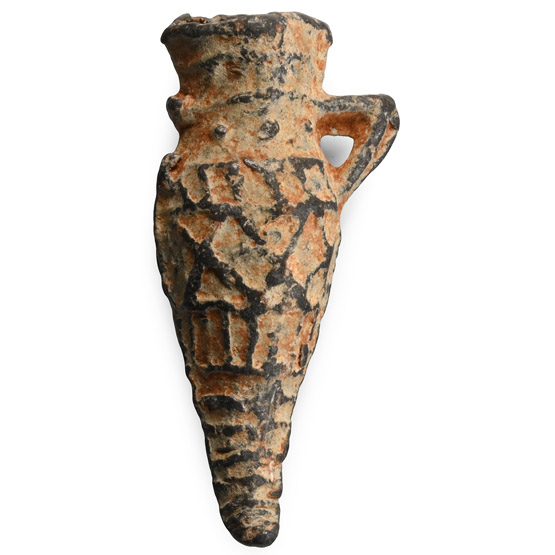
Byzantine Lead Decorated Pilgrim's Holy Water Ampulla
Circa 6th-8th century A.D.Sold for (Inc. bp): £46
Formed as a miniature amphora with flared mouth, triangular handle to the shoulder, raised hatched bands to the body. 18.2 grams, 40 mm
Ex German art market, 2000s. Acquired from an EU collector living in London. From the collection of a Surrey, UK, gentleman. -
.jpg)
Byzantine Bronze Ring with Scrolls
Circa 10th-12th century A.D.Sold for (Inc. bp): £91
Comprising a wide, keeled band with a flat plaque on each shoulder, raised bezel with a discoid plaque decorated with scroll motifs. 7.46 grams, 30.65 mm overall, 19.57 mm internal diameter (approximate size British R, USA 8 1/2, Europe 18 3/4, Japan 18)
Acquired on the UK art market before 2000. Property of an Essex, UK, gentleman. -
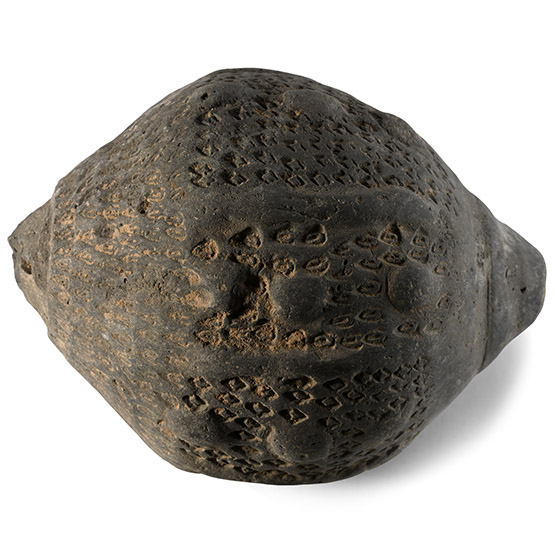
Byzantine 'Greek Fire' Ceramic Fire Bomb or Hand Grenade
9th-11th century A.D.Sold for (Inc. bp): £156
A piriform missile with domed filler-hole (chipped), segmented flanges to the sidewall and impressed texture; intended to be filled with explosive liquid and a wick, and used as a hand grenade. 844 grams, 13 cm
From an important specialist collection, London, UK, 1990s onwards. Accompanied by an academic paper by military specialist Dr Raffaele D'Amato, dated 15 July 2019 and titled 'Eastern Roman Empire - Greek Fire Bomb or Hand Grenade (μεσαίον kακάβιον) 9th-11th century AD'.
Apart from the use of siphons or manual flame-throwers called cheirosiphona, special corps of Roman soldiers employed terracotta grenades, in the form of small jars, abundantly evidenced in archaeological excavations. They were called μεσαία kακαβιά or κυτροκακάβια where the former had a bulbous shape and the latter a more cylindrical form. -
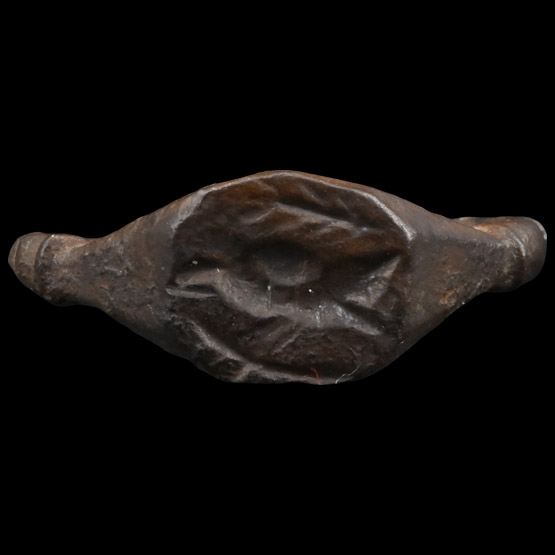
Byzantine Bronze Ring with Dove
12th-15th century A.D.Sold for (Inc. bp): £26
With slender hoop and baluster to each shoulder, ellipsoid bezel with incuse perching bird motif. 5.12 grams, 25.42 mm overall, 21.22 mm internal diameter (approximate size British U, USA 10, Europe 22.52, Japan 21)
Ex German art market, 2000s. Acquired from an EU collector living in London. From the collection of a Surrey, UK, gentleman. -
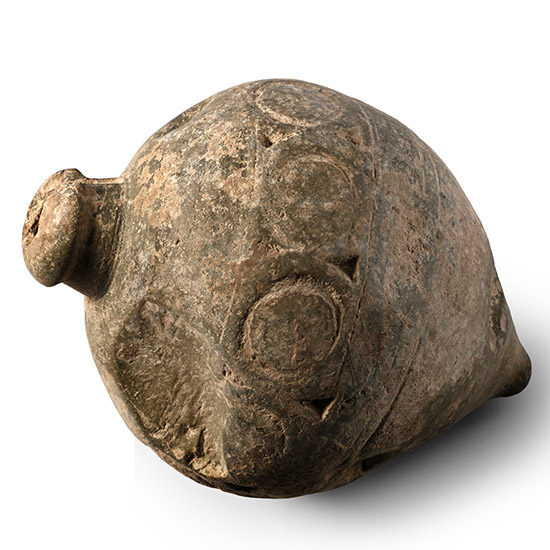
Byzantine 'Greek Fire' Ceramic Fire Bomb or Hand Grenade
9th-11th century A.D.Sold for (Inc. bp): £91
Piriform in profile with a band of impressed annulets on the shoulder; intended to be filled with explosive liquid and a wick, and used as a hand grenade. 533 grams, 11.9 cm
From a specialist collection, London, UK, 1990-2000s. Accompanied by an academic paper by military specialist Dr Raffaele D'Amato, dated 15 July 2019 and titled 'Eastern Roman Empire - Greek Fire Bomb or Hand Grenade (μεσαίον kακάβιον) 9th-11th century AD'.
Apart from the use of siphons or manual flame-throwers called cheirosiphona, special corps of Roman soldiers employed terracotta grenades, in the form of small jars, abundantly evidenced in archaeological excavations. They were called μεσαία kακαβιά or κυτροκακάβια, where the former had a bulbous shape and the latter a more cylindrical form. -
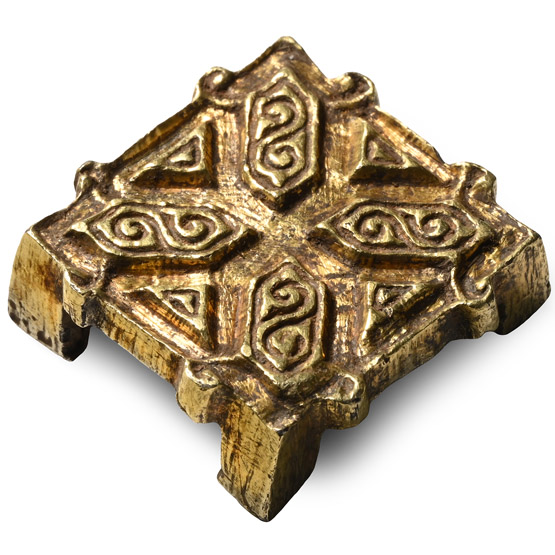
Byzantine Silver-Gilt Box Mount with Scroll Cross
Circa 10th-12th century A.D.Sold for (Inc. bp): £117
Square-shaped with low-relief motif of four hexagonal frames with scroll motif forming a cross; four attachment legs to the underside. 9.92 grams, 27 mm
Acquired on the UK art market before 2000. Property of an Essex, UK, gentleman. -
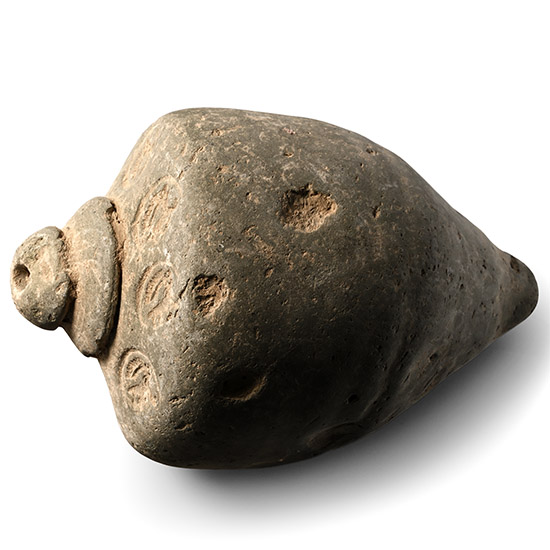
Byzantine 'Greek Fire' Ceramic Fire Bomb or Hand Grenade
9th-11th century A.D.Sold for (Inc. bp): £98
Piriform in profile with a band of impressed motifs above the shoulder; intended to be filled with explosive liquid and a wick, and used as a hand grenade. 500 grams, 13.2 cm
From a specialist collection, London, UK, 1990-2000s. Accompanied by an academic paper by military specialist Dr Raffaele D'Amato, dated 15 July 2019 and titled 'Eastern Roman Empire - Greek Fire Bomb or Hand Grenade (μεσαίον kακάβιον) 9th-11th century AD'.
Apart from the use of siphons or manual flame-throwers called cheirosiphona, special corps of Roman soldiers employed terracotta grenades, in the form of small jars, abundantly evidenced in archaeological excavations. They were called μεσαία kακαβιά or κυτροκακάβια, where the former had a bulbous shape and the latter a more cylindrical form.

