-
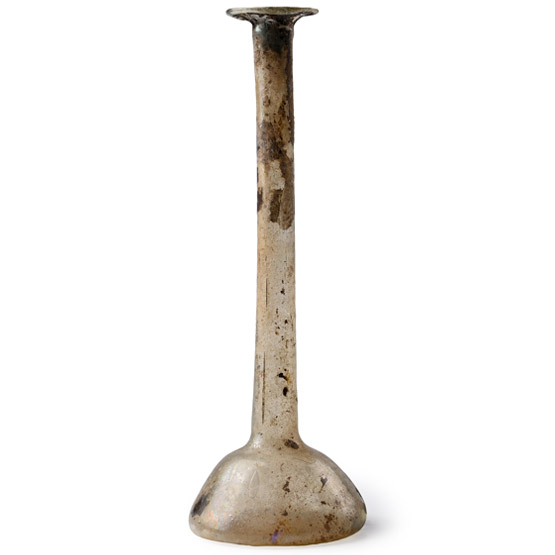
Roman Tall Glass Flask
Circa 1st-4th century A.D.Sold for (Inc. bp): £140
Comprising a squat conical body and long tubular neck with wide rim. 19.2 grams, 16 cm
From a London, UK, collection of glass, 1970-2000s. -
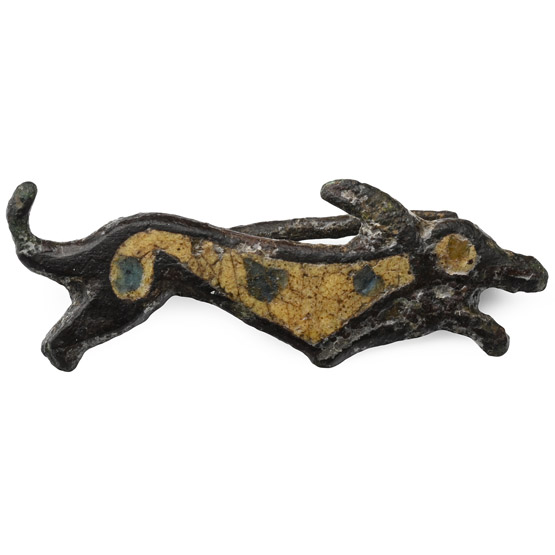
Roman Enamelled Dog Brooch
1st-3th century A.D.Sold for (Inc. bp): £390
Formed as a hound running right with panels to the eye, ear and flank to accept enamel; pin and catchplate to reverse. 4.23 grasms, 37 mm
Acquired on the UK art market. Private collection, England. -
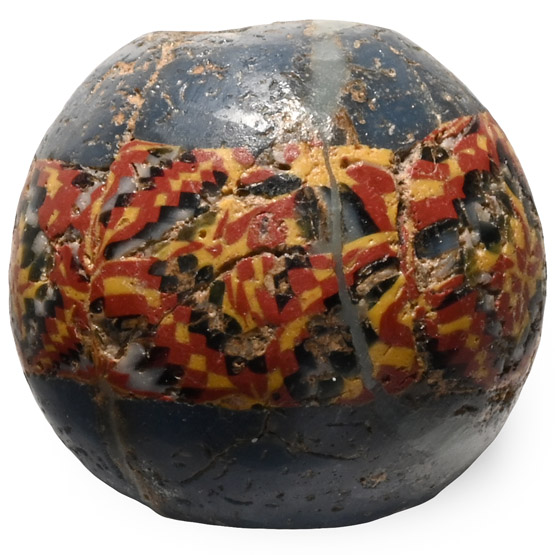
Roman Chequerboard Millefiori Glass Bead
Israel, 1st century A.D.Sold for (Inc. bp): £182
Spherical in profile with median horizontal band of chequerboard millefiori pattern. 5.92 grams, 17 mm
Acquired in the mid 1980s-1990s. Private collection, Switzerland, thence by descent. Private collection, since the late 1990s. -
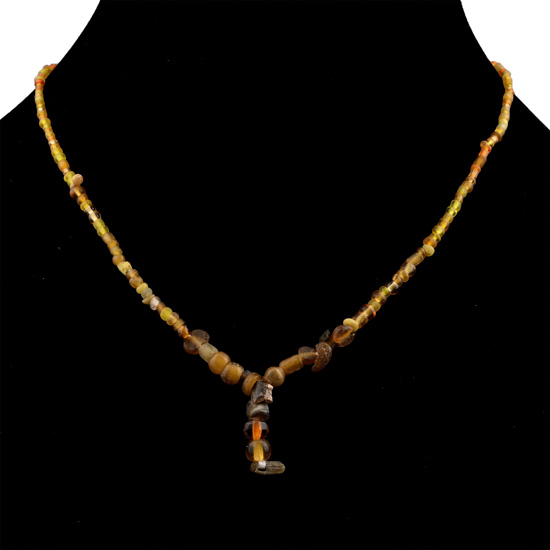
Roman and Other Brown and Yellow Glass Bead Necklace String
1st-4th century A.D. and laterSold for (Inc. bp): £59
Composed of small yellow and orange beads with larger beads as a central feature; restrung to a Y-shape. 6.39 grams, 39 cm
From London, UK, gallery collection, 1990s. -
.jpg)
Roman White and Orange Glass Ring with Amber Inlay
2nd-3rd century A.D.Sold for (Inc. bp): £234
Round section hoop, oval bezel set with amber. 1.30 grams, 21.04 mm overall, 13.89 x 14.39 mm internal diameter (approximate size British F, USA 2 3/4, Europe 3.67, Japan 3)
With J.Bagot Ancient Art, Barcelona, Spain. The Nico F.Bijnsdorp Collection (NFB 282), acquired from the above, 4 June 2013. Acquired on the English art market. -
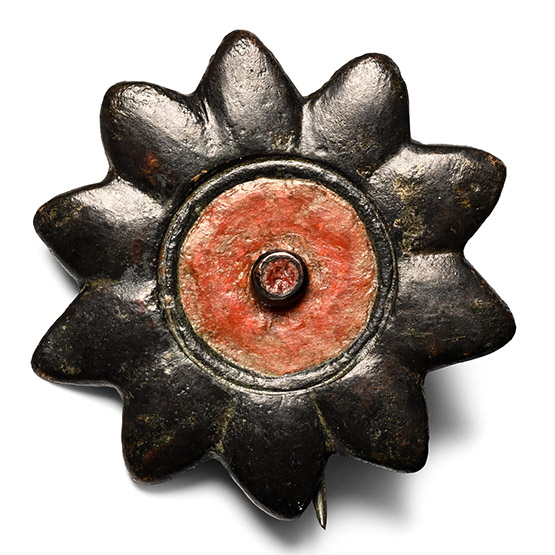
Roman Enamelled Bronze Flower-Shaped Plate Brooch
Circa 1st-3rd century A.D.Sold for (Inc. bp): £117
Tondo with central stud and red enamel fill, ten radiating triangular petals; hinged pin and catch to reverse. 5.43 grams, 28.4 mm
Ex German art market, 2000s. Acquired from an EU collector living in London. From the collection of a Surrey, UK, gentleman. -
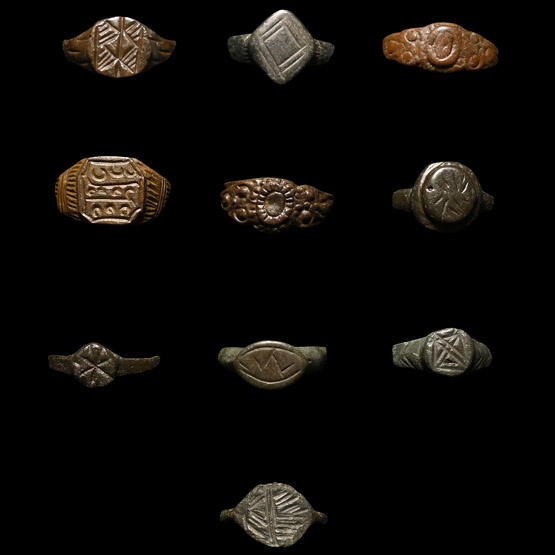
Roman to Medieval Bronze Ring Collection
1st-16th century A.D.Sold for (Inc. bp): £364
Including vesica bezel with 'W' motif, lozenge bezel with concentric squares, rosette motif and other types. 33.4 grams total, 16-24 mm
Ex German art market, 2000s. Acquired from an EU collector living in London. From the collection of a Surrey, UK, gentleman. -
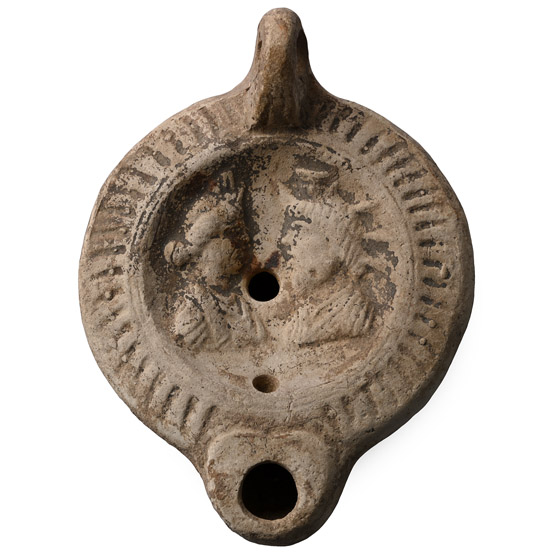
Roman Terracotta Oil Lamp with Isis and Serapis
2nd-3rd century A.D.Sold for (Inc. bp): £124
Discoid in plan with short D-shaped nozzle, loop handle, discus with low-relief image of two facing busts representing Isis and Serapis, shoulder with ribbed decoration; marked discoid base. 103 grams, 11.6 cm
From the stock of a former UK antiquarian, acquired at trade fairs and from private collection formed in the 1980s-1990s. Private collection, Europe. -
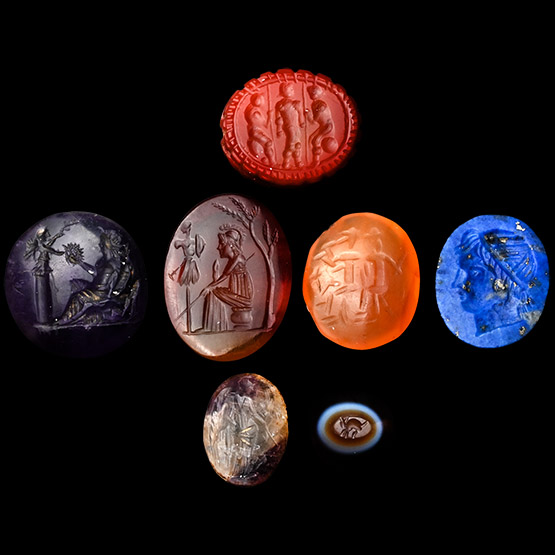
Roman and Later Hardstone Gemstone Collection
1st century A.D. and laterSold for (Inc. bp): £1,040
Including scaraboid with group of three figures, scene with Minerva and trophaeum, profile bust, seated figures and other types; supplied with a museum-quality impression. 9.78 grams total, 9-18 mm
Private collection, England. -
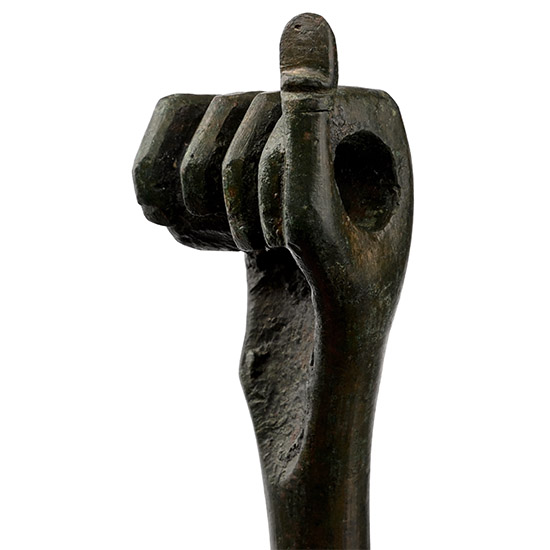
Roman Bronze Lamp Holder Shaped as Arm
Circa late 2nd-4th century A.D.Sold for (Inc. bp): £702
Comprising a tapering square-section spike below a stepped flange, columnar arm developing to a clenched fist with vertical socket. 429 grams, 27.5 cm
Ex German art market, 2000s. Acquired from an EU collector living in London. From the collection of a Surrey, UK, gentleman. -
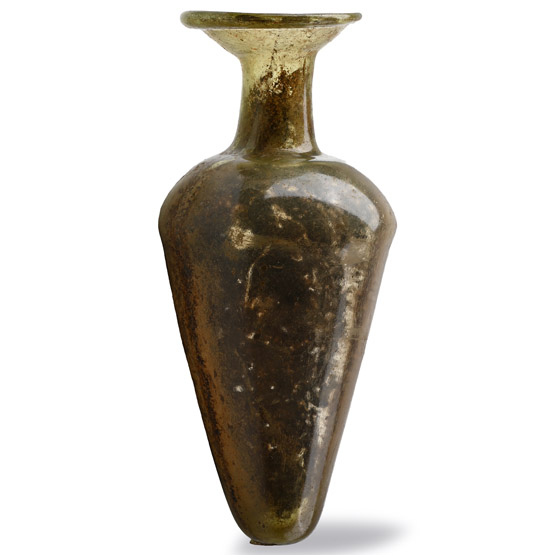
Roman Glass Flask
1st-2nd century A.D.Sold for (Inc. bp): £211
Conical body with rounded shoulder and tubular neck with wide everted rim. 74 grams, 17.1 cm
Ex Abelita family collection, 1980s-2000s. -
.jpg)
Roman Agate Gemstone with Minerva Holding Nike in Gold Ring
2nd century A.D.Sold for (Inc. bp): £1,300
Intaglio image of Minerva standing on a baseline holding spear and shield, supporting a victoriola in her extended hand; set into a later gold ring; supplied with a museum-quality impression. 7.59 grams, 27.22 mm overall, 18.18 mm internal diameter (approximate size British P, USA 7 1/2, Europe 16.23, Japan 15)
Private collection, Europe. Acquired on the English art market.
The specimen of agate used by the engraver was undoubtedly used for its apotropaic ‘eye’ like qualities, which were used as amulets for protection against the evil eye.

