-
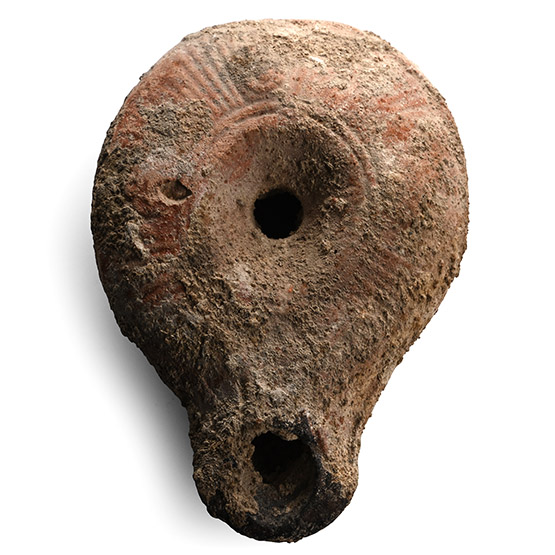
Roman Terracotta Oil Lamp
1st-2nd century A.D.Sold for (Inc. bp): £39
Discoid in plan with short nozzle, broad shoulder with radiating bands and low-relief rosette, sunken discus; underside with concentric rings to the base. 61 grams, 78 mm
From the Lloyd and Jeanne Raport collection, Washington, D.C. and Florida, USA, formed between 1972-2000. Acquired through Bonhams, London, UK. -
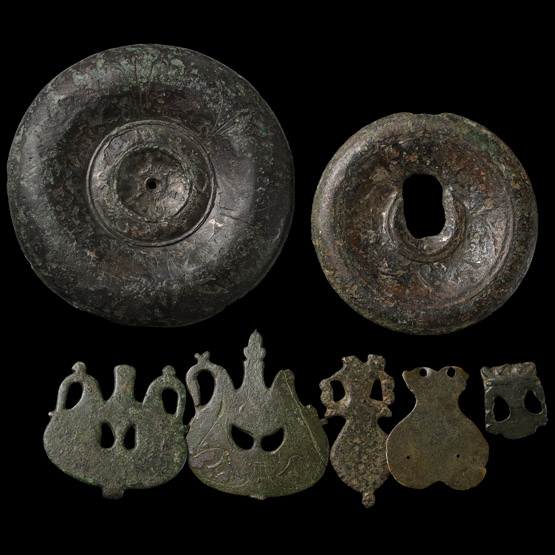
Roman Bronze Equestrian Military Decoration and Belt End Group
1st-4th century A.D.Sold for (Inc. bp): £65
Including discoid phalerae, ivy-leaf pendants and other types. 219 grams total, 19-71 mm
Ex German art market, 2000s. Acquired from an EU collector living in London. From the collection of a Surrey, UK, gentleman. -
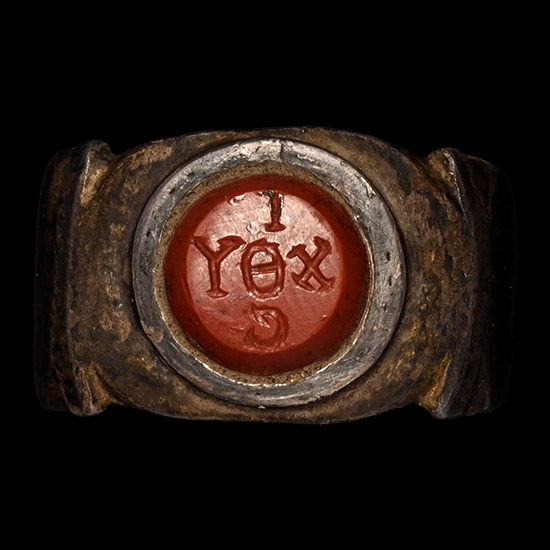
Roman Silver Ring with Early Christian Gemstone
4th-6th century A.D.Sold for (Inc. bp): £585
D-section hoop, elliptical in plan, with raised oval bezel set with a jasper intaglio engraved with inverted Greek inscription 'IXΘYC' (ichthys, meaning 'fish"), a Greek acronym for 'Jesus Christ, Son of God; supplied with a museum-quality impression. 9.18 grams, 21.91 mm overall, 18.68 mm internal diameter (approximate size British O 1/2, USA 7 1/4, Europe 15.61, Japan 15)
Private collector, acquired in the early 1990s. Private collection, England.
The term ichthys is the equivalent of the ancient Greek: ixθus, ichthýs ('fish'), used by early Christians to refer to Jesus Christ. For this reason, the fish symbol was very common in the catacombs of Rome. In particular, the ichthys is one of the oldest Christian symbols that has come down to us. Used covertly by Christians to mask their faith from Roman persecutors, when a Christian encountered a stranger whose loyalty he needed to know, he would draw one of the arches that make up the ichthys in the sand. If the stranger completed the sign, the two individuals recognised each other as followers of Christ. The symbol was also drawn on the doors of the houses of Christian families. Its use spread in the 3rd century to personal effects such as the ring offered here. -
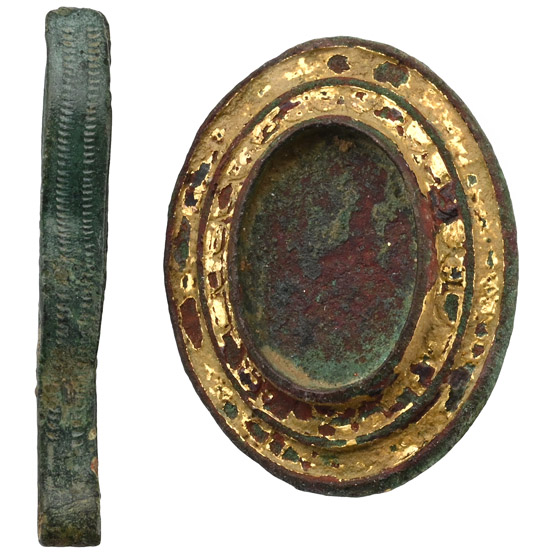
Roman Gilt Bronze Brooch and Medieval Tweezers
2nd-15th century A.D.Sold for (Inc. bp): £52
Comprising: ellipsoid plate brooch with gilt border and central cell, pin-lug and catch to reverse; flat-section tweezers found in association with the brooch. 12.5 grams total, 32-37.6 mm
Found whilst searching with a metal detector near Dullingham, East Cambridgeshire, UK, on Friday 13th December 2024 and Thursday 1st May 2025. Accompanied by copies of the British Museum's Portable Antiquities Scheme (PAS) report nos.SF-9D6556 and SF-CF180C. -
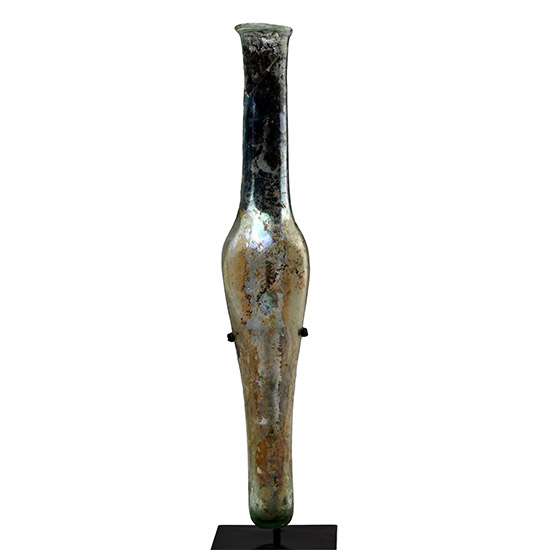
Roman Tall Glass Flask
2nd-3rd century A.D.Sold for (Inc. bp): £338
Iridescent square-section vessel with dimpled sides, tall neck and everted rim; mounted on a custom-made stand. 33 grams, 20.5 cm
From a London, UK, collection of glass, 1970-2000s. -
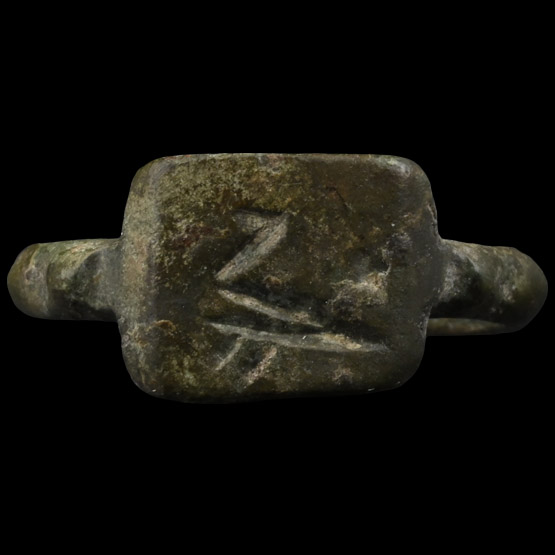
Roman Brancaster Type Bronze Ring with Bird
4th-5th century A.D.Sold for (Inc. bp): £33
Slender D-section hoop with raised knops flanking the rectangular bezel with a standing bird motif. 3.49 grams, 20.89 mm overall, 16.84 mm internal diameter (approximate size British K 1/2, USA 5 1/2, Europe 10.58, Japan 10)
Acquired on the UK and EU art market before 2000. From the private collection of a Surrey, UK, gentleman.
The 'Brancaster' type ring was a product of the late 4th to early 5th centuries. Although no exact parallel for the engraved design could be found, the design depicts mythical animals. A late Roman finger ring from Havering, Essex, exhibits an engraved glass gem depicting Bellerophon slaying the chimaera. -
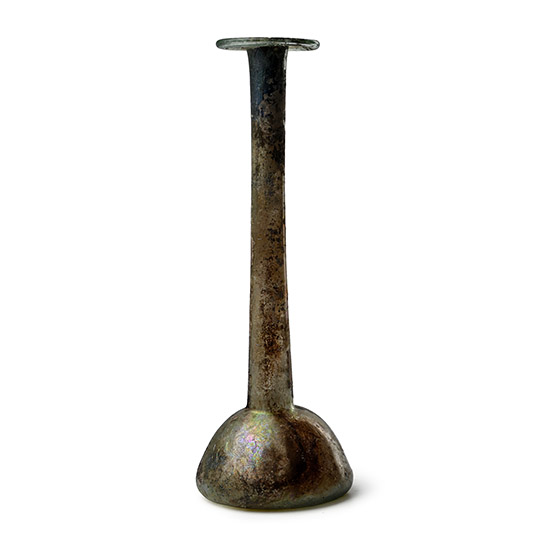
Roman Green Glass Flask
Circa 1st-4th century A.D.Sold for (Inc. bp): £208
With domed body and discoid base, tall neck with everted rolled rim; some iridescence. 50 grams, 20.7 cm
From a London, UK, collection of glass, 1970-2000s. -
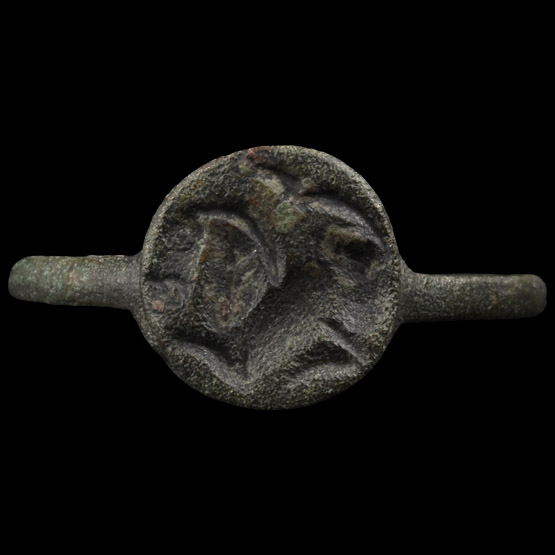
Roman Bronze Ring with Animal
4th-6th century A.D.Sold for (Inc. bp): £39
Slender hoop, cup-shaped bezel with low-relief advancing horse motif. 4.53 grams, 27.20 mm overall, 20.89 mm internal diameter (approximate size British U, USA 10, Europe 22.52, Japan 21)
Ex German art market, 2000s. Acquired from an EU collector living in London. From the collection of a Surrey, UK, gentleman. -
.jpg)
Roman Decorated Bronze Vessel Lid Group
3rd-4th century A.D.Sold for (Inc. bp): £515
Each a domed disc with central depression, concentric tendril bands and leaf motifs to shoulder, hinge lugs. 765 grams total, 11.2-11.6 cm wide
Acquired on the European art market in the early 2000s. with Galerie Rhéa, Zurich, Switzerland. -
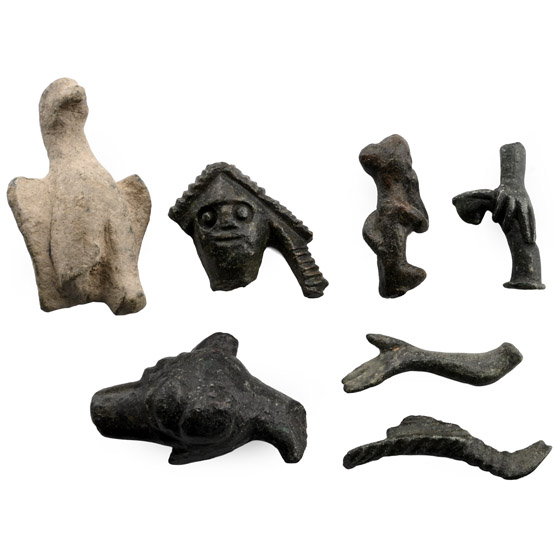
Roman to Medieval Bronze Statuette Fragment Collection
1st-16th century A.D.Sold for (Inc. bp): £46
Including right forearm and hand, right hand with rhyton and other types. 86 grams total, 24-38 mm
Ex German art market, 2000s. Acquired from an EU collector living in London. From the collection of a Surrey, UK, gentleman. -
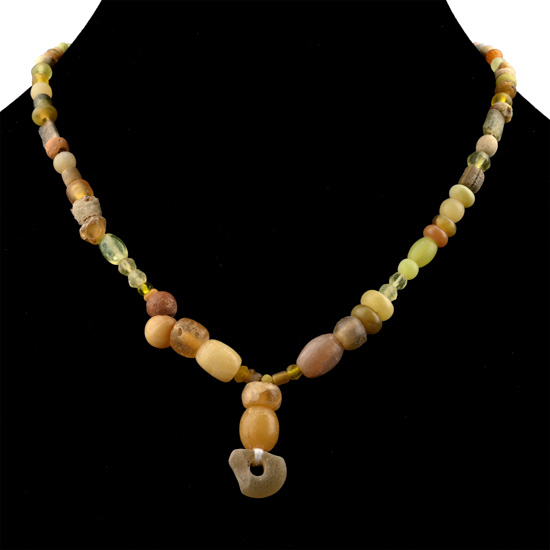
Roman and Other Yellow Glass Bead Necklace String
1st-4th century A.D. and laterSold for (Inc. bp): £52
Composed mainly of oblate, spherical, and other beads, the central feature composed of three larger beads; restrung. 19.7 grams, 38.3 cm
From London, UK, gallery collection, 1990s. -
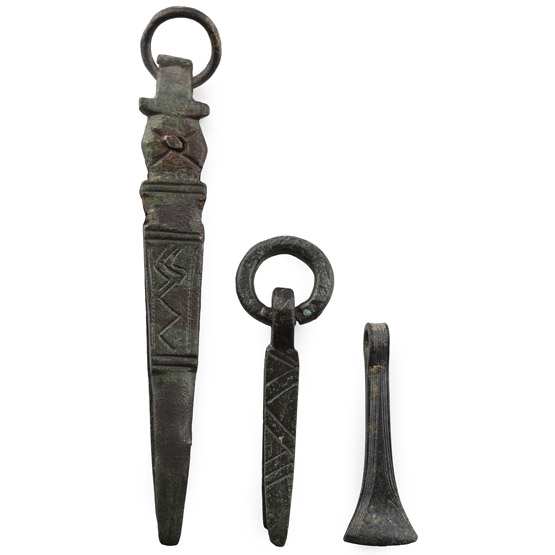
Roman Bronze Tweezers Collection
1st-4th century A.D.Sold for (Inc. bp): £111
Including pincer type with broad triangular arms and other types. 20 grams total, 35-85 mm
Ex German art market, 2000s. Acquired from an EU collector living in London. From the collection of a Surrey, UK, gentleman.

