-
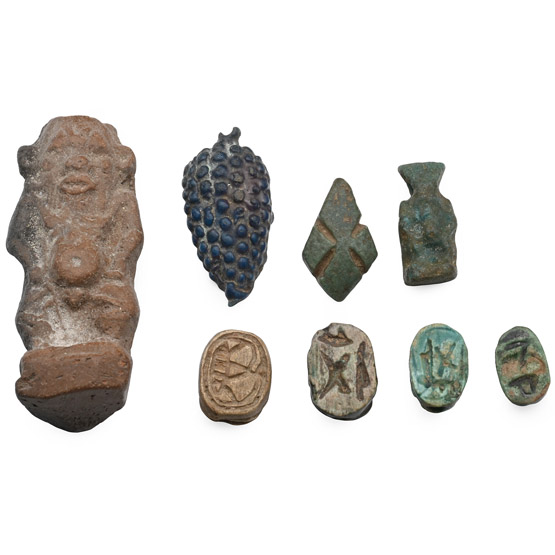
Egyptian Faience Amulet Group
New Kingdom-Ptolemaic Period, 1550-30 B.C.Sold for (Inc. bp): £156
Comprising a large standing Bes statuette on a rectangular base and a smaller Bes pierced for suspension; four scarabs with detailing to the upper face and incised signs and motifs on the underside; a tear-shaped bunch of grapes with a broken suspension loop; a lozenge-shaped pierced for suspension. 11 grams total, 9-38 mm
From the Walter Thomas Gaze Cooper (1895-1980) collection; thence by descent. -
.jpg)
Egyptian Steatite Scarab Collection
Hyksos Period and New Kingdom, 18th-13th century B.C.Sold for (Inc. bp): £780
Each with a domed carapace, two with a figure on the underside surrounded by hieroglyphs, two inscribed with hieroglyphic signs. 15 grams total, 18-24 mm
Acquired in Europe before 1992. Private collection, UK. -
.jpg)
Egyptian Sky Blue Faience Shabti
Late Period-Ptolemaic Period, circa 380-30 B.C.Sold for (Inc. bp): £208
Mummiform figure with a lappet wig and beard. 5.7 grams, 61 mm
Ex private collection, London, UK, 1970s-1990s. -
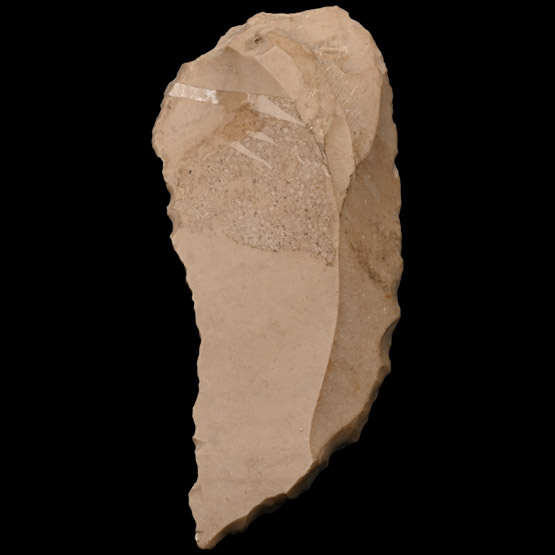
Egyptian Predynastic Flint Pocket Knife
Naqada II Period, 3500-3100 B.C.Sold for (Inc. bp): £195
Slightly curved blade with broad flake forming cutting edge. 19.80 grams, 72 mm
Ex Armand Trampitsch, Monte Carlo, 1990s. Private collection, Europe. -
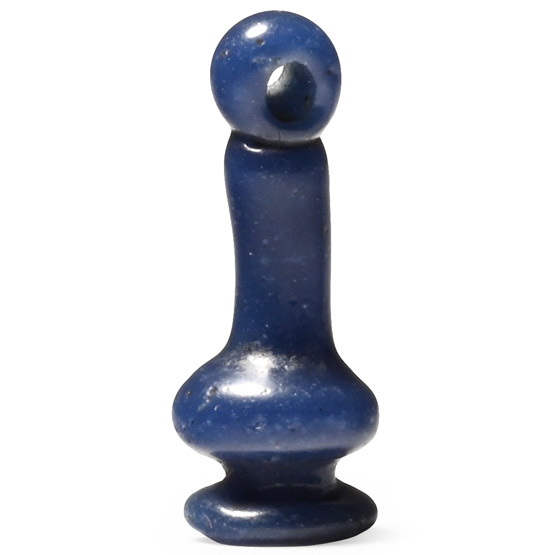
Egyptian Poppy Seed Amulet
New Kingdom, 1550-1070 B.C.Sold for (Inc. bp): £143
A dark blue glass amulet formed as a poppy seed, suspension loop to the top; chipped at the base. 0.20 grams, 12 mm
Ex Constable collection, 1990s. Ex Ancient & Oriental, UK. Ex P. Morris collection. Accompanied by an Ancient & Oriental certificate of authenticity. -
.jpg)
Egyptian Faience Wedjat Eye Amulet
Late Period, 664-332 B.C.Sold for (Inc. bp): £130
Turquoise-glazed with black pupil and brow ridge; pierced longitudinally. 3.38 grams, 32 mm
Ex early 20th century collection, London, UK.
The wedjat-eye amulet (also called the Eye of Horus) became one of the most recognisable symbols in ancient Egyptian culture. It signifies protection, healing, and restoration. In myth, Horus lost his eye during his battle with Seth, and it was later magically restored, symbolising healing and the return to wholeness. The Eye of Horus came to embody divine power and protection, and was often used in amulets to safeguard and promote well-being. -
.jpg)
Egyptian Multi-Stranded Mummy Bead Necklace
Late Period, 664-332 B.C.Sold for (Inc. bp): £468
Four-stranded designer necklace composed of polychrome beads of mainly disc and cylindrical types. 28.5 grams, 74 cm
Acquired before 1979. From the private collection of Mr F.A., South Kensington, London, UK; thence by descent 2014.
For thousands of years, artisans in Egypt created vibrant ceramics to echo the beauty of rare jewels. These ornaments were created with almost every material, colour, and texture imaginable and they come from across Egypt and beyond: vibrant blue lapis lazuli from Afghanistan, glossy black obsidian from Turkey, and aqua-green turquoise from the Sinai. They were worn in life and, after death, they served as precious ornamentation for mummies. -
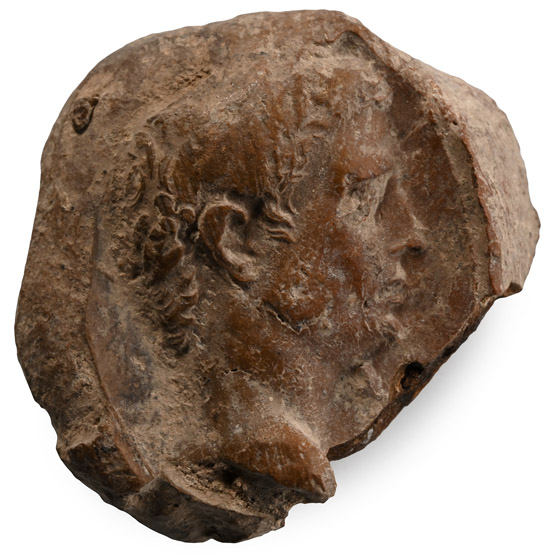
Egyptian Clay Papyrus Document Sealing with Bust of Tiberius
Roman Period, early 1st century A.D.Sold for (Inc. bp): £208
Discoid in plan with impressed seal, profile bust of Tiberius (14-37 A.D.) placed to one side. 3.78 grams, 25 mm
Ex German art market, 2000s. Acquired from an EU collector living in London. From the collection of a Surrey, UK, gentleman. -
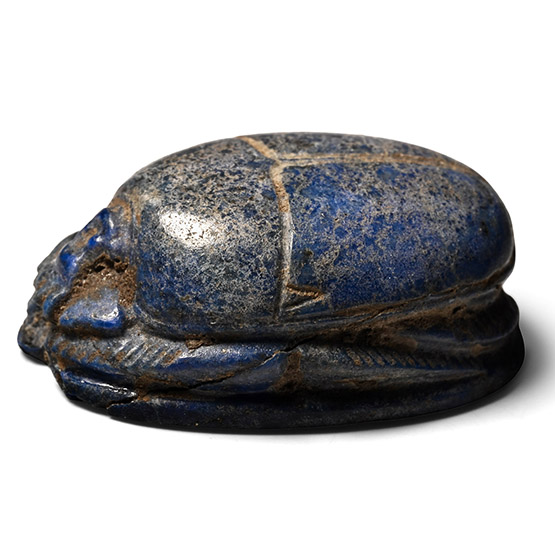
Egyptian Lapis Lazuli Scarab
Late Period, 664-332 B.C.Sold for (Inc. bp): £715
Carved in the round with longitudinal piercing, ellipsoid base. 12.8 grams, 30 mm
Ex early 20th century collection. -
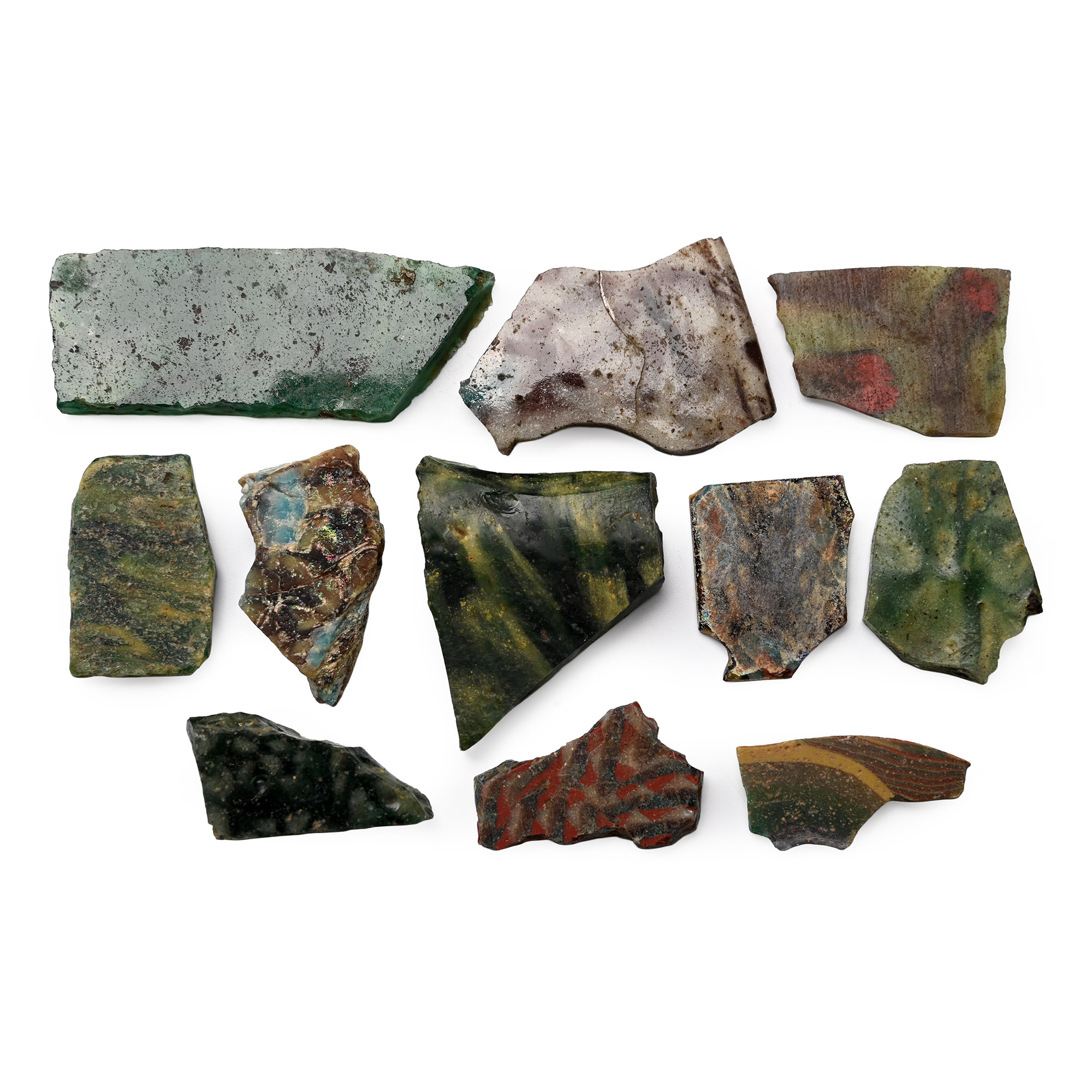
Romano-Egyptian Mosaic Glass Fragment Group
Roman Period, 30 B.C.-323 A.D.Sold for (Inc. bp): £117
Irregular plate fragments with banded, rosette and other designs. 34.6 grams total, 21-48 mm
Ex Gallery Mikazaki, prior to 1994. From the collection of a London, UK, gentleman. -
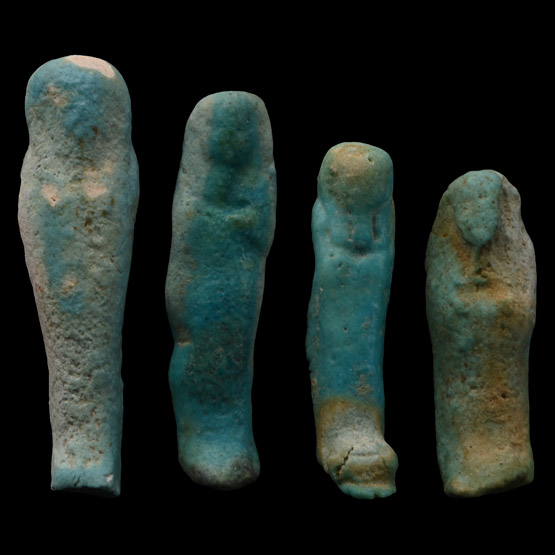
Egyptian Faience Shabti Collection
Ptolemaic Period, 332-30 B.C.Sold for (Inc. bp): £143
Comprising four mummiform figures with tripartite wigs and divine beards. 22.7 grams total, 44-60 mm
Ex H Norri collection, Milton Keynes, Bedfordshire, UK, 1980s-1990s. -
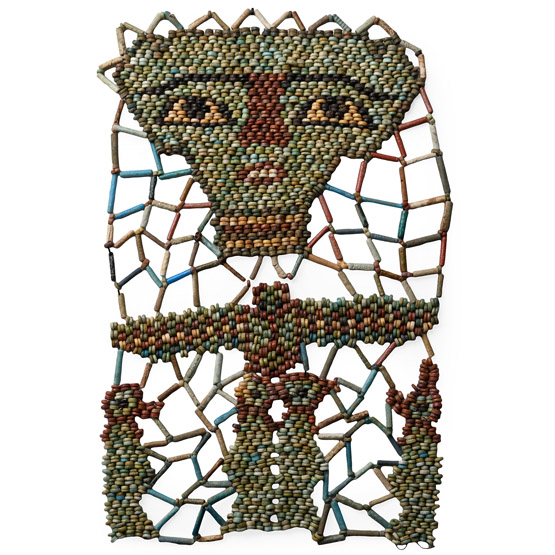
Egyptian Faience Mummy Bead Mask with Scarab and Four Sons of Horus
Ptolemaic Period, 332-30 B.C.Sold for (Inc. bp): £780
A restrung netted beadwork panel of annular and tubular glazed composition beads in blues, greens, black, cream and red-brown colours, depicting a mummy face mask with false beard, a scarab with extended wings below, the 'Four Sons of Horus’ beneath the scarab, joined together with areas of open netting of tubular beads. 100 grams, 24 cm
Ex North London, UK, gallery. Ex Cambridgeshire, UK, collection.
The Four Sons of Horus were deities responsible for protecting the deceased's internal organs. The human-headed Imsety protected the liver, the baboon-headed Hapy protected the lungs, the jackal-headed Duamutef protected the stomach, and the falcon-headed Qebehsenuef protected the intestines.

