-
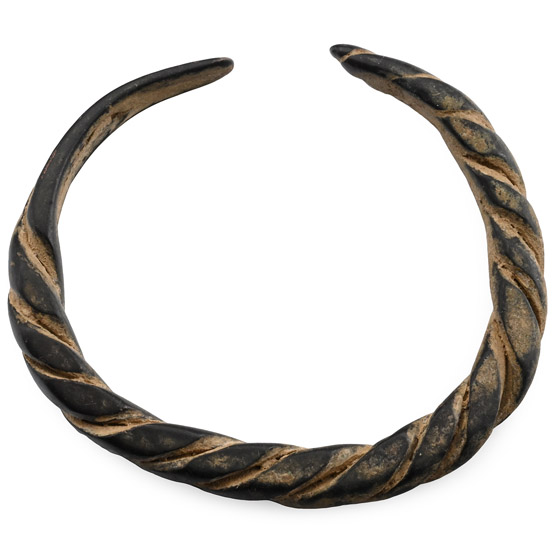
Viking Age Bronze Twisted Bar Bracelet
Circa 9th-11th century A.D.Sold for (Inc. bp): £85
Two rods tightly twisted and curved into a penannular shape, hammered flat towards the ends, one terminal with a hatched design to the outer edge. 36 grams, 62 mm
Ex East Sussex private collection, 1970s-1980s. -
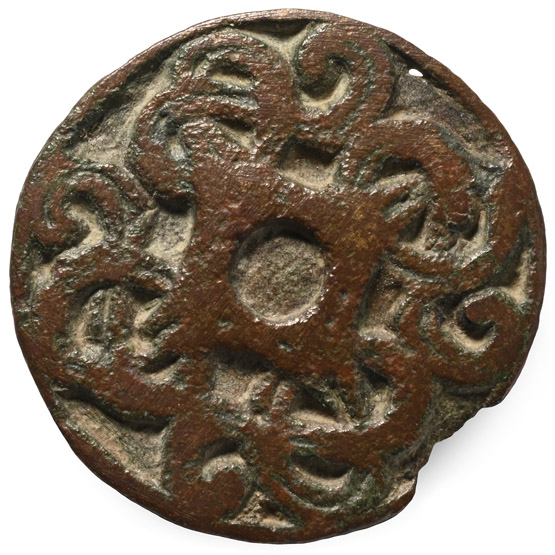
Anglo-Saxon Bronze Borre Style Disc Brooch
10th-11th century A.D.Sold for (Inc. bp): £33
With a central annular motif from which issue four bilinear tendrils, each ending in a coiled loop; a catchplate and remains of the lug to the reverse. 9.44 grams, 29 mm
Found Norfolk, UK. -
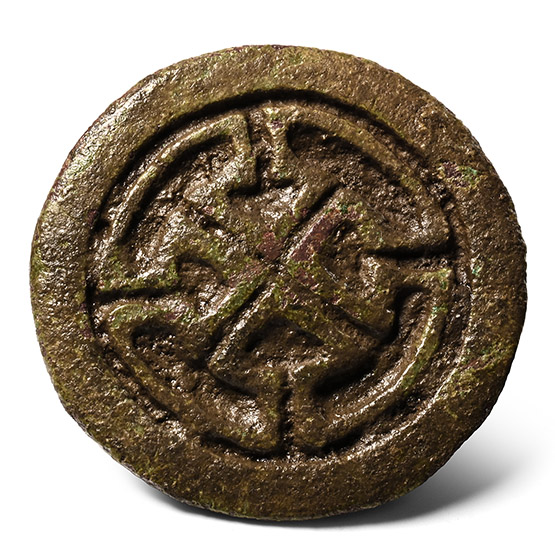
Anglo-Saxon Bronze Disc Brooch with Cruciform Axe Design
9th-10th century A.D.Sold for (Inc. bp): £143
Discoid in plan with low-relief reserved cross design, shallows cells to accept enamel fill; pin-lug and catch to the reverse. 11 grams, 30.2 mm
Found whilst searching with a metal detector near Little Wibraham, South Cambridgeshire, UK, on Sunday 1st September 2024. Accompanied by a copy of the British Museum's Portable Antiquities Scheme (PAS) report no.SF-0A4A60. -
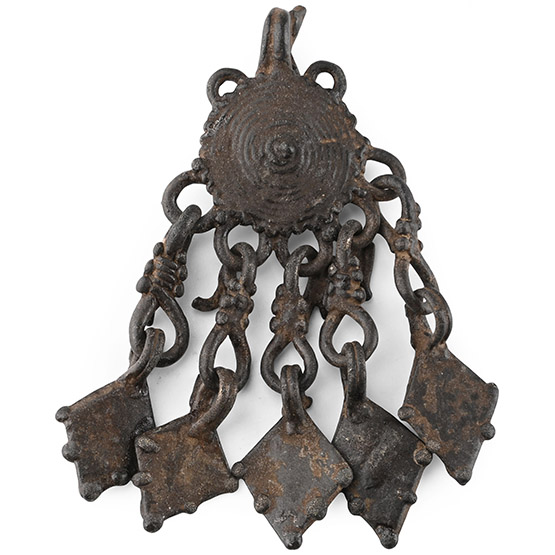
Viking Period Bronze Pendant with Duck-Foot Dangles
Circa 8th-10th century A.D.Sold for (Inc. bp): £130
Circular plaque with seven loops and another at the apex, the lower five loops each with 'duck-foot' type dangle; Finno-Ugric type. 24.8 grams, 70 mm
UK gallery, early 2000s. -
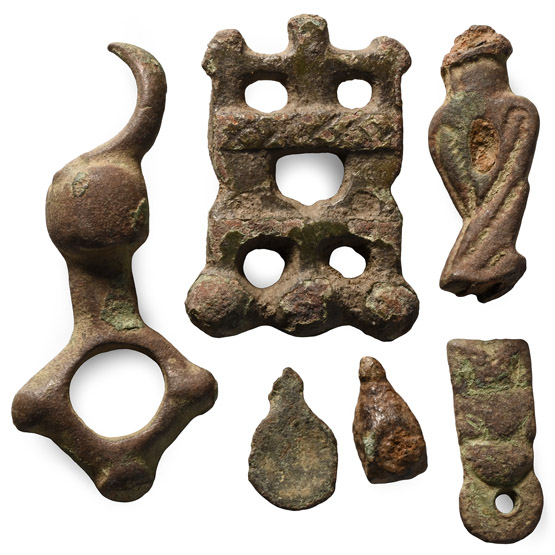
Viking Artefact Collection
11th century A.D.Sold for (Inc. bp): £39
Including a strap end, harness mounts and other items. 37.6 grams total, 13-49 mm
Acquired on the UK art market. Private collection, Kent, UK. -
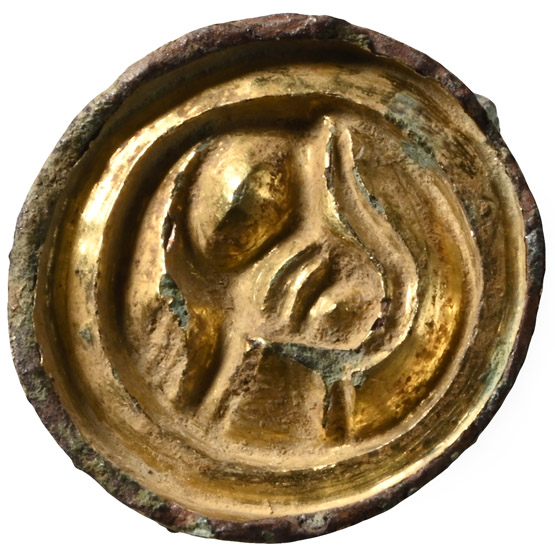
Anglo-Saxon Gilt Bronze Button Brooch with Helmetted Head
6th century A.D.Sold for (Inc. bp): £468
Brooch of Avent's Class L with flange to the rim, inner collar, central mask with central 'eye', remains of pin, lugs and catchplate to reverse. 1.68 grams, 12.7 mm
Found Norfolk, UK. -
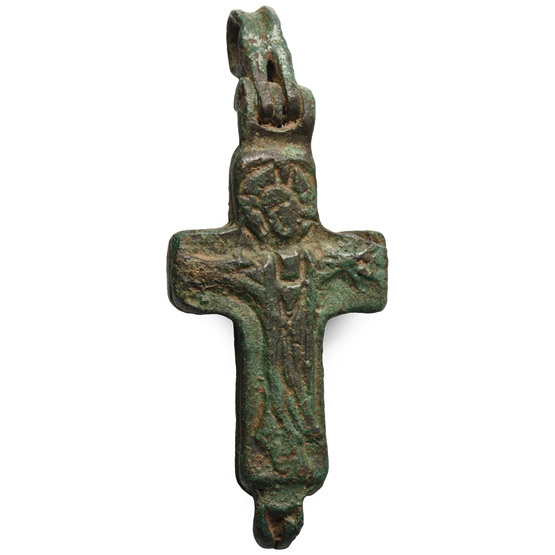
Reliquary Bronze Cross Pendant with Dark Age Inscription to Reverse
Circa 8th-10th century A.D.Sold for (Inc. bp): £572
Of Byzantine type, obverse with low-relief Corpus Christi; reverse with enigmatic legend '[?] NIXIXIN'. 31.77 grams, 72 mm
Ex R Ungar, Parthenon Gallery, London, UK, 2006. From an important North London, UK, private collection
The reverse may bear a blundered attempt at the 'INRI' legend which appears in Byzantine and Late Roman art, for Iesus Nazarenus, Rex Iudaeorum 'Jesus King of the Jews'. -
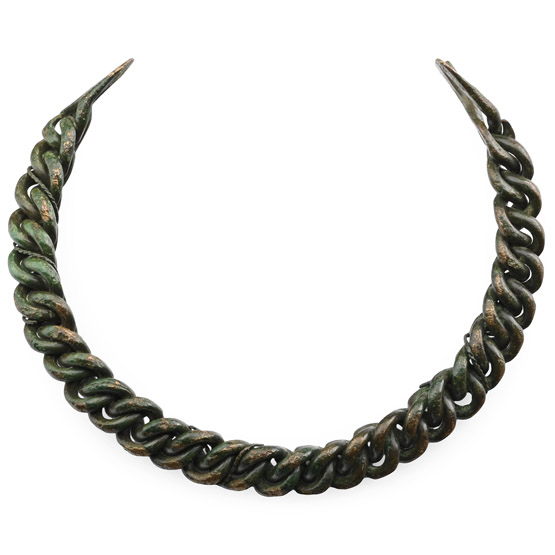
Viking Age Bronze Plaited Bracelet
9th-11th century A.D.Sold for (Inc. bp): £117
Comprising a braided band of wire; one end fused and the other splayed. 20.68 grams, 68 mm
Ex German art market, 2000s. Acquired from an EU collector living in London. From the collection of a Surrey, UK, gentleman. -
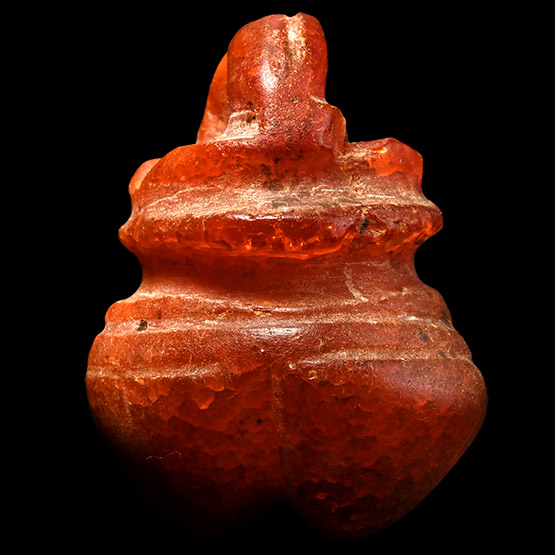
Viking Age Phallic Amber Pendant
Circa 9th-11th century A.D.Sold for (Inc. bp): £260
Carved in the round with loop and a gussetted collar below, two bulbs emerging from a carinated band. 3.86 grams, 27 mm
Private collection formed in Europe in the 1980s. Westminster collection, central London, UK. -
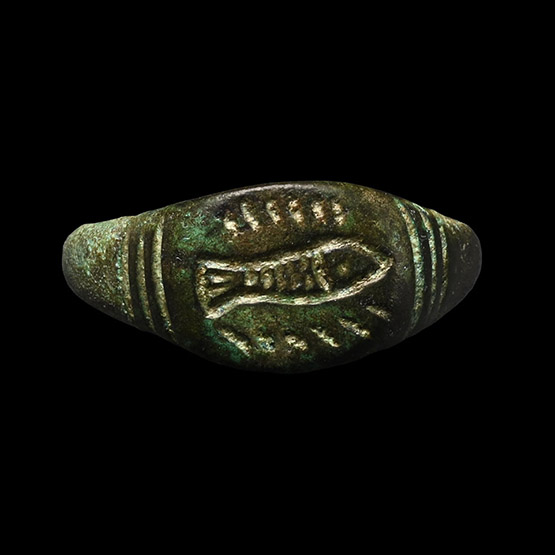
Merovingian Bronze Ring with Early Christian Fish Symbol
6th century A.D.Sold for (Inc. bp): £195
Comprising a D-section hoop expanding at the shoulders, an oval bezel with a stylised fish flanked by linear motifs. 5.72 grams, 25.40 mm overall, 19.14 mm internal diameter (approximate size British S, USA 9, Europe 20, Japan 19)
Acquired on the UK and EU art market before 2000. From the private collection of a Surrey, UK, gentleman.
The German tribes who settled inside the Roman Empire were great wearers of rings; archaeological discoveries show that these ornaments were worn by adults and children of both sexes. The number of graves excavated in Gaul and Germany is large, and the material for comparative study is extensive. A considerable proportion of rings are signets, with portraits, names or monograms, and emblems such as the cross, the fish, the dove, i.e. early Christian symbols; most of these have the designs cut in a metal bezel. -
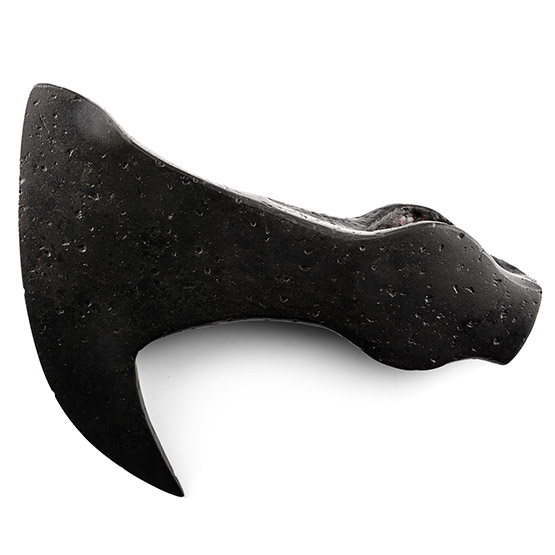
Viking Age Iron Socketted Hook-Billed Axehead
Circa 9th-11th century A.D.Sold for (Inc. bp): £286
With a long, deeply curved blade, short neck, socket with slightly curved wings above and below, and hammer-face to rear; professionally cleaned, conserved, and restored. 618 grams, 15.2 cm
From the family collection of a South East London collector; formerly acquired in the late 1950s.
These axes are typical of Baltic workmanship. During this age, the axes were the favourite weapons of many Baltic people, including the Curonian army, which included lightly armed soldiers who fought with spears, shields, fighting knives and axes. A heavily armed soldier could also carry a sword, a helmet, a shield, and a wide-bladed axe. -
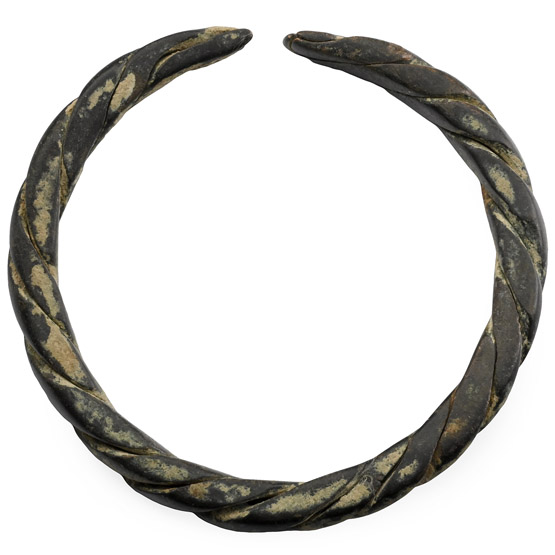
Viking Age Bronze Twisted Bar Bracelet
Circa 9th-11th century A.D.Sold for (Inc. bp): £72
Penannular in form with tapering ends, twisted-rod construction. 33 grams, 66 mm
Ex East Sussex private collection, 1970s-1980s.

