-
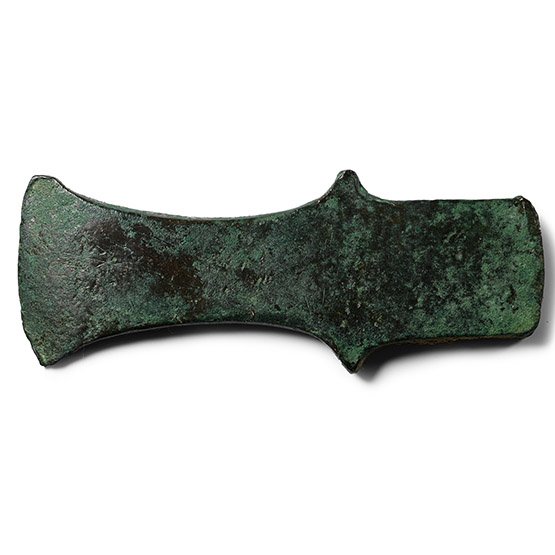
Bronze Age Flanged Flat Axe
Central Europe, 2nd millennium B.C.Sold for (Inc. bp): £117
With a curved blade, two flanges to the outer edge, crescentic-shaped butt. 340 grams, 13.5 cm
Acquired in Europe before 1992. Ex Swiss collection. -
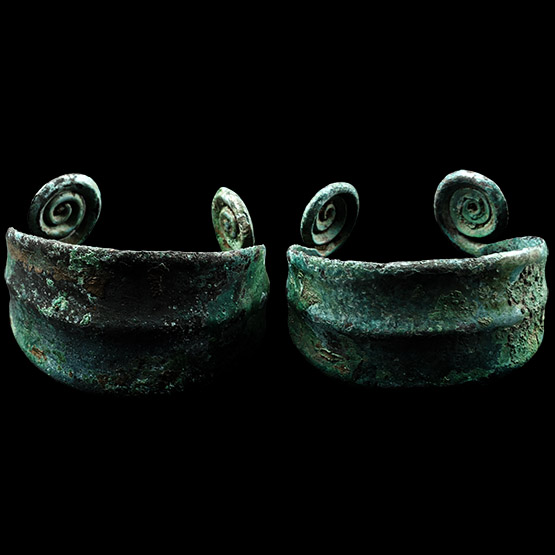
Large Bronze Age Bracelet Pair
Central Europe, 10th-8th century B.CSold for (Inc. bp): £338
Each a penannular band with coiled finials, median rib to the lentoid plaque. 70 grams total, 52-56 mm
Private European collection, 1990s. Private collection, London, UK. -
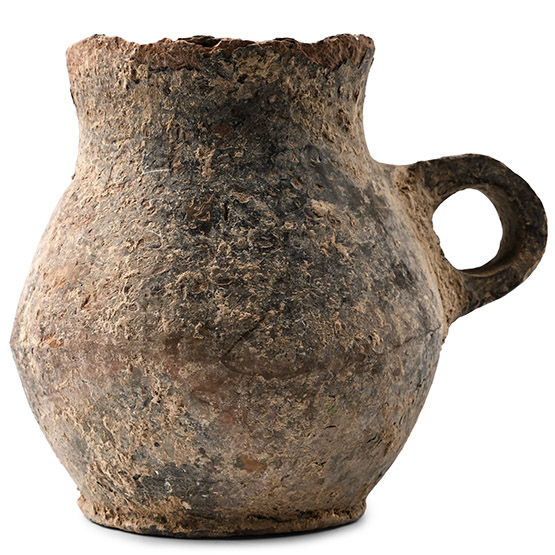
Bronze Age Grey Ware Jug
1st millennium B.C.Sold for (Inc. bp): £117
Biconvex in profile with flared mouth and ribbed loop handle. 200 grams, 95 mm high
Acquired on the UK art market before 2000. Property of an Essex, UK, gentleman. -
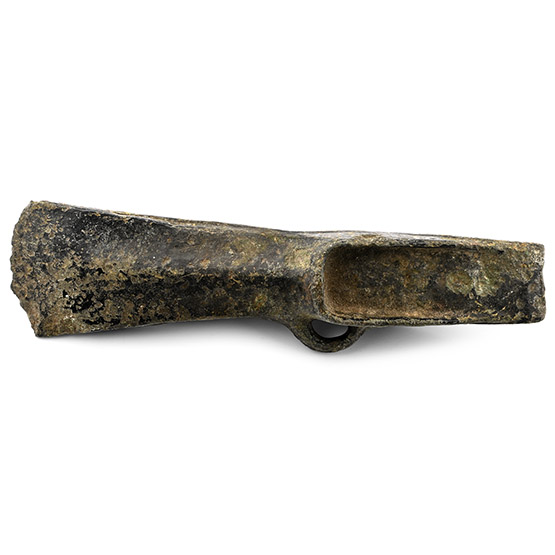
British Bronze Age Looped Palstave Axehead
1200-800 B.C.Sold for (Inc. bp): £143
A low-flanged palstave with a short 'squared' butt, a triangular blade with a convex cutting edge, deep lateral flanges, a stop and a median rib; loop to the side. 560 grams, 17.3 cm
From a Buckingham auction house, UK. From the private collection of a West Midlands lady collector. -
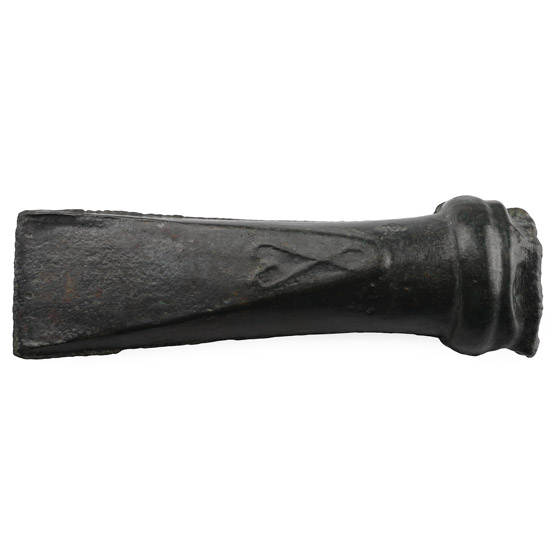
Bronze Age Currency Axehead
2nd-1st millennium B.C.Sold for (Inc. bp): £176
With hexagonal-section shank and long chamfered blade, squared cutting edge; casting seams to long edges; solid shank in place of socket. 640 grams, 13 cm
Ex German art market, 2000s. Acquired from an EU collector living in London. From the collection of a Surrey, UK, gentleman. -
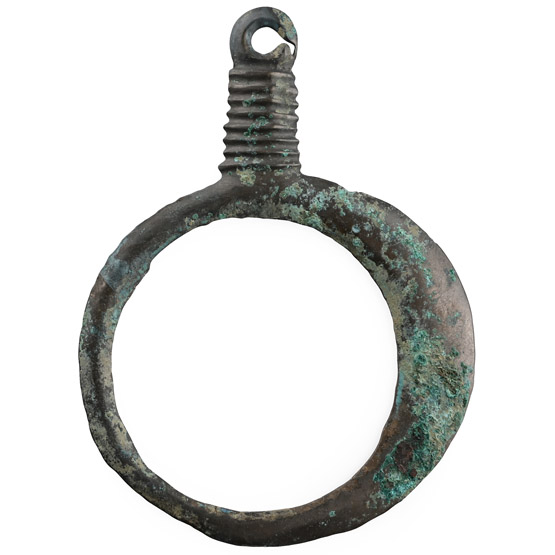
Bronze Age Pendant
Central Europe, 2nd-early 1st millennium B.C.Sold for (Inc. bp): £286
Discoid in plan with eccentrically placed circular hole, ribbed shank to the suspension ring. 9.53 grams, 75 mm
Ex London, UK, collection, 2000s. -
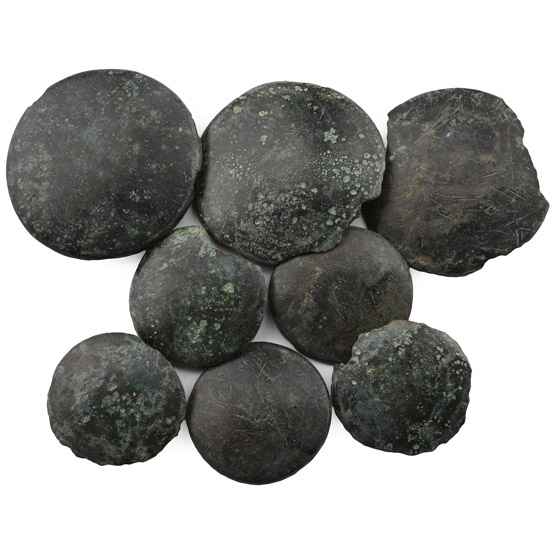
Bronze Age Boss Mount Group
2nd-1st millennium B.C.Sold for (Inc. bp): £20
Mixed group of discoid mounts in various sizes, each with mounting stud to reverse. 50 grams total, 27-40 mm
Ex German art market, 2000s. Acquired from an EU collector living in London. From the collection of a Surrey, UK, gentleman. -
.jpg)
Bronze Age Socketted Spearhead
11th-10th century B.C.Sold for (Inc. bp): £351
With a prominent stepped midrib extending to the wide socket with opposed lateral holes to accept attachment pegs. 118 grams, 18.2 cm
Acquired on the German art market, 2000. Private collection, Europe. -
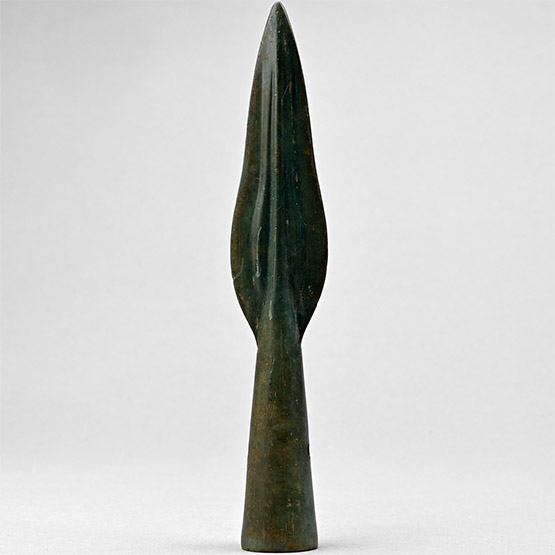
Bronze Age Socketted Spearhead
11th-10th century B.C.Sold for (Inc. bp): £351
With flared socket developing to a midrib with scooped lateral ribbing in a leaf-shaped blade; opposed lateral holes to accept attachment pegs. 109 grams, 16 cm
Acquired in Germany in 2000. Acquired by the present owner from the above. -
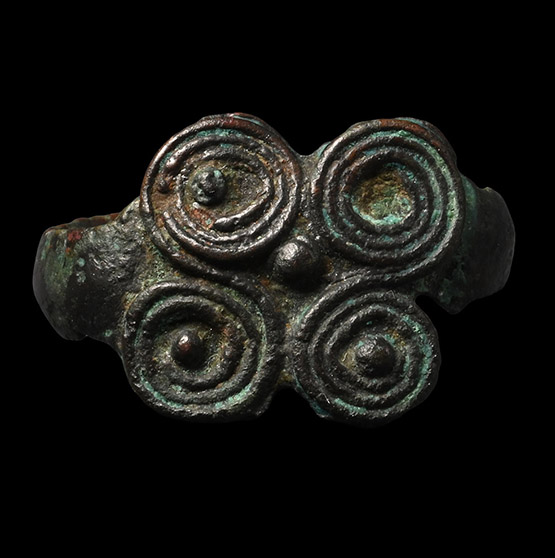
European Bronze Age Ring with Double Scroll Design
Circa 1200 B.C.Sold for (Inc. bp): £124
Wide hoop and a large bezel formed of four tightly wound spirals with applied pellets. 4.87 grams, 25.61mm overall, 22.03 mm internal diameter (approximate size British R 1/2, USA 8 3/4, Europe 19.38, Japan 18)
Acquired on the UK and EU art market before 2000. From the private collection of a Surrey, UK, gentleman.
The spiral motif was one of the most enduring and ancient motifs of jewellery. It was very popular with the people of the Bronze Age Mediterranean, but especially in Central Europe. It was seen as a symbol of life and death, day and night, rebirth and eternity. Obviously, the double spiral, like in our case, was also used as a decorative motif. -
.jpg)
Roman and Other 'Colchester' Pottery Collection
1st-4th century A.D. and laterSold for (Inc. bp): £13
Including: mortaria, cooking vessels, tableware and other types, plus stone age axe fragments and a domestic animal jaw bone with teeth. 8.4 kg total including box, 3-32 cm
Found Colchester, UK. (UK buyers only, not for export) From the collection of a late East Anglian teacher and antiquarian who retired to the Isle of Wight in Hampshire, UK. He amassed a large collection of objects between the 1960s-1980s. -
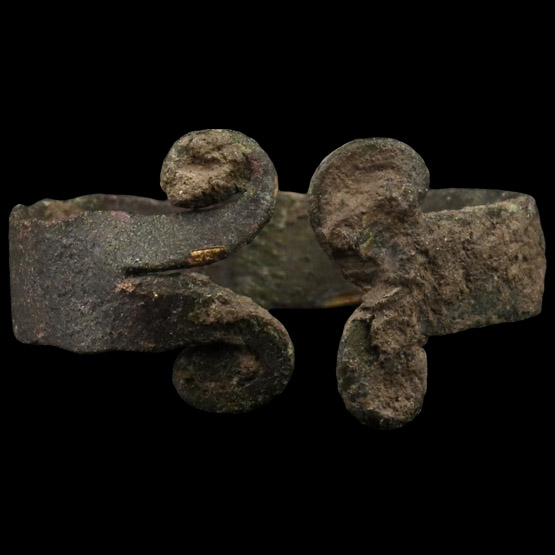
Bronze Age Ring with Scrolled Terminals
Early 1st millennium B.C.Sold for (Inc. bp): £65
Comprising a flat-section penannular hoop with scrolled finials. 1.57 grams, 19.40 mm overall, 17.92 mm internal diameter (approximate size British I 1/2, USA 4 1/2, Europe 8.07, Japan 7)
Acquired on the UK and EU art market before 2000. From the private collection of a Surrey, UK, gentleman.
Such rings, made of a twisted bar with smooth or spiral-shaped ends, are quite rare and are typically found in men’s graves. They may have been a sign of chieftainship. However, the small dimensions of the ring may suggest that the ring once belonged to an aristocratic child.

