-
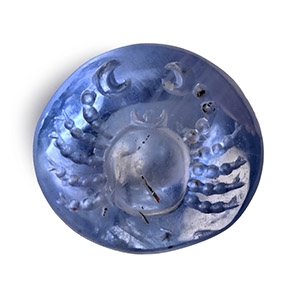
Roman Sapphire Gemstone of a Crab
1st century B.C.Sold for (Inc. bp): £4,680
With intaglio depiction of a crab; supplied with a museum-quality impression. 0.61 grams, 8 mm
Private English collection, formed between the late 1970s and early 1990s. Private collection, London, UK. -
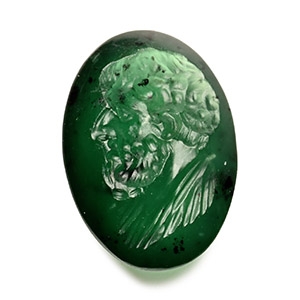
Roman Chrome Chalcedony Gemstone of a Philosopher
1st century A.D.Sold for (Inc. bp): £2,470
With intaglio profile bust of a bearded male facing left; supplied with a museum-quality impression. 0.38 grams, 10 mm
Private English collection, formed between the late 1970s and early 1990s. Private collection, London, UK. -
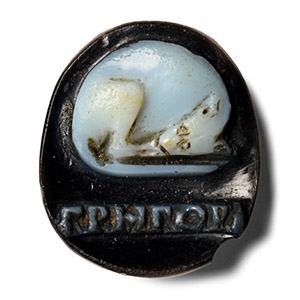
Roman Sardonyx Cameo of a Sleeping Dog with Greek Inscription
2nd-3rd century A.D.Sold for (Inc. bp): £1,690
With a cameo image of a lying dog curled to the right, ancient Greek lettering below 'ΓΡΗΓΟΡΙ (sic)': either 'Be wakeful' or '(ring/seal) of Gregory. 0.61 grams, 12 mm
Private English collection, formed between the late 1970s and early 1990s. Private collection, London, UK. -
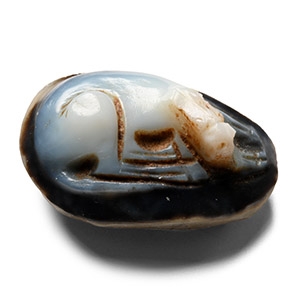
Roman Banded Agate Cameo of a Sleeping Dog
3rd century A.D.Sold for (Inc. bp): £338
With a cameo image of a lying dog curled to the right; supplied with a museum-quality impression. 0.72 grams, 12.7 mm
Private English collection, formed between the late 1970s and early 1990s. Private collection, London, UK. -
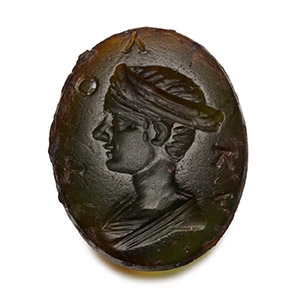
Roman Chrome Chalcedony Gemstone of a Noble Lady
2nd century A.D.Sold for (Inc. bp): £715
With intaglio profile bust of a wealthy lady facing left, possibly an empress; supplied with a museum-quality impression. 0.62 grams, 13 mm
Private English collection, formed between the late 1970s and early 1990s. Private collection, London, UK. -
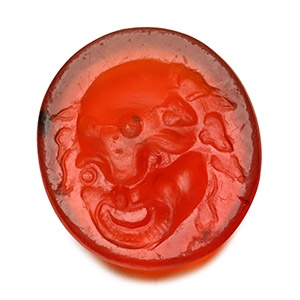
Roman Carnelian Gemstone of a Theatre Mask
1st century A.D.Sold for (Inc. bp): £2,210
With a New Comedy, The Cook Type theatre mask, facing with open mouth; supplied with a museum-quality impression. 0.39 grams, 10 mm
Private English collection, formed between the late 1970s and early 1990s. Private collection, London, UK. -
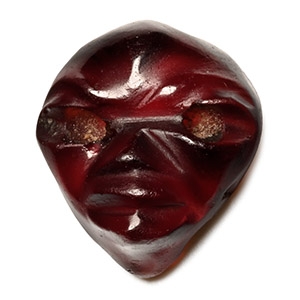
Roman Garnet Cameo of a Grotesque Head
1st century A.D.Sold for (Inc. bp): £338
With head of a grotesque facing; supplied with a museum-quality impression. 0.95 grams, 10 mm
Private English collection, formed between the late 1970s and early 1990s. Private collection, London, UK. -
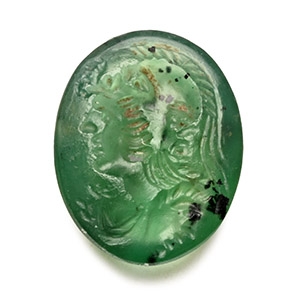
Roman Chrome Chalcedony Gemstone of Gryllus
1st century A.D.Sold for (Inc. bp): £910
With intaglio composite profile bust of a helmetted female (possibly depicting Minerva) facing left, and two other heads, one emerging from the helmet and the other beneath the neck; supplied with a museum-quality impression. 0.31 grams, 9 mm
Private English collection, formed between the late 1970s and early 1990s. Private collection, London, UK. -
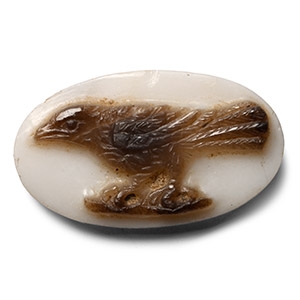
Roman Sardonyx Cameo of an Eagle
2nd-3rd century A.D.Sold for (Inc. bp): £3,380
With a cameo image of a bird, probably an eagle, facing left; supplied with a museum-quality impression. 0.65 grams, 16 mm
Private English collection, formed between the late 1970s and early 1990s. Private collection, London, UK. This lot has been checked against the Interpol Database of stolen works of art and is accompanied by search certificate number no.12950-246450. -
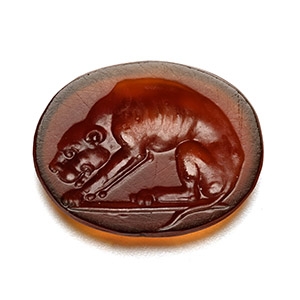
Roman Sard Gemstone of a Panther
1st century A.D.Sold for (Inc. bp): £5,460
With intaglio profile image of a large cat prone to the left; supplied with a museum-quality impression. 0.32 grams, 11 mm
Private English collection, formed between the late 1970s and early 1990s. Private collection, London, UK. This lot has been checked against the Interpol Database of stolen works of art and is accompanied by search certificate number no.12951-246458.
This depiction clearly belongs to a series of renderings of felines as the mounts, draught animals, and companions of Dionysus/Bacchus, and of the personages connected with him. Lions, panthers and leopards are among the attributes of the god Bacchus and a part of his thiasos (retinue). -
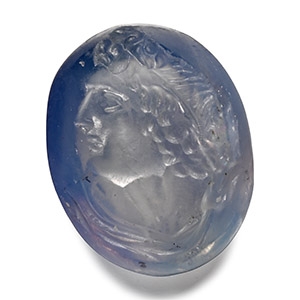
Roman Sapphire Gemstone of Bacchus
1st century B.C.Sold for (Inc. bp): £2,860
With intaglio profile bust of the god Bacchus facing left; supplied with a museum-quality impression. 1.41 grams, 12 mm
Private English collection, formed between the late 1970s and early 1990s. Private collection, London, UK. This lot has been checked against the Interpol Database of stolen works of art and is accompanied by search certificate number no.12952-246460.
During and after the Alexandrine period, the character of Greek gems changed considerably: the type of figure became softer and more feminine in beauty, Homeric scenes were no longer represented, and deities such as Apollo, Aphrodite or Dionysus, with subjects relating to the theatre or musical contests, became the favourite motifs for representation. -
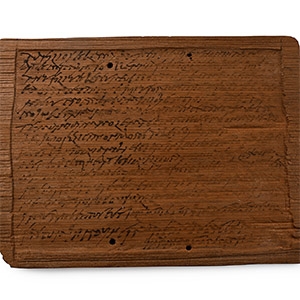
Roman Wooden Tablet from the Will of the Father of Iulia Ianuaria Made on the Goretiano Estate in the Province of Byzacena
Early 4th century A.D.Sold for (Inc. bp): £1,690
Well preserved rectangular tablet with a recessed panel to each face; the third and last tablet of a Roman will; both sides inscribed in Roman cursive script using ink and calamus, twenty-one lines of Roman cursive script written within the recess, some text is lost on the right half of both the inner and outer face; on the inner face partially damaged surface; on the other side sixteen lines of cursive script with a half-line at the right edge; two small holes both near the upper and lower rim (for binding the tablets of this document together); the text consists of testamentary dispositions and ends with the obligatory mancipatory formula of Roman testaments; mentioned is a Iulius Fortunatus. 65 grams, 23.5 x 17.6 cm
Acquired by Albert Sfez in the early 1950s. Formerly the property of Monsieur Alain Sfez, a Belgium collector; acquired by gift from his father Albert Sfez, in 1965. Acquired by a London dealer in 1973. From an important London collection since 1975; thence by descent. Accompanied by a copy of an illustrated academic report by Professor Dr phil. Peter Rothenhöfer. This lot has been checked against the Interpol Database of stolen works of art and is accompanied by search certificate number no.12602-230810.
Professor Dr phil. Peter Rothenhöfer writes: 'Without any doubts this tablet is an original document from Roman times. Because only few Roman testaments have survived this document is of great importance both for Roman Legal and Social History'.

