-
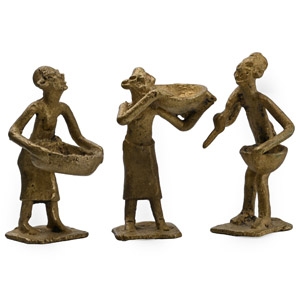
Ashanti Bronze Gold Figural Weight Collection
Akan Tribe, 19th-20th century A.D.Sold for (Inc. bp): £13
Comprising three kilted figures, each carrying a basket, in various poses. 105 grams total, 53-56 mm
From an old Oxford, UK, collection. From the property of a late Lincolnshire, UK, gentleman. -
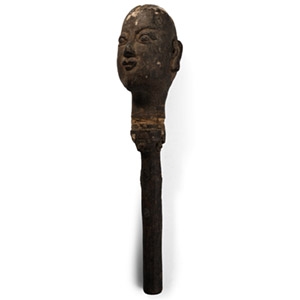
Indonesian Tau Tau Funerary Wooden Head
Toraja People, late 19th century A.D.Sold for (Inc. bp): £33
Funerary peg head with bald scalp, delicate facial features with grooves delineating the piercing eyes and shallow lips; below the neck a cylindrical protrusion to be slotted into the carving of its body, commemorating a deceased person. 780 grams, 35 cm
From South Central Sulewesi, Indonesia. Ex private Surrey, UK, ethnographic collection. From the property of a late Lincolnshire, UK, gentleman. -
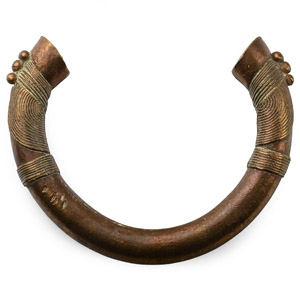
African Brass Manilla Slave Bracelet
Okombo Tribe, late 19th-early 20th century A.D.Sold for (Inc. bp): £33
Penannular in profile and round in section with integral pellet and wire detailing. 248 grams, 10.5 cm
From Nigeria, West Africa. From an old Derby, UK, specialist collection. From the property of a late Lincolnshire, UK, gentleman.
Also known as okpoho, Okombo or abi. Once a form of currency for West African peoples, manillas became one of the main currencies of choice during the slave trade to the Americas. Their usage during this time in history was of such prevalence that they were often referred to as “slave trade money.” The Manilla is in very good condition and measures 105mm wide and weighs about 250gms. Manillas are typically horse shoe-shaped with flared ends and often decorated with balls on each end. Africans from each region had names for each variety of manilla and were very particular about the types they would accept. They valued the Manillas by the sound they made when struck and used them as the dominant form of currency for many things including everyday market purchases, bride price and burials. The main purpose of the manilla – the trading and purchase of slaves- fostered a system where the incoming voyage of Europeans took manillas to West Africa to obtain slaves, who were then taken to the Americas. The price of a slave valued in manillas varied depending on the time, place and type being offered. -
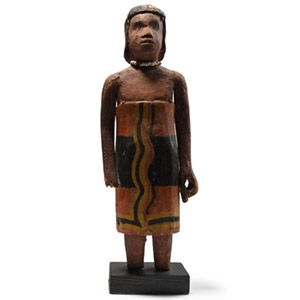
African Wooden Ceremonial Figure
Madagascan Tribe, 20th century A.D.Sold for (Inc. bp): £33
A painted female figure in knee-length robe with a white glass bead necklace, mounted on a later black wooden display base. 157 grams, 28 cm
From South Madagascar. From an old Shrewsbury, UK, ethnographic collection. From the property of a late Lincolnshire, UK, gentleman. -
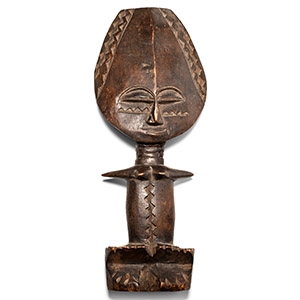
African Wooden 'Akuaba Doll' Fertility Figure
Ashanti Tribe, 20th century A.D.Sold for (Inc. bp): £33
Carved from dark-coloured, lightweight wood in traditional form and dyed dark brown with large, round head with a plain hairstyle, large eyes and zig-zag lines beneath, extending down the back and abdomen representing the typical tribal scarification marks. 250 grams, 30.5 cm
From Ghana, West Africa. Ex private collection of Mr.N.J., Leicester, UK. From the property of a late Lincolnshire, UK, gentleman.
Among the Ashanti people in Ghana, women hoping for offspring carry these ‘Akuaba dolls’ in their clothes. Traditionally, these ‘Akuaba’ have a large, round, flat head that is reminiscent of its origin as a representation of the moon goddess, which is associated with fertility. Once the ‘Akuaba’ figure has fulfilled its purpose, the mother of the desired child places it on her domestic altar, where it is worshipped in a shrine, or she passes it on to the next generation. -
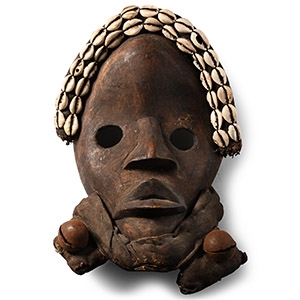
African Wooden Ceremonial Face Mask
Dan Tribe, 20th century A.D.Sold for (Inc. bp): £33
A carved face mask, decorated with cowrie shells, fabric and bells. 547 grams, 29 cm
From Democratic Republic of the Congo, Central Africa. From an old Hampshire ethnographic collection; acquired prior to 1960. From the property of a late Lincolnshire, UK, gentleman. -
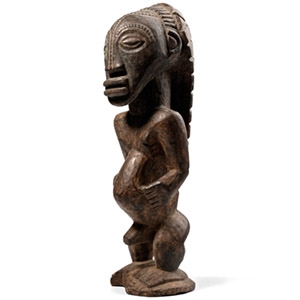
African Wooden Fertility Figure
Baule Tribe, early-mid 20th century A.D.Sold for (Inc. bp): £26
A carved standing figure with an elaborate hairstyle tied back with a band; scarification to the face. 904 grams, 35 cm
From Côte d'Ivoire, West Africa. From a Glasgow ethnographical collection; formed 1940s-1950s. From the property of a late Lincolnshire, UK, gentleman.
Baule statues are usually standing on a base with legs slightly bent, with their hands resting on their abdomen in a gesture of peace, and their elongated necks supporting a face with typically raised scarification and bulging eyes. -
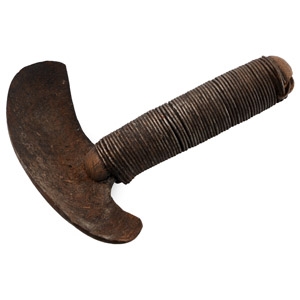
African Iron Zandle Spoon
Zande Tribe, late 19th-early 20th century A.D.Sold for (Inc. bp): £13
With elongated dished bowl fitted to a wooden handle bound with wire; belonging to the Zande. 185 grams, 12.5 cm
From Democratic Republic of the Congo, Central Africa. Ex property of a Canadian lady; acquired 1970s. From the property of a late Lincolnshire, UK, gentleman. -
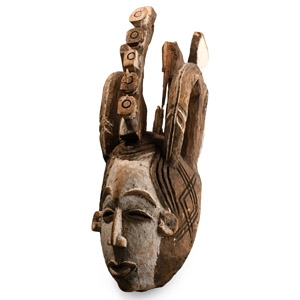
African Wooden Ceremonial 'Maiden Spirit' Face Mask
Igbo Tribe, early 20th century A.D.Sold for (Inc. bp): £46
A mask with long narrow face, painted white; narrow protruding sharp nose; slit eyes; closed mouth; small ears, arching eyebrows, incised hair design and above this is an elaborate openwork construction in brown, yellow and white. 1.4 kg, 56 cm
From South-West Nigeria, West Africa. From an old Newbury, UK, ethnographic collection. From the property of a late Lincolnshire, UK, gentleman.
Agbogho mmwo, or "maiden spirit," masks are worn by men at festivals that honour important deities. They represent the Igbo ideal of female beauty: small, balanced features, elaborate hairstyles, and delicate tattoos. The men who dance in agbogho mmwo masks wear colourful, tight-fitting fibre costumes, entertaining the crowd with exaggerated versions of women's dances. -
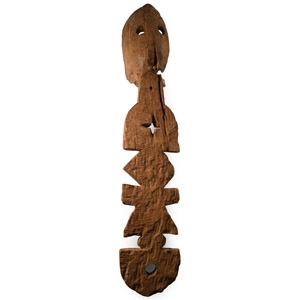
African Wooden Ceremonial Face Mask
Mossi Tribe, early-mid 20th century A.D.Sold for (Inc. bp): £33
Comprising an ellipsoid hollow face with parallel tusks; board of pierced geometric elements. 779 grams, 81 cm
From Burkina Faso, West Africa. Private Hampshire, UK, collection of tribal art; acquired in the 1960s. From the property of a late Lincolnshire, UK, gentleman.
Masks were regarded as the seat of the spirit, but they might also represent the totemic animal of the clan. -
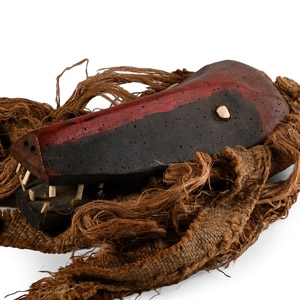
African Wooden Ceremonial Crocodile Face Mask
Bobo Tribe, mid-late 20th century A.D.Sold for (Inc. bp): £65
A simplified crocodile head, painted red and black, rough shaped eyes and pegged teeth. 870 grams, face long: 33 cm
From Mali, West Africa. From the estate of a West Sussex, UK, collector. From the property of a late Lincolnshire, UK, gentleman.
The masks symbolize animals or spirits and are worn during ceremonies associated with new crops, initiations and funerals. Ones with an interior cavity too small for a human head are carried on the top corner of a rectangular, tent like costume. -
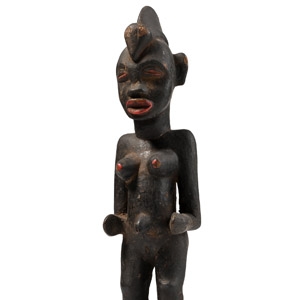
African Wooden Tugubele Figure
Senufo Tribe, 20th century A.D.Sold for (Inc. bp): £7
Carved in the round standing nude female on a socle base, with crested hairstyle and red painted detailing. 131 grams, 22.6 cm
From Côte d'Ivoire, West Africa. From an old Shrewsbury, UK, ethnographic collection. From the property of a late Lincolnshire, UK, gentleman.
Such relatively small figures are employed by the soothsayers of the Senufo people as ‘helpers’ during their oracles and prophecies.

