-
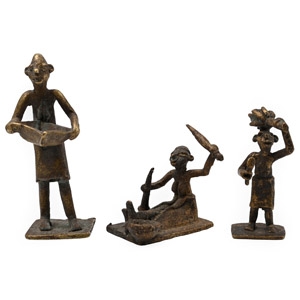
African Ashanti Bronze Figural Gold Weight Collection
Akan Tribe, 19th-20th century A.D.Sold for (Inc. bp): £59
Group of three workmen in active poses with handtools. 202 grams total, 51-84 mm
From an old Oxford, UK, collection. From the property of a late Lincolnshire, UK, gentleman. -
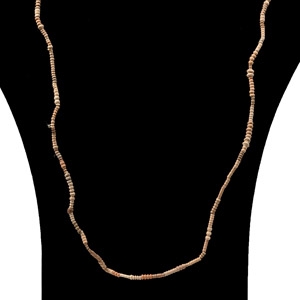
African Terracotta Bead Necklace
12th century A.D. or laterSold for (Inc. bp): £7
Mainly spherical, tubular and biconvex types. 8.77 grams, 94 cm long
Acquired on the London art market, 1990s. From the collection of the late Dr D.G., Surrey, UK. -
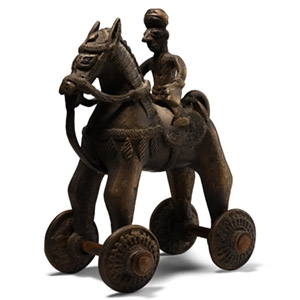
African Bronze Figure on Horseback
Edo Tribe, 20th century A.D.Sold for (Inc. bp): £46
Substantial bronze horse model with harness, bridle and saddle, a rider figure and four biconvex wheels. 2.33 kg, 18.4 cm high
From Benin. Ex Surrey, UK, ethnographical collection. From the property of a late Lincolnshire, UK, gentleman. -
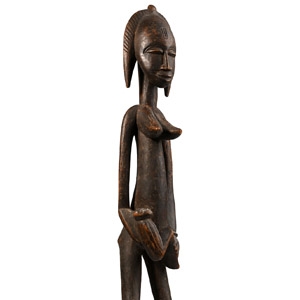
African Wooden Mother with Child Fertility Figure
Fang Tribe, early-mid 20th century A.D.Sold for (Inc. bp): £65
A hand-carved female figure standing on a base holding a child in front of the figure and displaying scarification to the face and breasts. 1.38 kg, 68.5 cm
From Equatorial Guinea, West Coast of Central Africa. From an old Bristol, UK, ethnographical collection. From the property of a late Lincolnshire, UK, gentleman.
The people that are called “Fang” in the geographic or ethnographic literature number 800,000 and constitute a vast mosaic of village communities, established in a large zone of Atlantic equatorial Africa comprising Cameroon, continental Equatorial Guinea and nearly the whole north of Gabon, on the right bank of the Ogowe River. The Fang practice a cult devoted to ancestor lineages, the Bieri, whose aim is to both protect themselves from the deceased and to recruit their aid in matters of daily life. Bieri are reliquary figures placed by the Fang upon their bark boxes to personify the tribal soul, containing the skulls and skeletons of prominent deceased persons. The Bieri also served for therapeutic rituals and, above all, for initiations of young males during the great so festival. The rites included consumption of a plant with stimulant properties, which induced a trance lasting for several hours, and the “resuscitation of the ancestors,” in which figures detached from the reliquaries were moved somewhat playfully from behind a raffia screen as puppets. -
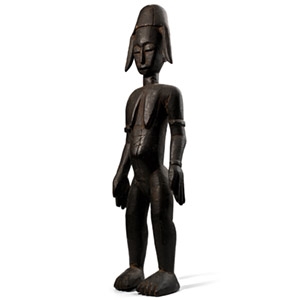
African Wooden Ancestor Figure
Baule Tribe, early-mid 20th century A.D.Sold for (Inc. bp): £33
A hand-carved standing female figure with hands placed by the side, some scarification and wearing arm rings. 1.06 kg, 48.5 cm
From Côte d'Ivoire, West Africa. From an old Bristol, UK, ethnographical collection. From the property of a late Lincolnshire, UK, gentleman.
The Baule are noted for their fine wooden sculpture, particularly for their ritual figures representing spirits; these are associated with the ancestor cult. The figures and human masks are often elegant, well polished with elaborate hairdressings and scarification. -
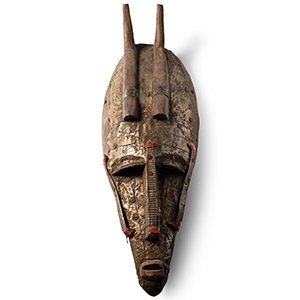
African Wooden Ceremonial Face Mask
Bambara Tribe, 20th century A.D.Sold for (Inc. bp): £85
A small wooden carved mask with curved horns, decorated with thin metal sheets and fabric tufts. 234 grams, 30 cm
From Mali, West Africa. From the collection of the late Professor R M Hicks, OBE. From the property of a late Lincolnshire, UK, gentleman. -
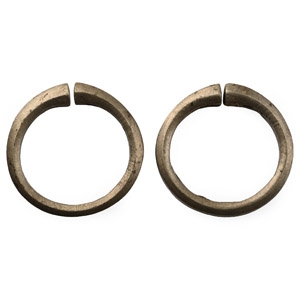
African Brass Kano Bracelet Pair
Okombo Tribe, late 19th-early 20th century A.D.Sold for (Inc. bp): £7
Penannular in form and faceted section, clubbed ends. 134 grams total, 62 mm wide
From Nigeria, West Africa. From an old Derby, UK, specialist collection. From the property of a late Lincolnshire, UK, gentleman. -
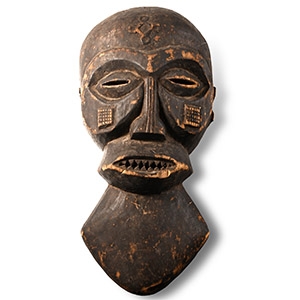
African Wooden Ceremonial Face Mask
Pende Tribe, early-mid 20th century A.D.Sold for (Inc. bp): £13
Carved with scarification panels to the cheeks and forehead, protruding mouth with teeth, flat nose and a neck panel below the chin. 560 grams, 37.5 cm
From Democratic Republic of the Congo, Central Africa. From the collection of the late Professor R M Hicks, OBE. From the property of a late Lincolnshire, UK, gentleman.
Pende masks are among the most dramatic works of all African art. There are two styles: the western one of the Kwilu with its mbuya mask characterized by a somber, gloomy expression, and the Kasai style that is more geometric and colorful. The Kwilu Pende are especially well known for their masks that were originally used for circumcision ceremonies but later became accessories for a type of popular theater. The minganji, or masks of power, represent the ancestors; the mbuya, or village masks, represent human types, such as the chief, the diviner, the epileptic with a twisted mouth, the madman or man in a trance, the widow, the lover, or the executioner. -
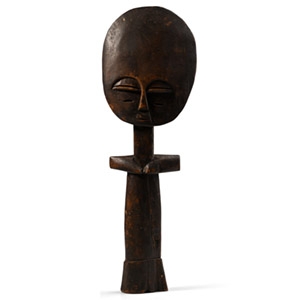
African Wooden 'Akuaba Doll' Fertility Figure
Ashanti Tribe, 20th century A.D.Sold for (Inc. bp): £26
Carved from dark-coloured, lightweight wood in traditional form and dyed dark brown; with a large, round head, plain hairstyle, large eyes and typical tribal scarification marks on the forehead. 159 grams, 31.5 cm
From Ghana, West Africa. Ex private collection of Mr.N.J., Leicester, UK. From the property of a late Lincolnshire, UK, gentleman.
Among the Ashanti people in Ghana, women hoping for offspring carry these ‘Akuaba dolls’ in their clothes. Traditionally, these ‘Akuaba’ have a large, round, flat head that is reminiscent of its origin as a representation of the moon goddess, which is associated with fertility. Once the ‘Akuaba’ figure has fulfilled its purpose, the mother of the desired child places it on her domestic altar, where it is worshipped in a shrine, or she passes it on to the next generation. -
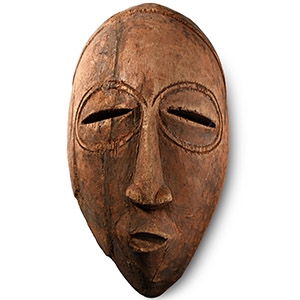
African Wooden Ceremonial Face Mask
Kamba Tribe, mid-late 20th century A.D.Sold for (Inc. bp): £26
Hollow to the reverse, with reserved hoops around the eye-slots developing to a slender nose, puckered mouth; remains of pigment. 734 grams, 37.5 cm
From Kenya, East Africa. From the private collection of Mr N.J., Leicester, UK; acquired circa 2010. From the property of a late Lincolnshire, UK, gentleman. -
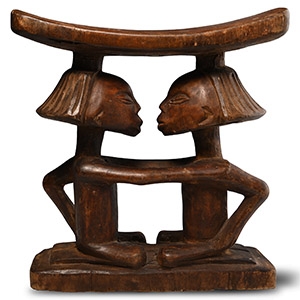
African Congo Wooden Headrest
Luba Tribe, 20th century A.D.Sold for (Inc. bp): £104
A carved headrest formed as two opposed kneeling figures each with an arm on the other's shoulder; rectangular base. 485 grams, 20.5 cm high
Ex Walter Steinberg collection; acquired London art market, 1960s-1970s. -
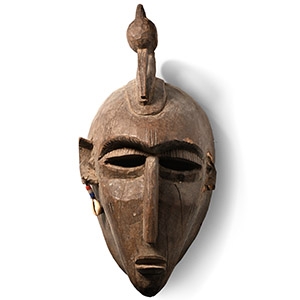
African Wooden Ceremonial Face Mask
Senufo Tribe, early-mid 20th century A.D.Sold for (Inc. bp): £20
Carved with a narrow face, narrow protruding sharp nose, slit eyes with some decoration, a closed mouth with protruding lips, bead and cowrie shell decoration to one ear and a bird's neck and head sculpture to the top of the mask. 1.12 kg, 36.5 cm
From Burkina Faso, West Africa. From a Glasgow ethnographical collection; formed 1940s-1950s. From the property of a late Lincolnshire, UK, gentleman.

