-
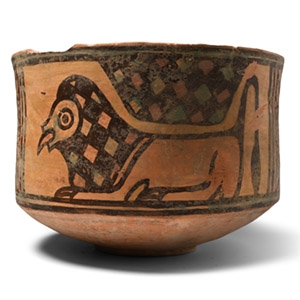
Indus Valley Mehrgarh Terracotta Vessel with Lions
3rd-2nd millennium B.C.Sold for (Inc. bp): £156
With painted polychrome frieze of geometric panels and crouching lions. 305 grams, 13.5 cm
Fine condition, rim chipped.
From an important London collection of Bronze Age pottery; formed 1970s-1980. From the private collection of John Meredith, acquired since the 1990s; thence by descent. -
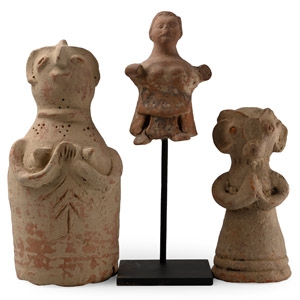
Indus Valley Clay Fertility Idol Collection
3rd-2nd millennium B.C.Sold for (Inc. bp): £124
A standing female in bell-shaped robe and ribbed headdress, pinched nose and mouth with almond-shaped eyes, hands held together in front of the abdomen; one standing figure in bell-shaped robe and ribbed headdress, large ears and chin with large circular eyes, hands held together in front of the chest; a seated figure showing the feet, with elaborate headdress, modelled nose, mouth and almond-shaped eyes, showing signs of original pigment; all mounted on custom-made display stands. 1.78 kg total, 16-24.5 cm including stand
Property of a West London gentleman; from a private collection since 1989. From the private collection of John Meredith, acquired since the 1990s; thence by descent. -
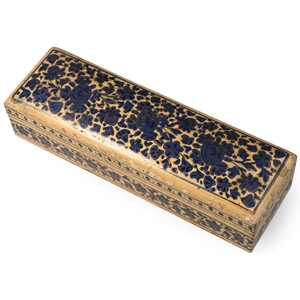
Indian Pen Box
19th-20th century A.D.Sold for (Inc. bp): £13
Wooden carcass with painted and lacquered floral design. 161 grams, 21 cm
Private collection, London, UK. -
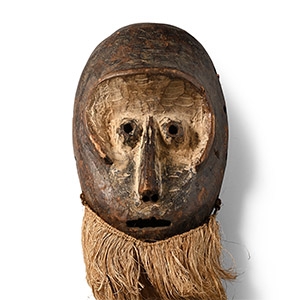
African Wooden Ceremonial Face Mask
Lega Warega Tribe, early 20th century A.D.Sold for (Inc. bp): £221
Hollow to the rear with protruding bosses for the eyes, applied fabric to lower edge. 181 grams, 22.1 cm
From Democratic Republic of the Congo, Central Africa. From the Estate of Dr J Bynon; acquired 30 July 1911. From the property of a late Lincolnshire, UK, gentleman.
Most Lega masks are sculptures of a human face that are rarely worn over the face and never for purposes of true transformation. The Lega masks can be assigned different uses and meanings depending on the context of the performance. In Bwami ceremonies, masks are attached to different parts of the body, fixed to hat, piled in stacks, hung on fences, held in the hand, dragged on the ground, and occasionally worn on the forehead with the beard draping over the face of the wearer or arranged on a miniature palisade. Participants in most rites display their masks as a group in conjunction with particular dance movements and aphorisms, which vary depending on the context in which they are used. Lega masks differ from those used in many other African masquerades in that while women do not own them, both men and women handle and present them in very similar performances. Masks are among the initiation objects displayed on the grave before being passed to new owners. They are usually passed from an uncle to a nephew. -
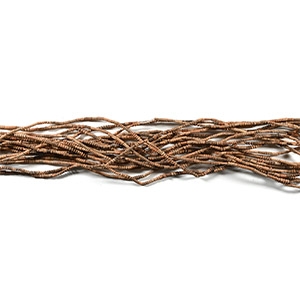
African Terracotta Bead Necklace Group
12th century A.D. or laterSold for (Inc. bp): £65
Ten restrung mainly cream and beige-coloured rondelle, tubular and ribbed beads and other types. 64 grams total, 70-74 cm
Ex property of a UK gallery, early 2000s. -
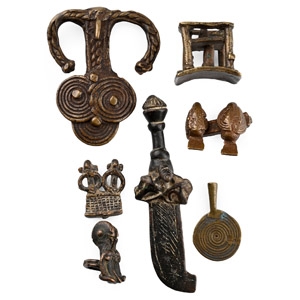
Ashanti Bronze Gold Weight Collection
Akan Tribe, 19th-20th century A.D.Sold for (Inc. bp): £104
Including a miniature cutlass with phallic ornament, anchor with ropework detailing and other items. 236 grams total, 3-10.2 cm
From an old Oxford, UK, collection. From the property of a late Lincolnshire, UK, gentleman. -
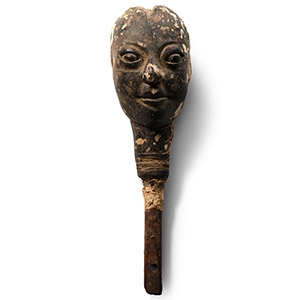
Indonesian Tau Tau Funerary Wooden Head
Toraja People, late 19th century A.D.Sold for (Inc. bp): £39
Carved in the round with large almond-shaped eyes, cruciform channels to upper face and rear, pierced attachment peg beneath. 352 grams, 20.7 cm
From South Central Sulewesi. Ex private Surrey, UK, ethnographic collection. From the property of a late Lincolnshire, UK, gentleman. -
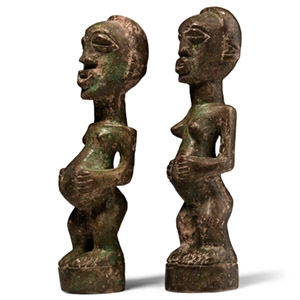
African Bronze Fertility Figure Pair
Yoruba Tribe, early-mid 20th century A.D.Sold for (Inc. bp): £78
Comprising male and female standing figures, each with hands resting on extended abdomen; drum-shaped base. 2.23 kg total, 17-17.1 cm each
From Nigeria, West Africa. Acquired during 1950s. From an old Surrey, UK, oriental and ethnographical collection. From the property of a late Lincolnshire, UK, gentleman. -
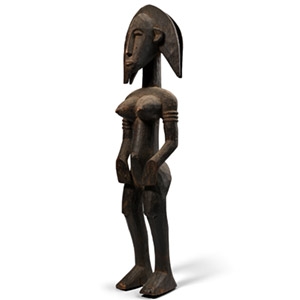
African Wooden Ancestor Figure
Fang Tribe, 20th century A.D.Sold for (Inc. bp): £39
A hand-carved standing female figure with hands placed in front of the figure and wearing arm rings. 930 grams, 48 cm
From Equatorial Guinea, West Coast of Central Africa. From an old Bristol, UK, ethnographical collection. From the property of a late Lincolnshire, UK, gentleman.
The people that are called “Fang” in the geographic or ethnographic literature number 800,000 and constitute a vast mosaic of village communities, established in a large zone of Atlantic equatorial Africa comprising Cameroon, continental Equatorial Guinea and nearly the whole north of Gabon, on the right bank of the Ogowe River. The Fang practice a cult devoted to ancestor lineages, the bieri, whose aim is to both protect themselves from the deceased and to recruit their aid in matters of daily life. Bieri are reliquary figures placed by the Fang upon their bark boxes to personify the tribal soul, containing the skulls and skeletons of prominent deceased persons. The bieri also served for therapeutic rituals and, above all, for initiations of young males during the great so festival. The rites included consumption of a plant with stimulant properties, which induced a trance lasting for several hours, and the “resuscitation of the ancestors,” in which figures detached from the reliquaries were moved somewhat playfully from behind a raffia screen as puppets. -
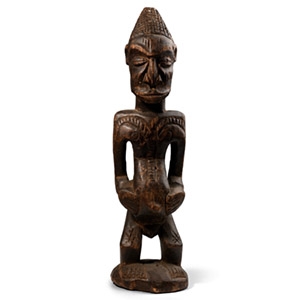
African Wooden Fertility Figure
Yoruba Tribe, mid 20th century A.D.Sold for (Inc. bp): £39
Carved in the round standing male figures with tall hatched headdress extending to the rear, hands placed either side of his distended abdomen, knees flexed, standing on a plano-convex base. 1.1 kg, 48.5 cm
From South West Nigeria, West Africa. From the property of a late Lincolnshire, UK, gentleman.
The Yoruba are the largest nation in Africa with an art-producing tradition. Their figures, more often of Shango (also spelled Sango and Sagoe), deity of thunder and lightning are carved from wood and kept in shrines. -
.jpg)
African Wooden Ceremonial Face Mask
Lega Warega Tribe, early 20th century A.D.Sold for (Inc. bp): £208
Lentoid in plan with vertical lug for the bose and slits for the eyes; applied hair strip to lower face. 158 grams, 22.5 cm
From Democratic Republic of the Congo, Central Africa. From the Estate of Dr J Bynon; acquired 30 July 1911. From the property of a late Lincolnshire, UK, gentleman.
Most of Lega masks are sculptures of a human face that are rarely worn over the face and never for purposes of true transformation. The Lega masks can be assigned different uses and meanings depending on the context of the performance. In Bwami ceremonies, masks are attached to different parts of the body, fixed to hat, piled in stacks, hung on fences, held in the hand, dragged on the ground, and occasionally worn on the forehead with the beard draping over the face of the wearer or arranged on a miniature palisade. Participants in most rites display their masks as a group in conjunction with particular dance movements and aphorisms, which vary depending on the context in which they are used. Lega masks differ from those used in many other African masquerades in that while women do not own them, both men and women handle and present them in very similar performances. Masks are among the initiation objects displayed on the grave before being passed to new owners. They are usually passed from an uncle to a nephew. -
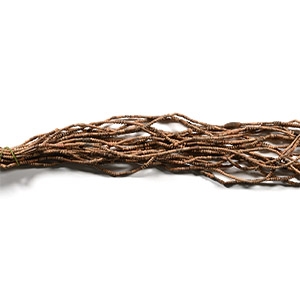
African Terracotta Bead Necklace Group
12th century A.D. or laterSold for (Inc. bp): £46
Ten restrung mainly cream and beige-coloured rondelle, tubular and ribbed beads and other types. 64 grams total, 72-74 cm
Ex property of a UK gallery, early 2000s.

